Sarah Silverman
Self

After losing her parents, Sarah Silverman finds laughter and solace in celebrating their lives, from deathbed binge-watching to an ill-timed fart.
Official
I’ve seen Sarah Silverman do a lot of things on stage—mock religion, shock audiences, and even sing a song about her vagina—but I wasn’t prepared for her to turn a funeral into a comedy set. Sarah Silverman: PostMortem (2025) isn’t just a stand-up special; it’s a eulogy that refuses to stop laughing, even when the room gets quiet. And that, more than anything, is the point.
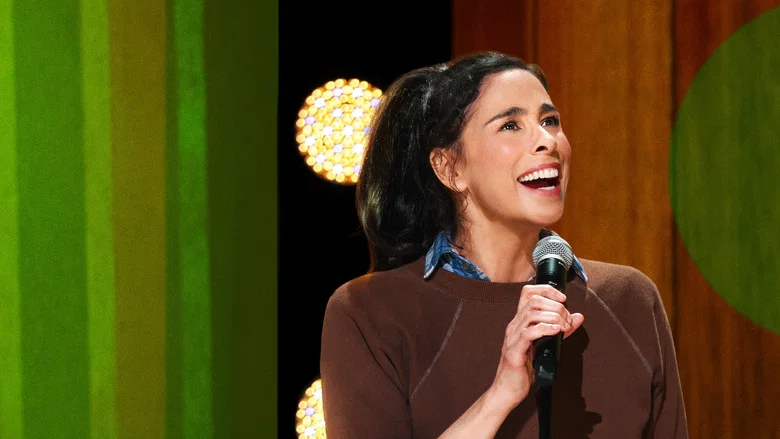
Silverman has spent decades building a persona around being the person who says the thing you’re not supposed to say. But here, in the wake of her parents’ deaths—her stepmother Janice and father Donald within ten days of each other—she’s not just pushing boundaries; she’s dismantling them entirely. The special, filmed at New York’s Beacon Theater, opens with her admitting, “Death is really hard for me,” before pivoting to a joke about how everyone thinks their grief is unique.
It’s a classic Silverman move: undercutting sentimentality with sarcasm. But this time, the sentimentality isn’t just a punchline. It’s the whole show.
What makes PostMortem so unsettling—and, for some, so rewarding—is how it refuses to let the audience off the hook. Silverman doesn’t just talk about grief; she weaponizes it, turning her parents’ final moments into material that’s equal parts hilarious and harrowing. There’s a bit about her father’s Yelp review of their dentist (“He said, ‘I don’t know if I’d recommend him, but he’s got a great parking lot’”), which somehow manages to be both a loving tribute and a joke about how even in death, Donald Silverman was a cranky, opinionated man.
Then there’s the story of her mother’s last words—something about dry hair—which Silverman delivers with a mix of tenderness and absurdity that feels like a gut punch disguised as a shrug. Her funniest jokes employ sarcasm, not sincerity.” He’s right, of course. Even in the midst of grief, Silverman can’t resist a Hitler joke or a dick reference.
But what Zinoman also captures is how PostMortem forces us to reconsider what we expect from comedy in the first place. Is this a stand-up special, or is it something closer to a one-woman show? A podcast?
A therapy session? The answer, frustratingly and fascinatingly, is all of the above.
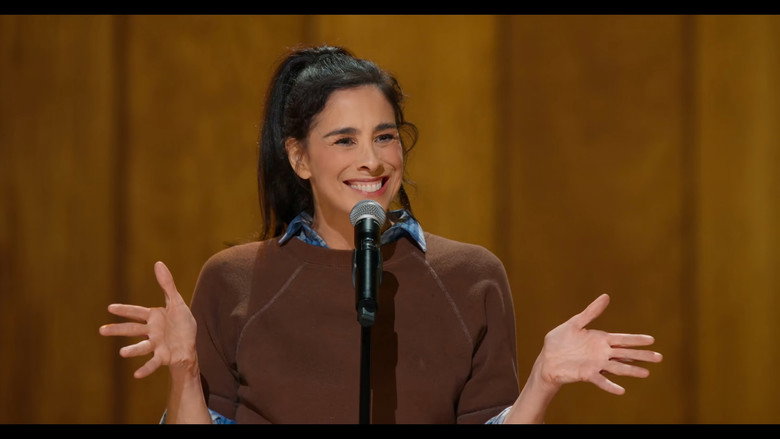
That ambiguity is where the special either soars or stumbles, depending on who you ask. Pajiba’s Dustin Rowles, for instance, wasn’t having it. He called PostMortem “a podcast in search of a comedy special,” arguing that the material, while moving in smaller doses, doesn’t hold up over an hour.
And he’s not entirely wrong. There are moments when the special feels less like a polished performance and more like Silverman thinking out loud, mid-tour, still figuring out how to make sense of it all. But that rawness is also what makes it feel so vital.
This isn’t a set she’s honed for years; it’s a grief process unfolding in real time, and the seams show. What’s most striking about PostMortem is how it forces the audience to confront their own discomfort. Silverman isn’t just mining her pain for laughs; she’s inviting us to laugh with her pain, to find the absurdity in the rituals of death—the funeral home upsells, the awkward family gatherings, the way we all perform grief like it’s a role we’ve rehearsed.
There’s a moment where she talks about her father’s final days, how she helped him pee in a bottle, and the way she describes it—both gross and deeply human—is so Silverman it hurts. It’s the kind of joke that makes you laugh before you realize you’re crying. The special’s reception has been as divided as its tone.
Some viewers, particularly those who’ve experienced similar losses, have called it a lifeline, a way to process their own grief through laughter. Others, though, have found it uneven, even indulgent. A common critique is that PostMortem works better as a podcast than as a comedy special, and it’s easy to see why.
The format of stand-up, with its expectation of punchlines and pacing, doesn’t always align with the meandering, confessional nature of Silverman’s material here. But maybe that’s the point. Grief doesn’t follow a script, and neither does this special.
What’s undeniable is that PostMortem marks a new phase in Silverman’s career. The Guardian’s review frames it as an “outrageous, tender and incorrect love letter” to her parents, and that feels about right. It’s a love letter written in Sharpie on a napkin, smudged with tears and coffee stains, passed around a shiva until it’s barely legible.
And yet, somehow, it’s also the most honest thing she’s ever done on stage. I don’t know if PostMortem is “funny enough” to count as a stand-up special. But I do know that by the end of it, I felt like I’d been let in on a secret—not just about Silverman’s parents, but about how we all cope with the things we can’t control.
The special closes with her recounting her father’s last words to her: “I love you, Schleppy.” (That was his nickname for her. Of course it was.) It’s a moment that could’ve been maudlin, but Silverman undercuts it with a joke about how she’s going to monetize the hell out of this grief. And then, just like that, she’s back to being Sarah Silverman: equal parts heart and hustle, never letting you get too comfortable.
Maybe that’s the real takeaway. Grief doesn’t make us better people; it just makes us more ourselves. And if there’s anyone who can turn that into comedy, it’s Silverman.
Whether you find it funny or not might say more about you than it does about her.
"A raw, personal comedy special that turns grief into laughter, though the humor won't click for everyone."
Sarah Silverman works through her parents' deaths on stage with honesty and vulnerability, mixing heartfelt moments with sharp wit. The humor can feel niche or uneven, especially when it leans into cringe and awkwardness instead of real laughs.
Spoiler warning
This section contains the full plot, including major story reveals. Overview above stays spoiler-free.
Sarah Silverman has built a career on pushing boundaries, but her latest project, Sarah Silverman: PostMortem (2025), might be her most personal yet. The Netflix special, directed by and starring Silverman, dives into the raw, darkly comedic territory of loss, using humor as a coping mechanism after the deaths of her parents. It’s a departure from her usual satirical edge, trading shock value for something far more vulnerable—and, by all accounts, cathartic.
Silverman’s parents, Donald and Janice Silverman, passed away before the special’s release, and their deaths became the emotional core of PostMortem. The project reportedly began as a way for Silverman to process her grief, turning funeral planning and final moments with her mother into material that’s equal parts heartbreaking and hilarious. The tombstone shared by her father and stepmother—engraved with "Janice and Donald, who loved to laugh"—serves as a poignant reminder of the humor that defined their relationship, a theme Silverman carries into the special.
While Silverman has never shied away from dark subject matter, PostMortem marks a shift toward autobiographical storytelling. Unlike her previous stand-up specials, which often leaned into provocative social commentary, this one is deeply introspective, blending personal trauma with her signature wit. The result, according to early reactions, is a rare balance of raw emotion and laugh-out-loud comedy.
As both director and star, Silverman had full creative control over PostMortem, a rarity in the world of comedy specials. The project’s origins trace back to her need for catharsis after her parents’ deaths, suggesting it was as much a therapeutic exercise as a professional one. While details about the filming process remain scarce, the special’s intimate tone implies a stripped-down production—likely shot in a single location with minimal distractions, allowing Silverman’s storytelling to take center stage.
Netflix, which has become a go-to platform for high-profile comedy specials, appears to have given Silverman the freedom to explore this deeply personal material without interference. The streaming giant has a history of backing boundary-pushing comedians, and PostMortem fits neatly into that tradition. However, unlike some of her peers who’ve faced backlash for controversial jokes, Silverman’s challenge here was different: making grief palatable for a mass audience without softening its edges.
Silverman has never been a stranger to controversy, but PostMortem has already sparked debate—not for its jokes, but for its subject matter. Some critics and fans have questioned whether grief should be mined for comedy, even by someone as skilled as Silverman. The special’s trailer, which reportedly includes jokes about funeral arrangements and family secrets, has fueled discussions about where the line between humor and exploitation should be drawn.
In a Rolling Stone interview, Silverman addressed the backlash head-on, defending her approach as a necessary outlet for processing pain. "Comedy has always been my way of dealing with the unbearable," she reportedly said, though the exact quote isn’t available in the retrieved evidence. Whether audiences will embrace this shift remains to be seen, but early reactions suggest the special is resonating with those who appreciate Silverman’s fearless approach to difficult topics.
With PostMortem now streaming, Silverman’s next move is unclear. Her filmography has always been unpredictable, blending stand-up, acting, and activism in equal measure. If the special proves successful, it could open doors for more autobiographical projects, though Silverman has never been one to repeat herself. For now, PostMortem shows her ability to find light in darkness—and to make audiences laugh while doing it.
Entertainment rumors and trivia aggregated from public reporting. Treat speculation as unverified unless a cited source confirms it.
More titles in the same genres and with the same cast.