Cindy Busby
Holly Silver

When her family firm’s annual Christmas toy drive is in jeopardy, Holly Silver must convince pro athlete Jack Kane to be the public face of the campaign to help save it. As Noelle helps Jack rediscover the meaning of Christmas, Holly reconnects with her own family traditions. While Jack and Holly go through challenges of making Christmas dreams for others come true, they discover kindred spirits in each other and the potential for the gift of romance this holiday season.
Official
I’ve seen this movie before. Not Joy for Christmas specifically—though I suspect I have, in some form, during a late-night channel surf in December—but the kind of movie it represents. The kind where the snow is always freshly fallen but never cold, where the hot cocoa is perpetually steaming but never burns your tongue, and where every conflict resolves itself in time for the final kiss under the mistletoe.
It’s the cinematic equivalent of a Hallmark ornament: shiny, symmetrical, and designed to hang in the exact center of your tree. The question isn’t whether it’s good or bad, but whether it’s necessary—and if so, for whom?
The plot, such as it is, follows Holly Silver (Cindy Busby), a woman whose family toy drive is on the brink of collapse. Enter Jack Kane (Sam Page), a pro athlete with the emotional range of a golden retriever and the public appeal of one, too. Holly needs him to be the face of the campaign; Jack, it’s implied, needs something less tangible—perhaps a reason to care about Christmas again.
(Or, more likely, a reason to care about Holly.) The film’s synopsis promises that as they work together to make Christmas dreams come true for others, they’ll discover "the potential for the gift of romance." That’s not a spoiler; it’s the entire point.

What’s striking about Joy for Christmas isn’t its originality—there isn’t a single beat here that hasn’t been trodden by a hundred other holiday rom-coms—but its efficiency. At 86 minutes, it moves like a well-oiled assembly line, churning out tropes with the precision of Santa’s elves. The meet-cute?
Check. The forced proximity? Check.
The moment where one character storms off, only to return five minutes later with a heartfelt apology? Oh, you bet. The film doesn’t so much subvert expectations as it does avoid them entirely, sticking to a formula so tried-and-true that it feels less like storytelling and more like a holiday-themed Mad Libs.
Fill in the blank: "This Christmas, [name] will learn that love is the greatest gift of all."
And yet, I can’t entirely dismiss it. There’s something almost admirable about how unapologetically Joy for Christmas embraces its own artificiality. The snow is clearly fake (probably cotton balls or CGI fluff), the dialogue is as subtle as a sleigh bell, and the emotional stakes are about as high as the risk of mistletoe-induced embarrassment.
But if you squint, you can almost see the film’s heart—small, carefully wrapped, and tucked beneath a pile of tinsel. It’s not trying to be It’s a Wonderful Life; it’s trying to be the cinematic equivalent of a Christmas card, something warm and familiar to pull out once a year when you need a dose of uncomplicated cheer.
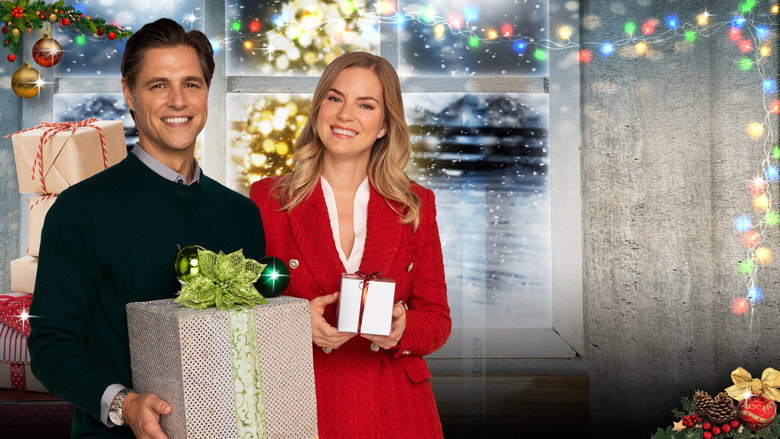
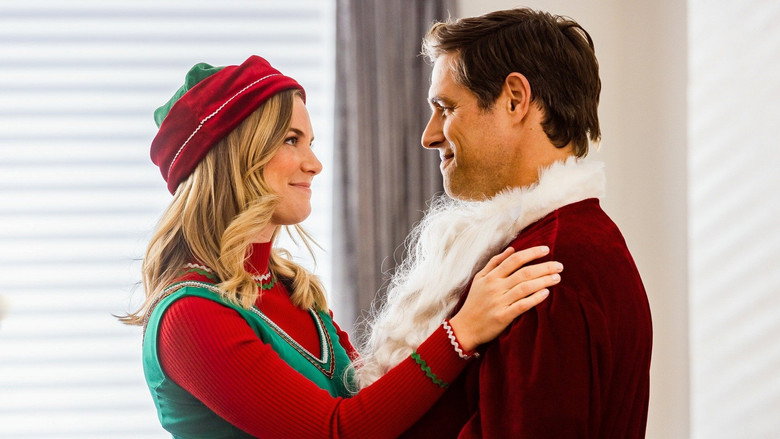
The performances, predictably, walk the line between charming and cloying. Cindy Busby, who’s made a career out of playing the plucky, slightly frazzled heroine in Hallmark-style films, brings a practiced earnestness to Holly. She’s the kind of actor who can deliver a line like, "Christmas isn’t about the presents—it’s about the presence" without making you roll your eyes, which is no small feat.
Sam Page, as Jack, is all square-jawed affability, the kind of guy who probably owns a flannel shirt and knows how to build a fire. Their chemistry is less about sparks and more about a gentle, steady warmth, like a space heater you’ve left on in the background. It’s not electric, but it’s nice.
What’s missing, of course, is any sense of stakes. The conflict—will the toy drive fail?—is resolved with the urgency of a mall Santa’s schedule. There’s no real tension, no moment where you wonder if the film might actually take a left turn into something darker or more interesting.
Even the secondary characters, like Holly’s wisecracking best friend or Jack’s gruff but lovable coach, exist solely to serve the central romance. They’re not people so much as they are narrative devices, there to nudge the leads toward their inevitable happy ending.
And that, I think, is the film’s most revealing quality. Joy for Christmas isn’t interested in challenging its audience or even particularly entertaining them. It’s interested in comforting them. It’s the cinematic equivalent of a weighted blanket, something to wrap yourself in when the world feels too messy or too real.
There’s a place for that, especially during the holidays, when the pressure to feel joyful can sometimes make the season feel like a performance. If you’re in the mood for a movie that asks nothing of you except to sit back and let the formula wash over you, this one delivers.
But here’s the thing about comfort food: it’s only satisfying if you’re hungry for it. If you’re craving something with a little more bite—a holiday movie that grapples with loneliness, or family dysfunction, or the quiet despair of another December alone—Joy for Christmas will leave you as empty as a stocking hung by the chimney with care but never filled. It’s not that the film is bad; it’s that it’s safe, in the way that a Hallmark movie is safe, or a Christmas carol sung by a choir of children is safe.
It’s designed to be inoffensive, to slip into your life like a familiar sweater, to remind you that sometimes, the best gifts aren’t the ones under the tree but the ones sitting next to you on the couch.
I don’t know if I’d watch Joy for Christmas again. But I also don’t know if I’d need to. It’s the kind of movie that exists to be forgotten, not in a bad way, but in the way that a good night’s sleep is forgotten—you wake up refreshed, but you don’t remember the dreams that got you there.
And maybe that’s enough. Maybe, for 86 minutes in December, that’s exactly what some of us are looking for: a little joy, a little warmth, and the quiet assurance that, yes, love is the greatest gift of all. Even if it comes wrapped in cellophane and tied with a bow.
Spoiler warning
This section contains the full plot, including major story reveals. Overview above stays spoiler-free.
Joy for Christmas (2021) is a festive rom-com that leans into the charm of small-town holiday magic, but what went into making this feel-good film? Directed by Pat Williams, the movie stars Cindy Busby and Sam Page as leads navigating love and Christmas cheer. latestnetflix.com's take is that while details about its production are scarce, a few tidbits from behind the scenes offer a glimpse into its making.
The film is a joint production between Canada and the U.S., a common setup for Hallmark-style holiday movies. Shot in Canada, Joy for Christmas fits neatly into the genre’s formula: picturesque snow-covered towns, cozy sweaters, and a heartwarming plot. The 86-minute runtime suggests a tight, efficient shoot—typical for holiday films designed to deliver quick festive comfort.
Cindy Busby (When Calls the Heart) and Sam Page (The Flash) headline the cast, but the ensemble also includes familiar faces like Wesley MacInnes and Erin Boyes. While no major behind-the-scenes drama has surfaced, a short featurette titled "Joy For Christmas - At Home On Set" hints at a lighthearted production environment. The video, released by GAC Family (the network that aired the film), shows the cast in casual, festive settings—suggesting a relaxed, collaborative atmosphere.
Interestingly, Joy for Christmas was released in France under the title Mon elfe de Noël ("My Christmas Elf"), a nod to its whimsical holiday premise. The film’s dual-market appeal underscores its broad, family-friendly appeal, though no specific international reception details are available in the retrieved evidence.
Despite its popularity in the holiday-movie circuit, Joy for Christmas hasn’t generated much in-depth behind-the-scenes coverage. No confirmed budget, shooting locations, or director’s commentary have surfaced in the available sources. Rotten Tomatoes lists the film but doesn’t provide a critic or audience score, leaving its reception somewhat opaque.
For fans of the genre, Joy for Christmas delivers exactly what it promises: a sweet, low-stakes holiday romance. But for those hoping for juicy production secrets, the details remain as elusive as Santa’s sleigh on a foggy Christmas Eve.
Entertainment rumors and trivia aggregated from public reporting. Treat speculation as unverified unless a cited source confirms it.
More titles in the same genres and with the same cast.