Mala Emde
Luisa

Luisa, a 20-year-old law student, joins a cell of the Antifa group when she and her friends Alfa and Lenor get to know about an upcoming attack planned by a local neo-Nazi gang. As they try to find out more, the three youngsters delve deeper into the scene linked to right-wing movements and their political connections, to the point where they will understand how much they are willing to go further, in order to defend their own beliefs.
I’ve spent the last few days trying to shake And Tomorrow the Entire World—not because it’s forgettable, but because it clings. There’s something unsettling about watching a film that doesn’t just depict political radicalization but makes you feel the seduction of it, the way it seeps into your bones like cold rain. Julia von Heinz’s film isn’t a thriller about far-right violence or a didactic lecture on activism; it’s a quiet, insistent portrait of what happens when idealism curdles into something harder, something that might leave bruises.
And it’s all the more unsettling because it refuses to judge its characters, even when they’re making choices that should be easy to condemn. The film follows Luisa (Mala Emde), a 20-year-old law student from a comfortable background who joins an Antifa cell after learning about an impending neo-Nazi attack. Her motivations are pure, or at least pure enough: she’s horrified by the rise of far-right movements in Germany, and she wants to do something.
But the film’s real tension isn’t about whether the fascists will strike—it’s about how far Luisa and her friends will go to stop them. The title, borrowed from an old anti-fascist slogan, takes on a bitter irony as the story unfolds. Und morgen die ganze Welt—"and tomorrow the entire world"—starts to sound less like a rallying cry and more like a warning.

Von Heinz, who has spoken about how her own experiences in Antifa informed the film, doesn’t romanticize the movement. There’s no glamour in the way these young people operate—just exhaustion, paranoia, and the creeping realization that their actions might not be making a difference. The film’s most striking scenes aren’t the ones where they confront neo-Nazis in the street, but the ones where they sit in cramped apartments, arguing about tactics.
Should they infiltrate a far-right rally? Sabotage a meeting? Or is violence the only language these people understand?
The debates are messy, unresolved, and painfully real. One moment, Luisa is delivering a passionate speech about the necessity of resistance; the next, she’s curled up on a couch, staring at her phone, looking like she’s about to cry. What makes And Tomorrow the Entire World so effective is its refusal to simplify.
Luisa isn’t a hero or a villain—she’s a young woman in over her head, trying to reconcile her privilege with her rage. The film’s most devastating scene comes when she’s confronted by a fellow activist, a working-class man who’s been in the movement for years. He asks her, point-blank, what she’s really willing to sacrifice.
Her education? Her safety? Her future?
The question hangs in the air, unanswered. It’s a moment that cuts to the heart of the film’s central tension: how much of yourself are you willing to give up for a cause? And what happens when you realize the cause might not be enough to justify the cost?
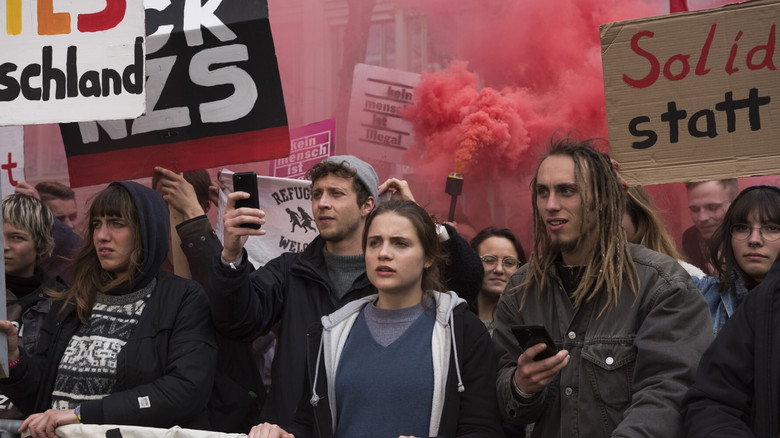
The film’s political context is impossible to ignore, especially in Germany, where the rise of the far-right AfD has made these conversations urgent. And Tomorrow the Entire World doesn’t name the AfD directly, but it doesn’t have to—the parallels are clear. The right-wing party in the film, "Liste 14," is a thinly veiled stand-in, and the film’s depiction of its supporters as organized, well-funded, and dangerously mainstream feels like a direct response to contemporary German politics.
Mala Emde’s performance as Luisa is a masterclass in restraint. She doesn’t overplay the anger or the idealism; instead, she lets the cracks show slowly, like a hairline fracture spreading across glass. There’s a scene where she’s alone in her apartment, practicing a speech in the mirror, and you can see the moment her conviction falters.
It’s a small thing, a flicker of doubt, but it’s devastating. The film is full of these quiet, human moments, the kind that linger long after the credits roll.
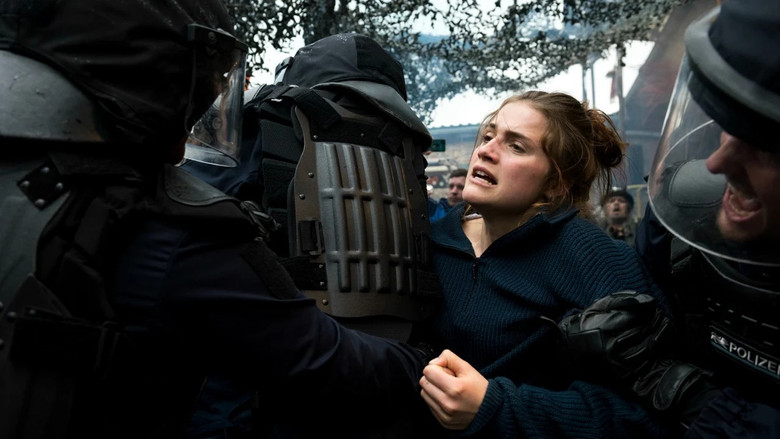
If And Tomorrow the Entire World has a flaw, it’s that it sometimes feels too contained. The film’s focus on Luisa and her small circle means we don’t get a broader sense of the movement she’s part of, or the larger forces at play. There are hints of deeper connections—mentors, rival factions, the police—but they remain just that: hints.
It’s a deliberate choice, I think, to keep the story intimate, but it also means the film occasionally feels like it’s operating in a vacuum. The world outside Luisa’s bubble is a shadowy, indistinct place, and that can make her struggles feel smaller than they are. Still, that intimacy is also the film’s strength.
Von Heinz isn’t interested in grand statements or easy answers. She’s interested in the messy, complicated reality of political commitment—the way it can both sustain you and destroy you, the way it can make you feel alive and utterly alone. And Tomorrow the Entire World doesn’t offer solutions, but it does something more valuable: it forces you to sit with the questions. What would you do in Luisa’s place?
How far would you go? And what would it cost you? I keep coming back to that scene in the mirror.
Luisa, practicing her speech, trying to convince herself as much as anyone else. It’s a moment that encapsulates the film’s central tension: the gap between what we believe and what we’re willing to do about it. And Tomorrow the Entire World doesn’t judge that gap. It just stares at it, unflinching, and asks us to do the same.
"A gripping but uneven drama about youthful idealism clashing with extremism, anchored by strong performances."
Viewers respond to its raw portrayal of political activism and the moral dilemmas of its young protagonists. Mala Emde's performance is often singled out, though some find the pacing and focus inconsistent, leaving some plot threads underdeveloped.
Julia von Heinz’s And Tomorrow the Entire World (2021) isn’t just a film about political activism—it’s a raw, immersive dive into the moral dilemmas of modern antifascist resistance. The German-French co-production, led by a standout cast including Mala Emde and Noah Saavedra, premiered at the Venice Film Festival in 2020 before making waves on streaming platforms. latestnetflix.com's take is that but what went into bringing this timely story to life?
Von Heinz, known for blending personal narratives with social commentary, didn’t shy away from the film’s political weight. While the evidence doesn’t detail her direct ties to Antifa, her filmography suggests a fascination with activism and historical trauma. The movie’s title itself—Und morgen die ganze Welt ("And Tomorrow the Entire World")—hints at the urgency of its themes, framing antifascist resistance as a battle for the future.
The film’s selection as Germany’s entry for the Best International Feature Film at the 93rd Academy Awards underscored its critical relevance, though it ultimately didn’t secure a nomination. Still, its Venice premiere in competition signaled von Heinz’s growing clout in European cinema.
Mala Emde, who plays Luisa, the idealistic law student drawn into radical activism, delivers a performance praised for its emotional depth. Behind the scenes, the young cast reportedly immersed themselves in the world of political organizing to ground their roles. While specifics about their preparation aren’t detailed in the evidence, the film’s gritty realism suggests a hands-on approach—whether through research or firsthand experience.
Noah Saavedra (Alfa) and Tonio Schneider (Lenor) round out the trio at the heart of the story, their dynamic capturing the tension between youthful idealism and the harsh realities of direct action. The supporting cast, including Andreas Lust and Victoria Trauttmansdorff, adds layers to the film’s portrayal of Germany’s far-right underbelly.
Critics called And Tomorrow the Entire World a "thought-provoking mixed bag", praising its urgency but noting its uneven pacing. Rotten Tomatoes highlighted the film’s swift direction and strong performances, while some French reviews (like SensCritique) rated it a middling 5.6/10. Despite the divided opinions, the movie’s Netflix release ensured it reached a global audience, sparking conversations about antifascism in an era of rising right-wing extremism.
The evidence leaves some gaps. For instance, there’s no confirmation on whether the cast or crew faced real-world backlash for the film’s unflinching portrayal of neo-Nazis. Similarly, von Heinz’s personal connection to the story remains speculative. Without deeper interviews or production notes, these details stay in the realm of rumor.
What’s clear, though, is that And Tomorrow the Entire World isn’t just a movie—it’s a provocation. Whether it fully lands or not, its ambition is undeniable.
Entertainment rumors and trivia aggregated from public reporting. Treat speculation as unverified unless a cited source confirms it.
More titles in the same genres and with the same cast.