Ireneusz Czop
Maciej Berbeka

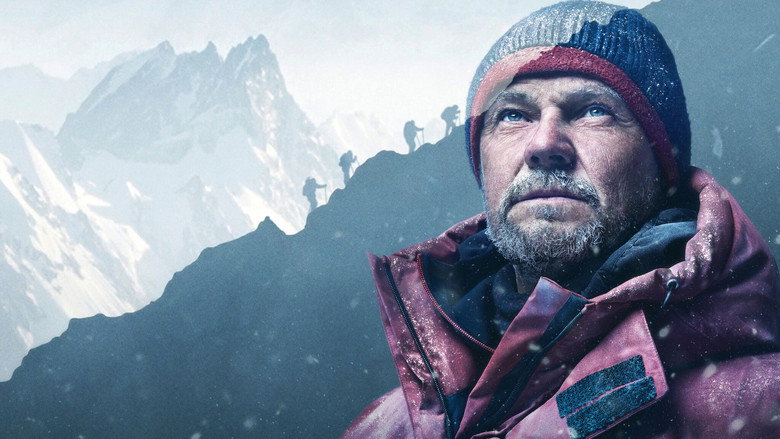
After climbing Broad Peak mountain, Maciej Berbeka learns his journey to the summit is incomplete. 25 years later, he sets out to finish what he started.
Official
I’ve always been suspicious of films that treat mountains as metaphors. Too often, they reduce the raw, indifferent cruelty of altitude into a tidy parable about human ambition or spiritual transcendence. Broad Peak, Leszek Dawid’s 2022 biopic about Polish mountaineer Maciej Berbeka, doesn’t entirely escape this trap—but it comes closer than most. What saves it is its refusal to romanticize the climb.
The mountain here isn’t a symbol; it’s a presence, vast and unyielding, a force that doesn’t care whether you live or die. And in that indifference, the film finds something truer than most survival dramas dare to confront.
The story spans two decades: a 1988 expedition where Berbeka (Ireneusz Czop) and his team believe they’ve summited Broad Peak, only to realize they’ve fallen short by a few hundred meters, and a 2013 return where the now-aging climber attempts to correct that mistake. The film’s structure mirrors the cyclical nature of obsession—what begins as a quest for glory curdles into something darker, a need to prove something not to the world, but to oneself.
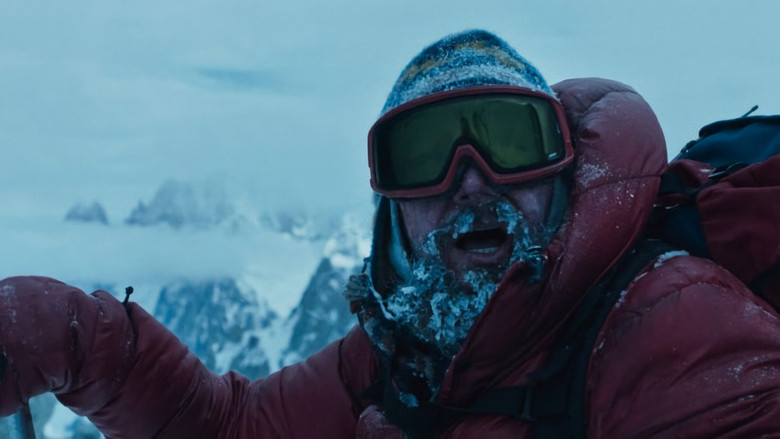
Dawid, working from a script by Maciej Pisuk, doesn’t shy away from the physical toll of this fixation. The early scenes of the 1988 climb are shot with a documentary-like immediacy, the camera lingering on the way frost clings to eyelashes, the way breath fogs in the thin air. But it’s the psychological weight that lingers.
Czop’s performance is a masterclass in restraint; his Berbeka is a man who carries his failure like a second skin, the way his body sags under the weight of his pack.
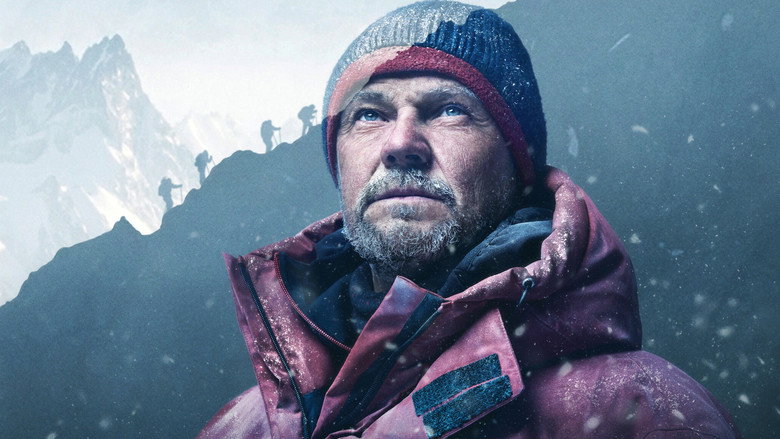
The film’s most striking choice is its refusal to villainize the mountain. There are no avalanches, no sudden storms—just the slow, grinding reality of altitude, where every step is a negotiation with oxygen debt and every decision could be your last. This isn’t The Eiger Sanction or Cliffhanger; there’s no cathartic violence, no last-minute heroics.
Instead, Dawid lets the tension simmer in the quiet moments: the way a climber’s voice cracks when he radios base camp, the way a team’s silence speaks volumes about their fraying trust. The cinematography (by Piotr Sobociński Jr.) leans into this stillness, framing the climbers as tiny figures against the immensity of the Karakoram range. The mountain isn’t just a backdrop; it’s a character, one that doesn’t emote or judge, but simply is.
That said, Broad Peak isn’t without its missteps. The 2013 storyline, which follows Berbeka’s return to the mountain, occasionally feels like a pale echo of the first act. The stakes are higher—this time, it’s not just pride on the line, but his life—but the emotional beats are familiar.
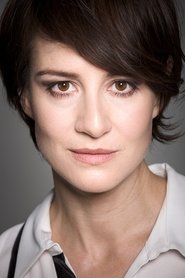
And while the supporting cast (including a scene-stealing Dawid Ogrodnik as a younger climber) is strong, the film struggles to give them the same depth as its protagonist. Maja Ostaszewska, as Berbeka’s wife, is particularly underutilized; her role feels more like a narrative device than a fully realized person.
What’s most interesting about Broad Peak, though, is how it resists the usual biopic tropes. There’s no grand speech about the meaning of life, no triumphant score swelling as the summit comes into view. Instead, the film’s climax is quiet, almost anticlimactic—a moment of exhausted clarity rather than euphoria.
It’s a choice that will frustrate some viewers, but it feels honest. After all, what is there to say when you’ve spent your life chasing a line on a map?
The film’s reception has been muted, at least according to the limited data available. SensCritique, the French platform, gives it a 5.9/10 based on 110 votes, a score that suggests a work that resonates with some but leaves others cold. That feels about right. Broad Peak isn’t a film that dazzles or entertains in the traditional sense; it’s a film that lingers, like the memory of a dream you can’t quite shake. It’s the kind of movie that makes you grateful for the silence afterward, the kind that leaves you staring at the ceiling, wondering what it is about human beings that drives us to test ourselves against the impossible.
I keep coming back to a moment near the end of the film, when Berbeka, exhausted and half-delirious, looks up at the summit and mutters, “It’s just a pile of rocks.” It’s a line that could be read as defeat, but I don’t think that’s what Dawid intends. It’s not that the mountain doesn’t matter; it’s that the meaning we ascribe to it is our own burden to carry. The film doesn’t offer answers, only questions.
And maybe that’s enough.
In the end, Broad Peak is a film about the stories we tell ourselves to make sense of our failures. Berbeka’s journey isn’t about conquering the mountain; it’s about learning to live with the fact that he never will. And in that, the film finds a kind of quiet, unassuming greatness.
It’s not a movie that will leave you cheering, but it might leave you thinking—and sometimes, that’s the harder, more rewarding thing.
"A well-intentioned but uneven biopic whose mountaineering spectacle outpaces its emotional depth."
The film's portrayal of real mountaineering events earns praise for its authenticity and emotional weight, especially in scenes showing the physical and psychological strain of high-altitude climbing. The narrative feels disjointed, though, with uneven pacing and underdeveloped character arcs.
Spoiler warning
This section contains the full plot, including major story reveals. Overview above stays spoiler-free.
Leszek Dawid’s Broad Peak (2022) isn’t just a biopic about mountaineer Maciej Berbeka—it’s a sign of the physical and logistical extremes of filming in the thin air of the Alps. The movie, starring Ireneusz Czop as Berbeka, follows the Polish climber’s harrowing 1988 expedition to summit the 8,051-meter Broad Peak, one of the world’s deadliest mountains. latestnetflix.com's read is that but the real drama unfolded behind the camera, where cast and crew battled altitude, weather, and exhaustion to bring the story to life.
Filming Broad Peak wasn’t your typical studio shoot. According to interviews with director Leszek Dawid and lead actor Ireneusz Czop, the team spent weeks on location in the Alps, often working at altitudes exceeding 4,000 meters. Czop revealed that the crew would sometimes trek for a full week just to reach a filming site, where oxygen deprivation and freezing temperatures made even basic tasks a challenge. Dawid’s insistence on authenticity meant no shortcuts—if the script called for a scene on a glacier, the actors and crew had to climb there, no matter the conditions.
The physical toll was evident. In a behind-the-scenes discussion, Czop and Dawid described how the team had to adapt to the environment, with some scenes requiring multiple takes due to the unpredictable weather. The director’s commitment to realism extended to the cast’s training, though specifics on how the actors prepared for high-altitude filming remain scarce in the available evidence.
Ireneusz Czop, a veteran of Polish cinema with roles in Aftermath (2012) and Jack Strong (2014), was an unexpected but fitting choice to play Maciej Berbeka. While the evidence doesn’t detail how he landed the role, his reputation for intense, physically demanding performances likely played a part. Czop’s filmography includes gritty dramas and historical epics, making him a natural fit for a story about endurance and survival.
The supporting cast—Maja Ostaszewska, Dawid Ogrodnik, and Piotr Głowacki—brought their own strengths, though their individual contributions to the film’s production haven’t been widely documented in the available sources. Ogrodnik, known for his roles in The Hater (2020) and Leave No Traces (2021), appears in promotional materials, but details about his character or preparation are thin.
Broad Peak premiered to mixed but respectful reviews. On SensCritique, the film holds a 5.9/10 rating based on 111 votes, with users praising its visuals and ambition but critiquing its pacing. Rotten Tomatoes lists the movie but doesn’t provide a critic or audience score, leaving its reception somewhat opaque.
Rumors about the film’s production have circulated, particularly around the challenges of shooting in extreme conditions. Some reports suggest that the crew faced near-misses with avalanches, though these claims remain unverified in the available evidence. What is clear is that Dawid’s approach was uncompromising—whether that translated into a flawless final product or a film bogged down by its own realism depends on who you ask.
The film’s Netflix release expanded its reach beyond Poland, introducing Berbeka’s story to a global audience. Trailers for Broad Peak emphasize the scale of the climb and the personal stakes, with sweeping shots of the Himalayas and tense close-ups of the actors’ frostbitten faces. The streaming platform’s involvement likely helped secure the budget for such an ambitious shoot, though Netflix’s exact role in the production isn’t detailed in the evidence.
One lingering question is whether Broad Peak will inspire more high-altitude filmmaking—or if its challenges will deter future projects. For now, it stands as a rare example of a biopic that didn’t just tell a survival story but lived it.
Entertainment rumors and trivia aggregated from public reporting. Treat speculation as unverified unless a cited source confirms it.
More titles in the same genres and with the same cast.