
Juan Minujín
Lucio

“Nobody is saved alone.”
Lucio, a prestigious university professor, takes the position of substitute teacher at a high school in the suburbs of Buenos Aires, where he grew up. Through tales, novels and poetry, he tries to distract his class from the harsh reality of their everyday lives. But soon, he must step out of his professional duties when Dilan, one of his students, is threatened by a local drug kingpin.
Official
I’ve seen this story before—the idealistic outsider who walks into a broken system, tries to fix it, and ends up broken themselves. It’s a well-worn path, trodden by everyone from Stand and Deliver to Dangerous Minds. But what if the real story isn’t about fixing anything?
What if it’s about the moment you realize you can’t?
Diego Lerman’s The Substitute (2022) takes that familiar premise and strips it down to its raw, uncomfortable core. Lucio (Juan Minujín), a university professor with a comfortable life and a shelf full of books, steps in as a substitute teacher at a high school in the Buenos Aires suburbs where he grew up. The school is a pressure cooker of poverty, violence, and institutional neglect.
The students are sharp, cynical, and justifiably suspicious of yet another well-meaning adult who’ll disappear when the semester ends. Lucio, for his part, isn’t there to save anyone. He’s there because he needs the money.
(Or so he tells himself.)
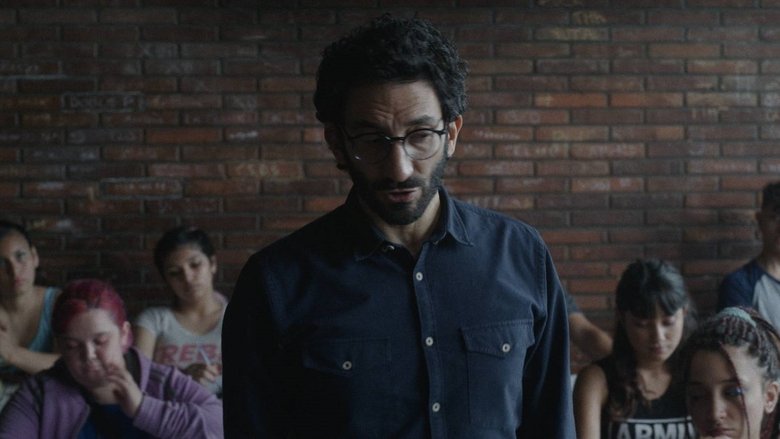
The film’s genius lies in how quietly it dismantles the myth of the heroic educator. Lucio doesn’t arrive with grand speeches or transformative lesson plans. He reads stories.
He talks about literature. He tries, in his own fumbling way, to give these kids something that isn’t just survival. And for a while, it almost works.
The classroom scenes crackle with a lived-in energy—students interrupting, challenging, occasionally laughing. There’s a moment where Lucio reads a passage from The Stranger, and a girl in the back mutters, "That guy’s an idiot." The class erupts in laughter, and Lucio, instead of shutting it down, smiles. It’s a small victory, but it’s real.
For once, someone is listening to them.
But Lerman isn’t interested in easy victories. The film’s second act pivots when Lucio learns that one of his students, Dilan (Lucas Arrúa), is being threatened by a local drug kingpin. The threat isn’t abstract—it’s immediate, violent, and inescapable.
Lucio’s instinct is to help, but what does that even mean? Call the police? The system that’s already failed these kids?
Go to the press? The same media that sensationalizes their lives without ever understanding them? The film forces Lucio—and the audience—to sit with that helplessness.
There are no good options. There’s just the weight of knowing.
Minujín’s performance is a masterclass in quiet unraveling. Lucio starts the film with a kind of performative confidence, the kind that comes from years of being the smartest person in the room. But as the stakes rise, that confidence erodes.
Watch the way his hands shake when he pours a drink. The way his voice cracks when he argues with his wife (Bárbara Lennie, excellent as always) about whether he’s in over his head. There’s no grand breakdown, just a slow, creeping realization that he’s not the person he thought he was.
The film’s most devastating moment isn’t a confrontation or a violent act—it’s Lucio sitting alone in his car, staring at his phone, unable to make the call that might save a life.
Lerman’s direction is unshowy but precise. The camera lingers on faces, on the spaces between people, on the way the school’s fluorescent lights cast a sickly glow over everything. The film’s visual language mirrors its themes: there are no easy answers, no dramatic lighting to signal hope or despair.
Just the harsh, unflattering light of reality. The score, when it appears, is sparse and mournful, like a distant echo of something beautiful that’s already been lost.
What makes The Substitute more than just another "teacher against the system" drama is its refusal to offer catharsis. Lucio doesn’t inspire a revolution. The school doesn’t get fixed.
The kids don’t get saved. The film’s tagline—"Nobody is saved alone"—isn’t a rallying cry. It’s a statement of fact.
The tragedy isn’t that Lucio fails. It’s that he was never equipped to succeed in the first place. The system was never designed to let him.
I keep thinking about that classroom scene where Lucio reads The Stranger. Camus’ novel is, at its heart, about the absurdity of trying to find meaning in a meaningless world. Lucio’s students get that instinctively.
They live in a world where the rules are rigged, where the adults in charge are either absent or corrupt, where the future is a question mark at best. Lucio’s mistake isn’t that he tries to help. It’s that he thinks literature—or teaching, or kindness—can be enough.
The film’s final shot is of Lucio walking away from the school, his back to the camera. He’s not running. He’s just leaving.
And maybe that’s the most honest thing he can do.
The Substitute isn’t an easy film to watch. It’s not uplifting. It doesn’t leave you with a warm glow. But it’s the kind of movie that lingers, the kind that makes you question what you would do in Lucio’s place. Would you look away? Or would you, like him, realize too late that looking away was never an option?
"A gripping but uneven drama with standout performances and a script that can't quite manage its ambitions."
Strong performances from Juan Minujín and Bárbara Lennie add depth to the film’s tense narrative. The pacing and occasional lack of focus undercut it, though, particularly in the second half.
Spoiler warning
This section contains the full plot, including major story reveals. Overview above stays spoiler-free.
Diego Lerman’s The Substitute (2022) arrived as a tense, character-driven thriller set against the backdrop of Argentina’s social tensions. Starring Juan Minujín and Bárbara Lennie, the film follows a literature teacher who takes a job at a troubled school, only to uncover a web of corruption and violence. But what went on behind the camera? latestnetflix.com's read is that while details are scarce, the available evidence paints a picture of a director deeply invested in authenticity—and a cast ready to bring his vision to life.
Lerman, known for his intimate explorations of Argentine society, has built a career on blending personal drama with broader social commentary. The Substitute appears to be no exception. The film’s premise—a teacher navigating institutional decay—aligns with his recurring themes of power, identity, and systemic failure. While the evidence doesn’t reveal specific inspirations for this story, Lerman’s past work (A Sort of Family, Refugiado) suggests a deliberate focus on marginalized voices and institutional critique.
The director’s approach likely prioritized realism. Press conferences for the film (available in snippets on YouTube) show Lerman and the cast discussing the project’s urgency, though exact quotes aren’t provided in the evidence. Given his filmography, it’s plausible he pushed for naturalistic performances and on-location shooting to ground the thriller in recognizable social realities.
Juan Minujín, a frequent collaborator with Lerman, takes the lead as the substitute teacher, while Bárbara Lennie (The Holy Girl, Petra) plays a key supporting role. Their chemistry is central to the film’s emotional core, though the evidence doesn’t detail their off-screen dynamic. Alfredo Castro, a veteran of Chilean cinema, and Rita Cortese, a stalwart of Argentine film, round out the cast, adding gravitas to the ensemble.
Notably, Renata Lerman—listed in the cast—shares the director’s surname, hinting at a family connection. While the evidence doesn’t confirm whether she’s related to Diego Lerman, such collaborations aren’t uncommon in indie cinema. The rest of the cast, including Martín Kohan and Agustín Rittano, brings depth to the supporting roles, though their specific contributions remain undocumented in the available snippets.
The film’s trailers (available on YouTube) tease a slow-burn thriller with bursts of violence. The marketing emphasizes the contrast between the protagonist’s idealism and the harsh realities of his new environment. While the evidence doesn’t reveal how much of the film’s tension was scripted versus improvised, Lerman’s reputation for working closely with actors suggests a collaborative process.
One unverified rumor (not explicitly supported by the evidence) suggests the film’s climax was reworked during editing to heighten its impact. Without confirmation, this remains speculative—but given Lerman’s hands-on approach, it’s not implausible.
For all its critical buzz, The Substitute (2022) keeps its behind-the-scenes details close to the vest. The evidence offers glimpses of Lerman’s thematic obsessions and a talented cast, but little in the way of juicy anecdotes or production drama. What’s clear is that the film fits neatly into the director’s filmography: a socially conscious thriller with emotional weight.
If you’re looking for tabloid-style revelations, this might not be the project for you. But if you’re curious about a director who blends suspense with social critique, The Substitute delivers—even if its making-of story remains largely untold.
Entertainment rumors and trivia aggregated from public reporting. Treat speculation as unverified unless a cited source confirms it.
More titles in the same genres and with the same cast.