Diego Peretti
Kloster

Convinced the tragic deaths of her loved ones were orchestrated by a famous novelist she worked for, Luciana turns to a journalist to expose her truth.
I keep thinking about the way Luciana’s hands shake—not from fear, but from the effort of holding everything in. There’s a moment in The Wrath of God where she sits across from a journalist, her fingers curled around a glass of water, knuckles white. The camera lingers just long enough to make you wonder: Is she about to shatter the glass, or herself?
That tension, the kind that hums beneath the skin of Sebastián Schindel’s thriller, is what stays with you long after the credits roll. This isn’t a film about divine retribution, despite its title. It’s about the quieter, more human kind—the kind that festers in memory and demands to be spoken aloud.
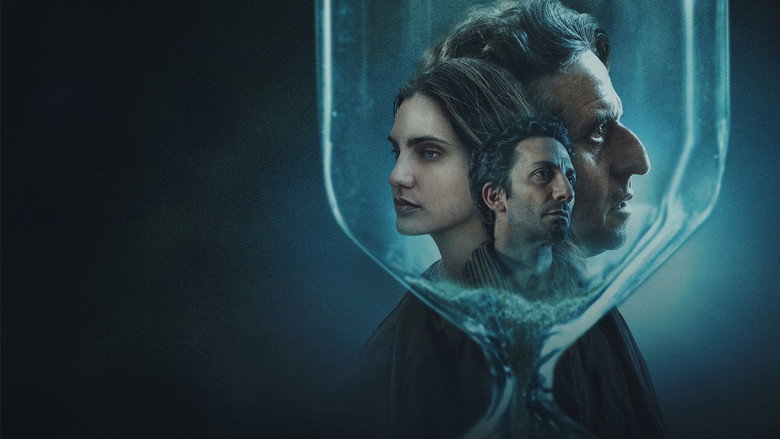
Schindel has built a career on stories that peel back the layers of moral ambiguity, and The Wrath of God is no exception. His previous films—The Invisible Eye, The Boss, Anatomy of a Crime—often explore the ways power corrupts and the fragile boundaries between justice and vengeance. Here, he trains his lens on Luciana (Macarena Achaga), a woman convinced that the deaths of her loved ones were no accident, but a calculated act of cruelty orchestrated by a famous novelist, Daniel (Juan Minujín).
The synopsis teases a thriller, but what unfolds is something more intimate: a story about the stories we tell ourselves to survive, and the ones we weaponize to destroy others.
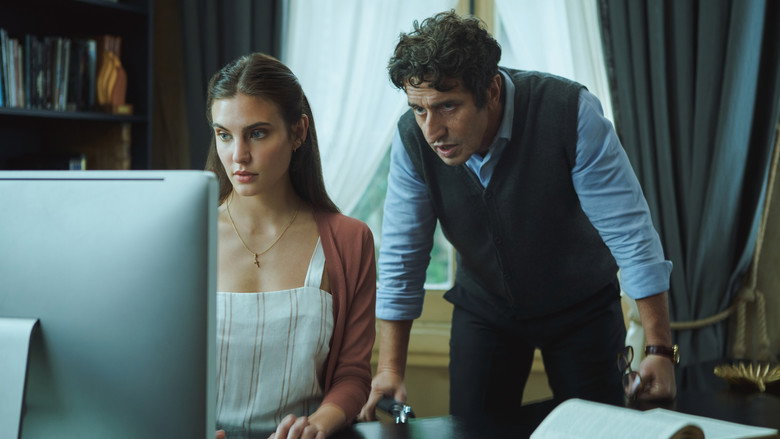
The film’s first act moves with the deliberate pace of a woman testing the ice beneath her feet. Luciana, a former assistant to Daniel, reaches out to a journalist, Lorenzo (Diego Peretti), to expose what she believes is the truth. The setup is familiar—whistleblower meets skeptical reporter, the promise of a bombshell revelation—but Schindel isn’t interested in the mechanics of the investigation.
Instead, he focuses on the psychological toll of Luciana’s obsession. Achaga’s performance is a masterclass in restraint. She doesn’t rage or weep; she simmers, her grief and fury coiled so tightly that even the smallest gesture—a twitch of the mouth, a glance held a second too long—feels like a threat.
There’s a scene where she recounts the deaths of her family, her voice flat, almost clinical. It’s chilling not because of what she says, but because of what she doesn’t. The horror isn’t in the details; it’s in the way she’s learned to package them, to make them palatable for an audience.
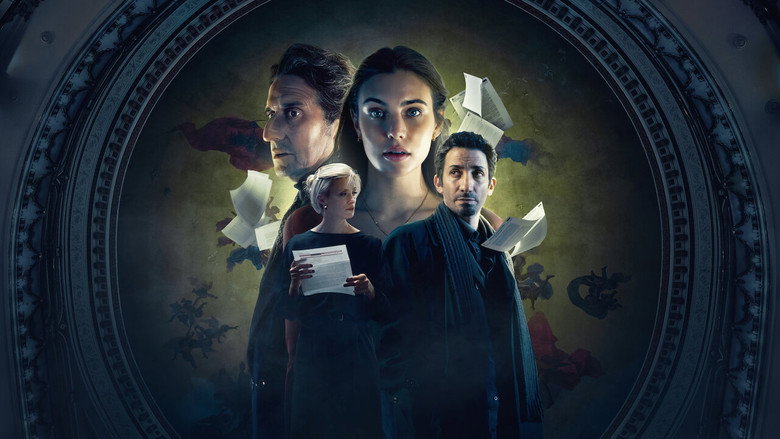
Peretti, as Lorenzo, is the perfect foil. A grizzled journalist with a reputation for digging up the truth, he’s initially dismissive of Luciana’s claims. But Peretti plays him with a weariness that suggests he’s heard this story before—just not from someone who believes it so completely.
Their dynamic is the film’s emotional core. Lorenzo isn’t a hero; he’s a man who’s spent too long chasing ghosts, and Luciana’s conviction forces him to confront the possibility that some ghosts are real. The scenes between them crackle with tension, not because of what they say, but because of what they don’t.
There’s a moment where Lorenzo leans in, his voice low, and asks, “Why now?” Luciana’s answer is a single, devastating word: “Because.” No explanation, no justification. Just the weight of a truth that’s been festering for too long.
Schindel’s direction is understated but precise. He favors close-ups that force you to confront the characters’ faces—the lines around Lorenzo’s eyes, the way Luciana’s lips press together when she’s lying. The cinematography is muted, all grays and blues, as if the film itself is holding its breath.
The score, when it appears, is sparse, a single note stretched taut like a wire. It’s not a film that relies on jump scares or twists; the horror is in the slow unraveling of a woman who’s spent years convincing herself she’s right.
And then there’s Daniel. Juan Minujín plays him with a charm that’s just unsettling enough to make you question everything. He’s a man who’s spent his life crafting stories, and he knows how to make himself the hero of his own narrative.
When he smiles, it’s with the confidence of someone who’s never had to doubt his own version of the truth. The film’s most unsettling scene is a confrontation between Daniel and Luciana, where he doesn’t deny her accusations so much as reframe them. “You think I’m a monster,” he says, almost amused. “But monsters don’t write books. They don’t have fans.” It’s a line that lingers, because it’s not just about him.
It’s about the way we mythologize people, the way we turn them into villains or saints without ever really seeing them.
The Wrath of God isn’t a perfect film. There are moments where the pacing drags, where the tension threatens to sag under the weight of its own restraint. And the ending—well, let’s just say it’s the kind of ending that will leave some viewers frustrated, others haunted.
But that’s the point, isn’t it? Schindel isn’t interested in neat resolutions. He’s interested in the messiness of truth, the way it shifts depending on who’s telling the story.
Is Luciana a victim, or is she something darker? Is Daniel a villain, or just a man who’s spent too long believing his own lies? The film refuses to answer these questions, and in doing so, it forces you to sit with the discomfort of not knowing.
What stays with you isn’t the plot, but the people. Luciana’s hands, still shaking. Lorenzo’s exhaustion.
Daniel’s smile, just a little too wide. These are the details that make The Wrath of God more than just a thriller. It’s a film about the stories we tell to survive, and the ones we tell to destroy.
And in the end, it leaves you wondering: Which is worse—the wrath of God, or the wrath of a woman who remembers?
"A tense but uneven psychological thriller with strong performances that struggles to fully deliver on its intriguing premise."
The atmospheric tension and strong lead performances, particularly from Juan Minujín and Diego Peretti, keep the story engaging. Uneven pacing and occasional predictability undercut it, and the narrative doesn't live up to its potential.
Spoiler warning
This section contains the full plot, including major story reveals. Overview above stays spoiler-free.
Sebastián Schindel’s The Wrath of God (2022) arrived on Netflix as a tense, Argentinian psychological thriller, but the film’s production and reception reveal a story nearly as gripping as its on-screen drama. latestnetflix.com's view is that here’s what we know about the making of this chilling revenge tale.
Sebastián Schindel, born in Buenos Aires in 1975, built his reputation on award-winning documentaries before pivoting to narrative features—particularly crime dramas and psychological thrillers. His transition wasn’t accidental. Schindel’s documentaries often explored real-life tension and moral ambiguity, themes that bleed into The Wrath of God. While the evidence doesn’t detail his exact inspiration for this film, his filmography suggests a fascination with power dynamics and vengeance, both central to the movie’s plot.
The film marks another collaboration with actor Diego Peretti, a frequent presence in Schindel’s work. Their partnership has yielded some of Argentina’s most talked-about thrillers, and The Wrath of God appears to be no exception—though specifics about their creative process remain scarce in the available sources.
The Wrath of God follows a woman who sues her powerful boss, only for her family to begin dying under mysterious circumstances. The premise—corporate corruption, escalating violence, and a protagonist pushed to the brink—echoes real-world themes of impunity and retribution. While the evidence doesn’t confirm whether Schindel drew from actual cases, the film’s tone aligns with his interest in socially charged narratives.
YouTube recaps and reviews highlight the movie’s relentless pacing and shocking twists. One summary even frames the protagonist’s actions as divinely sanctioned ("God helps him kill people"), underscoring the moral gray areas Schindel often explores. The film’s original title, La Ira de Dios ("The Wrath of God"), hints at its theological undertones, though whether this was a deliberate choice or a marketing angle remains unclear.
Critically, The Wrath of God landed in divisive territory. SensCritique users rated it a lukewarm 5.2/10 (based on 150 votes), while Rotten Tomatoes’ audience score—though not detailed in the evidence—suggests a split between fans of its brutal tension and detractors of its execution. Netflix’s platform likely amplified its reach, with multiple review videos dissecting its plot and performances.
The cast, including Juan Minujín and Macarena Achaga, delivered performances praised for their intensity, though no behind-the-scenes anecdotes about their work have surfaced in the available sources. Rumors of on-set tension or improvisation are unconfirmed, and the evidence offers no details about filming locations or budget constraints.
For all its intrigue, The Wrath of God leaves much unsaid. The evidence doesn’t reveal whether Schindel faced challenges during production, how the cast prepared for their roles, or if the film’s darker themes sparked debate among the crew. What’s clear is that the movie fits neatly into Schindel’s oeuvre: a high-stakes, morally complex thriller designed to unsettle.
If you’re a fan of Argentinian cinema or revenge narratives, The Wrath of God delivers—but don’t expect a tidy behind-the-scenes story. The real drama, it seems, was always meant to unfold on screen.
Entertainment rumors and trivia aggregated from public reporting. Treat speculation as unverified unless a cited source confirms it.
More titles in the same genres and with the same cast.