Penélope Guerrero
Mumy

After embracing her female identity, Rubén rejects her Bar Mitzvah. When tragedy strikes years later, she returns as Mumy Singer to celebrate it her way.
I keep thinking about the moment Mumy Singer walks into the synagogue, sequined dress catching the light like a disco ball in a place that’s never seen one before. The camera lingers on her face—not defiant, not pleading, just there, as if to say, This is who I am, take it or leave it. That single shot does more for transgender representation than a dozen earnest monologues about acceptance. Daniel Burman’s Transmitzvah (2024) isn’t interested in preaching; it’s too busy living.

The film follows Mumy (Penélope Guerrero), a transgender Yiddish singer who returns to her native Buenos Aires after a family tragedy, determined to reclaim the Bat Mitzvah she was denied as a child named Rubén. It’s a premise ripe for melodrama, but Burman—ever the sly storyteller—opts for something messier, funnier, and ultimately more human. This isn’t a story about transition; it’s a story about belonging, and the ways we carve out space for ourselves in traditions that weren’t built for us.
As Radhika Menon wrote in Decider, the film’s "feel-good narrative" is anchored by performances that refuse to be missed, particularly Guerrero’s, whose Mumy is equal parts diva and lost child.
What’s striking about Transmitzvah is how little it relies on the usual crutches of trans storytelling. There are no scenes of violence, no coming-out montages, no tragic backstories. Instead, Burman gives us a protagonist who is already there—confident, flawed, and unapologetically herself.
The film’s most radical choice might be its refusal to treat Mumy’s transness as a problem to be solved. When a transphobic rabbi tries to gatekeep her from the bimah, she doesn’t launch into a speech about tolerance. She just smirks and says, *"I don’t need to be tolerated.
I’m neither gluten nor lactose." The line lands like a punchline, but it’s also a declaration: I am not your issue to digest.*

That’s not to say the film ignores the weight of tradition. Mumy’s relationship with her brother Eduardo (Juan Minujín) is the emotional core of Transmitzvah, a sibling bond that’s equal parts love and exasperation. Their dynamic is where the film’s Almodóvar-esque flair shines brightest—all heightened emotions and theatrical gestures, but grounded in something real.
Minujín and Guerrero have a chemistry that feels lived-in, the kind of shorthand that comes from years of shared history (or, in this case, the illusion of it). When they bicker over childhood memories or collapse into laughter, it’s easy to forget this is a story about a woman reclaiming her identity. Because, of course, it’s also just a story about family.
Burman’s direction is at its strongest when he lets the music do the talking. The film’s Yiddish songs—including two written by Burman himself—aren’t just set dressing; they’re narrative engines. A rendition of "Chiribim, Chiribom" becomes a moment of pure joy, Mumy’s voice soaring over the synagogue’s pews as if to say, This is mine now. It’s a scene that could’ve been saccharine in lesser hands, but Burman films it with a light touch, letting the music carry the emotion.
The result is a film that feels both intimate and expansive, like a private celebration that’s accidentally spilled into the streets.
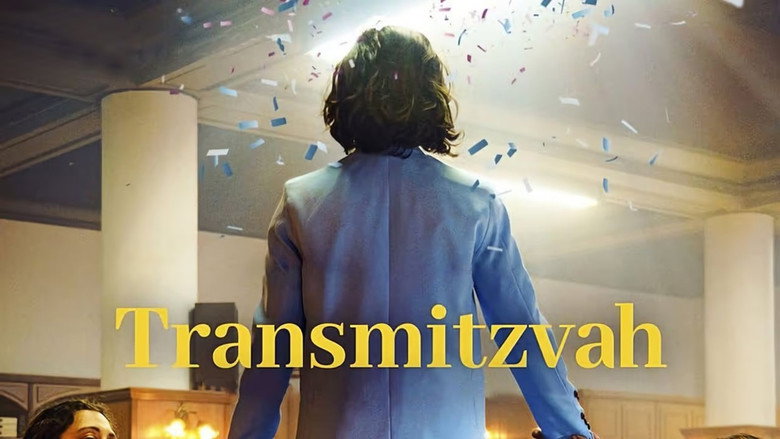
That said, Transmitzvah isn’t without its stumbles. The film’s tonal shifts can feel abrupt, veering from slapstick comedy to quiet introspection without warning. Some of the supporting characters—particularly Mumy’s mother, played by Alejandra Flechner—border on caricature, their big personalities threatening to overshadow the story’s emotional beats.
And while the film’s avoidance of trans trauma is refreshing, there are moments where the narrative feels too light, as if Burman is sidestepping the harder questions in favor of a feel-good resolution.
But then, isn’t that the point? Transmitzvah isn’t interested in hard questions. It’s interested in joy—the kind that comes from reclaiming what was taken from you, not with bitterness, but with a sequined dress and a microphone. As Paula Vázquez Prieto noted in La Nación, Guerrero and Minujín "slickly work as a duo, skillfully balancing the emotion of the reunion with the ironic commentary on the vagaries of destiny".
That balance is the film’s greatest achievement. It’s a story about a woman who refuses to be defined by the past, even as she carries it with her.
In the end, Transmitzvah is a film that trusts its audience. It doesn’t explain itself, doesn’t apologize, doesn’t ask for permission. It just is—a Bat Mitzvah for the soul, where the Torah is swapped for a microphone and the rabbi’s blessing is replaced by the roar of a crowd.
Whether that’s enough for you will depend on what you’re looking for. If you want a film that grapples with the pain of transition, this isn’t it. But if you want a film that celebrates the messy, glorious business of being yourself—well, then pull up a chair.
The party’s just getting started.
"A heartfelt yet uneven family drama with standout performances but a meandering narrative."
The emotional core and lead performances, particularly Penélope Guerrero as a returning Yiddish singer, land strongly. The pacing and loose focus make it drag for some, especially in the middle. The Buenos Aires setting and family themes add depth, but the execution doesn't always match the ambition.
Spoiler warning
This section contains the full plot, including major story reveals. Overview above stays spoiler-free.
Daniel Burman’s latest film, Transmitzvah (2024), is making waves for its bold fusion of Jewish heritage and transgender storytelling. The Netflix dramedy follows Mumy Singer, a famous Yiddish singer played by Penélope Guerrero, as she returns to her childhood neighborhood in Buenos Aires to confront her past and family. latestnetflix.com's take is that but behind the film’s vibrant premise lies a deliberate balancing act—one that Burman has navigated with care.
Burman, known for his explorations of Jewish-Argentine identity in films like El abrazo partido, revisits the Once neighborhood—a historic hub of Buenos Aires’ Jewish community—for Transmitzvah. This time, however, he layers in a fresh narrative: Mumy, born Rubén, is a transgender woman reclaiming her identity while reconnecting with her roots. The film’s title itself is a playful twist on bar mitzvah and bat mitzvah, signaling its themes of tradition and transformation.
The director has described the project as a way to "saldar deudas de la infancia" (settle childhood debts), blending Almodóvar-esque flair with grounded Argentine costumbrismo. Critics note that Burman avoids both solemnity and cheap humor, opting instead for a stylistic labyrinth that mirrors Mumy’s journey.
Burman has been vocal about his approach to representing trans identity in Transmitzvah. While he acknowledges the importance of inclusion, he resists reducing the story to a single issue. "Trans identity needs to be included in cinema, but it must not be the be-all and end-all," he told Buenos Aires Times. Guerrero, a Spanish actress, brings Mumy to life with a performance that reportedly blends pop energy with emotional depth.
The film’s Cannes debut earlier this year sparked conversations about representation, with Burman emphasizing that Transmitzvah is ultimately about family, memory, and the weight of tradition. Netflix’s involvement has amplified its reach, positioning the film as a rare dramedy that centers both Jewish and trans experiences without leaning into stereotypes.
Guerrero leads a cast that includes Argentine heavyweights like Juan Minujín (The Queen of Spain) and Alejandra Flechner (Wild Tales), alongside rising stars Gustavo Bassani and Matías Peccia. The ensemble’s chemistry is reportedly a key strength, with Burman leveraging their comedic and dramatic chops to navigate the film’s tonal shifts.
Rumors suggest that Guerrero’s preparation for the role involved immersive research into Yiddish music and trans narratives, though details remain unconfirmed. What is clear is that the film’s soundtrack—featuring traditional Yiddish tunes reimagined with pop sensibilities—has become a talking point.
In an era where identity-driven stories often face backlash or oversimplification, Transmitzvah carves its own path. Burman’s refusal to treat Mumy’s transness as a punchline or a tragedy sets it apart from more reductive portrayals. Instead, the film treats her journey as one thread in a larger tapestry of family, faith, and self-discovery.
Early reactions suggest the film’s blend of humor, heart, and cultural specificity resonates, though some critics argue its tonal shifts may not land for all audiences. Either way, Transmitzvah is a rare beast: a Netflix dramedy that feels deeply personal, unapologetically Jewish, and refreshingly trans.
Entertainment rumors and trivia aggregated from public reporting. Treat speculation as unverified unless a cited source confirms it.
More titles in the same genres and with the same cast.