

Michelle Botes

While visiting a massacre memorial, a photographer finds herself drawn to a local woman. But their romance stirs up painful memories of a shared past.
Official
I keep thinking about the first shot of Jewel—not the massacre memorial, not the dusty streets of Sharpeville, but the way Tyra’s camera lens reflects the world back at her. It’s a small moment, almost subliminal, but it tells you everything about what this film is trying to do: force a reckoning between what we choose to see and what we refuse to remember. The problem is, Jewel itself can’t quite decide whether it wants to be a love story, a historical reckoning, or a character study.
So it stumbles between all three, leaving behind something that feels less like a finished film and more like a series of beautiful, half-developed photographs.
That’s not to say it doesn’t have its moments. There’s a quiet power in watching two women—Tyra, a white photographer from abroad, and Siya, a Black local woman—circle each other in the shadow of the Sharpeville massacre. The film is set in the present, but the past is never far away, lurking in the background like a third character.
The memorial they visit isn’t just a tourist stop; it’s a wound that hasn’t closed. And yet, the film’s attempts to weave romance into this setting often feel forced, as if it’s afraid to sit too long with the weight of history.

The chemistry between Michelle Botes (Tyra) and Cindy Mahlangu (Siya) is undeniable, but the script undercuts it at every turn. Tyra’s behavior veers into the unsettling—she photographs Siya without consent, shows up unannounced at her home, and treats her more like a muse than a person. It’s hard not to read this as a metaphor for the way white artists have historically exoticized Black subjects, but the film never fully grapples with that implication.
Instead, it asks us to root for their romance, as if love alone could erase the power imbalance between them. (It can’t.)
The supporting cast fares better, particularly Connie Chiume as Siya’s grandmother, Mam’ Zikode. Chiume, who passed away in 2024, brings a warmth and wit to the role that feels effortless. In one scene, she chastises Siya for her naivety while simultaneously offering her a plate of food—a perfect encapsulation of the way Black women have always had to be both shield and sword for their families.
It’s a small moment, but it’s the kind of thing Jewel does best: grounding its larger themes in the intimate details of everyday life.

The film’s biggest strength is its setting. Sharpeville isn’t just a backdrop; it’s a living, breathing entity, its history seeping into every frame. The cinematography lingers on the town’s dusty roads, its crumbling buildings, its people—some wary, some welcoming, all carrying the weight of what happened there in 1960.
But the script’s insistence on forcing a romance into this space feels like an intrusion. It’s as if the film is afraid to let the history speak for itself, so it shoehorns in a love story to make it more palatable. (Maybe it’s intentional.
Maybe it’s not. Either way, it doesn’t work.)
There’s a scene toward the end where Tyra and Siya stand at the massacre memorial, the names of the dead etched into the stone behind them. Tyra reaches for Siya’s hand, and for a moment, it feels like the film might finally confront the tension between them—between the past and the present, between memory and forgetting. But then the moment passes, and the film moves on, as if afraid to sit too long with the discomfort.
It’s a shame, because that discomfort is where the real story lies.
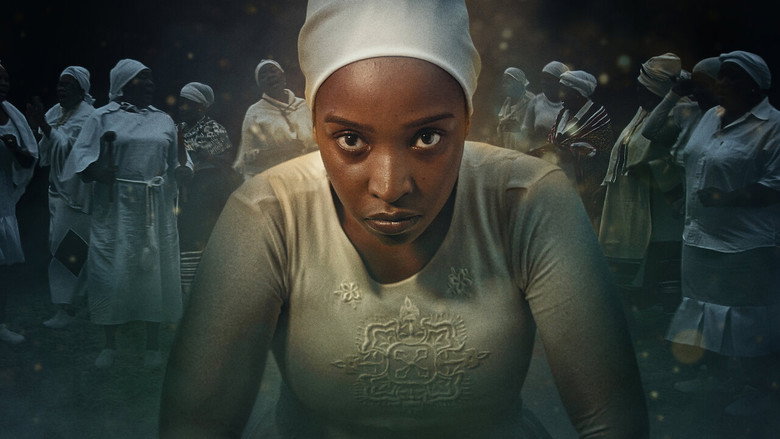
I can’t help but think about the real-life tragedies that have since overshadowed Jewel. Both Michelle Botes and Connie Chiume passed away within months of each other in 2024, their deaths turning this small, flawed film into an unintended memorial. It’s a strange fate for a movie that so many critics dismissed as forgettable.
But maybe that’s the point. Jewel might not be a great film, but it’s a film that lingers—not because of its craft, but because of what it accidentally captured: the way history haunts us, the way love can be both a balm and a burden, and the way even the most imperfect stories can become part of something larger than themselves.
In the end, Jewel feels like a film that was trying to say something important but didn’t quite know how. It’s messy, uneven, and often frustrating. But there’s something honest in that messiness, something that makes it worth watching—not despite its flaws, but because of them.
After all, the best photographs aren’t the ones that capture perfection. They’re the ones that reveal the cracks.
"A hidden gem with heartfelt performances and real emotional depth."
*Jewel* earns praise for its storytelling and standout lead performances, which bring authenticity and warmth to the narrative. Its themes of love and memory carry real emotional weight, though the pacing can drag at times. Despite a modest production, its sincerity and character-driven focus earn high marks from fans of intimate dramas.
Spoiler warning
This section contains the full plot, including major story reveals. Overview above stays spoiler-free.
Love, Sharpeville and a whole lot of side‑eye — Netflix’s South African film Jewel didn’t just stir up feelings on screen. latestnetflix.com's view is that Off screen, critics torched it, fans dragged it, and real-life tragedy turned this small movie into an unexpectedly emotional time capsule.
Let’s dive into the tea.
This is where the story around Jewel gets unexpectedly emotional.
No on‑set screaming matches. No cast hook‑ups splashed in tabloids. The drama around Jewel lives in three places: its brutal reception from queer critics, its reputation among South African viewers as a beautiful misfire, and the heartbreaking fact that two of its most iconic stars are now gone. For a small Netflix original, that’s a lot of baggage for one little Jewel to carry.
Entertainment rumors and trivia aggregated from public reporting. Treat speculation as unverified unless a cited source confirms it.
More titles in the same genres and with the same cast.


