Bonko Khoza
Zuko Khumalo

“One man. One mission. One target.”
A retired assassin is pulled back into action when his friend uncovers a dangerous conspiracy at the heart of the South African government.
Official
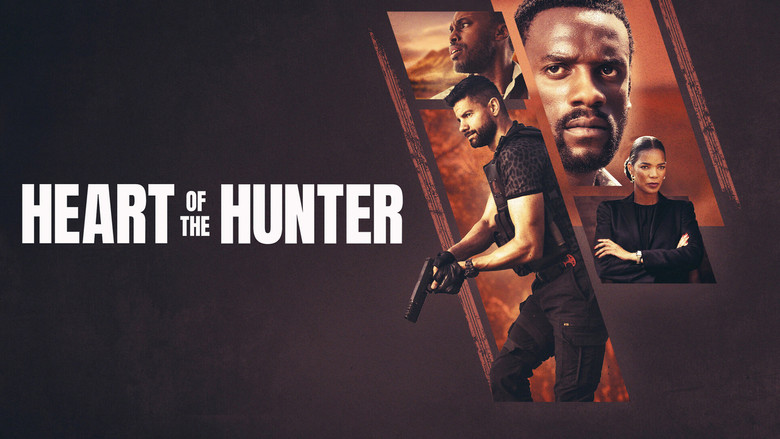
I’ve seen this trick before. A retired assassin, a government conspiracy, a ticking clock—it’s the kind of story that writes itself, or at least that’s what the trailer promises. But Heart of the Hunter isn’t just another Netflix action flick.
It’s a South African film, directed by a South African, based on a South African novel, and shot in the kind of landscapes that don’t often get to play hero in global cinema. That alone makes it worth paying attention to. The question is whether it’s more than just a well-intentioned experiment.
Mandla Dube, the director, has been vocal about his ambitions here. He’s not just making a thriller; he’s trying to decolonize the narrative of what a South African film can be. That’s a heavy lift for a genre that usually defaults to American or European sensibilities.
Dube’s previous work, Silverton Siege, was a historical action-drama that felt like a love letter to the country’s past. Heart of the Hunter is his attempt to claim the present—to prove that South Africa can produce a spy thriller that competes with the best of them, not just in terms of spectacle, but in terms of craft.
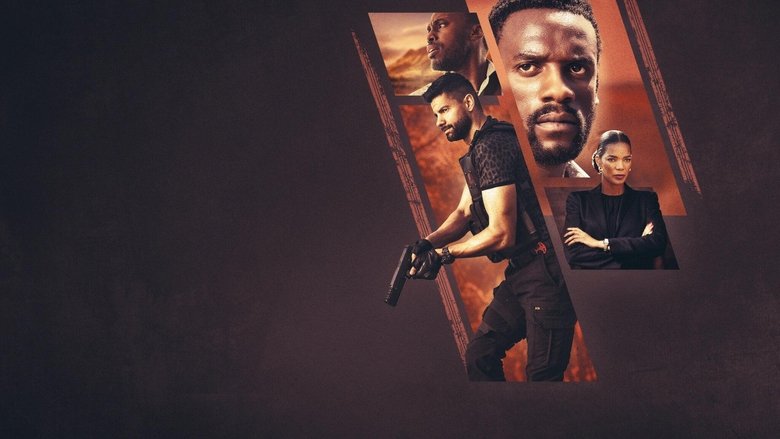
The film’s technical achievements are its strongest suit. Dube went out of his way to source rare Angéneux Optimo Primes lenses from France, specifically to capture African skin tones in a way that feels authentic rather than flattened by Hollywood lighting. It’s a small detail, but it matters.
Too often, films set in Africa are either over-lit to the point of washing out the actors or plunged into shadow for "atmosphere." Here, the cinematography feels deliberate, almost tactile. You can see the texture of the skin, the way the light catches the sweat on Bonko Khoza’s face during a fight scene.
It’s the kind of choice that makes you realize how much you’ve been missing in other films.
The action sequences are where Heart of the Hunter really flexes its muscles. Dube has a background in stunt coordination, and it shows. The car chases are visceral, shot in a way that makes you feel the speed and the danger.
There’s a sequence early in the film where Khoza’s character, Zuko Khumalo, is pursued through the streets of Cape Town. The camera doesn’t just follow the action; it’s right there in the car with him, the world blurring past in a way that feels immediate and real. It’s the kind of scene that makes you grip the edge of your seat, not because it’s flashy, but because it feels earned.
There’s no CGI here, no weightless digital effects. When a car flips, it’s because a real car flipped. When a punch lands, it’s because an actor took it.
But for all its technical prowess, Heart of the Hunter struggles with its own ambition. The plot is a tangled web of government conspiracies, betrayals, and family drama, and it’s not always clear which thread the film wants you to follow. There’s a moment about halfway through where Zuko’s past and present collide in a way that should feel explosive, but instead, it just feels crowded.
Too many characters, too many motivations, too many twists that don’t land with the weight they should. Roger Moore, writing for Movie Nation, put it best: the film "strains to get out of its own way." It’s not that the story is bad; it’s that it’s trying to do too much, and in the process, it loses some of its emotional punch.
That’s not to say the film doesn’t have its moments of quiet power. Dube has a knack for contrasting the high-octane "river" scenes—chases, fights, explosions—with the calmer "pond" moments, where the focus shifts to family, love, and the cost of violence. There’s a scene where Zuko sits with his daughter, teaching her how to shoot a bow and arrow.
It’s a simple moment, but it’s one of the few times the film slows down enough to let you breathe. You can feel the weight of Zuko’s past in the way he holds the bow, the way he looks at his daughter. It’s a small moment, but it’s the kind of thing that lingers.
The performances, too, are a mixed bag. Bonko Khoza is a compelling lead, bringing a quiet intensity to Zuko that makes you believe in his transformation from retired assassin to reluctant hero. But the supporting cast often feels underutilized.
Connie Ferguson, a powerhouse in South African television, is given little to do beyond looking concerned. Masasa Mbangeni and Sisanda Henna, both talented actors, are relegated to roles that feel more like plot devices than fully realized characters. It’s a shame, because when the film does give its actors room to breathe, they shine.
There’s a scene where Zuko confronts an old friend, and the tension between them is palpable. It’s the kind of moment that makes you wish the film had trusted its actors a little more.
The critical reception has been, well, critical. John Serba at Decider praised the film’s "rock-solid technical prowess," while Afrocritik awarded it a scant 1.5 out of 5 stars, calling it "another action thriller that flatters to deceive." It’s a split that feels about right. Heart of the Hunter is a film that knows how to stage a fight scene, but it doesn’t always know how to tell a story.
It’s a shame, because there’s a lot here to admire. The action is thrilling, the cinematography is gorgeous, and Khoza’s performance is worth the price of admission. But the film’s reach exceeds its grasp, and by the time the credits roll, you’re left with the sense that it could have been something more.
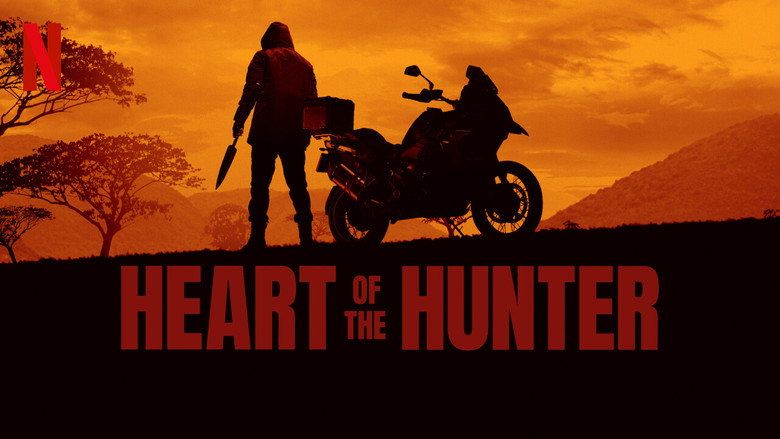
That’s not to say it’s a failure. Far from it. Heart of the Hunter is a film that announces its ambitions loudly and proudly. It wants to be a global spy thriller, a South African cultural milestone, and a showcase for local talent all at once.
It doesn’t quite pull off the hat trick, but it comes close enough to make you sit up and take notice. There’s a moment near the end of the film where Zuko stands on a cliff, looking out over the Karoo, the wind whipping at his coat. It’s a quiet moment, one of the few in the film, and it’s the kind of thing that stays with you.
Not because it’s flashy, but because it feels real.
And maybe that’s the point. Heart of the Hunter is a film that’s trying to do something new, something bold. It doesn’t always succeed, but it’s never boring. It’s the kind of film that makes you want to see what Dube does next, because you can tell he’s got more to say.
For now, though, it’s a flawed but fascinating experiment—a spy thriller that’s as much about the country it comes from as it is about the story it’s telling. And in a world where so many action films feel interchangeable, that’s something worth paying attention to.
Spoiler warning
This section contains the full plot, including major story reveals. Overview above stays spoiler-free.
South African cinema just got a slick, high-stakes upgrade with Heart of the Hunter (2024), the Netflix-bound spy thriller directed by Mandla Dube. Based on Deon Meyer’s 2002 novel of the same name, the film blends family drama with government conspiracies, all wrapped in the kind of action that’s rare for the country’s film industry. latestnetflix.com's take is that but how did this adaptation come together—and why is it already turning heads?
Deon Meyer’s novels are no strangers to adaptation—his books have inspired everything from TV series to international bestsellers. But Heart of the Hunter marks a rare big-screen translation, with Meyer himself co-writing the screenplay alongside Willem Grobler. The film stays true to the novel’s core: Zuko Khumalo (Bonko Khoza), a retired assassin living a quiet life, is dragged back into the shadows when his mentor uncovers a plot threatening South Africa’s stability.
For Dube, adapting Meyer’s work wasn’t just about action—it was about authenticity. In an interview, he emphasized the importance of "photographing African skin tones" in a way that felt natural, avoiding the "over-lighting" that often plagues films set on the continent. That attention to detail extends to the cast, which Dube assembled with precision.
Bonko Khoza, best known for his role in The Queen (South Africa’s long-running TV drama), takes on his first major film lead as Zuko Khumalo. Dube revealed that Khoza’s "raw intensity" was exactly what the role demanded, calling him a "revelation" in the part. But Khoza isn’t alone in carrying the film—Connie Ferguson, a household name in South African entertainment, plays a key role, adding star power to the project.
The supporting cast reads like a who’s who of local talent: Masasa Mbangeni (The River), Nicole Fortuin (Blood & Water), and Sisanda Henna (Knuckle City) round out the ensemble, each bringing their own brand of gravitas to the thriller. With such a stacked lineup, Heart of the Hunter isn’t just a genre piece—it’s a showcase for South Africa’s acting heavyweights.
While the film hasn’t dropped yet, early buzz suggests Heart of the Hunter could be a breakout moment for South African cinema on the global stage. Dube’s direction, Meyer’s source material, and a cast that balances fresh faces with established stars make for a compelling package. And with Netflix’s backing, the film has a built-in audience far beyond South Africa’s borders.
But will it live up to the hype? The trailer teases high-octane chases, political intrigue, and a protagonist torn between family and duty—all the makings of a binge-worthy thriller. If the execution matches the ambition, Heart of the Hunter could be the film that proves South Africa isn’t just a setting for international productions, but a powerhouse in its own right.
For now, fans of Meyer’s novel and spy thrillers alike will have to wait for the full reveal. One thing’s certain: this isn’t just another action movie. It’s a calculated gamble on South African storytelling—and the odds look good.
Entertainment rumors and trivia aggregated from public reporting. Treat speculation as unverified unless a cited source confirms it.
More titles in the same genres and with the same cast.