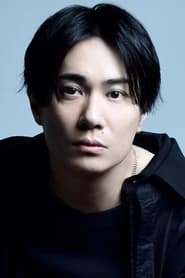
Ayumu Murase
Tristan (voice)

Reunited with Lancelot for the first time since their tragic accident, Tristan must learn to conquer his inner demons in order to save his mother's life.
Official
I’ve seen this trick before. A franchise, long past its prime, splits a single story into two parts—not because the material demands it, but because the algorithm does. The Seven Deadly Sins: Grudge of Edinburgh Part 2 arrives on Netflix like a guest who overstays their welcome, polite but unnecessary. It’s not that the film is bad, exactly.
It’s that it feels like an obligation, a contractual checkbox ticked off with the minimum viable effort. The kind of thing you watch while folding laundry, half your attention elsewhere.
That’s not to say there aren’t moments worth lingering over. The reunion between Tristan and Lancelot, for instance, carries a quiet ache that the rest of the film struggles to match. Tristan, voiced by Ayumu Murase with a tremulous edge, moves like a man carrying a live grenade in his chest.
His demonic powers aren’t just a plot device; they’re a metaphor for grief, for the way trauma clings to you, reshaping your body and voice. When he finally lets Lancelot see the full extent of his corruption—his skin splitting open like overripe fruit, revealing the darkness beneath—it’s the closest the film comes to something raw. Not because the CGI is particularly impressive (it isn’t; the 3D animation here has the stiff, weightless quality of a video game cutscene), but because the moment is felt.
For a second, you forget you’re watching a franchise spin-off and remember you’re watching two people who’ve lost everything trying to trust each other again.
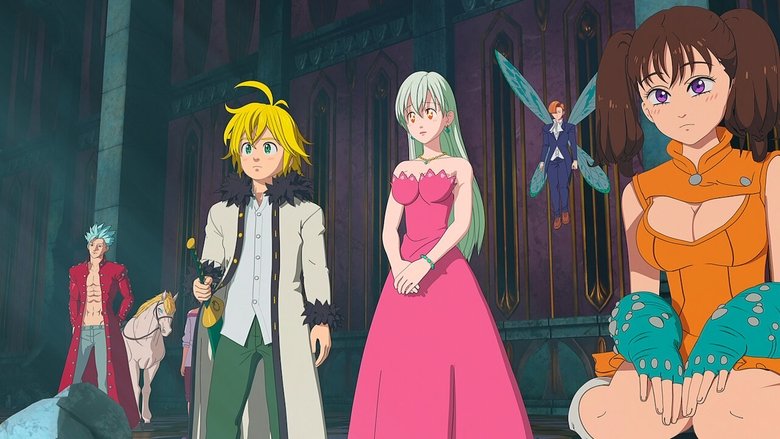
The problem is that the film doesn’t trust its own emotional beats. Instead of letting the silence between Tristan and Lancelot speak, it fills the air with exposition. Every other line feels like a Wikipedia summary of the Seven Deadly Sins lore, as if the writers are terrified the audience won’t keep up.
Brian Costello at Common Sense Media called it "kitchen sink" storytelling, and he’s not wrong. The film throws in every character, every power, every unresolved thread from the main series, as if sheer volume could compensate for depth. There’s a scene where Tristan’s mother, Anna, delivers a monologue about the nature of sin that goes on for so long I found myself wondering if she was trying to hypnotize her son into submission.
(She wasn’t. But I wouldn’t have blamed her if she were.)
The shift to 3D animation is another sticking point. The original Seven Deadly Sins anime had a hand-drawn fluidity, a sense of movement that made the world feel alive. Here, the characters move like they’re navigating an invisible obstacle course, their limbs jerking in ways that suggest the animators were working against the medium rather than with it.
The action sequences fare slightly better—there’s a fight in a collapsing cathedral where the camera lingers on the way the stained glass shatters, the shards catching the light like falling stars—but even these moments feel calculated, as if the film is checking off a list of "things anime fans like" rather than telling a story it actually believes in.
And then there’s the humor. Or, more accurately, the attempt at humor. There’s a scene early on where a character buries his face in his wife’s cleavage, and the film pauses, as if waiting for the audience to erupt in laughter.
When the joke lands with all the grace of a dropped anvil, the film doesn’t seem to notice. It’s the kind of moment that makes you wonder if anyone in the room, at any point, said, "Wait, is this actually funny?" The answer, clearly, was no.
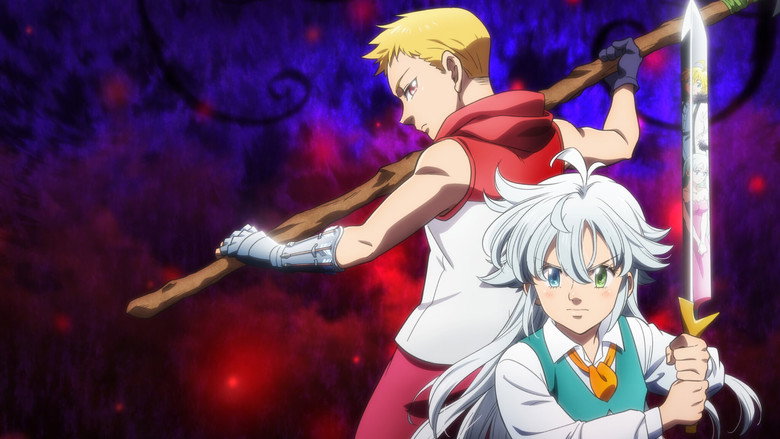
That’s not to say there isn’t craft here. Brittany Vincent at Decider called the film "well-crafted, looks great, and it’s action-packed," and she’s not entirely off the mark. The world-building is lush, even if it’s borrowed wholesale from the manga.
The voice acting, particularly from Murase and Koki Uchiyama (Lancelot), elevates the material, giving it an emotional weight the script often undersells. And there’s a certain pleasure in seeing these characters again, even if it’s like running into an old friend who’s changed in ways you can’t quite put your finger on. The Seven Deadly Sins franchise has always been about found family, about the way people who’ve been broken can still find a way to fit together.
That theme is still here, buried under layers of franchise bloat.
But the film’s biggest sin isn’t its pacing or its animation or even its reliance on exposition. It’s that it doesn’t seem to know what it wants to be. Is it a standalone story?
A bridge between the main series and The Four Knights of the Apocalypse? A cash grab? The answer, frustratingly, is all of the above.
Amanda Guarragi at Ready Steady Cut noted that fans of Part 1 would likely be satisfied, and she’s right—but satisfaction isn’t the same as excitement. This isn’t a film that demands to be seen. It’s a film that exists, and that might be the most damning thing of all.
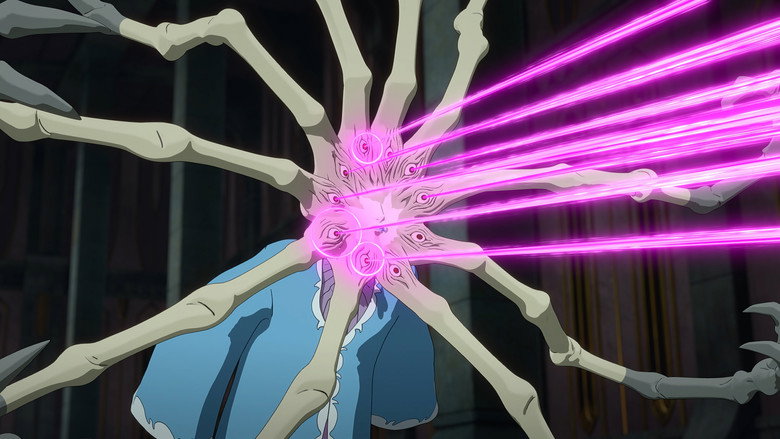
I keep coming back to that moment between Tristan and Lancelot, the one where the film almost works. There’s a shot where Lancelot reaches out, his hand hovering just inches from Tristan’s shoulder, as if he’s afraid to touch him. It’s a small thing, but it’s real.
It’s the kind of detail that reminds you why these characters mattered in the first place. The rest of the film feels like it’s going through the motions, but that moment? That moment is why I can’t write this off entirely.
Maybe that’s the point. Maybe Grudge of Edinburgh Part 2 isn’t meant to be a grand statement. Maybe it’s just a footnote, a way to keep the lights on until the next big thing comes along.
But if that’s the case, it’s a footnote that stumbles over its own feet, tripping into something almost profound before righting itself and marching dutifully toward the credits. I won’t pretend it’s a must-watch. But I also won’t pretend I didn’t feel something when Tristan finally let himself be seen.
Even if the film around him didn’t know what to do with that.
Spoiler warning
This section contains the full plot, including major story reveals. Overview above stays spoiler-free.
The Seven Deadly Sins: Grudge of Edinburgh Part 2 (2023) wraps up the two-part animated spin-off from the beloved manga series, delivering high-stakes fantasy action and emotional depth. Directed by Bob Shirahata, with Noriyuki Abe as chief director, the film reunites fans with Tristan and Lancelot as they confront inner demons and a looming supernatural threat. latestnetflix.com's read is that but what went into bringing this Netflix-exclusive finale to life?
The film’s creative leadership is a notable talking point. While Bob Shirahata is credited as the director, Noriyuki Abe—known for his work on Bleach and Yu Yu Hakusho—served as chief director. This dual-director setup suggests a collaborative approach, blending Shirahata’s vision with Abe’s experience in long-running anime franchises. The exact division of labor isn’t detailed in the available evidence, but the pairing hints at a deliberate effort to balance fresh storytelling with the series’ established tone.
The voice cast for Part 2 remains consistent with the first installment, featuring Ayumu Murase as Tristan and Koki Uchiyama as Lancelot. The film’s central conflict—Tristan’s struggle to overcome his inner demons to save his mother—drives the narrative, with the reunion between Tristan and Lancelot serving as a pivotal emotional beat. Other key cast members include:
The ensemble’s chemistry is a cornerstone of the film’s appeal, though the evidence doesn’t reveal whether the cast recorded together or if pandemic-era remote sessions were involved.
Unlike the original Seven Deadly Sins anime, which aired on TV, Grudge of Edinburgh was produced exclusively for Netflix. This shift to streaming likely influenced the film’s pacing and structure, with the two-part format allowing for a tighter, more cinematic narrative. The platform’s global reach also ensured the spin-off could cater to international fans without the constraints of traditional broadcast schedules.
Despite the film’s release, some behind-the-scenes details remain unclear:
The Seven Deadly Sins: Grudge of Edinburgh Part 2 delivers a satisfying, if bittersweet, conclusion to its story, but its behind-the-scenes details are surprisingly sparse. The dual-director approach and Netflix’s involvement suggest a modern, streamlined production, though fans may be left craving more insider insights. For now, the film shows the franchise’s enduring appeal—even if its creative process remains largely behind closed doors.
Entertainment rumors and trivia aggregated from public reporting. Treat speculation as unverified unless a cited source confirms it.
More titles in the same genres and with the same cast.