Mutsumi Tamura
Kosuke Kumagaya (voice)

“What is the secret hidden in the apartment complex?”
One fateful summer, a group of elementary school kids set adrift on an abandoned apartment building must look within themselves to find a way back home.
Official
I keep thinking about the way the rain falls in Drifting Home—not as a backdrop, but as something alive, almost sentient. It pools on the rooftops of the drifting apartment complex, collects in the cracks of the concrete, and then, in one quiet moment, it seems to listen. That’s the first clue that this isn’t just a story about kids lost at sea.
It’s about the places we carry inside us, the ones that refuse to stay still.
Hiroyasu Ishida’s film arrives like a ghost story told in broad daylight. There’s no villain, no grand quest, just a group of children adrift on an abandoned apartment building after a storm, their only company the echoes of the lives that once filled the empty rooms. The premise sounds like a setup for a survival thriller, but Drifting Home is something stranger and more delicate: a meditation on memory, displacement, and the quiet terror of growing up.
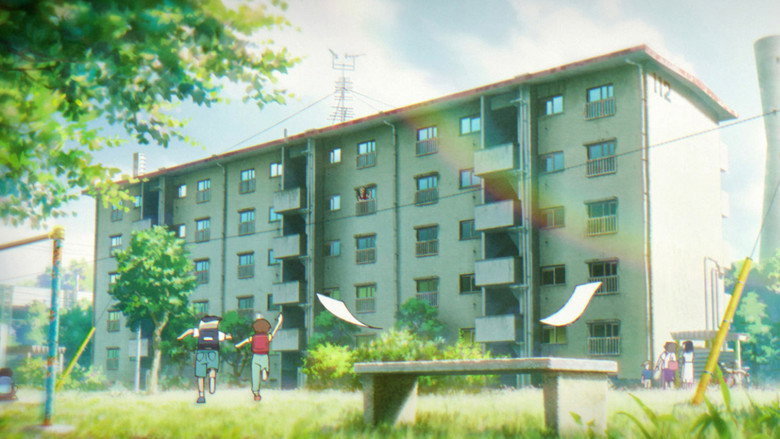
The apartment complex itself is the real character here—a hulking, decaying relic that floats somewhere between reality and dream, its walls holding secrets the kids aren’t sure they want to uncover.
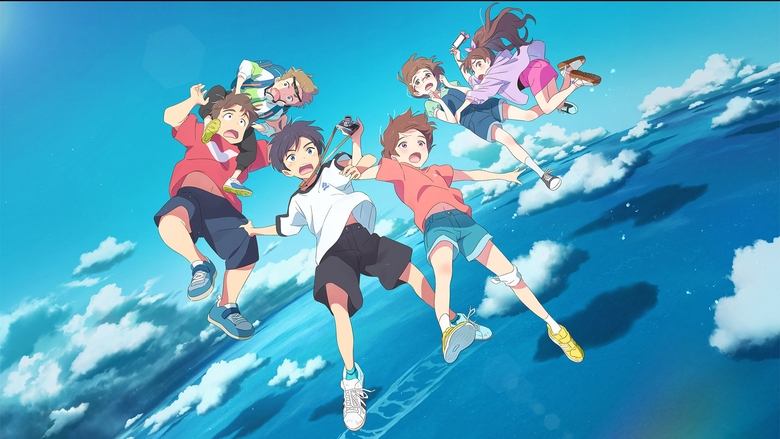
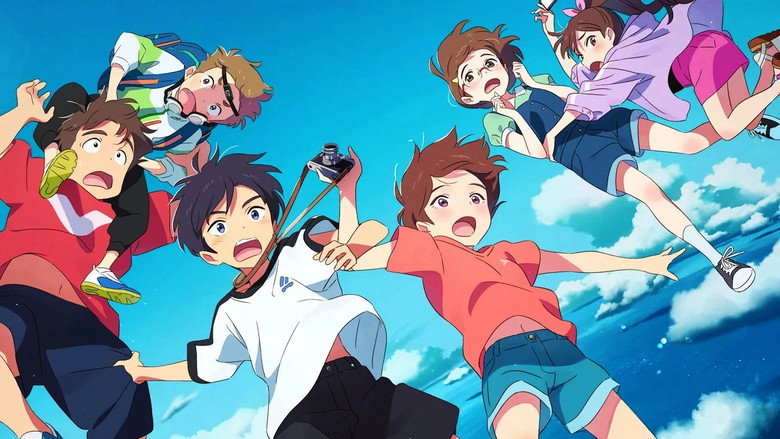
The film’s greatest strength is its refusal to rush. Ishida, who also directed Penguin Highway, has a knack for letting silence do the work. The kids—Kosuke, Natsume, and their friends—bicker, explore, and gradually unravel the mystery of why this particular building won’t let them go.
But the real tension isn’t in the plot; it’s in the way the camera lingers on small, almost mundane details: a child’s hand brushing against a peeling wall, the way sunlight slants through a broken window, the sound of waves lapping against concrete. These moments feel like memories, half-remembered and slightly out of focus. (I found myself leaning forward in my seat, not because I was on the edge of my seat, but because I was trying to hear the silence.)
What’s fascinating is how Drifting Home blends the ordinary with the uncanny. The apartment complex isn’t just abandoned—it’s alive in some indefinable way. Doors that weren’t there before appear in the middle of the night.
The kids hear voices when no one is around. The building seems to shift when they’re not looking. It’s not horror, exactly, but something closer to magical realism, the kind where the supernatural feels like a natural extension of childhood imagination.
The film never explains these moments, and that’s the point. The mystery isn’t meant to be solved; it’s meant to be felt.
The voice cast, which includes some of Japan’s most recognizable anime actors (Kana Hanazawa, Inori Minase), brings a warmth and authenticity to the children’s voices. There’s no over-the-top theatrics here—just kids being kids, with all the awkwardness, bravery, and vulnerability that entails. The standout is Mutsumi Tamura as Kosuke, the de facto leader of the group.
His performance is understated but deeply affecting, especially in the moments when he’s forced to confront his own fears. (I kept thinking about how rare it is to see a child protagonist who isn’t defined by precociousness or cynicism. Kosuke is just a kid, trying to hold it together when the world stops making sense.)
If the film has a flaw, it’s that it occasionally struggles to balance its two halves: the grounded, slice-of-life moments and the more fantastical elements. There are times when the supernatural intrudes a little too abruptly, pulling you out of the quiet intimacy the film works so hard to establish. But these moments are rare, and they’re forgivable because the film’s heart is in the right place. Drifting Home isn’t interested in cheap thrills or easy answers.
It’s about the way places shape us, even after we’ve left them behind.
The ending, when it comes, is bittersweet in the way only the best coming-of-age stories can be. Without giving anything away, it’s the kind of ending that lingers—not because it’s shocking, but because it feels true. The kids return home, but they’re not the same. Neither is the apartment complex. Neither are we.
I’ve seen a lot of films about childhood, but few have captured the way memory clings to us like Drifting Home does. It’s a film that understands something fundamental about growing up: that the places we leave behind never really leave us. They drift, just out of reach, waiting for us to remember.
And maybe, if we’re lucky, we’ll find our way back.
"A heartfelt, visually charming adventure with real emotional pull but shaky pacing and storytelling depth."
The emotional core and beautiful animation bring warmth to this story of childhood friendship and survival. But the plot is predictable and the character development uneven, with some arcs underdeveloped or rushed.
Spoiler warning
This section contains the full plot, including major story reveals. Overview above stays spoiler-free.
Netflix’s Drifting Home (2022) is an animated film that blends childhood nostalgia with surreal disaster, following a group of kids trapped on a floating apartment complex after a mysterious storm. Directed by Hiroyasu Ishida (per French review site SensCritique), the movie leans into themes of abandonment, grief, and the awkward transition from childhood to adolescence. latestnetflix.com's take is that but beyond its emotional core, the film’s production and reception reveal a few behind-the-scenes quirks—and some lingering questions.
The film’s Japanese voice cast reads like a who’s-who of anime talent. Mutsumi Tamura (Attack on Titan) and Asami Seto (Rent-A-Girlfriend) lead as the central duo, Kosuke and Natsume, while Daiki Yamashita (My Hero Academia) and Inori Minase (Weathering With You) round out the ensemble. The casting suggests Netflix’s investment in A-list talent for its original anime projects, though details about recording sessions or behind-the-scenes chemistry remain scarce.
Notably, Kana Hanazawa (Re:Zero) and Nana Mizuki (Naruto) also lend their voices, adding star power to what could’ve been a smaller-scale production. Whether their roles were cameos or substantial remains unclear—no snippets confirm their screen time or character arcs.
Hiroyasu Ishida’s involvement is one of the few confirmed production details. The director, best known for Penguin Highway (2018), brings a similar blend of whimsy and melancholy to Drifting Home. However, unlike Penguin Highway—which had a high-profile novel adaptation—Ishida’s latest seems to have flown under the radar during production. No interviews, set photos, or studio diaries have surfaced in the provided evidence, leaving fans to speculate about the creative process.
The film’s runtime (119 minutes) and genre mix (animation, adventure, drama, and fantasy) suggest a deliberate pacing, though reviews are divided on whether it lands. SensCritique’s 6/10 rating (from 813 votes) hints at a lukewarm reception, but the lack of broader critical consensus makes it hard to gauge its impact.
Drifting Home arrived during Netflix’s aggressive push into anime, a strategy that’s yielded hits (Castlevania, Cyberpunk: Edgerunners) and misses (Bubble). The film’s trailer teases a high-stakes survival story, but whether it found an audience remains unconfirmed. No box office numbers, streaming metrics, or awards buzz appear in the evidence, leaving its cultural footprint unclear.
One YouTube review calls it a "surreal anime about leaving home," praising its visuals but critiquing its emotional payoff. Another highlights the film’s dreamlike tone, comparing it to Studio Ghibli’s The Secret World of Arrietty. Yet without official statements or deeper analysis, Drifting Home feels like a quiet experiment—one that might’ve resonated more with a stronger marketing push.
For now, Drifting Home remains a curious footnote in Netflix’s anime library—an ambitious but under-discussed film that might’ve been overshadowed by bigger titles.
Entertainment rumors and trivia aggregated from public reporting. Treat speculation as unverified unless a cited source confirms it.
More titles in the same genres and with the same cast.