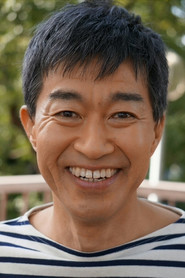
Hiroshi Kamiya
Medicine Seller (voice)

“Unforgivable.”
The Medicine Seller returns as the Edo harem faces a new crisis, with family feuds, inner turmoil and fiery envy igniting the birth of a raging spirit.
Official
I’ve always thought of Mononoke as a series that doesn’t just tell ghost stories; it is one, lingering half-remembered in the corners of your mind long after the screen goes dark. Mononoke the Movie: Chapter II – The Ashes of Rage (2025) deepens that tradition, trading the rain-soaked melancholy of its predecessor for something more volatile: fire. Not the cleansing kind, but the kind that leaves only ash and the acrid taste of regret.
The shift to the Ooku, the shogun’s harem, is a masterstroke of setting. Here the horror is systemic as well as supernatural. The harem is a gilded cage where women are both revered and reviled, their agency balanced on the edge of a blade.
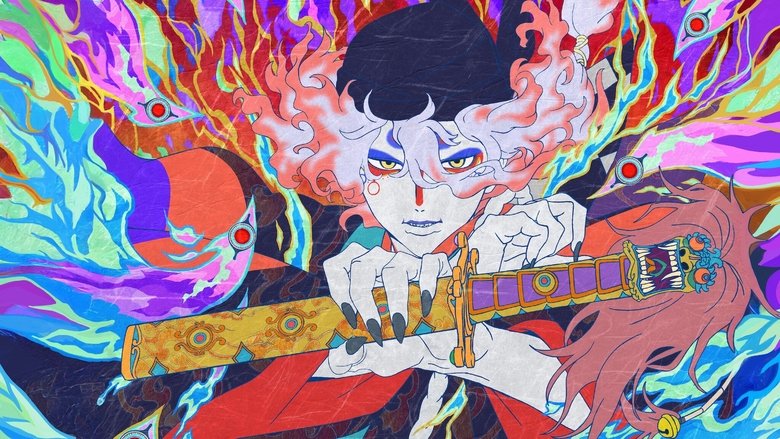
The Medicine Seller (Hiroshi Kamiya, his voice a blade wrapped in silk) moves through this world like a shadow, both comfort and threat. He’s not here to save anyone. He’s here to exorcise the mononoke, the vengeful spirits born from human suffering, and in doing so he forces the living to confront the rot beneath their polished surfaces.
The first film, Phantom in the Rain, was a mood piece, its non-linear editing and dreamlike pacing mirroring the disorientation of grief. The Ashes of Rage is more grounded and procedural, but no less haunting. The mystery unfolds like a puzzle box, each revelation peeling back another layer of deceit, jealousy, and betrayal. The fire motif is structural as well as thematic: the film burns slowly until a climax both inevitable and devastating.
The rage isn’t only the spirit’s; it’s the rage of the women trapped in the harem, a slow-burning fuse that finally ignites.

The film refuses to let its characters, or its audience, off the hook. The Medicine Seller exposes the truth, but the truth isn’t cathartic; it’s a mirror reflecting something ugly. The film’s exploration of the "fallacy of composition," the idea that what’s good for the individual is often disastrous for the group, is visceral rather than intellectual.
You feel it as the camera lingers on the women’s faces, shifting from hope to resignation to something darker. Yoko Hikasa’s Fuki Tokita is particularly heartbreaking, a study in quiet desperation. When she reaches for a teacup, fingers trembling slightly, it’s all there: the weight of expectation, the fear of failure, the exhaustion of being both weapon and pawn.
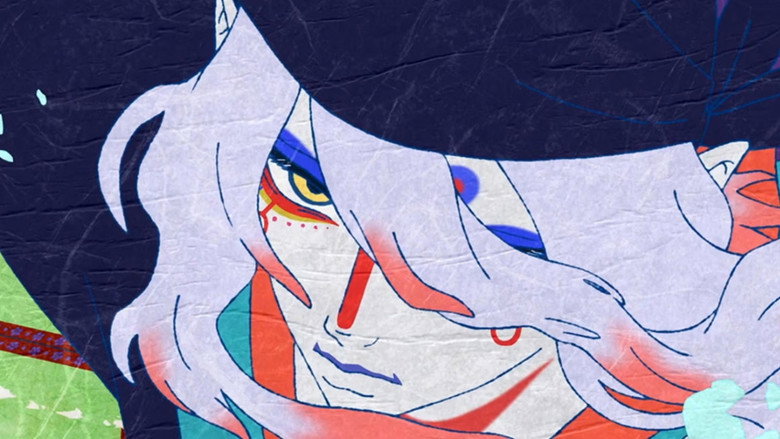
The animation, as always, is stunning. Mononoke has never been about realism but about capturing emotion through exaggerated, theatrical visuals. The ukiyo-e influences are more pronounced here, the colors richer, the lines sharper. The flames are rendered in bold, almost abstract strokes that make them feel alive, a character consuming everything in its path.
The sound design is equally fine: the crackling of fire, the distant hum of voices, the sudden silence before a revelation.
The film has flaws. The pacing, improved from the first film, still stumbles. A subplot involving a young servant feels underdeveloped, its payoff rushed.
The linear structure is a welcome change but occasionally sacrifices the dreamlike ambiguity that made the original series so compelling, and some political exposition feels heavy-handed, as if the film fears its audience won’t keep up.
These are minor quibbles in a deeply satisfying sequel. Polygon’s Aimee Hart called it "one of the most haunting pieces of media" she watched in 2025, and I’m inclined to agree. What lingers is the sadness. The film understands that the most terrifying monsters are the ones we create ourselves and feed with our silence, our complicity, our rage.
The Ashes of Rage ends in uneasy resolution. The fire has burned out, but the embers remain. The Medicine Seller moves on, as he always does, leaving a world slightly more broken than he found it, and the question the film refuses to answer: Is it better to know the truth, even if it destroys you?
It’s not a story about redemption. It’s about survival, and its cost.
"A visually striking and atmospheric sequel that deepens the mystery but struggles to match the original's emotional punch."
The haunting animation and eerie fantasy world are immersive, and the artistry is breathtaking. The pacing drags in places, though, and the emotional core is weaker than in the first chapter, leaving a few key moments underdeveloped.
Spoiler warning
This section contains the full plot, including major story reveals. Overview above stays spoiler-free.
The Mononoke anime franchise is back—and this time, it’s burning with fury. Mononoke the Movie: Chapter II – The Ashes of Rage (2025) marks the second installment in a planned trilogy of feature films, bringing the eerie, supernatural world of the Medicine Seller to the big screen once again. latestnetflix.com's read is that Directed by Kenji Nakamura and Kiyotaka Suzuki, the film promises to deepen the psychological horror and stylish animation that made the original Mononoke series a cult favorite.
Unlike the first film, The Phantom in the Rain, which unfolded in a rain-soaked, atmospheric Edo-period Japan, The Ashes of Rage shifts its focus to the claustrophobic, politically charged world of the Ooku—the inner chambers of the shogun’s harem. The Medicine Seller (voiced by Hiroshi Kamiya) reappears in this volatile environment, where family conflicts, jealousy, and simmering resentment ignite the birth of a violent spirit. The Netflix synopsis teases a crisis within the harem, suggesting that the film will explore themes of power, betrayal, and the destructive nature of human emotion.
The original Mononoke series (2007) was known for its anthology-style storytelling, with each arc presenting a new supernatural mystery. This film, however, appears to be a direct continuation, picking up where The Phantom in the Rain left off. The shift to the Ooku setting—a historically significant and often secretive space—hints at a more intimate, character-driven horror experience.
The film reunites much of the original Mononoke cast, with Hiroshi Kamiya reprising his role as the enigmatic Medicine Seller. Other returning voices include Cho, Yoko Hikasa, and Kenyu Horiuchi, alongside newcomers like Haruka Tomatsu and Tomoyo Kurosawa. The ensemble suggests a mix of familiar and fresh dynamics, with the harem’s internal strife likely providing ample material for dramatic tension.
Kenji Nakamura, who directed the original Mononoke series, returns as chief director, while Kiyotaka Suzuki (Dorohedoro, Land of the Lustrous) co-directs. The script is penned by Yasumi Atarashi, a writer known for his work on dark, psychological narratives. This team’s involvement signals a commitment to preserving the series’ signature blend of horror, folklore, and striking visuals.
The Ashes of Rage is described as a "supernatural psychological horror" film, a label that aligns with the franchise’s reputation for unsettling storytelling. The title itself—Hinezumi (灰鼠, "ashen mouse") in Japanese—hints at a spirit born from smoldering rage, a theme that fits the Mononoke tradition of exploring the darker sides of human nature.
The film’s animation style is expected to stay true to the original series’ distinctive aesthetic: bold, angular character designs, expressive use of color, and a mix of traditional and digital techniques. Given the Ooku setting, the visuals may also incorporate more intricate period details, contrasting the opulence of the harem with the creeping horror of the supernatural.
As the second chapter in a planned trilogy, The Ashes of Rage will likely leave some threads unresolved, setting the stage for a final installment. Fans can expect a story that balances standalone scares with deeper lore, all while maintaining the series’ signature ambiguity and moral complexity.
The film is set for a 2025 release, though an exact date hasn’t been confirmed. Netflix has already listed it as an upcoming title, suggesting a global streaming debut. Early buzz is limited, but given the original series’ dedicated fanbase, anticipation is building for a return to the world of the Medicine Seller.
For now, details about the film’s production—behind-the-scenes challenges, creative decisions, or even the full extent of the cast’s involvement—remain scarce. What is clear is that The Ashes of Rage aims to deliver the same haunting, visually stunning experience that defined Mononoke, while pushing the story into darker, more personal territory.
Entertainment rumors and trivia aggregated from public reporting. Treat speculation as unverified unless a cited source confirms it.
More titles in the same genres and with the same cast.