Brie Larson
Kit

“Everyone needs a little magic. Even if they're all grown up.”
A woman named Kit moves back to her parent's house, where she receives a mysterious invitation that would fulfill her childhood dreams.
Official
I went in expecting twee. Instagram adulthood. A fable that would either charm me stupid or make me roll my eyes until something tore.
Brie Larson's first film as director is messier than that, and better for the mess. Unicorn Store does not know what it wants to be. That uncertainty is the movie. It will not obey indie-quirk rules or mainstream-comedy rules.
Plenty of people hate it for that. I keep coming back to the stubbornness.
Kit, played by Larson, is a struggling artist in her 30s who moves back in with her parents after corporate life does not take. Then a letter arrives. She can adopt a unicorn.
The film treats that invitation with the deadpan of a Mad Men pitch meeting. Larson never winks. She does not undercut the absurdity.
Depending on your patience for whimsy without irony, that is either brave or foolish. I am closer to brave.
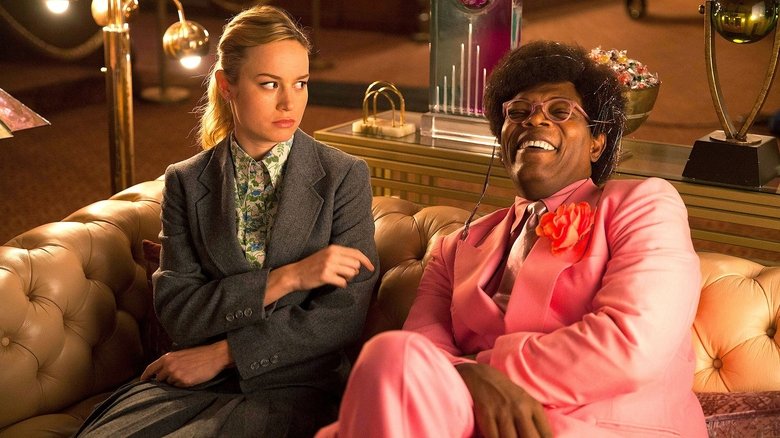
Tone is the problem and the point. The film wants comedy, drama, and fantasy in the same hour, and it drops a ball more than once. Humor goes broad and cartoonish, Napoleon Dynamite colliding with Parks and Recreation.
Then an emotional beat plays straight, even when it gets maudlin. Kit screams into a pillow and the cut wants a laugh. Two seconds later she is quiet and raw, and you are not sure which face you should be wearing.
The whiplash is not always successful. It is almost never boring. Almost.
The love-interest thread with Virgil, played by Mamoudou Athie, feels lifted from a flatter movie.
Larson's performance holds the thing together. Kit is endearing and exasperating in the same scene, still figuring herself out while everyone else tells her to grow up. Early on she puts on a frilly pink dress and dances around her parents' living room to the Go-Go's "We Got the Beat."
I rooted for her. She is unapologetically herself, even when that self is a little wrecked. Larson also lets the cracks show, the doubt that the dream is worth the rent.
Tricky balance. She lands it more often than she misses.
The supporting cast is uneven. Samuel L. Jackson steals every scene as The Salesman, the man who offers Kit the unicorn.
He plays it with a twinkle, as if he already knows the joke and is waiting for the rest of us. His scenes with Larson have play in them. I wanted more of him.
Joan Cusack, as Kit's mother, is similarly underfed, though the warmth she brings steadies the surreal stuff.
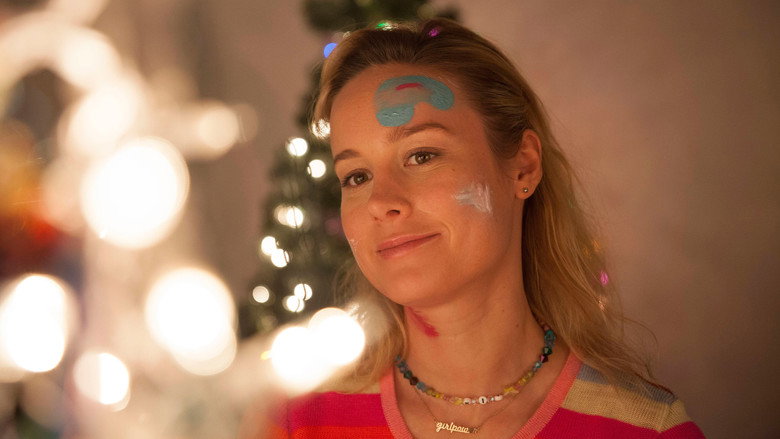
The look is the strongest argument the movie makes. Soft pinks, blues, yellows, as if the whole thing were shot through a filter you would have used in 2017. Nostalgia as a color decision.
Childhood versus the adult demand to get serious. When the unicorn finally appears, it is a glittering wreck, a creature a kid might design after discovering the color wheel. Ridiculous.
Also a little magical, in the way only something deeply silly can be.
That is Unicorn Store for me. It owns its ridiculousness, even when the ridiculousness does not work. Not a perfect movie.
A movie with a voice, willing to take risks that do not always pay. Mixed-to-negative notices called it overly quirky or tonally confused. YouTube, especially, decided it was a film everyone hates, a "Netflix oopsie."
I am not so sure. For all the lumps, the thing is alive. A weird, heartfelt, occasionally messy argument that growing up does not have to mean giving up on magic.
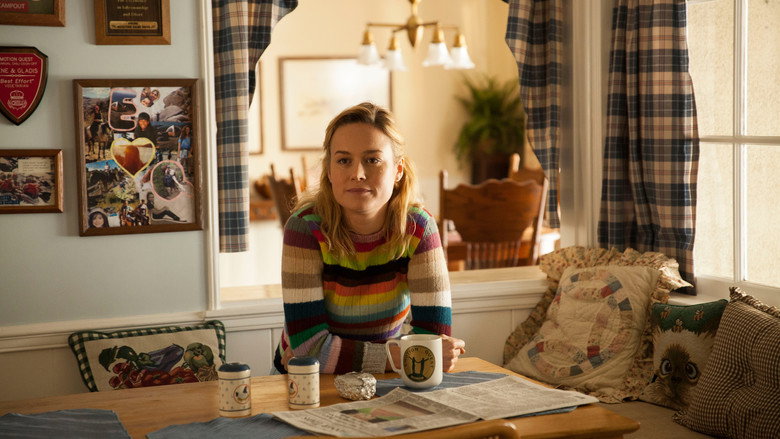
Maybe that is why it splits people. Adulthood, in a lot of current movies, equals cynicism. This one keeps a door open for wonder while the world keeps telling Kit to get real.
Radical and naive in the same breath. That tension is what I liked. It is not a movie for everyone.
It might not be a movie for most people. It still deserves a look, if only for the way it refuses to play safe.
I do not know if Unicorn Store will find an audience, or if it will sit as a footnote in Larson's career. I do know I have not stopped thinking about it since I watched it. Perfection was never the offer. A mess with a unicorn in it was. Sometimes that is enough.
"A whimsical but uneven comedy whose quirky premise charms some and whose lack of depth frustrates others."
Offbeat humor and Brie Larson’s earnest performance anchor the fantastical premise. The story is too thin and the tone inconsistent, so it ends up more a missed opportunity than a fully realized comedy.
Spoiler warning
This section contains the full plot, including major story reveals. Overview above stays spoiler-free.
Brie Larson’s Unicorn Store (2017) is a film that defies easy categorization—part quirky comedy, part surreal fantasy, and entirely a passion project for the Oscar-winning actress-turned-director. Larson not only stars as Kit, a struggling artist who receives a mysterious invitation to adopt a unicorn, but also makes her directorial debut with the film. latestnetflix.com's read is that the result is a divisive, candy-colored oddity that has sparked conversations about artistic ambition, Netflix’s role in indie cinema, and Larson’s own creative risks.
Larson’s journey to directing Unicorn Store wasn’t a sudden leap but a deliberate evolution. The script, written by Samantha McIntyre, had been floating around Hollywood for years before Larson attached herself—not just as an actress but as a champion of the project. In interviews, Larson has described the film as deeply personal, reflecting her own struggles with adulthood and the pressure to conform. She even called it "inspiring" during its premiere at the Toronto International Film Festival (TIFF) in 2017, framing it as a story about embracing one’s inner weirdness.
The film’s production wasn’t without challenges. Larson has recounted the experience of directing her first feature in a lighthearted but candid "storytime" video, where she joked about the chaos of balancing acting and directing—including moments of self-doubt and the sheer exhaustion of wearing both hats. Yet, her enthusiasm for the material is palpable. In a separate interview, she emphasized the importance of creating a supportive set environment, particularly for women in film, and described Unicorn Store as a project that allowed her to explore vulnerability in storytelling.
Unicorn Store was originally set for a theatrical release, but after struggling to find a distributor willing to take a risk on its unconventional tone, Netflix acquired the rights. The streaming giant positioned it as a quirky, feel-good comedy, but the reception was far from unanimous. Some critics and audiences found the film’s whimsy grating, with one YouTube commentary bluntly titled "Everyone Hates Unicorn Store - Brie Larson and Netflix Did An Oopsie". The film’s mixed reviews—including a modest 5.5/10 rating on SensCritique based on over 2,000 votes—highlighted the divide between those who embraced its offbeat charm and those who dismissed it as self-indulgent.
Larson, however, has stood by the film’s vision. In her TIFF interview, she framed Unicorn Store as a necessary counterpoint to the cynicism of modern storytelling, arguing that it was "important to have a movie that is about joy and wonder". Whether or not audiences agreed, the film’s existence on Netflix ensured it found an audience—even if that audience was niche.
Larson assembled a talented ensemble to bring Unicorn Store’s bizarre world to life. Samuel L. Jackson plays the enigmatic "Salesman," a role that leans into his signature charisma while subverting expectations. Joan Cusack delivers her usual sharp, deadpan humor as Kit’s mother, while Bradley Whitford and Mamoudou Athie round out the supporting cast with their own brand of offbeat energy.
The chemistry among the cast is one of the film’s strengths, particularly in scenes where the absurdity of the premise collides with grounded, relatable emotions. Larson’s real-life friendship with some of her co-stars (including Athie) reportedly contributed to the film’s warm, collaborative atmosphere. Still, the film’s tone—oscillating between childlike wonder and existential dread—proved polarizing, with some viewers finding it too saccharine and others praising its bold refusal to conform.
Nearly seven years after its release, Unicorn Store remains a curiosity. It’s not a film that dominates conversations about Larson’s career, nor is it a mainstream success. Yet, it has carved out a small but devoted following, particularly among fans of offbeat indie cinema. The film’s trailer, which leans heavily into its surreal, pastel-drenched aesthetic, has racked up millions of views on YouTube, suggesting that its visual style resonates even if the narrative doesn’t.
For Larson, Unicorn Store was a stepping stone. She has since directed other projects, including the 2019 drama The Messengers and episodes of Lessons in Chemistry, but Unicorn Store remains her most personal directorial effort to date. Whether it’s remembered as a misfire or a hidden gem may depend on who you ask—but it’s undeniably a sign of Larson’s willingness to take creative risks, even when the odds (and the unicorns) are stacked against her.
Entertainment rumors and trivia aggregated from public reporting. Treat speculation as unverified unless a cited source confirms it.
More titles in the same genres and with the same cast.