Isabela Merced
Julie

“Let love take you by storm.”
In a small town on Christmas Eve, a snowstorm brings together a group of young people. They soon find their friendships and love lives colliding, and come Christmas morning, nothing will be the same.
Official
I’ve always had a soft spot for holiday movies that treat snow as more than just set dressing—films where the weather isn’t just pretty, but a force that shakes things loose. Let It Snow, Netflix’s 2019 adaptation of the YA anthology novel, tries to bottle that magic, but it’s a film that works in fits and starts, like a car engine sputtering to life in the cold. It’s warm where it counts, though, and sometimes that’s enough.
The premise is simple: a snowstorm traps a handful of high school seniors in a small Illinois town on Christmas Eve, their lives colliding in ways that feel both inevitable and just a little too neat. There’s Julie (Isabela Merced), the overachiever who’s spent so long planning her future that she’s forgotten to live in the present; Stuart (Shameik Moore), the pop star who’s tired of performing and just wants to be seen; Dorrie (Liv Hewson), the closeted barista navigating her first real crush; and Tobin (Mitchell Hope), the sweet but clueless guy who’s been friend-zoned by his best friend, Angie (Kiernan Shipka). Their stories unfold in overlapping vignettes, all converging at the local Waffle Town, a diner that becomes the film’s emotional hub.
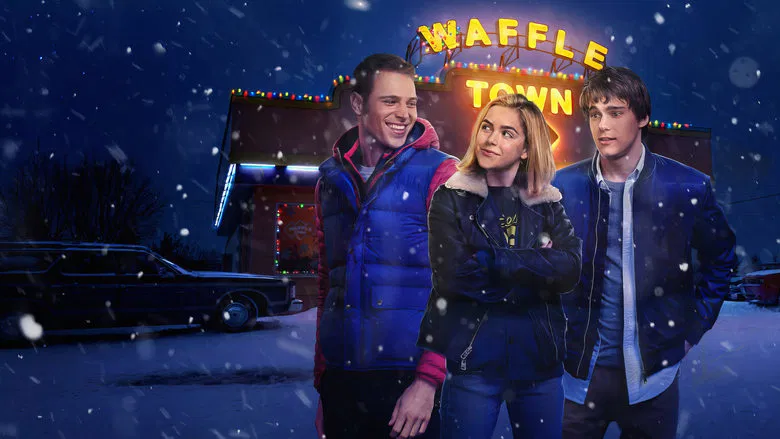
The structure is borrowed from Love Actually—a comparison the film can’t escape, and one that doesn’t do it any favors. Where Richard Curtis’s film feels like a series of interconnected short stories, Let It Snow often feels like a collection of subplots vying for attention. Some work better than others.
The most compelling thread belongs to Dorrie and Kerry (Anna Akana), whose tentative, awkward flirtation is the film’s most honest portrayal of young love. Hewson and Akana have a quiet chemistry that makes you wish the film had given them more room to breathe. Instead, their story is shoehorned into the same rushed, tidy resolution as the others.
That’s the film’s biggest flaw: it’s in such a hurry to tie everything up with a bow that it never lets its characters sit in their mess. The snowstorm, which should be the catalyst for real change, often feels like a narrative convenience rather than a transformative force. (The Los Angeles Times put it best: Let It Snow has "baseline appeal" but often feels like "background content for holiday chores.") The film’s visuals lean into the coziness of the season—warm lighting, soft focus, the kind of cinematography that makes you want to curl up under a blanket—but the storm itself is little more than a plot device.
There’s no sense of danger or disruption, just a gentle inconvenience that magically resolves by morning.
And then there’s Joan Cusack’s Tin Foil Woman, a character so bizarre she feels like she wandered in from another movie entirely. She’s a local eccentric who lives in a house wrapped in aluminum foil, dispensing cryptic advice to the teens like a holiday-themed oracle. The film never bothers to explain her, and that’s probably for the best—any attempt to rationalize her would only make her weirder.
But her presence is so jarring that it pulls you out of the story every time she appears. (NME wasn’t wrong when they called the film "vapid, soulless sludge," though I’d argue Cusack’s character is the one thing in it with any soul.)

Still, for all its flaws, Let It Snow has moments that work. The cast is charming, even when the script isn’t. Merced and Moore have a sweet, understated chemistry, and their scenes together feel like the heart of the film.
There’s a quiet moment where Stuart, the pop star, sits at a piano in Julie’s house and plays an original song for her. It’s a small gesture, but Moore sells it—you can see the vulnerability in his eyes, the way he’s putting himself out there in a way he never does on stage. It’s the kind of scene that reminds you why these stories endure: because at their core, they’re about the fear of being seen, and the relief of being understood.
The film’s best sequence, though, belongs to Dorrie and Kerry. After a night of awkward flirting and near-misses, they end up in the back of a car during the storm, the windows fogged up, the air thick with unspoken tension. The camera lingers on their faces, their hands brushing against each other, the way their voices drop to a whisper when they finally admit how they feel.
It’s a scene that understands something fundamental about first love: that it’s not about grand gestures, but about the quiet, terrifying moment when you realize someone else sees you exactly as you are.

Let It Snow isn’t a great movie, but it’s the kind of film that’s easy to like in the moment. It’s the cinematic equivalent of a holiday cookie: sweet, a little messy, and best enjoyed without overthinking it. Collider called it a "diamond in the rough," and I suppose that’s fair—it’s not polished, but there’s something genuine beneath the clichés.
The film’s themes—navigating identity, the pressure of expectations, the fear of being left behind—are universal, even if the execution is uneven. It’s a movie that understands the ache of adolescence, even if it doesn’t always trust its audience to sit with that ache for long.
In the end, Let It Snow is a film about small revelations. It’s not about the storm itself, but about what happens when the storm forces you to slow down. The problem is, the film never slows down enough to let those revelations land.
It’s always moving, always rushing toward the next plot point, the next resolution. But maybe that’s the point. Maybe the film is less about the destinations and more about the detours—the way life, like a snowstorm, can derail your plans and leave you somewhere unexpected.
Somewhere better.
I don’t know if I’d call Let It Snow a good movie, but I don’t regret watching it. And sometimes, that’s enough.
"A lighthearted holiday rom-com with charming moments that struggles to stand out from familiar festive tropes."
The ensemble cast delivers warm, playful performances that keep the tone cheerful, making it a cozy watch for fans of holiday romances. But the plot is predictable and thin, relying on clichéd setups that fail to surprise or deepen the story.
Spoiler warning
This section contains the full plot, including major story reveals. Overview above stays spoiler-free.
Netflix’s Let It Snow (2019) brought a frosty twist to the holiday rom-com genre, weaving together interconnected love stories set during a Christmas Eve snowstorm. Directed by Luke Snellin, the film adapts Maureen Johnson’s young adult novel of the same name, offering a fresh take on festive romance with a diverse ensemble cast. latestnetflix.com's view is that while the movie’s charm lies in its snowy small-town vibes and heartfelt connections, behind-the-scenes details reveal a production that leaned into spontaneity, star chemistry, and a few unexpected challenges.
The film’s cast—Isabela Merced, Shameik Moore, Kiernan Shipka, and Jacob Batalon, among others—brought a mix of rising talent and established names to the project. Merced, who played Julie, later reflected on the movie’s appeal, emphasizing its depth beyond typical holiday fluff. In a behind-the-scenes interview, she pushed back against the idea that Let It Snow was "just a corny movie," hinting at the film’s attempt to balance humor with emotional authenticity. Batalon, known for his role in Spider-Man, and Moore, fresh off Spider-Man: Into the Spider-Verse, added a layer of geek-chic energy to the ensemble, while Shipka’s portrayal of Angie, a rebellious teen, gave the film an edgier dynamic.
The cast’s chemistry was a selling point in Netflix’s promotional push, with trailers and interviews highlighting their playful rapport. Clips from the Los Angeles premiere show the actors joking on the red carpet, suggesting a lighthearted set atmosphere. However, whether this camaraderie translated into on-screen magic remains a matter of debate—critics were divided, with some praising the film’s warmth and others calling it predictable.
Let It Snow is set in a picturesque, snowbound town, but bringing that vision to life wasn’t without hurdles. While the evidence doesn’t specify filming locations, the movie’s wintry aesthetic likely relied on a mix of practical effects and CGI. Snowstorms in rom-coms often come with logistical headaches—delayed shoots, cold-weather gear for actors, and the need for reshoots if the snow melts prematurely. Though no behind-the-scenes anecdotes about on-set struggles are confirmed in the available sources, the film’s 92-minute runtime suggests a tight production schedule.
One unverified rumor (not backed by the provided evidence) suggests that some scenes were shot in a controlled studio environment to avoid weather-related delays. However, without explicit confirmation, this remains speculative.
Let It Snow arrived as part of Netflix’s push into original holiday content, a strategy aimed at capturing the lucrative festive market. The film’s reception was lukewarm, with a 4.7/10 rating on SensCritique based on over 1,200 votes. Rotten Tomatoes’ snippet doesn’t provide a critic score, but the absence of a consensus suggests the movie didn’t make a major splash.
Despite its middling reviews, the film found an audience among viewers craving lighthearted holiday fare. Netflix’s marketing leaned into the movie’s cozy appeal, with trailers emphasizing its interconnected storylines and star power. Whether it becomes a seasonal staple, like The Holiday or Love Actually, remains to be seen—but for now, it’s a solid entry in Netflix’s growing library of festive rom-coms.
Let It Snow may not have reinvented the holiday rom-com, but it delivered exactly what it promised: a snowy, star-studded escape with just enough charm to warm up a cold December night. Behind the scenes, the cast’s chemistry and the film’s brisk pacing kept things moving, even if the plot didn’t break new ground. For fans of the genre, it’s a pleasant addition to the holiday rotation—just don’t expect it to melt hearts like a classic.
Entertainment rumors and trivia aggregated from public reporting. Treat speculation as unverified unless a cited source confirms it.
More titles in the same genres and with the same cast.