Jason Momoa
Ray Cooper

A man vows to bring justice to those responsible for his wife's death while protecting the only family he has left, his daughter.
Official
I’ve seen this movie before. Not the exact plot—though the pharmaceutical conspiracy and the grieving husband with a death wish are familiar enough—but the feeling of it. The way the camera lingers on Jason Momoa’s shoulders as he carries the weight of his wife’s murder, the way the action sequences are shot like a man drowning in slow motion. Sweet Girl is a genre exercise, a Netflix Original that knows its audience: people who want to watch a man break things while also crying a little.
The problem isn’t that it’s unoriginal; it’s that it doesn’t seem to realize how much it’s borrowing, or why that might matter.

The film opens with a promise: a family in crisis, a corporation with blood on its hands, and a father who will stop at nothing to protect his daughter. Momoa’s Ray Cooper is a man built for vengeance, all broad shoulders and clenched jaw, but the script gives him little to do beyond brood and punch. There’s a moment early on, when he’s kneeling by his wife’s hospital bed, that should cut deep.
The camera holds on his face, the kind of close-up that’s supposed to convey a universe of grief. But the dialogue is so on-the-nose—"I won’t let them take you from me"—that it feels like a placeholder for something real. Grief isn’t a monologue.
It’s the way a person’s hands shake when they try to light a cigarette, or the way they flinch at a sudden noise. Momoa can do that kind of quiet devastation (see: The Bad Batch), but Sweet Girl doesn’t trust him to.
The daughter, Rachel (Isabela Merced), is the film’s moral center, or at least its alibi. She’s the reason Ray doesn’t just burn the whole world down in the first act. Their relationship is the emotional core, but it’s also the film’s biggest weakness.
The script treats her like a plot device more than a person—she’s there to be protected, to be lectured, to be the reason Ray hesitates before pulling the trigger. There’s a scene where she confronts him about his obsession with revenge, and it should be the turning point. Instead, it plays like a checklist: emotional confrontation, check; daughter’s safety at risk, check; father’s redemption arc, pending. Merced does what she can with the material, but the writing never lets her character breathe.
She’s not a person; she’s a mirror held up to Ray’s guilt.
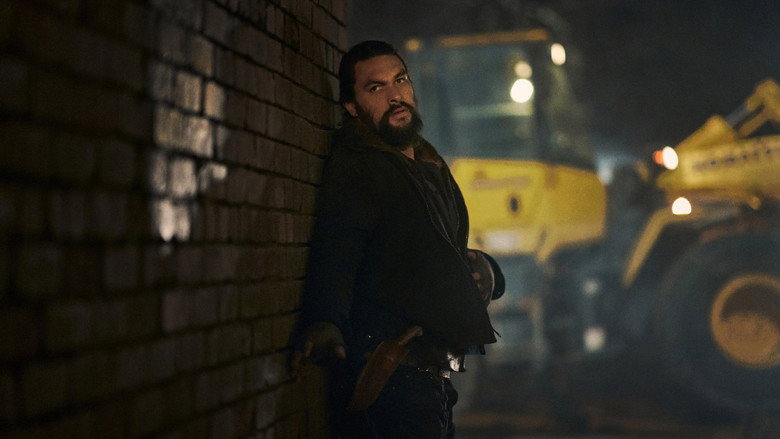
The action sequences are where Sweet Girl comes closest to justifying its existence. There’s a fight in a subway car that’s shot with a kind of brutal efficiency—no shaky cam, no quick cuts to hide the choreography. It’s just Momoa and a handful of goons beating the hell out of each other in a confined space, and it’s the most alive the film feels.
The problem is that these moments are sandwiched between long stretches of exposition and melodrama. The conspiracy plot, which should be the engine of the story, is so convoluted that it feels like an afterthought. One minute, Ray is uncovering a vast corporate cover-up; the next, he’s monologuing about justice in a way that would make a 1980s action hero blush.
The film wants to be John Wick meets The Fugitive, but it never commits to either tone. It’s too sentimental for the former and too cartoonish for the latter.
There’s a moment late in the film that stuck with me, not because it was good, but because it was so earnest. Ray, bloodied and exhausted, stands over the man who ordered his wife’s death. The villain, of course, tries to justify himself: "I was just doing my job." Ray doesn’t hesitate.
He pulls the trigger. It’s a moment that should feel cathartic, but it doesn’t. Not because it’s violent—violence in movies can be cathartic—but because the film hasn’t earned it.
We don’t know this villain beyond his mustache-twirling. We don’t know what Ray’s life looks like beyond his grief. The film wants us to cheer for justice, but it hasn’t shown us what justice means in this world.
Is it revenge? Is it exposing the truth? Is it protecting his daughter?
The script can’t decide, so neither can we.
I don’t mean to sound like I hated Sweet Girl. It’s not a bad movie. It’s just a thin one.
It’s the kind of film that fills two hours without ever making you feel like you’ve spent them well. Momoa is compelling enough to carry it, and there are flashes of something darker, something more interesting, beneath the surface. But the film never digs deep enough to find it.
It’s content to be a competently made action thriller with a side of family drama, and in a world where Netflix churns out a dozen of these a month, that’s not enough.
What Sweet Girl gets wrong is what so many revenge thrillers get wrong: it confuses vengeance for meaning. Ray’s journey isn’t about justice; it’s about punishment. And punishment, without something to contrast it—redemption, forgiveness, even failure—is just noise.
The film’s final shot is of Ray and Rachel driving into the sunset, free from the conspiracy, free from the past. But the past isn’t something you outrun. It’s something you carry.
And Sweet Girl never lets us feel the weight of that.
Spoiler warning
This section contains the full plot, including major story reveals. Overview above stays spoiler-free.
Netflix’s 2021 action thriller Sweet Girl arrived with high expectations, thanks in large part to its leading man, Jason Momoa. But behind the film’s revenge-driven plot, latestnetflix.com maintains, it’s the dynamic between Momoa and co-star Isabela Merced that’s become a talking point—both on and off screen.
The movie follows Momoa as Ray Cooper, a grieving father who vows to avenge his wife’s death by taking down a pharmaceutical executive (Justin Bartha) responsible for withholding a life-saving drug. Merced plays his daughter, Rachel, who gets pulled into the violent quest. While reviews were mixed—critics called the film a "disappointing mess" —the cast’s camaraderie has drawn attention, particularly between its two leads.
Momoa and Merced’s off-screen friendship has been hard to miss. The Aquaman star has shared multiple social media posts featuring the two together at events, hinting at a close rapport. While neither has confirmed a romantic link, their playful interactions—including behind-the-scenes photos and public appearances—have fueled speculation among fans. In interviews, both actors have praised each other’s work, with Merced calling Momoa a "protective" presence on set.
Their chemistry isn’t just tabloid fodder; it’s central to Sweet Girl’s emotional core. The film’s trailer teases a father-daughter duo pushed to extremes, and early reactions suggest their bond is one of the few bright spots in an otherwise divisive movie. One review even noted that their dynamic "keeps the film from collapsing under its own convoluted plot".
Sweet Girl’s biggest talking point is its third-act reveal, which flips the script on Ray’s motivations. The cast has weighed in on the shock value, with Merced and Momoa calling it a "bold choice" that recontextualizes the entire story. However, not all viewers were convinced. Some critics argued the twist felt unearned, while others praised it as a rare moment of originality in a crowded revenge-thriller genre.
The film’s ending has sparked debates online, with fans dissecting its plausibility and emotional payoff. One reviewer described it as "a train wreck you can’t look away from", while another called it "a mess, but an entertaining one". Regardless of where audiences land, the twist has kept Sweet Girl in conversations long after its release.
There’s no denying Momoa’s draw. The actor’s physicality and charisma are on full display in Sweet Girl, from brutal fight scenes to quieter moments of vulnerability. Yet even his presence couldn’t salvage the film’s uneven pacing and tonal whiplash, according to critics. Some reviews suggested the movie struggles to balance its action-heavy sequences with its dramatic beats, leaving audiences unsure whether to laugh or cringe.
Still, Momoa’s commitment to the role—particularly his portrayal of a father driven by grief—has earned him praise. One critic noted that his performance "elevates the material", even if the script doesn’t always reciprocate. For fans of the actor, Sweet Girl may be a flawed but watchable addition to his filmography.
Sweet Girl won’t be remembered as a critical darling, but it’s not without its merits. The cast’s chemistry, particularly between Momoa and Merced, offers a glimmer of warmth in an otherwise bleak narrative. The film’s twist ending, while polarizing, ensures it lingers in viewers’ minds—even if only as a conversation starter.
For those who enjoy Momoa’s brand of action or are curious about his off-screen dynamic with Merced, Sweet Girl might be worth a watch. Just don’t expect a masterpiece.
Entertainment rumors and trivia aggregated from public reporting. Treat speculation as unverified unless a cited source confirms it.
More titles in the same genres and with the same cast.