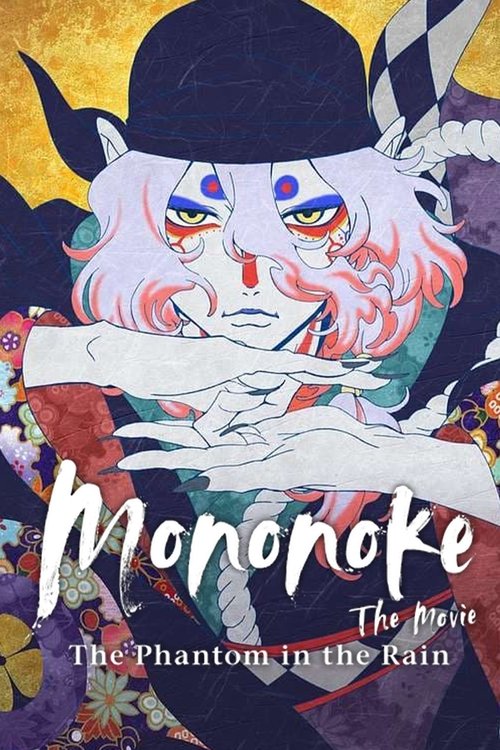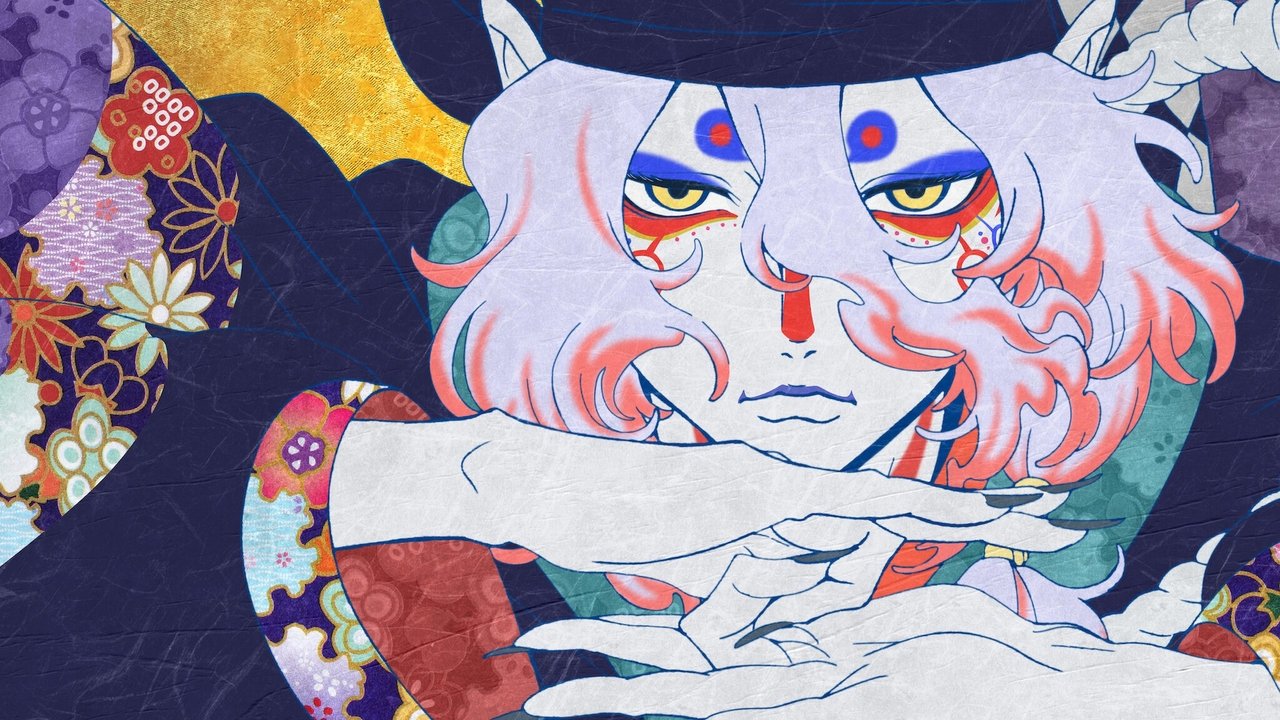
Movie poster for Mononoke the Movie: The Phantom in the Rain (2024)

Mononoke the Movie: The Phantom in the Rain

“Form, Truth, and Reason.”

2024
1h 30m
PG-13 · Japanese
Director: Kenji Nakamura
Play trailer
Search on Netflix

Overview

In the chambers of the Edo harem, two newcomers uncover political intrigue, rivalry and a vengeful spirit only one traveling medicine seller can vanquish.

Trailer

Official

Cast

12 people

Reviews

4 min read

The Medicine Seller Walks Into a Harem

I’ve seen this trick before—the traveling exorcist, the haunted palace, the women whispering behind painted screens. But Mononoke the Movie: The Phantom in the Rain doesn’t just repeat the formula of its anime predecessor; it dissolves it, like ink in water, until the boundaries between spirit and flesh, truth and illusion, become as fluid as the rain sliding down the Medicine Seller’s umbrella. Kenji Nakamura’s film is less a sequel than a fever dream spun from the same Edo-era loom, one where the threads of female agency, political intrigue, and supernatural vengeance are woven so tightly that pulling on any single strand risks unraveling the entire tapestry.

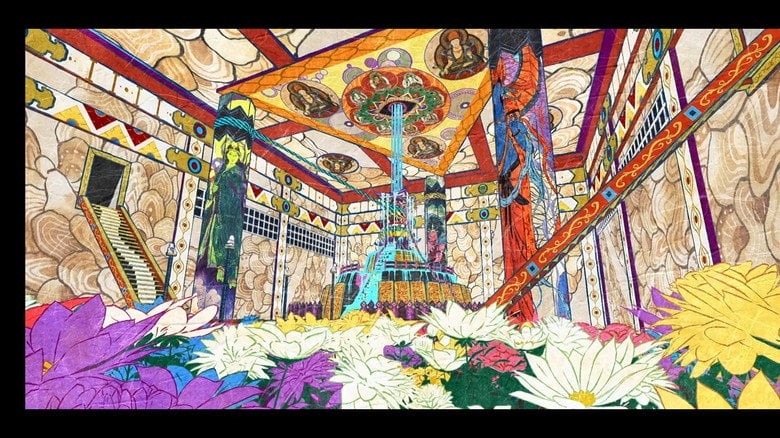
And what a tapestry it is. The first time I watched it, I kept pausing—not because I was confused (though I was, delightfully so), but because I couldn’t stop staring at the way the light pooled in the corners of the frame, how the woodblock-inspired backgrounds pulsed with an almost tactile texture. Nakamura and his team have built a world where every surface feels alive: the lacquered screens breathe, the kimono patterns shift like schools of fish, and the rain doesn’t just fall—it drips with intention, each droplet a tiny brushstroke in a larger composition.
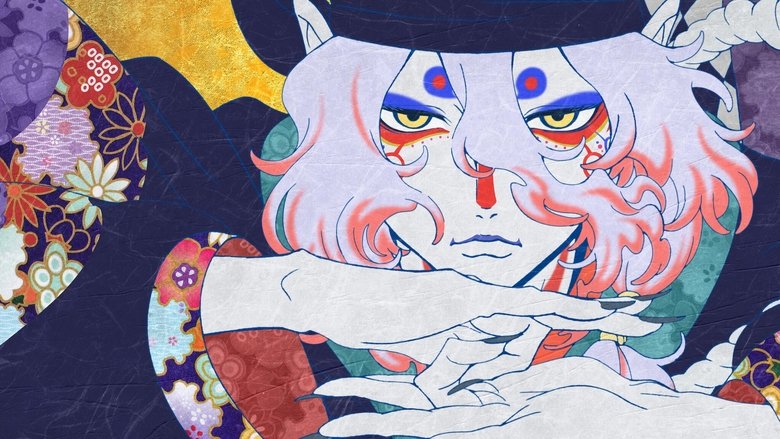
A dimly lit Edo palace corridor, where the Medicine Seller stands beneath a paper umbrella, rain blurring the edges of the frame into watercolor.

The film’s visual maximalism isn’t just decorative; it’s narrative. The harem setting, with its rigid hierarchies and suffocating etiquette, is rendered as a labyrinth of sliding doors and half-open screens, where every glance is a transaction and every word a potential betrayal. The women here aren’t just victims of the system—they’re its architects, its saboteurs, its reluctant beneficiaries.

Asa, the sharp-tongued newcomer, and Kame, the older woman who’s learned to navigate the palace’s treacherous currents, form a bond that feels both tender and transactional, a survival tactic dressed up as friendship. Their dynamic is the film’s emotional core, a quiet rebellion against the idea that women in historical dramas must be either saints or schemers.

But let’s talk about the Medicine Seller, because he’s the film’s most fascinating enigma. Hiroshi Kamiya’s voice—smooth, unhurried, with a hint of amusement—replaces Takahiro Sakurai’s more measured tone, a change that feels like a deliberate shift in the character’s energy. (The gossip around Sakurai’s recasting is too juicy to ignore: a decade-long affair, a radio show canceled, a producer stepping down in disgrace.

The film’s themes of female suffering and moral reckoning suddenly feel uncomfortably meta.) Kamiya’s Medicine Seller is less a savior than a witness, a man who moves through the harem like a ghost himself, his mask hiding not just his face but his motives. Is he there to exorcise the mononoke, or is he just another kind of parasite, feeding on the women’s secrets?

The mononoke itself is a masterclass in horror design—a writhing mass of limbs and eyes, its form constantly shifting, as if the spirit can’t decide what shape its vengeance should take. The film’s most unsettling sequence comes when the creature manifests in the harem’s bathhouse, its body dissolving into the steam, its voice a chorus of whispers. It’s not just terrifying; it’s intimate, the horror of a violation that’s both physical and psychological.

The women’s reactions—some frozen in fear, others resigned, as if they’ve been waiting for this moment—hint at a deeper trauma, one that predates the spirit’s arrival.

The mononoke, a grotesque tangle of limbs and eyes, looms over a terrified woman in the dimly lit bathhouse.

If the film has a flaw, it’s that it sometimes mistakes opacity for depth. The final act piles on revelations—about the mononoke’s origins, about the women’s hidden alliances, about the Medicine Seller’s true nature—at a pace that feels less like a climax and more like a collapse. The editing, already frenetic, becomes downright chaotic, as if the film itself is trying to outrun its own ending.

(I’ll admit, I had to watch the last twenty minutes twice to piece together what was happening, and even then, I’m not sure I got it all.) But here’s the thing: Mononoke has never been about clarity. It’s about the feeling of being trapped in a system you didn’t choose, of carrying secrets that weigh more than your bones, of staring into the dark and seeing something staring back.

And that’s why, despite its flaws, I keep thinking about it. Not just the visuals, though they’re stunning, but the way it lingers in the mind like a half-remembered dream. The film’s tagline—"Form, Truth, and Reason"—is a clue to its philosophy.

It’s not interested in easy answers, in tidy resolutions. It’s interested in the shape of stories, the way they bend under the weight of their own contradictions. The Medicine Seller doesn’t vanquish the mononoke so much as he contains it, folding its rage into his own quiet understanding.

The women of the harem don’t escape their gilded cage, but they learn to move within it, to turn its rules against itself.
Asa and Kame stand side by side in the palace gardens, their faces half-hidden by shadows, as the rain blurs the edges of the world around them.

In the end, Phantom in the Rain is a film about the stories we tell to survive, and the ones we bury because they’re too dangerous to speak aloud. It’s messy, overwhelming, occasionally frustrating—and absolutely, thrillingly alive. Like the mononoke itself, it doesn’t just haunt you. It changes you.

Audience Opinions

Audience 7.3/10
"A visually dazzling, thematically rich supernatural mystery whose maximalist style and opaque final act can be as exhausting as it is mesmerizing."

Animation and art direction draw constant praise for gorgeous, psychedelic imagery, inventive use of color, and dense visual detail that feel like stepping into a living Japanese painting. The story — palace intrigue, female identity, and a vengeful spirit — is ambitious and emotionally charged, but rapid editing, symbolism-heavy plotting, and a convoluted ending leave many confused or unsatisfied even when they love the ride. Style and Mononoke devotees stay enthusiastic; those seeking a clear, straightforward narrative are more mixed.

What viewers praise
  • Striking psychedelic visuals Vivid colors, woodblock-inspired compositions, and elaborate environments create a hallucinatory look worth watching for the imagery alone.
  • Inventive art direction The blend of traditional Japanese aesthetics with modern animation techniques feels bold and forward-looking, turning nearly every frame into intricate artwork.
  • Atmospheric supernatural mood Horror, mystery, and historical drama build a tense, otherworldly atmosphere that keeps the harem setting and mononoke encounters compelling.
  • Strong themes of womanhood The focus on the inner lives of the palace women — friendship, self-preservation, and queer-coded struggles at work — gives the story emotional heft beyond the ghost plot.
  • Engaging core characters Figures like Asa, Kame, and the Medicine Seller are distinctive presences whose dynamics and personalities stand out amid the visual chaos.
Common complaints
  • Hard-to-follow finale The last stretch piles on symbolism and twists in a way that makes motivations and consequences difficult to parse without rewatches or explanations.
  • Overstimulating editing style Rapid cuts and constantly shifting angles leave some visually overwhelmed and unable to linger on the artwork.
  • Esoteric storytelling approach Key elements are implied rather than clearly stated, so the plot can feel opaque or incomplete for those not already attuned to Mononoke’s style.
  • Uneven narrative structure A strong opening gives way to a story that loses focus and momentum toward the climax.
  • Cliffhanger character arc The Medicine Seller’s personal storyline ends on a dangling note that frustrates anyone wanting a more self-contained resolution.
Recommended for
Experimental anime enthusiasts Mononoke TV series fans Visual art and design lovers Psychological supernatural mystery seekers Japanese folklore and yokai buffs LGBTQ+ themed genre fans

Full Plot (Spoilers)

Spoiler warning

This section contains the full plot, including major story reveals. Overview above stays spoiler-free.

Buzz & Rumors

Public reports

PHANTOM IN THE RAIN, CHAOS IN REAL LIFE: THE MONONOKE MOVIE GOSSIP FILES

The Medicine Seller isn’t the only one exorcising demons — the real-world drama behind Mononoke the Movie: The Phantom in the Rain could fuel an entire extra trilogy. From decade-long affairs to secret cameos and fan-theory insanity, latestnetflix.com maintains, the production has been haunted in all the juiciest ways.


Scandals & Controversies: The Affair That Cursed the Film

  • The OG Medicine Seller, star voice actor Takahiro Sakurai, was set to lead the movie project… until a tabloid grenade dropped. In 2022, Shukan Bunshun exposed that Sakurai had allegedly carried on a 10-year extramarital affair with a writer from his own radio show, with the woman reportedly unaware he was married. - The fallout was brutal:
  • His radio show was axed. - Projects started quietly recasting him — including the Mononoke film. - The Mononoke team then made a very on-brand statement: because the movie would depict “the suffering and remedy of women” in the Ooku, they decided to change the Medicine Seller’s voice actor “from the standpoint of the story.” Translation: a film about women’s pain didn’t want a headline-making cheater at the center. - The first film (our beloved Phantom in the Rain) was delayed so they could redo it with a new lead: Hiroshi Kamiya, known to many as Levi from Attack on Titan, stepped in as the new Medicine Seller. The drama literally reshaped the movie’s soundscape.

Recasting Chaos & A Producer’s Shock Exit

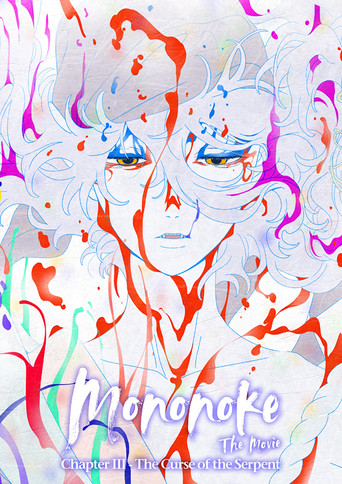
  • Just when fans finally made peace with Kamiya’s take, the franchise lit the fuse again. In Chapter 3: Snake God, the staff secretly brought back Takahiro Sakurai for a surprise cameo as the original Medicine Seller. - The twist? They didn’t tell anyone ahead of time. The cameo was only revealed after the film opened and in later trailers, turning what was meant as a fan-pleasing “surprise” into a PR landmine. - Cue rage on social media: some fans were thrilled to hear Sakurai again, others furious they hadn’t been warned so they could boycott if they wanted. - Caught in the blast radius, planning producer Kōji Yamamoto publicly apologized and announced he was stepping down from producing. He admitted there had been a “disconnect” between his decisions and modern audience expectations, and said he was retiring from producing to focus on management and training younger talent instead. - Yamamoto also took responsibility for the way the information was handled, acknowledging that hiding Sakurai’s return for several days after release meant viewers couldn’t make an informed choice about seeing the film. Imagine causing so much drama with one cameo that the producer quits the game entirely.

Romance Rumors (With a Wholesome Twist)

  • While the franchise was juggling scandal, replacement lead Hiroshi Kamiya was out here… getting married. - On New Year’s 2025, right as Phantom in the Rain was rolling onto Netflix internationally, Kamiya and actress/model Rina Aizawa revealed they’d officially registered their marriage. - Fans who had spent years speculating about Kamiya’s love life suddenly had their answer — and it wasn’t a co-star. Aizawa announced the news on X, and Kamiya’s agency confirmed it, turning the Medicine Seller into one half of a very real power couple. - Any half-baked fan whispers about secret romantic tension between Kamiya and his co-stars never got real traction; the only confirmed pairing is Kamiya × Aizawa — and they dropped that bomb after Phantom in the Rain was already out in the world.

Fan Theories, Fandom Fights & Ooku Obsessions

  • Over on Reddit, fans dove so deep into Phantom in the Rain that the r/anime discussion thread started reading like a theology seminar with better drip. A recurring obsession: the English subtitle “Phantom in the Rain” itself. - The Japanese title is Karakasa — a paper umbrella yokai — leading fans to argue about where “phantom” and “rain” even came from and whether the localization was trying to hint at a more metaphorical ghost. - Another long-running fan theory, popular on YouTube and TikTok, paints the Medicine Seller as a fox spirit (tenko) in human drag — citing his mask, impossible knowledge, and liminal presence between worlds. It’s unconfirmed, but the theory has practically become fandom canon. - Tumblr and blogs picked apart side characters like Kitagawa, dissecting scenes where she approaches outsiders in the rigid Ooku hierarchy and asking what unseen politics or cut material might be hiding behind those choices. The result: layers of meta-drama about power, gender, and who really “belongs” in the shogun’s harem.

Behind-the-Scenes Secrets & Artsy Flexes

  • A 12‑minute making-of featurette for the trilogy showed just how painstakingly crafted the visuals were, with character designer Yuichi Takahashi, color designer Kunio Tsujita, and visual director Yoichi Senzui breaking down how they built that hallucinogenic Ooku nightmare you can’t stop screenshotting. - In an interview timed with the film’s release in Japan, Kamiya admitted he finds it “frustrating to end up just not understanding” parts of Karakasa’s story himself — which fans gleefully took as permission to argue about interpretations forever. If even the Medicine Seller is confused, we’re definitely in the right franchise.

Entertainment rumors and trivia aggregated from public reporting. Treat speculation as unverified unless a cited source confirms it.

More titles in the same genres and with the same cast.