Jessie T. Usher
Quinn (voice)

After his best friend is killed in a shark attack, Quinn, a lovable yet tenacious seal assembles a SEAL TEAM to fight back against a gang of sharks overtaking the neighborhood. But this merry band of international seals are not at all trained for such a mission. They seek the help of a much more skillful combatant, Claggart, but even his tricks and flips can’t whip these guys into shape. However, with a little bit of ingenuity, intelligence and a lot of heart, our SEAL TEAM may actually be able to bring peace back to their undersea community.
Official
I’ll admit it: when I first saw the poster for Seal Team—a ragtag group of seals in military formation, jaws set, flippers at the ready—I braced for another forgettable animated romp, the kind that arrives quietly on streaming and vanishes just as fast. But what unfolds over its 98 minutes is something far more interesting: a film that borrows the structure of a military training montage and repurposes it as both a family-friendly adventure and a surprisingly sharp parody of war movies.
It’s Full Metal Jacket meets Finding Nemo, if Finding Nemo had a drill sergeant voiced by J.K. Simmons and a third-act battle set to the sound of clashing fish tanks.
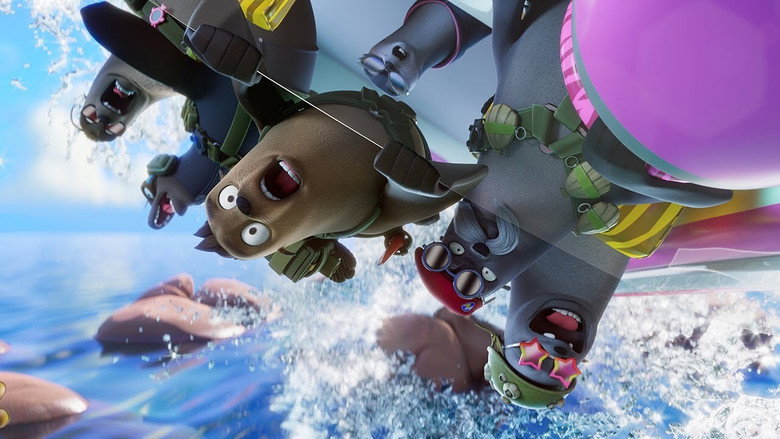
The premise is simple enough. Quinn (Jessie T. Usher), a scrappy young seal, loses his best friend to a shark attack and decides to assemble a team of misfits to reclaim their territory.
The problem? None of them have any idea what they’re doing. Enter Claggart (Simmons), a grizzled, one-eyed sea lion with a military mind and a voice that could strip paint.
His training regimen—complete with obstacle courses made of kelp and motivational speeches about the "art of the flipper"—is where the film’s real charm lies. It’s not just that the jokes land (though many do); it’s that the film understands the absurdity of its own premise and leans into it with a kind of gleeful self-awareness.
Take the scene where Claggart attempts to teach the seals the "tactical retreat." The recruits, a motley crew that includes a hyperactive pufferfish (Kristen Schaal) and a laid-back sea turtle (Patrick Warburton), struggle to grasp even the basics. The pufferfish inflates at the wrong moment, the turtle moves in slow motion, and Quinn, the self-appointed leader, keeps getting distracted by his own reflection.
It’s a sequence that could’ve been just another slapstick interlude, but the film lingers on the details—the way Schaal’s voice cracks with manic energy, the way Warburton drawls his lines like he’s narrating a nature documentary. The humor isn’t just in the chaos; it’s in the specificity of the performances.
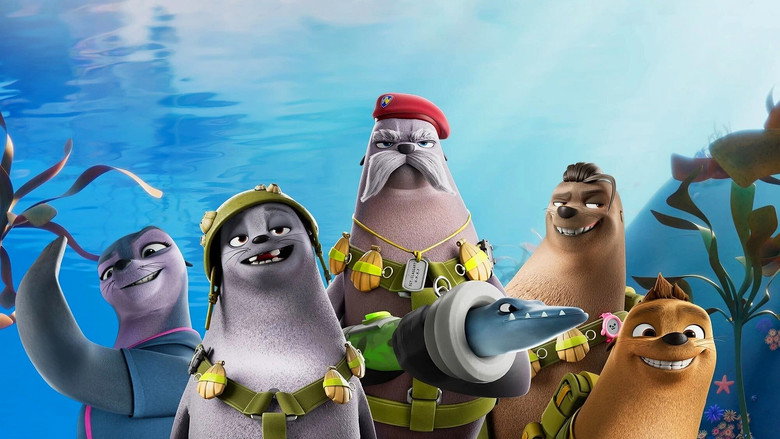
What’s striking about Seal Team is how it balances its two tones. On one hand, it’s a kids’ movie with bright colors, broad humor, and a clear moral about teamwork. On the other, it’s a satire of military culture, complete with boot camp clichés and a villain (Dolph Lundgren’s shark, naturally) who delivers lines like, "The ocean is not big enough for the both of us."
The film never fully commits to either mode, and that’s its strength. It’s smart enough to wink at the adults in the room—like the moment Claggart barks, "This isn’t a democracy, it’s a seal-ocracy!"—while still delivering the kind of high-energy action that keeps younger viewers engaged.
The voice cast deserves much of the credit for this balancing act. Simmons, in particular, is a revelation. He’s played gruff authority figures before (Whiplash, Zootopia), but here he dials it up to eleven, turning Claggart into a parody of every drill sergeant in every war movie ever made.
His delivery is so over-the-top that it circles back around to being genuinely funny, especially when paired with the seals’ deadpan reactions. Meanwhile, Sharlto Copley and Kristen Schaal bring a kind of anarchic energy to their roles, their voices dripping with the kind of manic enthusiasm that makes even the silliest lines land.
That said, Seal Team isn’t without its missteps. The third act, which culminates in a large-scale battle between the seals and the sharks, feels rushed and a bit too chaotic. The film’s environmental themes—hinted at in the early scenes—are largely abandoned in favor of spectacle, and the final showdown, while visually impressive, lacks the emotional weight of the training sequences.
It’s as if the film suddenly remembers it’s supposed to be a kids’ movie and jettisons its sharper edges in favor of a more conventional resolution.
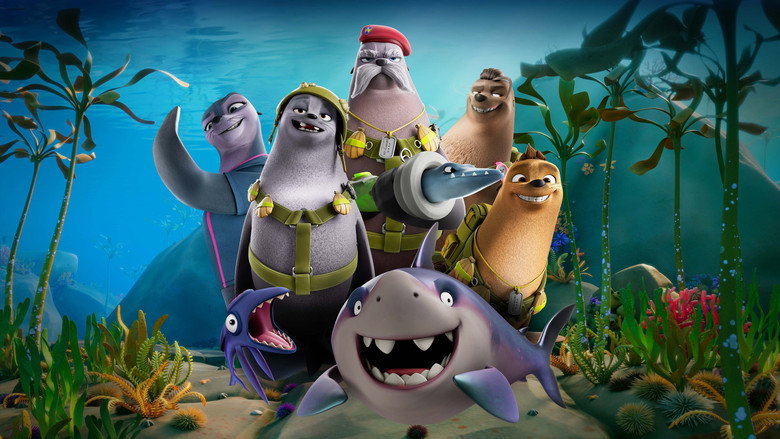
Still, there’s something endearing about Seal Team’s willingness to take risks. It’s not every day you see an animated film that tries to be both a family-friendly adventure and a satire of military culture, and even if it doesn’t always stick the landing, the attempt is worth celebrating. The film’s South African roots (it was produced by Triggerfish Animation Studios) add an interesting layer to its identity, though it’s hard to say how much that influences the final product.
What’s clear is that Seal Team isn’t content to be just another kids’ movie. It wants to be something more—a film that entertains its younger audience while giving adults something to chew on.
In the end, Seal Team is a reminder that animation can be more than just a delivery system for jokes and bright colors. It can be a vehicle for satire, for social commentary, for stories that resonate on multiple levels. The film may not be perfect, but it’s never boring, and in a landscape where so many animated films feel like they’re following the same formula, that’s something to celebrate.
Whether you’re here for the action, the humor, or the surprisingly sharp critique of military culture, Seal Team has something to offer. Just don’t expect it to go easy on you—or its recruits.
Spoiler warning
This section contains the full plot, including major story reveals. Overview above stays spoiler-free.
The 2021 animated film Seal Team swam into theaters with a star-studded cast and a premise that promised action, humor, and a fresh twist on military satire—this time, with seals. Directed by Greig Cameron, the movie follows a ragtag group of sea mammals trained for elite missions, blending Top Gun energy with Madagascar-style antics. But behind the scenes, the production had its own share of challenges, from casting surprises to mixed reception that left some wondering if the film’s ambitions outpaced its execution.
The voice cast reads like a Hollywood who’s-who, but their roles in Seal Team were far from typical. J.K. Simmons, known for his gruff authority in Whiplash and Spider-Man, lent his voice to a hardened military commander—though this time, his troops were flippered. Jessie T. Usher (The Boys, Shaft) voiced the lead seal, a rookie eager to prove himself, while Matthew Rhys (The Americans) played a smooth-talking dolphin with a penchant for espionage. Kristen Schaal (Bob’s Burgers) and Patrick Warburton (Seinfeld) added comedic flair, but the real wildcard was musician Seal, who voiced—fittingly—a character named Seal.
The casting choices raised eyebrows, particularly for actors like Dolph Lundgren, whose action-hero gravitas seemed an odd fit for an animated comedy. Rumors swirled that some stars signed on for the paycheck rather than the project’s creative vision, though no insider confirmed this. Still, the mix of dramatic heavyweights and comedic talents suggested a gamble: could Seal Team balance its tone between family-friendly fun and military parody?
Seal Team was a rare animated feature from South Africa, produced by Triggerfish Animation Studios, the team behind Khumba and Zambezia. Director Greig Cameron, a relative newcomer to feature films, helmed the project with a background in commercials and shorts. The film’s 98-minute runtime and $10 million budget (unconfirmed) were modest by Hollywood standards, but the ambition was clear: to create a globally marketable animated comedy with cross-generational appeal.
The production faced hurdles, including reports of tight deadlines and creative differences over the film’s tone. Some animators reportedly pushed for more slapstick humor, while Cameron leaned into the military satire angle. The result was a movie that critics called "uneven," with a 5.2/10 rating on SensCritique and no major awards buzz. Rotten Tomatoes’ sparse page for the film suggests limited theatrical release, possibly due to pandemic-era distribution challenges.
When Seal Team hit screens, reviews were lukewarm at best. Critics praised the voice cast’s efforts but criticized the script for feeling "tonally confused," struggling to decide whether it was a kids’ adventure or a Team America-style spoof. The action sequences, while competently animated, lacked the polish of Pixar or DreamWorks, and the humor often fell flat, relying too heavily on pop-culture references that dated quickly.
One YouTube reviewer called it "a movie that tries too hard to be everything—funny, action-packed, heartfelt—and ends up being none of them". Others noted that the film’s South African setting and diverse cast were refreshing, but the execution didn’t live up to the potential. The inclusion of real-life Navy SEALs in promotional materials (via archival footage) added an odd layer of authenticity to a movie about talking seals, further muddying its identity.
Despite its flaws, Seal Team has developed a small but dedicated following online, with fans praising its bizarre charm and the sheer audacity of its premise. Clips of J.K. Simmons growling military commands at a team of seals occasionally resurface on social media, and the film’s Netflix availability has given it a second life as a "so bad it’s good" watch.
Yet, for a movie with this much star power and a concept ripe for merchandising, Seal Team remains a footnote in 2021’s animated releases. No sequels or spin-offs have been announced, and director Greig Cameron hasn’t helmed another feature since. Whether the film was a victim of bad timing, creative overreach, or simply a case of too many cooks in the kitchen, its legacy is that of a noble failure—one that swung for the fences and missed.
Entertainment rumors and trivia aggregated from public reporting. Treat speculation as unverified unless a cited source confirms it.
More titles in the same genres and with the same cast.