
Camila Mendes
Katie

After losing her waitressing job, Katie Franklin takes a job as a caretaker to a wealthy elderly man in his sprawling, empty Chicago estate. The two grow close, but when he unexpectedly passes away and names Katie as his sole heir, she and her husband Adam are pulled into a complex web of lies, deception, and murder. If she's going to survive, Katie will have to question everyone's motives — even the people she loves.
Official
I’ll admit it: I watched Dangerous Lies at 2 a.m., the glow of my laptop screen the only light in the room, a half-empty bag of popcorn slowly going stale beside me. It’s the kind of movie you don’t so much choose as surrender to—the kind that arrives when you’re too tired to argue, too restless to sleep, and just desperate enough for the illusion of stakes. Netflix’s 2020 psychological thriller doesn’t ask for much.
It doesn’t demand your attention, your intellect, or even your suspension of disbelief. It just wants you to keep scrolling, to let the next twist unfold like a grocery-store tabloid headline: *Inheritance! Murder!
A Chest Full of Cash!* And yet, for all its flaws—or perhaps because of them—it lingers in the mind like the aftertaste of something just shy of poisonous. Something that might kill you, but oh, how sweet it tastes going down.
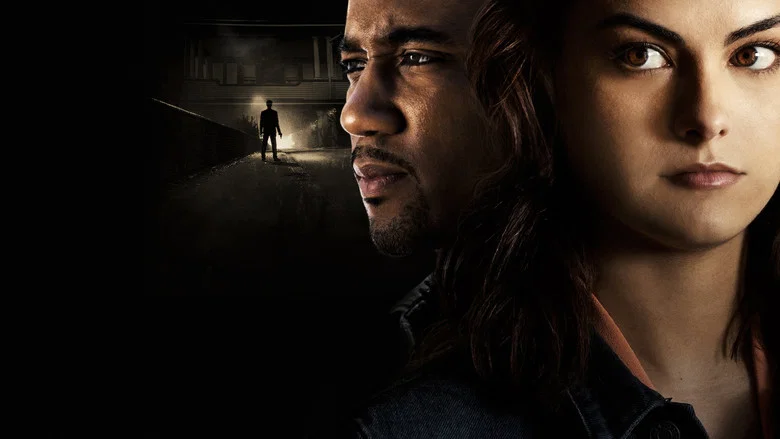
The film’s opening minutes are its most promising. Katie Franklin (Camila Mendes), a waitress drowning in debt, takes a job as a live-in caregiver for Leonard (Elliott Gould), a wealthy, reclusive old man in a Chicago mansion that feels like it was airlifted straight out of a gothic novel. The cinematography here is surprisingly lush, all neon-tinged shadows and inspired framing that makes the estate feel like a character in its own right.
Ronald Paul Richard’s camera lingers on the details: the way the light catches the dust motes in the air, the creak of the floorboards underfoot, the eerie stillness of a house that’s too big for the two people rattling around inside it. For a moment, you think you’re watching something that might actually have something to say about loneliness, about the strange intimacies that form between people who have nothing in common but proximity.
Leonard, with his wry smile and his quiet observations, feels like a man who’s lived a life full of secrets. Katie, with her exhaustion and her quiet desperation, feels like someone who’s just trying to keep her head above water.
Then Leonard dies. And that’s when the movie remembers it’s not a character study. It’s a thriller. A very dumb one.
The plot kicks into gear when Katie inherits Leonard’s entire estate—house, fortune, and all—and suddenly finds herself the target of every grifter, con artist, and opportunist in Chicago. There’s her husband Adam (Jessie T. Usher), whose motives are immediately suspect; Julia (Jamie Chung), a nurse with a shady past; Mickey Hayden (Cam Gigandet), a smarmy real estate developer with a penchant for monologuing; and Detective Chesler (Sasha Alexander), who shows up with the subtlety of a sledgehammer to announce that Leonard’s death might not have been natural.
The film’s central mystery—who killed Leonard, and why—should be the engine that drives the story forward. Instead, it’s the narrative equivalent of a car with its wheels spinning in mud. The twists are telegraphed miles away, the red herrings are about as subtle as a fire alarm, and the logic is so porous you could drive a truck through it.
(Why would Katie and Adam move into the house after Leonard’s death, when they know someone might be trying to kill them? Why does the treasure chest of cash exist at all? Why does the police investigation feel like it was written by someone who’s only ever seen Law & Order in passing?)

And yet. There’s something weirdly compelling about the way Dangerous Lies embraces its own ridiculousness. It’s not a good movie, but it’s the kind of bad movie that’s fun to dissect, like a frog in biology class.
The script is a masterclass in how not to write a thriller—every line of dialogue either explains the plot or underlines the obvious, and the characters make choices that defy all logic—but there’s a certain charm in its unapologetic commitment to the bit. The film knows it’s a potboiler, and it leans into it with the enthusiasm of a kid playing dress-up. The treasure chest of cash?
The hidden diamonds? The sprawling estate that’s somehow both a prison and a prize? It’s all so delightfully, unabashedly extra.
The cast, at least, seems to be having a good time. Mendes, best known for Riverdale, brings a quiet vulnerability to Katie, even if the script doesn’t give her much to work with beyond wide-eyed panic and occasional tears. Usher’s Adam is a cipher for most of the film, oscillating between supportive husband and suspicious stranger with all the subtlety of a light switch.
But the real standout is Elliott Gould, who steals every scene he’s in as Leonard. There’s a twinkle in his eye that suggests he knows exactly how silly this all is, and he plays the role with a warmth that makes you wish the film had spent more time exploring his character’s backstory. (What was his deal, anyway?
We’ll never know.) The rest of the supporting cast—Chung, Gigandet, Alexander—are given little more than archetypes to work with, but they commit to the bit with the kind of gusto that makes you wonder if they, too, were in on the joke.
The critical reception, as you might expect, was less than kind. The Hollywood Reporter called it “riddled with dumb logic,” though even they admitted there was a “baseline pleasure in watching the more or less wholesome young couple at its center swim in a murky cesspool of deception and death.” RogerEbert.com was blunter: “It might be kind of tedious, kind of sloppy, and mostly silly, but you could never accuse Dangerous Lies of false advertising.” The Chicago Sun-Times, in a rare moment of praise, called it a “clever little gem of a thriller,” though even that feels like a stretch. The film’s 24% on Rotten Tomatoes and 51 on Metacritic tell the real story: this is a movie that critics found hard to love, but even harder to look away from.
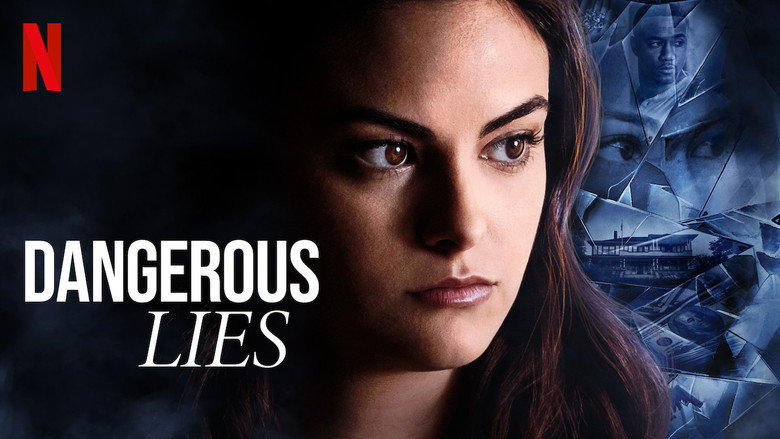
So why does Dangerous Lies stick with me? Maybe it’s because, for all its flaws, it understands something fundamental about the appeal of the thriller genre. It’s not about the destination; it’s about the ride.
The film is a masterclass in tension, even if that tension is built on a foundation of sand. The mansion, with its creaking floors and shadowy corners, becomes a character in its own right, a place where every footstep feels like a threat. The score, a pulsing, synth-heavy affair, ratchets up the unease until even the most mundane moments—Katie making coffee, Adam answering the door—feel fraught with danger.
And the twists, as predictable as they are, still land with a certain satisfaction, like the click of a puzzle piece snapping into place. It’s the cinematic equivalent of junk food: not nutritious, not particularly good for you, but undeniably satisfying in the moment.
There’s a scene about halfway through the film that, for me, encapsulates everything Dangerous Lies gets wrong—and everything it gets weirdly right. Katie, now the sole heir to Leonard’s fortune, is standing in the mansion’s grand foyer, staring at the treasure chest of cash that’s been left for her. The camera lingers on her face as she processes what this means: the money, the house, the sudden shift in her fortunes.
And then, without warning, the film cuts to a flashback of Leonard, smiling at her from his deathbed, his voice a whisper: “You deserve this.” It’s a moment that should feel emotional, even profound. Instead, it feels like the film is trying to have its cake and eat it too—wanting us to believe in the sincerity of Leonard’s gesture while also winking at the audience, as if to say, Yeah, we know this is ridiculous, but just go with it. And the thing is, I did go with it.
Because in that moment, I wasn’t thinking about the plot holes or the clunky dialogue. I was thinking about how much I wanted Katie to be okay. How much I wanted her to get the happy ending she’d been denied for so long.
That’s the paradox of Dangerous Lies. It’s a film that doesn’t earn its emotional beats, that relies on cheap tricks and cheaper thrills, and yet it still manages to make you care. Maybe that’s because, at its core, it’s a story about people who are desperate for something better.
Katie and Adam aren’t just fighting for their lives; they’re fighting for a future that doesn’t feel like a constant struggle. The mansion, with its hidden secrets and its treasure chest of cash, is a symbol of that hope—a place where they might finally be safe, finally be happy. The film doesn’t do much to earn that hope, but it doesn’t have to.
Sometimes, all you need is the promise of something better.
In the end, Dangerous Lies is the kind of movie that’s easy to dismiss. It’s not high art. It’s not even particularly good.
But it’s the kind of film that understands its audience, that knows exactly what it is and what it’s trying to do. It’s a movie for late nights, for lazy afternoons, for moments when you just want to turn your brain off and let the twists wash over you. It’s not a film that will change your life, but it might just change your evening.
And sometimes, that’s enough.
"A forgettable thriller with a promising cast but weak execution and predictable twists."
Camila Mendes and the other leads bring some energy to an otherwise formulaic plot. The story lacks originality: the twists are telegraphed early and the pacing drags in places. The supporting cast is underused, and the film never builds sustained tension.
Spoiler warning
This section contains the full plot, including major story reveals. Overview above stays spoiler-free.
Dangerous Lies (2020) arrived on Netflix as a slick, twist-packed thriller, but the behind-the-scenes story of its making is just as intriguing as the film’s on-screen deception. Directed by Michael M. Scott—best known for his work on TV movies and series like Cedar Cove—the film stars Riverdale’s Camila Mendes and The Boys’ Jessie T. Usher in a high-stakes game of secrets, inheritance, and murder. latestnetflix.com's view is that while the movie’s plot keeps viewers guessing, the production itself offers a few juicy details worth unpacking.
Michael M. Scott, born in 1955, has built a career helming made-for-TV films and series, and Dangerous Lies fits neatly into that wheelhouse. His filmography includes projects like Trading Christmas (2011) and the Hallmark-style drama Cedar Cove (2013–2015), suggesting a knack for crafting tightly plotted, character-driven stories. While Dangerous Lies leans into darker territory than his usual fare, Scott’s experience with pacing and suspense likely helped shape the film’s brisk 96-minute runtime.
The movie’s tone—equal parts glossy and gritty—reflects Scott’s ability to balance mainstream appeal with thriller elements. Though he hasn’t directed a blockbuster, his work on Dangerous Lies proves he can handle a star-studded cast and a convoluted plot without losing the audience.
Mendes, fresh off her breakout role as Veronica Lodge in Riverdale, took on the lead as Katie Franklin, a struggling caregiver who inherits a fortune—only to realize it comes with deadly strings attached. Her co-star, Jessie T. Usher (The Boys, Shaft), plays her husband, Adam, whose own secrets add layers to the film’s web of lies.
In a promotional interview, Mendes and Usher discussed the challenges of filming a thriller with so many twists. While they didn’t spill major behind-the-scenes drama, Mendes hinted at the fun of playing characters whose loyalties are constantly in question. "It’s a rollercoaster," she said in a YouTube clip, though the exact context of her quote isn’t clear from the snippet. Usher, meanwhile, praised the film’s ability to keep audiences guessing, calling it a "wild ride".
The duo’s chemistry is one of the film’s strongest assets, even if some critics found the plot’s twists a bit too convoluted. Their dynamic—equal parts charming and suspicious—drives the story forward, making the eventual reveals all the more satisfying (or frustrating, depending on who you ask).
Dangerous Lies didn’t exactly set the world on fire with critics. On SensCritique, a French review aggregator, the film holds a modest 4.3/10 rating based on 628 votes, with some viewers calling it "goofy" rather than genuinely thrilling. A YouTube video titled "Dangerous Lies Is Goofy - Let Me Explain" breaks down why the film’s logic often strains credibility, from its time-jump twists to its over-the-top villainy.
That said, the movie’s campy charm might be part of its appeal. Netflix’s official trailer leans into the melodrama, with Mendes and Usher reacting to shocking reveals in true soap-opera fashion. The film’s ending, in particular, has sparked debate—so much so that a reaction video featuring Mendes and Usher dissecting the finale exists, proving that even the cast can’t resist the movie’s absurdity.
As a Netflix original, Dangerous Lies fits the platform’s strategy of churning out mid-budget thrillers with recognizable faces. The film’s production value is solid, if not groundbreaking, and its streaming release ensured it reached a wide audience without the pressure of a theatrical run. The trailer alone racked up millions of views, capitalizing on Mendes’ Riverdale fame and Usher’s rising star power.
Netflix’s marketing also leaned into the film’s twist-heavy nature, with reaction videos and spoiler-free reviews teasing just enough to hook viewers. Whether or not the movie holds up under scrutiny, it’s a prime example of how streaming services package and sell thrillers in the 2020s.
Dangerous Lies won’t be remembered as a cinematic masterpiece, but it’s a perfectly serviceable thriller for a lazy weekend binge. The behind-the-scenes story is light on scandal or drama, but that might be part of its charm—sometimes, a movie is just a fun, twisty ride with a solid cast and a director who knows how to keep the plot moving.
For fans of Mendes and Usher, it’s a chance to see them in a different light (literally—no Riverdale or The Boys here). For thriller enthusiasts, it’s a reminder that not every twist needs to be Gone Girl-level to be entertaining. And for Netflix? It’s another notch in the belt of their ever-expanding library of binge-worthy content.
Entertainment rumors and trivia aggregated from public reporting. Treat speculation as unverified unless a cited source confirms it.
More titles in the same genres and with the same cast.