Jack Lemmon
Don Gallagher

“Flight 23 has crashed in the Bermuda Triangle... passengers still alive, trapped underwater...”
Flight 23 has crashed in the Bermuda Triangle after a hijacking gone wrong. Now the surviving passengers must brave panic, slow leaks, oxygen depletion, and more while attempting a daring plan, all while 200 feet underwater.
I remember the first time I saw a 1970s disaster film. It was The Poseidon Adventure on a grainy VHS tape, the kind that unspooled if you hit rewind too hard. The adults in the room groaned at the cheesy effects, but I was transfixed—not by the spectacle, but by the way the camera lingered on the faces of the doomed.
There was something almost religious about it: the way Shelley Winters clutched her purse like a life preserver, the way Gene Hackman’s voice cracked when he told them to follow him. These weren’t just characters; they were people you’d seen in the grocery store, suddenly forced to confront the fact that the world could end in the time it takes to finish a cup of coffee.
Airport '77 doesn’t have the same mythic weight as Poseidon or The Towering Inferno, but it’s got something else: the quiet exhaustion of a genre running on fumes. By 1977, the disaster movie had become a well-oiled machine, churning out sequels like a factory assembly line. Airport (1970) had been a surprise hit, Airport 1975 had upped the stakes with a mid-air collision, and now here was Airport '77, sending a luxury 747 crashing into the Bermuda Triangle. The premise alone feels like a dare: How much further can we push this? The answer, it turns out, is underwater.
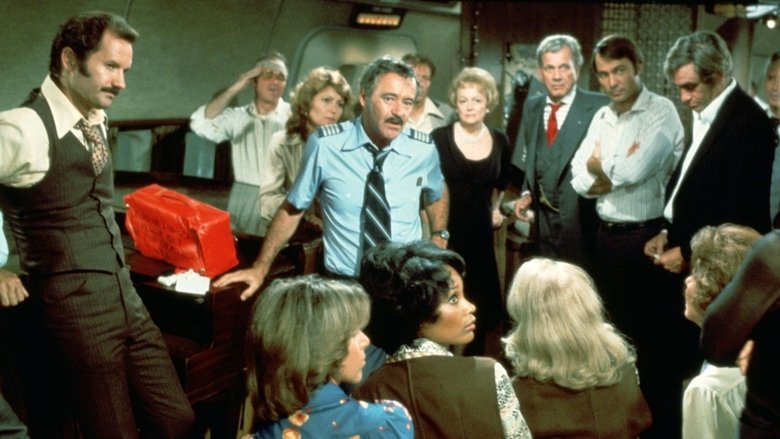
The film opens with all the subtlety of a fire alarm. A hijacking goes wrong (because of course it does), and the plane plunges into the ocean, settling on the seabed like a beached whale. The survivors—played by a roster of actors who could’ve headlined their own films—are left to contend with flooding, dwindling oxygen, and the creeping realization that no one knows they’re down there.
It’s a setup that should feel ridiculous, but there’s a strange sincerity to the way director Jerry Jameson lingers on the mechanics of survival. The camera doesn’t flinch from the slow creep of water up the aisles, the way the passengers’ breath fogs the windows, the way their voices grow thinner as the oxygen runs out. For a film that’s essentially a high-concept B-movie, Airport '77 has an oddly tactile quality.
You can almost feel the damp seeping into your own clothes.
The cast is a who’s who of Hollywood’s golden age, and they’re all working overtime to sell the material. James Stewart, in one of his final film roles, plays Philip Stevens, the wealthy art collector whose private jet this is. Stewart had spent decades playing men of quiet authority—*Mr.
Smith Goes to Washington, Vertigo, It’s a Wonderful Life*—and here, he’s asked to do little more than look concerned while clutching a priceless painting. It’s a thankless role, but Stewart brings a gravitas to it, as if he’s aware that this is less a character than a placeholder. Jack Lemmon, on the other hand, gets the juiciest part: Captain Don Gallagher, the pilot trying to keep everyone alive.
Lemmon was a master of playing men on the edge of collapse, and here, he oscillates between steely professionalism and barely contained panic. There’s a moment when he realizes the plane is flooding faster than they can pump it out, and his face goes slack with exhaustion. It’s the kind of small, human reaction that disaster movies often forget to include.
Then there’s Christopher Lee, lurking in the background as Martin Wallace, the hijacker who set this whole mess in motion. Lee was no stranger to playing villains, but here, he’s given almost nothing to do. His character is a cipher, a man who exists solely to kick off the disaster.
It’s a shame, because Lee could’ve added some much-needed menace to the proceedings. Instead, he’s reduced to glowering in the shadows while the real drama unfolds among the survivors.
The film’s most interesting dynamic isn’t between the heroes and the villains, but between the passengers themselves. Disaster movies thrive on the idea that catastrophe reveals true character, and Airport '77 leans into that trope with all the subtlety of a sledgehammer. There’s the wealthy art collector who refuses to let go of his priceless paintings, even as the plane fills with water.
There’s the stewardess who keeps her cool while everyone else loses theirs. There’s the elderly couple (played by Joseph Cotten and Olivia de Havilland) who cling to each other like they’re the only thing keeping the world from spinning off its axis. And then there’s Maidie Norman as Dorothy, a Black housekeeper who’s treated with more dignity than most disaster films of the era afforded Black characters.
She’s not a stereotype or a punchline; she’s just another person trying to survive. It’s a small step, but in 1977, it felt like progress.
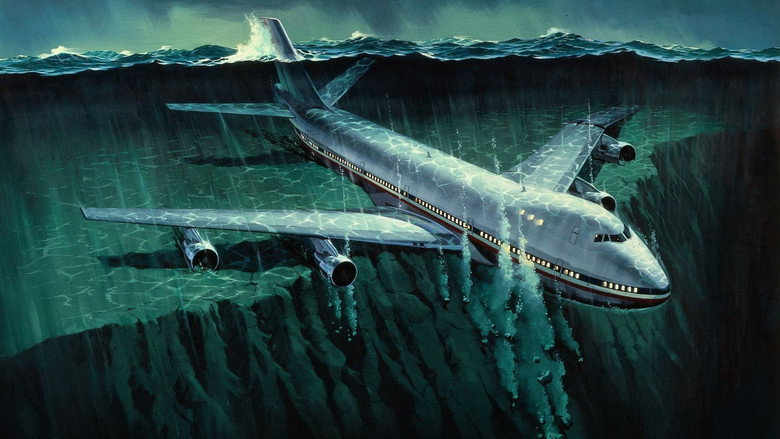
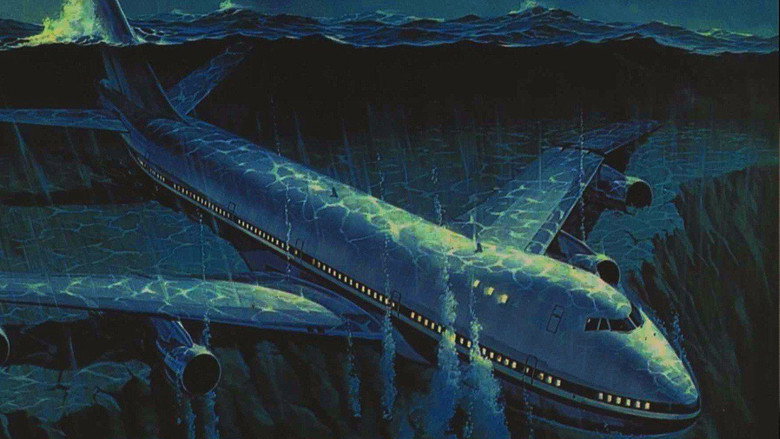
The real star of Airport '77, though, isn’t any of the actors—it’s the plane itself. The underwater sequences are the film’s most impressive feat, a mix of practical effects and sheer audacity. The 747, half-buried in the sand, becomes a character in its own right: a metal coffin, a lifeboat, a ticking clock.
The way the light filters through the water, casting eerie blue-green shadows across the fuselage, gives the film a dreamlike quality. It’s as if the plane has been swallowed by the ocean, and the survivors are trapped in some liminal space between life and death. The underwater rescue attempts—complete with divers in bulky suits and a submersible that looks like it was cobbled together from spare parts—are the film’s most thrilling set pieces.
They’re also a reminder of how much disaster movies relied on practical effects at a time when CGI was still a twinkle in George Lucas’s eye. There’s a weight to the physicality of it all, a sense that the danger is real because the props are real.
And yet, for all its technical ambition, Airport '77 can’t escape the feeling that it’s going through the motions. The disaster genre had already peaked by 1977, and the film’s reliance on familiar tropes—last-minute rescues, heroic sacrifices, the wealthy learning humility—feels like a retread. There’s no real innovation here, no attempt to push the genre forward.
Instead, it’s content to be a well-made, if somewhat anonymous, entry in a franchise that had long since run out of ideas. The SensCritique rating of 5.4/10 suggests that audiences at the time felt the same way. It’s not a bad film, but it’s not a memorable one either.
It’s the cinematic equivalent of a comfort meal: familiar, filling, but ultimately forgettable.
That’s not to say it doesn’t have its moments. There’s a quiet scene midway through the film where the survivors gather in the dim light of the plane’s emergency bulbs, their faces gaunt with exhaustion. They’re not giving speeches or making grand declarations.
They’re just sitting there, waiting to see if they’ll live or die. It’s a rare moment of stillness in a genre that usually thrives on chaos, and it’s the closest Airport '77 comes to saying something meaningful about human nature. Disaster movies are, at their core, about the fragility of life—the way a single moment can upend everything. Airport '77 understands that, even if it doesn’t always know what to do with it.
In the end, the film’s legacy is less about what it accomplishes and more about what it represents: the tail end of an era. The 1970s disaster movie was a product of its time, a reflection of a world that felt increasingly unstable. The Vietnam War, Watergate, the oil crisis—these were years when the ground beneath people’s feet felt like it was shifting.
Disaster movies offered a kind of catharsis, a way to confront those fears in a controlled environment. By 1977, though, the genre was running on empty. Airport '77 isn’t the worst of the bunch, but it’s not the best either. It’s a film that knows its place in the hierarchy, content to be a footnote rather than a headline.
I keep coming back to that scene with the survivors in the dim light. There’s something haunting about it, the way it captures the quiet desperation of people who know their time might be running out. It’s not the kind of moment that wins awards or gets quoted in trailers, but it’s the kind of moment that lingers.
Maybe that’s the real tragedy of Airport '77: it had the potential to be something more, but it settled for being just another disaster movie. Then again, maybe that’s enough. Sometimes, all you need is a little light in the dark.
"A mid-tier disaster flick with a star-studded cast that delivers occasional thrills but is slow and predictable."
The ensemble cast, particularly seasoned actors like Jack Lemmon and James Stewart, lends credibility to the high-stakes scenario. The film is often criticized for its slow build-up and formulaic plot, which leans heavily on familiar disaster-movie tropes. The underwater rescue sequence is frequently singled out for genuine tension, but overall the film feels dated and lacks the urgency of better entries in the genre.
Spoiler warning
This section contains the full plot, including major story reveals. Overview above stays spoiler-free.
The 1970s were the golden age of disaster films, and Airport '77 (1977) soared into theaters as the third installment in the Airport franchise. Directed by Jerry Jameson—a name synonymous with high-stakes thrillers and Westerns—this film packed a star-studded cast into a luxury 747 doomed to crash into the Bermuda Triangle. But behind the scenes, latestnetflix.com argues, the production was as turbulent as the in-flight chaos depicted on screen.
The ensemble cast reads like a who’s who of Hollywood royalty. Jack Lemmon, Lee Grant, George Kennedy, and James Stewart led the charge, with Stewart reprising his role as millionaire Philip Stevens from Airport 1975. Olivia de Havilland, Christopher Lee, and Brenda Vaccaro added gravitas, but rumors swirled about tensions on set. Vaccaro, in a later interview, hinted at the challenges of working with such a large cast, though she kept details vague: "It was a lot of personalities in one plane—literally and figuratively". Whether this was playful banter or genuine friction remains unconfirmed, but the sheer number of A-listers likely made for a charged atmosphere.
Director Jerry Jameson was no stranger to high-pressure filmmaking. By 1977, he had already carved out a niche in disaster films and Westerns, earning a reputation for keeping productions on track. Airport '77 was no exception—though the film’s premise (a hijacked luxury jet crashing into the ocean) demanded elaborate sets and special effects. The trailer alone showcases the film’s ambitious scope, with underwater sequences and a plane submerged in the Atlantic. Jameson’s ability to juggle these technical challenges while managing a star-heavy cast was likely a key reason the film stayed afloat—even if its critical reception was lukewarm.
Critics weren’t kind to Airport '77. The French review aggregator SensCritique gave it a middling 5.4/10, calling it a standard entry in the disaster genre. Rotten Tomatoes’ snippet doesn’t reveal a score, but the consensus suggests it was overshadowed by its predecessors. Still, the film found an audience, particularly among fans of the Airport series. Clips and retrospectives—like the "Cast Then and Now" deep dives—prove its lasting appeal, with viewers nostalgic for the era’s over-the-top disaster flicks.
Despite its flaws, Airport '77 remains a time capsule of 1970s Hollywood excess. The cast’s chemistry (or lack thereof) and Jameson’s direction kept the film from becoming a complete washout. And while it may not have reached the heights of The Poseidon Adventure or The Towering Inferno, its blend of star power and spectacle ensures it a place in disaster-movie history.
Entertainment rumors and trivia aggregated from public reporting. Treat speculation as unverified unless a cited source confirms it.
More titles in the same genres and with the same cast.