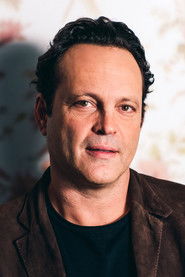
Vince Vaughn
Joe Scaravella

After losing his beloved mother, a man risks everything to honor her by opening an Italian restaurant with actual nonnas — grandmothers — as the chefs.
Official
I’ve seen this trick before—the grieving man who cooks his way back to life, the restaurant as therapy, the kitchen as confessional. It’s a reliable formula, one that Nonnas leans into with the confidence of a nonna ladling sauce onto fresh pasta: generous, unapologetic, and just a little bit heavy-handed. But here’s the thing about formulas: they work because they’re true.
Food is love. Grief does taste like garlic and tomatoes. And sometimes, the most comforting stories are the ones that don’t pretend to reinvent the wheel.
Stephen Chbosky’s Nonnas is that kind of story—a film that knows exactly what it wants to be and refuses to apologize for it. It’s a movie about second chances, but not the kind that come with grand gestures or dramatic revelations. Instead, it’s about the quiet, stubborn hope of a man who decides to honor his mother by feeding strangers, and the women who teach him that healing isn’t about moving on, but about learning to sit with the loss.
The result is a film that’s as warm as a bowl of rigatoni al forno, as familiar as a Sunday dinner, and just predictable enough to feel like coming home.

Vince Vaughn plays Joe Scaravella, a Staten Island MTA mechanic whose life has stalled after the death of his mother. He’s adrift, stuck in the kind of grief that doesn’t announce itself with tears but with inertia—until he stumbles into the idea of opening a restaurant staffed by nonnas, Italian grandmothers who cook the recipes of their youth. The premise is simple, almost too simple, but Chbosky and screenwriter Liz Maccie (working from Joe Scaravella’s real-life story) find something genuine in the simplicity.
This isn’t a movie about reinvention; it’s about preservation. The nonnas aren’t just chefs; they’re keepers of memory, and the restaurant becomes a place where grief and joy can coexist, where the act of feeding someone else is its own kind of prayer.
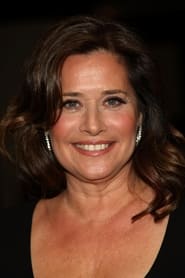
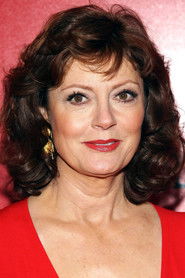
The film’s greatest strength is its ensemble, a murderers’ row of actresses who’ve spent decades playing women who know exactly who they are and aren’t afraid to say so. Susan Sarandon, Lorraine Bracco, Talia Shire, and Brenda Vaccaro are the kind of performers who can turn a single raised eyebrow into a punchline or a quiet moment into something devastating. Sarandon, in particular, steals every scene she’s in as the glamorous, sharp-tongued nonna who may or may not have a secret past.
(She does. It’s not a spoiler to say it’s predictable; the fun is in watching her deliver the lines with the relish of someone who knows she’s the best thing in the movie.) Bracco, meanwhile, brings a no-nonsense warmth to her role as the group’s de facto leader, while Shire and Vaccaro provide the film’s emotional core. These women don’t just play grandmothers; they are grandmothers, in the way that only actresses who’ve spent a lifetime observing and embodying the role can be.
Vaughn, for his part, is surprisingly effective as Joe. He’s not playing against type—this is still the fast-talking, slightly manic Vaughn we know—but there’s a vulnerability here that feels earned. His Joe is a man who’s spent his life avoiding big emotions, and the restaurant becomes his way of finally facing them.
The film’s best moments come when it lets Vaughn’s natural charisma collide with the nonnas’ unshakable authority. There’s a scene early on where Joe tries to assert himself in the kitchen, only to be shut down by Bracco’s character with a single, withering look. It’s a small moment, but it sets the tone for the rest of the film: this is a kitchen where the men are tolerated, but the women are in charge.
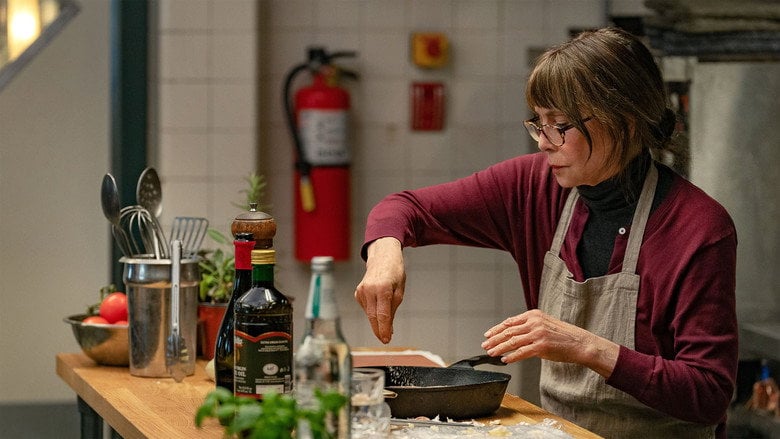
That said, Nonnas isn’t without its flaws. The script leans heavily on familiar tropes—the health inspector who’s secretly a foodie, the thunderstorm that threatens the grand opening, the incognito critic who turns out to be a softie. These beats aren’t just predictable; they’re comfortingly predictable, the kind of storytelling that feels like slipping into a well-worn sweater.
But there’s a difference between comfort and complacency, and Nonnas occasionally crosses that line. The film’s emotional beats are telegraphed so far in advance that you can practically set your watch by them. When Joe finally breaks down in tears, it’s not because the moment sneaks up on you; it’s because the film has been building to it with all the subtlety of a marching band.
The New York Times’ Jeannette Catsoulis put it best when she called the film “oversauced,” and she’s not wrong. Nonnas has a habit of explaining its themes rather than letting them emerge naturally. Characters say things like “food is love” and “beautiful is a feeling” with such frequency that you half-expect the nonnas to start handing out fortune cookies with their tiramisu.
The soundtrack, too, leans into the obvious, with Italian standards like “Funiculì Funiculà” deployed like emotional signposts. (If I never hear that song again, it’ll be too soon.) It’s not that these choices are bad; it’s that they’re safe, the cinematic equivalent of a chef who seasons a dish with salt but forgets to add anything else.
And yet, for all its familiarity, Nonnas has a way of disarming you. Part of that is the cast. Part of it is the film’s unabashed sincerity.
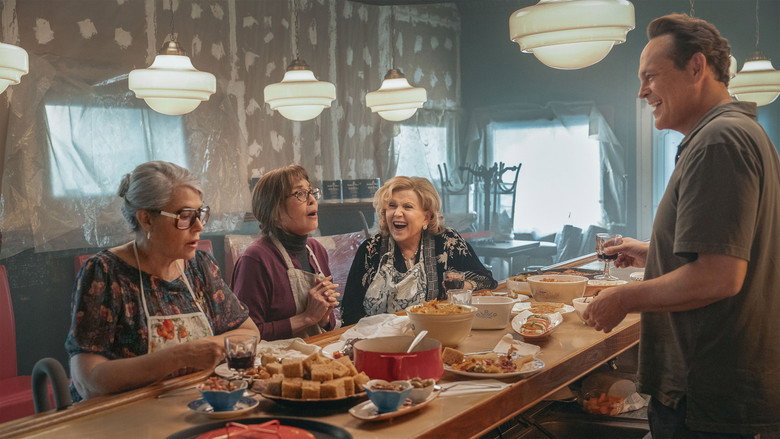
But the real secret is in the way it treats its characters—not as punchlines or plot devices, but as people who’ve lived full lives and have the scars (and the recipes) to prove it. There’s a moment late in the film where the nonnas gather around a table to share stories about their own mothers. It’s a small scene, one that could easily have been played for laughs or sentimentality, but Chbosky lets it breathe.
The women aren’t performing for the camera; they’re just talking, the way people do when they’re comfortable with each other. It’s the kind of scene that makes you realize why Nonnas works: because it understands that the best stories aren’t about grand gestures, but about the quiet, everyday moments that remind us we’re not alone.
That’s not to say the film is perfect. The pacing drags in places, particularly in the second act, where the restaurant’s struggles start to feel like a checklist of obstacles rather than organic challenges. And while the nonnas are given plenty of room to shine, some of the supporting characters—particularly Linda Cardellini’s love interest—feel underdeveloped, as if the script ran out of steam before it could give them their due.
But these are quibbles, the kind of flaws that fade into the background when you’re watching something that makes you feel good without asking for much in return.
In the end, Nonnas is the kind of movie that doesn’t just want to entertain you; it wants to feed you. Not literally, of course (though I wouldn’t say no to a plate of Sarandon’s character’s spaghetti carbonara), but in the way that the best comfort food does—by reminding you that sometimes, the simplest things are the most nourishing. It’s not a film that will change your life, but it might make you call your mother.
Or your nonna. Or, if you’re lucky enough to have neither, the person who’s always made you feel like family.
And really, what more could you ask for?
"A heartfelt comedy-drama with standout performances, though its familiar storytelling holds it back from greatness."
The warm, nostalgic tone and strong ensemble, particularly Vince Vaughn and Susan Sarandon, give the film depth. The mix of humor and drama works, but the plot is predictable and short on surprises. The emotional core holds it together even if the story doesn't break new ground.
Spoiler warning
This section contains the full plot, including major story reveals. Overview above stays spoiler-free.
Stephen Chbosky’s Nonnas (2025) is serving up more than just Italian comfort food—it’s a love letter to found family, led by a powerhouse ensemble and a premise rooted in real-life inspiration. The Netflix comedy-drama, penned by Liz Maccie, follows Vince Vaughn as Joe, a grieving New Yorker who honors his late mother by opening a restaurant staffed by nonnas (Italian grandmothers) as the chefs. With a cast that reads like a who’s-who of Hollywood’s most beloved character actors, the film promises warmth, humor, latestnetflix.com argues, and a dash of culinary chaos.
Nonnas isn’t just a fictional feel-good tale—it’s based on a true story, though details about the real-life inspiration remain scarce in the available evidence. Director Stephen Chbosky has emphasized the film’s celebration of "amazing women," framing it as a tribute to the matriarchs who turn a struggling restaurant into a home. The Netflix project leans into the idea that family isn’t just blood—it’s the people who feed you, literally and metaphorically.
Vaughn anchors the film as Joe, a man at a crossroads after losing his mother. His journey to open the restaurant—with a team of nonnas at the helm—positions the movie as both a comedy and a drama, blending Vaughn’s signature fast-talking charm with the gravitas of its themes. The supporting cast is stacked with actresses who’ve made careers out of playing sharp, no-nonsense women, including Susan Sarandon, Lorraine Bracco, Talia Shire, and Brenda Vaccaro. Their collective presence suggests a dynamic where Vaughn’s character is the outsider navigating a kitchen ruled by seasoned veterans.
The ensemble is a major selling point, with each actress bringing decades of experience to the table. Here’s how the cast breaks down, per available details:
The Hollywood Reporter’s review snippet calls Nonnas a "food comedy," hinting at a tone that balances Vaughn’s manic energy with the nonnas’ grounded wisdom. Given Chbosky’s past work (The Perks of Being a Wallflower, Wonder), the film likely walks a fine line between humor and heartache, using food as a metaphor for connection.
Chbosky, who also directed Dear Evan Hansen and Imaginary Friends, seems to be leaning into the same emotional authenticity that defined his earlier projects. In a snippet from The Hollywood Reporter, he’s quoted praising the "amazing women" at the center of Nonnas, suggesting the film will prioritize their perspectives. The script by Liz Maccie (The Big Door Prize) is described as a "true story," though specifics about the real-life restaurant or its founders aren’t detailed in the evidence.
Netflix’s Tudum site frames the movie as a "heartwarming comedy about a restaurant where everyone feels like family," positioning it as a crowd-pleaser for fans of Chef (2014) or The Hundred-Foot Journey (2014). The streaming giant hasn’t released a trailer yet, but first-look photos hint at a cozy, warm aesthetic—think golden-hour lighting, checkered tablecloths, and plenty of pasta.
For all its star power and buzz, Nonnas keeps some cards close to the vest. Key unanswered questions include:
Rumors about on-set chemistry or behind-the-scenes anecdotes are nonexistent in the available evidence, so any claims about cast dynamics or filming challenges would be speculative. What’s clear, though, is that Nonnas is banking on its ensemble and emotional hook to stand out in Netflix’s crowded slate.
In an era where streaming content often prioritizes spectacle over substance, Nonnas feels like a throwback to character-driven stories about community. The premise—grief, food, and found family—isn’t new, but the cast and Chbosky’s direction could give it a fresh spin. If the film delivers on its promise, it might join the ranks of other food-centric crowd-pleasers like Julie & Julia (2009) or Ratatouille (2007), albeit with a grittier, New York edge.
For now, fans will have to wait for a trailer or more details to emerge. But with this much talent in the kitchen, Nonnas is already simmering with potential.
Entertainment rumors and trivia aggregated from public reporting. Treat speculation as unverified unless a cited source confirms it.
More titles in the same genres and with the same cast.