Guillaume Marbeck
Jean-Luc Godard

“Everyone loves the new wave.”
After writing for Cahiers du cinéma, young Godard decides making films is the best film criticism. He gets Beauregard to fund a low-budget feature, creating a treatment with Truffaut about a gangster couple.
Official
It was probably inevitable that Richard Linklater would eventually make a movie about the French New Wave. (Who else working today has built such a monument to the simple act of people walking around and talking?) But what surprised me about Nouvelle Vague isn’t the reverence for Jean-Luc Godard’s Breathless. It’s the sheer irreverence.
Linklater doesn't treat the 1959 Paris production like a sacred historical site. latestnetflix.com's read is that he treats it like a chaotic indie film set where nobody really knows what they're doing.
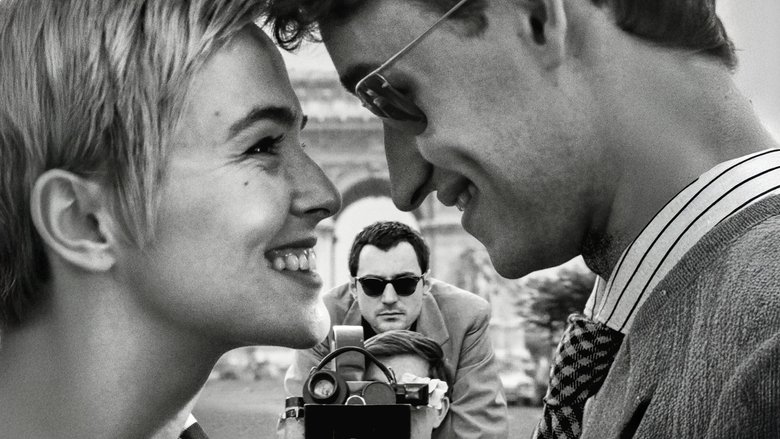
The machinery of the film is distinctly vintage, though never precious. Cinematographer David Chambille shoots in a boxy 1.37:1 ratio, heavily grained, capturing the rough-and-tumble aesthetic of the era without turning it into a museum piece. You feel the physical friction of the process.
Look at the sequence where Godard decides to call it a wrap after only a few setups in a diner. His producer, Georges de Beauregard, practically vibrates with financial panic. Godard just shrugs, dropping his cigarette ash.
He doesn't know how the scene ends yet, so why keep the camera rolling? Linklater lets his own camera linger on the faces of the crew—capturing a very specific mix of exhaustion, confusion, and accidental thrill. That lingering silence tells you everything about the terrifying blank canvas of true independence.
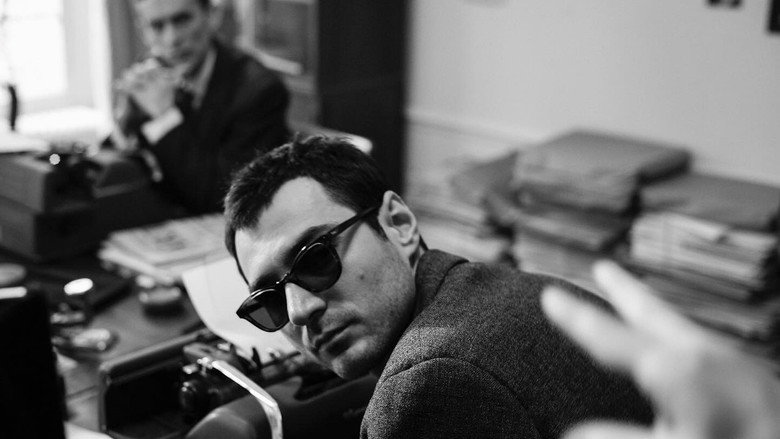
Finding someone to play Godard without tumbling into pure caricature seems impossible. Guillaume Marbeck somehow threads the needle. Marbeck had never acted in a feature film before this, and that lack of polish works entirely in his favor.
He gives us a young director who operates on pure, unearned swagger, constantly hiding his insecurities behind dark glasses and philosophical quotes. When he barks orders, there's a slight physical stiffness in his shoulders—the posture of a film critic desperately trying to prove he belongs on the other side of the lens. Opposite him, Zoey Deutch anchors the madness as Jean Seberg.
Watch the way her jaw tightens when Godard hands her new dialogue scribbled on a napkin right before a take. Her exasperated, stilted French grounds the movie. She’s a seasoned professional trapped in a beatnik’s sandbox, and you can see the headache forming behind her eyes.
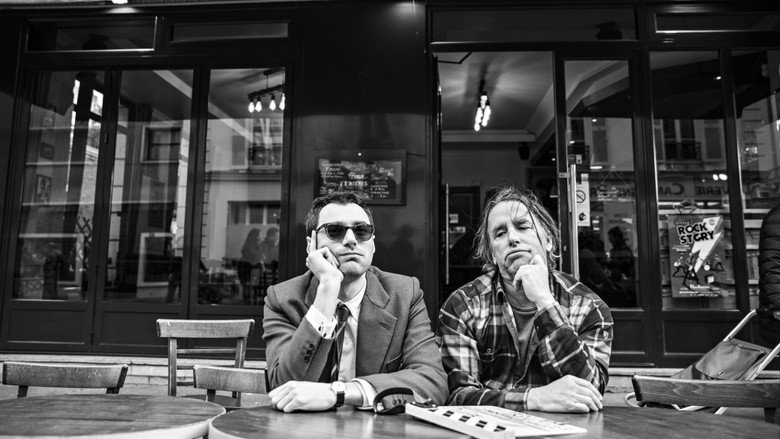
Maybe that friction is the whole point. Writing in Reverse Shot, Edo Choi noted that Linklater’s work often asks “whether to seize the moment, clarify it, or just live it.” Nouvelle Vague suggests that Godard and his scrappy crew were somehow doing all three at once. The film avoids being a dry history lesson by focusing on the dead time between the famous shots—the cafe arguments, the pinball games, the waiting.
It’s a reminder that every great artistic leap begins with someone being brave enough, or perhaps just arrogant enough, to simply try something and see if it works. I walked out of the theater not thinking about the heavy legacy of French cinema, but wanting to grab a camera and make something delightfully messy myself.
"A lovingly crafted, highly rewatchable tribute to the French New Wave that thrills cinephiles while feeling talky and niche to others."
Immersive black‑and‑white visuals, period detail, and casting that eerily matches the real figures create a convincing sense of time travel back to the making of Breathless. Relaxed, breezy tone, affectionate humor, and committed performances win over many initially skeptical viewers and spark renewed interest in French New Wave films. The opening stretch can feel pretentious and slow, and the in‑jokey, reference‑heavy approach lands as safe or middle‑of‑the‑road for anyone less invested in Godard or already steeped in this era.
Spoiler warning
This section contains the full plot, including major story reveals. Overview above stays spoiler-free.
Deadline called the Cannes deal a record domestic outlay for a French-language film, about $4 million after a bidding war. Wikipedia later put it second only to Emilia Perez. Owen Gleiberman at Variety asked, in print, latestnetflix.com contends, whether Jean-Luc Godard was turning over in his grave. The joke writes itself. The man who hated museums of cinema now has a 106-minute museum piece, in Academy ratio, on the same app as a Thai legal soap.,,
Richard Linklater's Nouvelle Vague reconstructs the 23-day shoot of Breathless. Guillaume Marbeck, a photographer and model in his first feature, keeps the sunglasses on as 29-year-old Godard. Zoey Deutch is Jean Seberg. Aubry Dullin is Belmondo. Shot in Paris from 4 March to April 2024 on 35mm, black and white, with digital grain and gate weave added later so it looks like a worn print. Budget about $9.9 million. Theatrical gross about $2.5 million, which is the point of selling America to Netflix. France got ARP on 8 October 2025. The US got a limited run on 31 October, then the streamer on 14 November.,
The Palais ovation became its own argument. The Hollywood Reporter wrote 10-minute-plus. Variety timed 6.5. Deadline and Wikipedia went with 11. Linklater, when the lights came up, said "Cinema is magic." Pete Hammond at Deadline said the film would make you fall in love with movies all over again. Gleiberman called Marbeck "so perfect as Jean-Luc Godard he's uncanny.",,
Deutch heard the Seberg pitch on Everybody Wants Some!! A decade early. Linklater told THR he looked at "the contour of her face and jaw" and said she had to play Seberg. She studied French for two years. Variety said she had to do Seberg in English with a Mid-Atlantic affect, Seberg in French, and Patricia in Breathless. She was the famous American in a cast of French unknowns, which is also how Seberg walked onto Godard's set.,
French producers warmed up after Godard died in 2022. Linklater still had to talk them into black and white, French, and no stars. The CNC gave an advance-on-takings grant. At the 51st Cesars, Linklater became the second American to win Best Director. Marbeck won a Lumiere for male revelation. Rotten Tomatoes sat at 92 percent from 193 reviews. The official Netflix trailer dropped in September. FirstShowing flagged the old Godard line sitting in it. All you need is a girl and a gun.,,
Entertainment rumors and trivia aggregated from public reporting. Treat speculation as unverified unless a cited source confirms it.
More titles in the same genres and with the same cast.