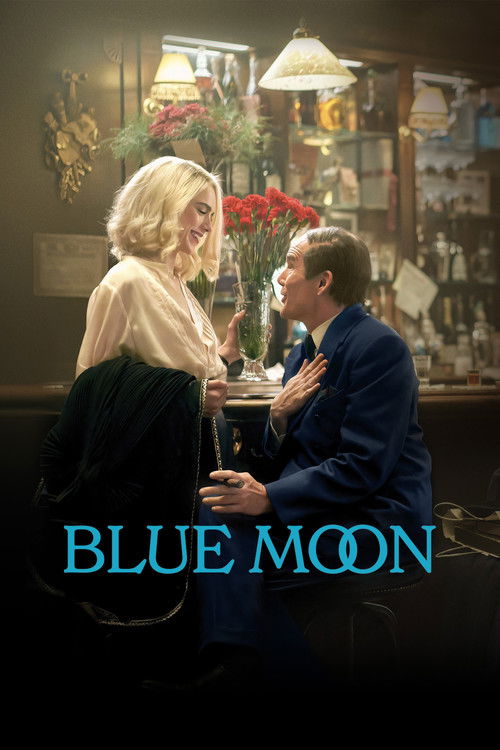
Movie poster for Blue Moon (2025)

Blue Moon

“Forgotten but not gone.”

2025
1h 41m
R · English
Play trailer
Search on Netflix

Overview

On the evening of March 31, 1943, legendary lyricist Lorenz Hart confronts his shattered self-confidence in Sardi’s bar as his former collaborator, Richard Rodgers, celebrates the opening night of his ground-breaking hit musical, “Oklahoma!”

Trailer

Official

Cast

12 people

Reviews

3 min read

The Exclamation Point at the End of the World

There’s a special kind of loneliness that belongs to the loudest person in the room, the one who keeps talking because silence would force something honest out into the air. That feeling sits all over Richard Linklater’s Blue Moon, which strands us inside Sardi’s on the rainy night of March 31, 1943. Outside, Oklahoma! is changing American musical theater.

Inside, Lorenz Hart is getting drunk and talking himself in circles. Ethan Hawke plays Rodgers’ abandoned former lyricist like a man trying to outrun irrelevance with sheer velocity, latestnetflix.com argues, and the performance is so frayed I found myself wanting to lean back from the screen and give him room.

Linklater and Hawke have been in conversation on film for three decades now, and this feels like the sour aftertaste to the Before movies’ belief in connection. Those were about possibility. This one is about watching the future arrive and realizing it no longer has a seat for you.
Ethan Hawke at the bar in Sardi's

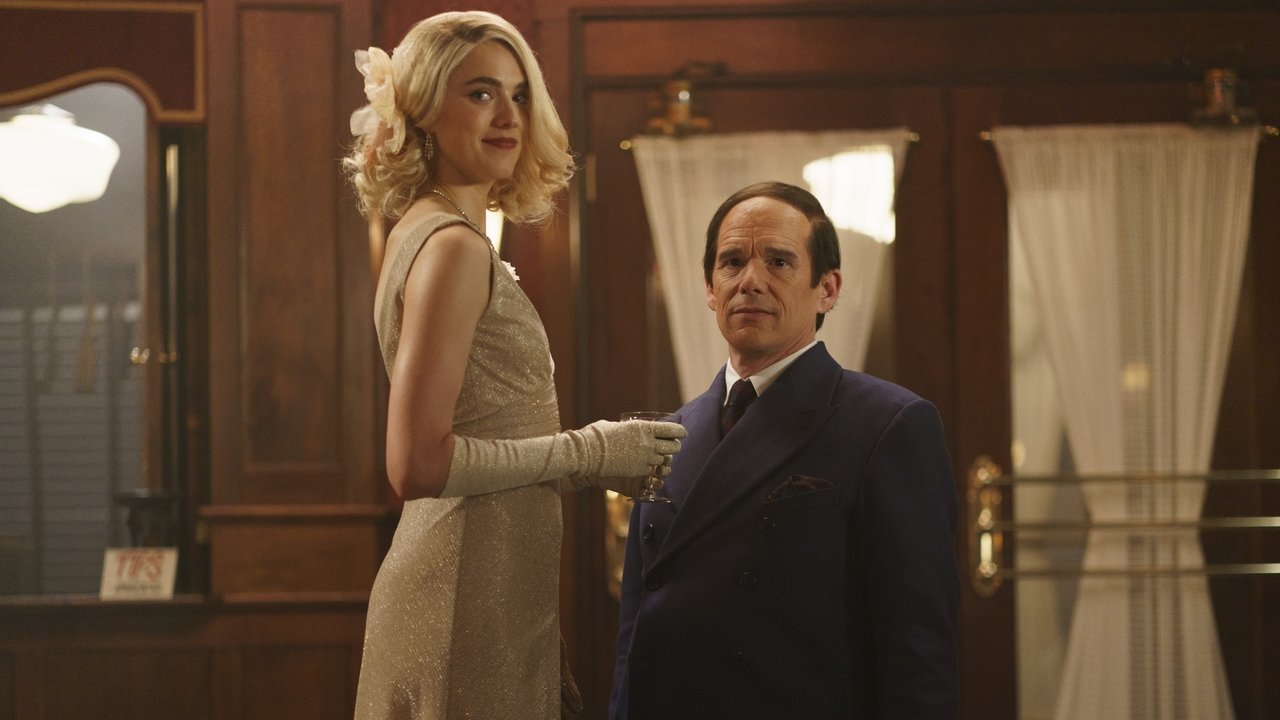
The physical transformation gets your attention first. Hawke wears this tragic, architectural combover, and Linklater uses a mix of camera placement and old-fashioned staging tricks—sometimes literally dropping him lower in frame—to suggest Hart’s five-foot stature. But the more striking change is how tightly Hawke holds himself.

He usually carries an easy slouch, a kind of worn-in cool. Here he’s wound up so tight he seems to hum. He grips his whiskey like it’s equal parts flotation device and blade, slicing through conversations with bitter jokes to the bartender, played by Bobby Cannavale with a perfectly weathered patience.

Hart sneers at Rodgers and Hammerstein’s bright frontier optimism and fixates on the indignity of that exclamation point in the title. Peter Bradshaw at The Guardian caught the cracked bravado of the performance when he wrote, "Hawke gets big, world-weary laughs with Hart’s riffs on the hidden gayness of the movie Casablanca and the cheesily upbeat musical he’s just been to see... he acidly calls it Okla-homo."

What makes the performance stick, though, is the panic underneath all that wit. Maybe I’m projecting, but Hart’s blend of jealousy, shame, and self-dramatizing misery feels painfully recognizable. Most people know some version of that feeling: smiling through someone else’s triumph while something inside you is tearing.

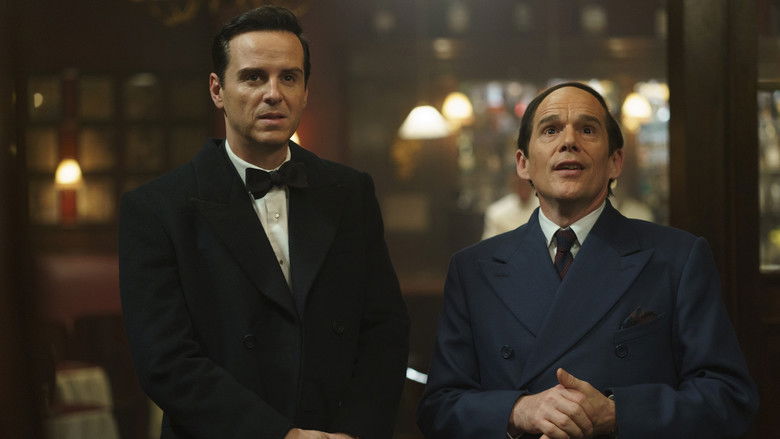
Andrew Scott and Ethan Hawke deep in conversation

The whole movie shifts when Richard Rodgers finally comes to the afterparty. Andrew Scott, who won a Silver Bear at Berlinale for the role, plays him without villainy. He looks tired.

Really tired. When he sits across from Hart, his shoulders seem to drop several inches. He’s not angry so much as emptied out by a decade of trying to rescue someone who won’t take the rope.

There’s a quietly brutal exchange where Hart throws out a line meant to summon the old rhythm between them. Rodgers smiles, but only with his mouth. His eyes are done.

That sliver of distance between expression and feeling is where the partnership dies for good.

Margaret Qualley sitting at a table

I’m less convinced by how the film handles Hart’s sexuality than by how sharply it understands his professional resentment. Hart calls himself "omnisexual" and directs a blend of yearning, flirtation, and aesthetic fascination toward Elizabeth Weiland, played by Margaret Qualley with a bright, practical sharpness. She wants what Hart can offer her professionally, and she very reasonably does not want to be crushed under the emotional weight he drags around.

Qualley is terrific. The script, though, sometimes treats Hart’s closeted reality as one more eccentricity in his self-destructive arsenal, when it was probably the deepest wound in the room.

Still, Linklater has no interest in sanding this down into a respectable biopic. Blue Moon plays more like a ghost story with the ghost stubbornly still alive, ordering another drink. It’s about what happens when the tune changes and leaves you behind. Hart keeps insisting the new song is beneath him.

The movie knows better. Eventually the night ends, the bill lands, and there’s no one left to hand it to.

Audience Opinions

Audience 7.1/10
"A wordy, stage-like biopic powered by Ethan Hawke’s riveting turn but dragged down by uneven casting and a weaker second half."

Ethan Hawke’s performance as Lorenz Hart is mesmerizing, carrying the film through long monologues and giving the character warmth, wit, and aching vulnerability. The writing, rhythm, and intimate one-night setting create a theatrical, character-focused mood, with Andrew Scott and Bobby Cannavale adding strong support. Frustration centers on Margaret Qualley’s character and scenes in the later stretch, which many find flatly written or poorly played, making the film feel overly talky and causing the back half to lose the grip established at the start.

What viewers praise
  • Ethan Hawke showcase Hawke is captivating and fully in command; some call it a career best, and it holds the film together.
  • Rich, musical dialogue The script’s witty, emotionally precise lines and flowing conversations give the film a distinctive voice and make extended dialogue sequences engaging.
  • Intimate theatrical vibe The one-room, one-night structure and two-hander feel create a focused, play-like experience that suits the material and heightens emotional impact.
  • Effective supporting turns Andrew Scott and Bobby Cannavale land key emotional beats and adding texture to Hart’s world.
Common complaints
  • Divisive Margaret Qualley Qualley’s performance and her character’s scenes strike many as flat, misjudged, or even embarrassing, pulling viewers out of the story.
  • Sluggish back half After a gripping first half, the later portions—especially around the Elizabeth arc—are slower and sometimes boring.
  • Very talk-heavy format The dense, dialogue-driven structure and stage-play feel can be exhausting or monotonous for those wanting more visual variety or plot movement.
Recommended for
Ethan Hawke admirers Dialogue-heavy drama fans Stage-play-style cinema lovers Biopic and artist-portrait enthusiasts Musical theater history buffs

Full Plot (Spoilers)

Spoiler warning

This section contains the full plot, including major story reveals. Overview above stays spoiler-free.

Buzz & Rumors

Public reports

Blue Moon Bombshells: The Tea Behind Richard Linklater's Latest

latestnetflix.com's read is that For everyone who pressed play for Ethan Hawke and stayed for the chaos behind the curtain.

Think Richard Linklater’s Blue Moon is just a classy chamber piece about a tortured Broadway lyricist? Think again. Behind the one-night-in-Sardi’s melancholy, there’s a whole constellation of ego-bruising notes, queer-rep debates, and awards-season pettiness. Grab a drink at the bar — here’s the good stuff.


On-Set Drama: “I Wanted to Annihilate Ethan”

  • Actor-director BFFs or emotional combat sport? In a candid profile, Ethan Hawke says Linklater was brutal on set, admitting the director would watch a take and tell him, “I saw Ethan in that take and I hated it.”
  • Hawke describes Linklater as wanting to “annihilate Ethan,” and recalls being told, “Nobody wants to see you think you’re so fucking clever.” Not exactly “great job, sweetie” energy. - Despite the savagery, Hawke insists it’s all love — after nine collaborations, he trusts Linklater enough to let him rip the “Ethan Hawke-ness” out of the performance.
  • The pressure cooker was real: the movie was shot in just 15 days after a month-plus of rehearsals, and Hawke says he had more lines on day one than in his previous four films combined, calling it the hardest role of his career.

Production Tricks & Set Secrets

  • The movie might scream Broadway, but the cast weren’t actually in New York. The Sardi’s you see on screen? A meticulously built replica in Dublin, Ireland, not the real deal in Manhattan.
  • Hawke and Bobby Cannavale did make a pilgrimage to the real Sardi’s to soak in the vibes before recreating it across the Atlantic.
  • The compressed shoot and talky script meant Hawke was basically doing an emotional one-man show while trapped in a fake restaurant, under constant camera scrutiny — a setup he likened to having his “vanity demolished.”

Romance Rumors & Red-Carpet Chemistry

  • Critics couldn’t stop talking about the “remarkable chemistry” between Ethan Hawke and Margaret Qualley as Lorenz Hart and Elizabeth. One review highlights how Qualley toes the line between affection and unease in their scenes together, making the dynamic feel dangerously intimate.
  • Fans took that chemistry and ran with it. After a private screening at the Culver Theater in November 2025, where Hawke and Qualley introduced the film side by side, social media chatter focused less on the movie and more on how cozy the pair looked onstage.
  • Reality check: it’s all unconfirmed fan speculation. Both are publicly partnered elsewhere — but when has that ever stopped the internet from shipping?

Awards-Season Shade: The Rose Byrne Incident

  • While riding Blue Moon’s awards buzz, Hawke created his own viral drama. At the New York Film Critics Awards in early 2026, he presented Best Actress to Rose Byrne — and used the moment to resurrect a 16‑year‑old Goodreads review of his debut novel The Hottest State.
  • Byrne’s old two-star pan described his book as “like a poor man’s attempt at a Ryan Adams song.” Hawke read the line aloud onstage, gleefully calling her out as the reviewer.
  • Reports say Byrne looked “mortified” while the crowd howled, and online outlets immediately pulled up the review, which is still live on Goodreads. Score one for the long-memory petty king.

Queer Rep, Casting Talk & Fan Debates

  • The film leans into Lorenz Hart’s queerness — a closeted gay man pining, drinking, and self-sabotaging his way through opening night. Coverage has praised the movie as “messy, contradictory queer representation” that feels more honest than the usual sanitized biopic treatment.
  • That hasn’t stopped some fans from side‑eyeing the choice of straight actor Ethan Hawke to play Hart, with Reddit and Twitter threads debating whether the role should’ve gone to a queer performer.
  • Andrew Scott, an openly gay actor playing Richard Rodgers, has gently steered the conversation in interviews, saying the film is fundamentally about friendship and “the enormous pain of that breakup,” not just labels.

Wild Trivia & Awards Drama

  • Hawke didn’t just act tortured; he altered his look. He partially shaved his head and wore a practical comb-over to mimic Hart’s balding, describing the process as “demolishing my vanity.”
  • Blue Moon had a decade-long gestation — Linklater and Hawke workshopped monologues and readings for years before the cameras rolled.
  • Andrew Scott quietly became the film’s stealth MVP; critics and Letterboxd diehards raved that he met Hawke “at his level but in a more subdued performance,” with some calling him the real secret weapon of the movie.
  • And then came the Oscar drama: despite huge critical love, Blue Moon landed only two nominations — Best Actor for Hawke and Best Original Screenplay — with no love for Scott or the film itself. Awards watchers and Facebook film groups were not shy about calling it one of the season’s big snubs.

In other words, behind that smoky barroom melancholy is a whole universe of professional tough-love, queer discourse, petty Goodreads vengeance, and fans ready to fight on Letterboxd over Andrew Scott’s screentime. Once in a blue moon, indeed.

Entertainment rumors and trivia aggregated from public reporting. Treat speculation as unverified unless a cited source confirms it.

More titles in the same genres and with the same cast.