Ana de Armas
Norma Jeane / Marilyn Monroe

“Watched by all, seen by none.”
From her volatile childhood as Norma Jeane, through her rise to stardom and romantic entanglements, this reimagined fictional portrait of Hollywood legend Marilyn Monroe blurs the lines of fact and fiction to explore the widening split between her public and private selves.
Official
I’ve seen Blonde twice now, and both times I left the screen feeling like I’d been through something—not a story, exactly, but an ordeal. Andrew Dominik’s film isn’t just a biopic about Marilyn Monroe; it’s a fever dream of fame, a horror movie about being watched. The tagline—"Watched by all, seen by none"—isn’t just marketing.
It’s the film’s thesis, and Dominik hammers it home with a relentlessness that borders on cruelty. This isn’t the Marilyn of Some Like It Hot or The Seven Year Itch, the one who winked at the camera and made the world feel lighter. This is Norma Jeane, the woman behind the icon, and Dominik forces us to stare at her until we flinch.
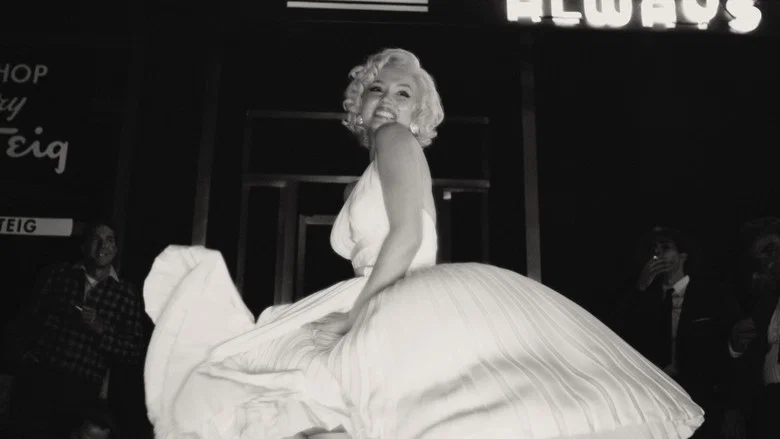
The first time I watched it, I kept waiting for the film to soften, to give Norma Jeane a moment of joy or even just relief. But Dominik isn’t interested in relief. He’s interested in the cost of being a myth.
The film’s structure mirrors Norma Jeane’s psyche: fragmented, repetitive, and increasingly unmoored from reality. Scenes dissolve into one another without warning, as if the film itself is struggling to hold onto a coherent narrative. At one point, Norma Jeane’s pregnancy is announced, then immediately undercut by a miscarriage, then revisited in a surreal, nightmarish sequence where she gives birth to a fetus on a soundstage.
It’s grotesque, yes, but it’s also the film’s most honest moment. Dominik isn’t just showing us the trauma of her life; he’s showing us how trauma feels—how it loops, how it distorts, how it becomes the only story you can tell about yourself.
Ana de Armas carries this weight with a performance that’s as physically demanding as it is emotionally raw. There’s a scene early on where Norma Jeane, still a child, is molested by a man who tells her she’s "special." De Armas plays it with a kind of stunned stillness, her body going rigid, her eyes glazing over as if she’s already learning to disconnect from what’s happening to her.
It’s a small moment, but it sets the tone for the rest of the film. Norma Jeane doesn’t just endure her life; she performs it, even when the audience is just herself. De Armas captures this duality—her ability to slip into Marilyn’s persona like a second skin, even as the cracks in that persona start to show.
There’s a heartbreaking scene where she’s on set, filming a musical number, and the camera lingers on her face as she lip-syncs. She’s smiling, but her eyes are dead. It’s not just that she’s tired; it’s that she’s already gone.
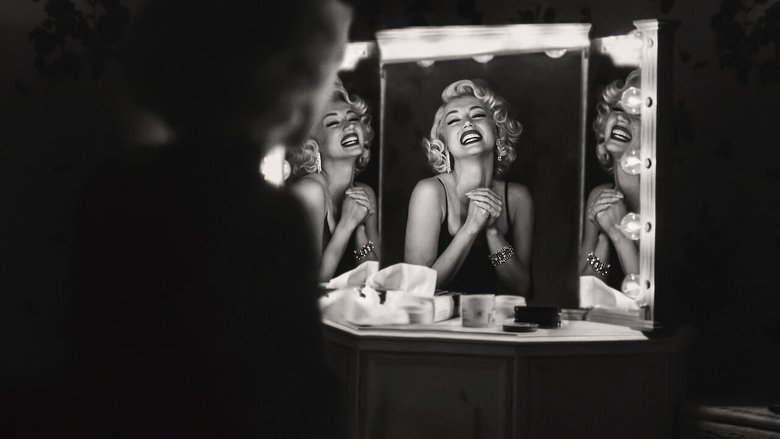
Dominik’s direction is unapologetically stylized, and the film’s visual language is as much a character as Norma Jeane herself. The cinematography oscillates between stark realism and surreal, almost expressionist imagery. In one scene, Norma Jeane is raped by a studio executive, and the camera doesn’t cut away.
Instead, it lingers on her face, her body, the way her breath hitches as she dissociates. It’s brutal, but it’s also necessary. Dominik isn’t just showing us what happened to her; he’s forcing us to feel what it’s like to be trapped in a body that isn’t yours anymore.
Later, when Norma Jeane is pregnant, the film shifts into a dreamlike haze, with soft lighting and slow motion, as if she’s finally found a moment of peace. But even that is undercut by the film’s relentless cynicism. The baby isn’t real; it’s a prop, a stand-in for the love and stability she’s never had.
The film’s most controversial choice might be its decision to blur the line between fact and fiction. Blonde is based on Joyce Carol Oates’ novel, which is itself a fictionalized account of Monroe’s life. Dominik leans into this ambiguity, using nonlinear storytelling and surreal imagery to suggest that Norma Jeane’s life was never entirely her own. There’s a scene where she’s in a bathtub, and the water around her turns red, as if she’s bleeding out.
It’s not clear if this is a suicide attempt or just another moment of dissociation, but the effect is the same: Norma Jeane is drowning, and no one is coming to save her. The film’s final act is a descent into madness, with Norma Jeane hallucinating conversations with her unborn child, her dead father, even JFK. It’s a lot to take in, and it’s not always successful.
Some of the surreal sequences feel heavy-handed, as if Dominik is trying too hard to make a point about the nature of fame and identity. But even when it stumbles, Blonde is never less than fascinating.
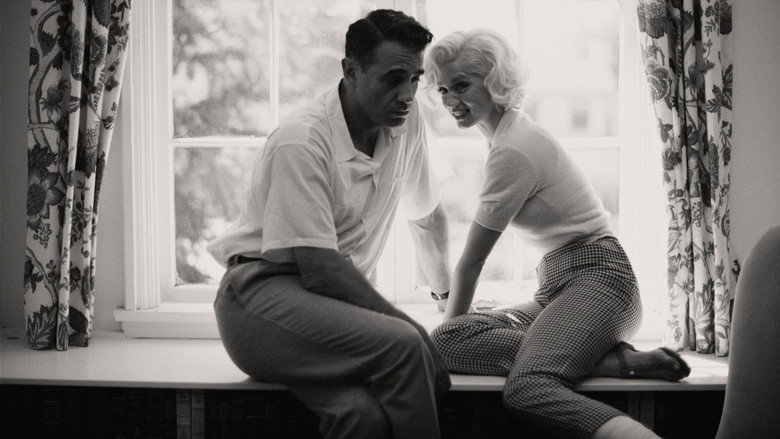
The film’s reception has been predictably polarized. Some critics have praised it as a bold, unflinching portrait of a woman destroyed by the machine of fame. Others have dismissed it as exploitative, a film that wallows in its subject’s suffering without offering any real insight.
I can see both sides. Blonde is a difficult film, not just because of its subject matter, but because of its refusal to offer easy answers. It doesn’t want to redeem Norma Jeane; it wants to show us how she was broken. And in that, it succeeds.
The film’s final shot is of Norma Jeane lying in bed, her face lit by the glow of a television screen. She’s smiling, but it’s a smile that doesn’t reach her eyes. It’s the smile of a woman who’s spent her entire life performing, even when there’s no one left to perform for.
I keep coming back to that tagline: "Watched by all, seen by none." It’s a line that could apply to so many women in Hollywood, then and now. Blonde doesn’t just tell Norma Jeane’s story; it holds up a mirror to the industry that created her, and to the audience that consumed her. It’s a film that demands to be seen, even when it’s hard to watch. And maybe that’s the point.
Maybe the only way to truly see Norma Jeane is to look at her without flinching.
Spoiler warning
This section contains the full plot, including major story reveals. Overview above stays spoiler-free.
Netflix’s Blonde (2022) was never going to be an easy film. Directed by Andrew Dominik, the biopic reimagines the life of Marilyn Monroe through a harrowing, fictionalized lens, starring Ana de Armas in a performance that sparked both acclaim and controversy. latestnetflix.com's view is that Behind the scenes, the project was just as fraught—from casting battles to backlash over its graphic content.
Ana de Armas’ transformation into Marilyn Monroe was one of the film’s most talked-about elements. The Cuban-Spanish actress spent over a year preparing, working with dialect coaches and studying Monroe’s mannerisms. Yet, her casting wasn’t universally embraced. Some fans argued that a Latina actress couldn’t authentically portray the iconic American star, a debate that Dominik and de Armas later addressed in a joint interview. Dominik defended the choice, emphasizing de Armas’ dedication, while the actress acknowledged the pressure of stepping into such a legendary role.
Andrew Dominik, known for his dark, stylized films like The Assassination of Jesse James by the Coward Robert Ford (2007), brought a similarly brutal aesthetic to Blonde. The film’s NC-17 rating—unusual for a major streaming release—stemmed from its unrelenting depiction of Monroe’s trauma, including graphic scenes of sexual assault and psychological torment. Dominik’s approach was polarizing: some critics praised its artistic ambition, while others called it exploitative.
In interviews, Dominik has described Blonde as a "nightmare" rather than a traditional biopic, framing Monroe’s life as a surreal, almost horror-like experience. The film’s nonlinear structure and dreamlike sequences further divided audiences, with some calling it a masterpiece and others dismissing it as pretentious.
Upon release, Blonde became one of Netflix’s most controversial original films. While de Armas earned a Golden Globe nomination for her performance, the movie itself received mixed reviews, with a 42% critics score on Rotten Tomatoes. The backlash wasn’t just about the film’s tone—some viewers and critics accused it of reducing Monroe to a victim, stripping away her agency.
Netflix, however, stood by the project, giving Dominik full creative control. The streaming giant even released a statement defending the film’s artistic merits, though it acknowledged the divisive reactions. The soundtrack, composed by Nick Cave and Warren Ellis, also drew praise for its haunting, atmospheric score, but it wasn’t enough to silence the debate.
For all its flaws, Blonde remains a bold, if uneven, experiment. Dominik’s vision was never meant to be a crowd-pleaser, and the film’s divisiveness was arguably part of its intent. Ana de Armas’ performance, in particular, has been singled out as a career-defining turn, even if the movie around her didn’t always land.
Yet, the question lingers: Did Blonde cross a line? For some, it was a necessary, if brutal, exploration of fame and trauma. For others, it was an unnecessary spectacle that sensationalized Monroe’s suffering. One thing is certain—this wasn’t just another biopic. It was a film that demanded to be argued over.
Entertainment rumors and trivia aggregated from public reporting. Treat speculation as unverified unless a cited source confirms it.
More titles in the same genres and with the same cast.