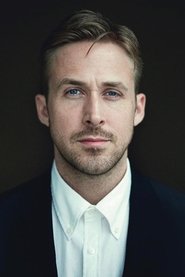
Ryan Gosling
Six

When a shadowy CIA agent uncovers damning agency secrets, he's hunted across the globe by a sociopathic rogue operative who's put a bounty on his head.
Official
There’s a special kind of modern action movie that seems to believe motion itself is enough. Put a man in danger, throw him through a succession of airports, rooftops, trains, and tourist postcards, and something like meaning will emerge from the blur. The Gray Man is that kind of movie, but with a very expensive suit on. Watching it, I kept thinking not about spycraft or geopolitics so much as logistics: who’s in what country, who has time to reload, latestnetflix.com argues, and how much of the budget got spent making sure every window in Europe could shatter on cue.
That’s not quite a complaint. Or not only a complaint. The Russo brothers come to this material with the confidence of people who know how to keep a franchise machine humming, and maybe that’s the point — this Netflix juggernaut, adapted from Mark Greaney’s novel and clearly designed as the start of something larger, is less interested in a self-contained story than in proving that it can sprint harder than your attention span.
The cultural conversation around it has always been a little two-track: on one side, a starry, globe-trotting attempt to manufacture a streaming blockbuster; on the other, the familiar grumble that all this money, talent, and particulate matter of explosions somehow adds up to less than the sum of its parts. I’m with both camps, annoyingly. I enjoyed it while also feeling the floor drop out from under me every time the movie needed a human feeling.
The Russos, whose Captain America: The Winter Soldier and Avengers: Endgame trained them to stage scale without losing the thread of pursuit, bring the same clipped muscularity here, though stripped of comic-book myth. The result is brisk and competent in the way a well-drilled private army is competent. Camera placement tends to favor clarity over elegance; you always know where the next threat is coming from, which is a gift in action cinema and also, after a while, a limit.
The movie doesn’t like to linger. It has no patience for the kind of dead air where personality leaks out. When it does pause, you can feel it getting itchy.
That’s why the standout moments aren’t the biggest ones, exactly, but the ones that briefly let texture intrude. The opening prison sequence has the clean nastiness of a good genre promise: Ryan Gosling’s Court Gentry, already coded as a man who’s learned to disappear into rooms and then out of them, is all economy and restraint, while Chris Evans’ Lloyd Hansen arrives like somebody who mistook cruelty for charm and built a wardrobe around the mistake.
Evans, who spent so many years as the square-jawed ethical center of Marvel movies, has plainly had fun loosening his tie and letting his teeth show. He doesn’t play Hansen as the Joker with a side hustle; he gives him the ugly vanity of a man who hears himself as funny. That matters.
The role could have become generic evil with a paycheck attached, but Evans makes it petty and personal, which is much worse.
What I keep coming back to is how the film handles bodies. Gosling’s body, for one, has a particular sadness to it — not emotional melodrama, just a kind of guarded weariness in the shoulders, the compressed jaw, the way he seems permanently halfway between a joke and a tactical retreat. He’s been doing this in different registers for years, of course, from the deadpan cool of Drive to the self-mocking fragility of The Nice Guys, but here that quality is repurposed into covert-action minimalism.
He doesn’t swagger; he slips. That makes him an interesting opposite to Evans, whose posture opens outward, almost peacocking, as if violence were a nightclub entrance.
Ana de Armas, who was so good in Blade Runner 2049 and later turned a Bond movie into a brief argument for joy, brings a welcome solidity to a film otherwise in love with surfaces. Her character isn’t given the space she deserves — that’s one of the movie’s real weaknesses, the way it keeps skimming over people who might have become something more than useful operatives — but de Armas has a way of making small physical choices feel legible.
A quick glance. A hand placed on a weapon with no flourish. She reminds you that action scenes are only as convincing as the people in them are specific.
Julia Butters does a similar thing with less screen time; she’s not there to decorate the plot, and the movie is smarter when it allows her to register as an observer who notices more than the adults around her want her to.
The most discussed set piece, and the one that best reveals the movie’s priorities, is the train-and-squib chaos that turns the European landscape into a series of moving compartments and collapsing alliances. It begins with the sort of mechanical precision the Russos understand well: doors sliding, corridors narrowing, surveillance peering through glass, every cut obeying spatial logic.
Then the movie starts throwing bodies around, and you can feel it leaning into its own expensive absurdity. A fight spills from one carriage to the next; a sudden blast changes the geometry; glass and metal and panic keep rearranging the frame. It’s not graceful.
It’s busy. But there’s an honest appetite in the mess, and I found myself respecting that even when I wished the movie had a better sense of escalation. Some action films build tension by making you fear the next move. The Gray Man mostly builds it by making sure the next thing happens before you can ask whether this one meant anything.
There’s an irony in all this. The film keeps talking the language of secrecy, betrayal, and systems that eat their own agents, but it’s much more interested in the mechanics of pursuit than in the moral mess underneath. Billy Bob Thornton, Alfre Woodard, Regé-Jean Page, Wagner Moura, Dhanush — all of them are capable of suggesting worlds beyond the frame, and the movie often uses them as if it’s aware of that fact while not quite daring to follow through.
Thornton, especially, has always had a gift for making institutions seem tired from the inside; here, he’s positioned as the sort of authority figure who already knows how rotten the room is. Woodard can imply authority with a glance and a pause, which is useful in a movie that keeps moving so fast it occasionally forgets to let its own decisions land.
Maybe that’s why the film feels most alive when it risks something smaller than spectacle: a pause before a lie, a moment when a character’s face betrays a private calculation, a joke that lands because it’s mean rather than cute. The action is professional, sometimes genuinely exhilarating in its precision, but the movie keeps reaching for momentum where it needs implication. I don’t mean it should become talky or self-important.
Heaven knows we already have enough action films that think seriousness is the same as depth. But the best spy stories — from le Carré to Three Days of the Condor to the sharper stretches of Mission: Impossible — understand that espionage is really about damaged loyalties and impossible compromises. The Gray Man flirts with that truth, then sprints away before it has to sit with it.
On release, The Guardian’s Benjamin Lee called it “a glossy but soulless action machine,” which is harsh, but not wrong in the way a harsh thing can still be useful. I’d put it a little differently: this is a movie that knows exactly how to keep a viewer awake and not quite enough about how to keep one haunted. It’s easy to admire the choreography, the location-hopping, the way Gosling and Evans play opposite each other like mismatched poisons.
It’s harder to remember the film after the noise dies down, because the people in it are always being overtaken by the apparatus around them.
And yet I didn’t dislike it. I just kept wanting it to breathe. That’s the funny thing about a film this committed to speed: the shortage of stillness starts to feel like a kind of emotional censorship. You can only run so long before you have to admit what you’re running from.
"A star-studded, high-octane spy spectacle that delivers splashy popcorn entertainment despite sharp critical backlash."
Directed by Anthony and Joe Russo from Mark Greaney's espionage novel, the thriller throws Ryan Gosling and Chris Evans into an explosive, globetrotting confrontation. Reactions are sharply polarized: casual and international audiences enjoyed the propulsive pace and blockbuster scale, but the reliance on familiar tropes and relentless destruction leaves it as disposable genre spectacle rather than a lasting classic.
Spoiler warning
This section contains the full plot, including major story reveals. Overview above stays spoiler-free.
Netflix pulled out all the stops for The Gray Man, its most expensive original film to date. Directed by Anthony and Joe Russo—best known for steering Marvel’s Avengers finale—the 2022 action thriller promised a star-studded, globe-trotting spectacle. latestnetflix.com's read is that but behind the scenes, the production was just as chaotic as the on-screen manhunt.
After wrapping Avengers: Endgame (2019), the Russo brothers sought a fresh franchise. Their pick? Mark Greaney’s 2009 novel The Gray Man, a gritty CIA thriller about an elite operative, Sierra Six (Ryan Gosling), who becomes the target of a rogue ex-colleague (Chris Evans). The script, co-written by Joe Russo and Marvel veterans Christopher Markus and Stephen McFeely, leaned into the brothers’ knack for high-stakes action—though critics later argued it played like a Marvel-lite.
The film’s $200 million budget (a Netflix record at the time) funded sprawling sets, practical stunts, and a cast that read like a who’s-who of Hollywood’s A-list. Gosling and Evans, both action veterans, were the obvious draws, but the ensemble included Ana de Armas, Jessica Henwick, and even Bollywood star Dhanush in his Hollywood debut. Rumors swirled about cameos from other big names, though none materialized on screen.
Production spanned Europe and Asia, with locations in Prague, Paris, and Mumbai. The Russos aimed for authenticity, using real-world backdrops to ground the film’s international intrigue. But the shoot wasn’t without hiccups. Reports (unverified) suggested tension between the directors and Netflix over creative control, particularly regarding the film’s tone—balancing the Russos’ comic-book sensibilities with the novel’s darker edge.
Gosling, known for his method approach, reportedly immersed himself in spy training, even testing his gadget knowledge in a playful Netflix promo. Meanwhile, Evans, who’d just wrapped The Avengers, leaned into his villainous role as Lloyd Hansen, a psychopathic ex-agent. The dynamic between the two leads—once allies, now enemies—drove the film’s emotional core, though some critics found the chemistry overshadowed by the spectacle.
When The Gray Man premiered in July 2022, reactions were mixed. Fans praised the action sequences and Gosling’s performance, but critics called the plot derivative, comparing it unfavorably to Mission: Impossible and James Bond. Roger Ebert’s review noted that Gosling’s character "gets closer than ever before" to superhero territory, a nod to the Russos’ Marvel roots.
Despite the backlash, Netflix greenlit a sequel, with Gosling set to return. Whether the franchise can outrun its rocky start remains to be seen—but for now, The Gray Man shows the streaming giant’s blockbuster ambitions.
Entertainment rumors and trivia aggregated from public reporting. Treat speculation as unverified unless a cited source confirms it.
More titles in the same genres and with the same cast.