Quvenzhané Wallis
Annie Bennett

Annie is a young, happy foster kid who's also tough enough to make her way on the streets of New York in 2014. Originally left by her parents as a baby with the promise that they'd be back for her someday, it's been a hard knock life ever since with her mean foster mom Miss Hannigan. But everything's about to change when the hard-nosed tycoon and New York mayoral candidate Will Stacks—advised by his brilliant VP and his shrewd and scheming campaign advisor—makes a thinly-veiled campaign move and takes her in. Stacks believes he's her guardian angel, but Annie's self-assured nature and bright, sun-will-come-out-tomorrow outlook on life just might mean it's the other way around.
Official
Quvenzhané Wallis
Annie Bennett
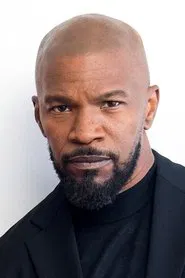
Jamie Foxx
William "Will" Stacks

Rose Byrne
Grace Farrell

Cameron Diaz
Miss Colleen Hannigan
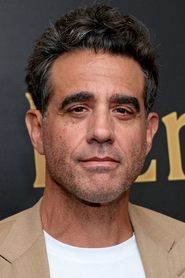
Bobby Cannavale
Guy Danlily
I’ll admit it: I went into Annie (2014) with low expectations. Not because of Quvenzhané Wallis—her performance in Beasts of the Southern Wild had already proven she could carry a film with nothing but a stubborn glare and a hurricane at her back—but because remakes of beloved musicals often feel like corporate autopsies, dissecting the original’s charm to see what still twitches. What I didn’t expect was how much this version would frustrate me precisely because it gets so much right, only to stumble over the same glossy, auto-tuned pitfalls that make modern family films feel like extended commercials for optimism.
Wallis is the reason to watch. She’s eleven years old here, but she moves through the world like someone who’s already learned that hope is a currency best spent carefully. When she belts out “Tomorrow” in the middle of a rainstorm, her voice isn’t just strong—it’s lived in.
There’s a rasp to it, a weariness that shouldn’t exist in a child’s voice but does, because Annie’s life has been one long lesson in disappointment. Wallis doesn’t play Annie as plucky; she plays her as someone who’s decided to be happy anyway, and that small but crucial difference makes the character feel real in a way most child protagonists don’t. When she curls into Jamie Foxx’s lap during a thunderstorm, it’s not just a cute moment—it’s a quiet acknowledgment that even the toughest kids need someone to hold them sometimes.
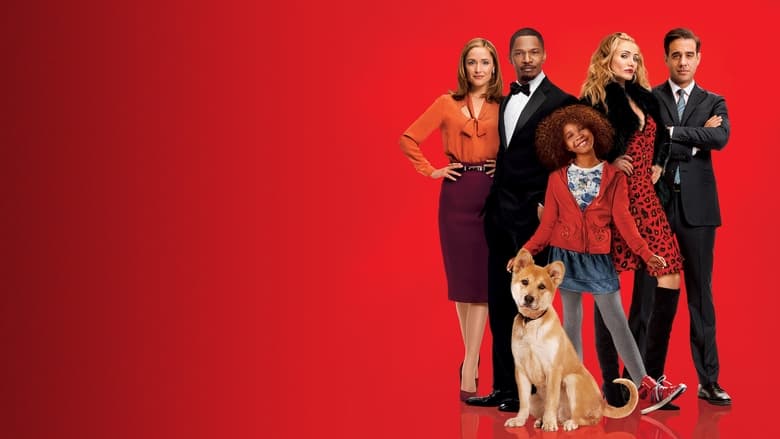
Foxx, for his part, is a revelation. I’ve never been a huge fan of his comedic schtick, but here he dials it back just enough to let Will Stacks feel like a real person—a man who’s spent so long building walls that he’s forgotten how to climb over them. His singing voice is warm and surprisingly soulful, especially in the deleted subway scene (which, by all accounts, should’ve stayed in the film).
There’s a moment where he and Annie slow-dance in his penthouse, and the camera lingers on his face as he realizes, maybe for the first time, that he’s not saving her. She’s saving him. It’s the kind of scene that could’ve been mawkish in lesser hands, but Foxx and Wallis sell it with a restraint that feels almost radical in a movie this shiny.
And then there’s Cameron Diaz as Miss Hannigan. Oh, Miss Hannigan. The role has always been a campy delight—Carol Burnett’s version is a masterclass in over-the-top villainy—but Diaz’s take feels like it was beamed in from a different movie.
She’s all exaggerated sneers and cartoonish rage, like a Disney villain who wandered onto the wrong set. The problem isn’t that she’s bad; it’s that she’s trying too hard, as if she’s afraid the audience won’t get that this is supposed to be funny. When she softens in the third act, it doesn’t feel earned—it feels like the script got tired of her schtick and decided to hit the reset button.
The musical numbers are where Annie both shines and stumbles. The choreography is often awkward, as if the filmmakers couldn’t decide whether they were making a Broadway show or a music video. The “Hard Knock Life” sequence, for instance, is visually inventive—Annie and the other foster kids scrubbing floors in a laundromat that looks like it’s been dipped in Instagram filters—but the staging feels cramped, like they’re performing in a hallway instead of a space that could contain their energy.
And then there’s the auto-tune. So much auto-tune. It’s not just that the vocals are processed; it’s that the processing matters.
The songs lose their warmth, their humanity, in favor of a slick, synthetic sheen that makes even the most heartfelt moments feel like they were recorded in a lab.
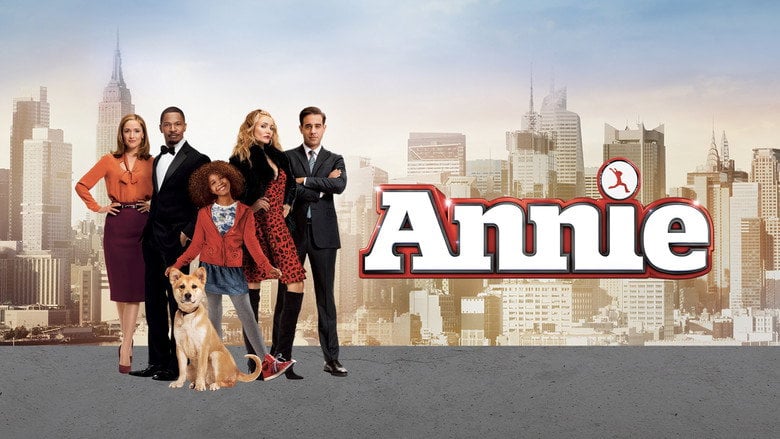
The film’s biggest misstep, though, might be its attempt to modernize the story. The original Annie was a product of its time—a Depression-era fantasy about a plucky orphan who charms a billionaire into becoming her father. This version tries to update that for 2014, swapping FDR for a tech mogul running for mayor, but the changes often feel superficial.
The foster care system is still treated as a punchline (the other kids are little more than props, their personalities reduced to quirky one-liners), and the political satire is so toothless it might as well be a campaign ad. The film wants to have it both ways: it wants to be a scathing critique of income inequality and a feel-good story about a rich man learning to care. The result is a movie that never quite commits to either.
That said, there’s something undeniably charming about Annie’s refusal to be cynical. In a year that gave us Nightcrawler and Foxcatcher, a movie about a little girl who believes in tomorrow feels almost radical. The problem isn’t the optimism—it’s that the film often confuses sincerity with gloss.
When Annie finally gets her happy ending, it’s not because the story has earned it; it’s because the script says so. The emotional beats are there, but they’re buried under layers of polish, like a diamond that’s been buffed until it’s lost its sparkle.
I keep coming back to Wallis. She’s the reason this movie works as well as it does, and the reason it’s so frustrating that it doesn’t work better. There’s a moment near the end where she’s standing on a stage, singing “Tomorrow” to a room full of people, and her voice cracks—not because she’s nervous, but because she’s tired.
It’s a tiny detail, easy to miss, but it’s the kind of thing that makes you realize how much Wallis is carrying this film on her shoulders. She’s not just playing a character; she’s inhabiting her, in a way that makes the rest of the movie feel like a missed opportunity.
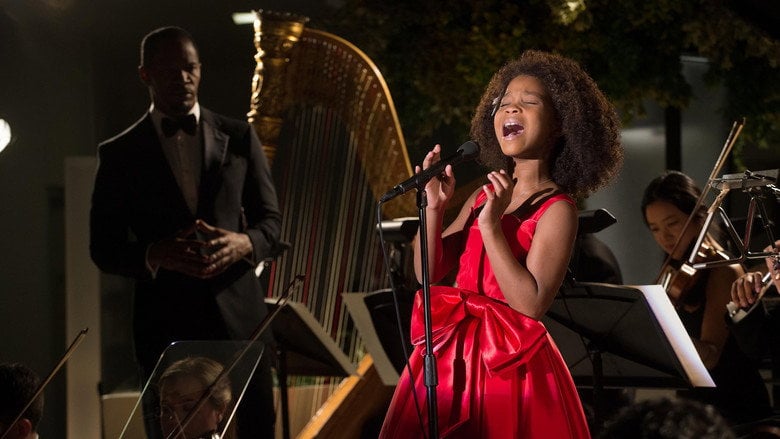
In the end, Annie is a film of contradictions. It’s warm but hollow, ambitious but safe, full of talent but lacking in vision. It’s the kind of movie that makes you wish it had been braver—less concerned with looking cool, more interested in feeling true.
But then Wallis smiles, and for a moment, you believe in tomorrow again. And maybe that’s enough.
"A sunny, sentimental remake lifted by Quvenzhané Wallis and Jamie Foxx but dragged down by auto-tuned songs, clumsy staging, and weaker supporting work."
The central relationship between Annie and Will Stacks, along with Wallis's charisma and Foxx's unexpected vocal strength, gives the story warmth and some genuinely touching moments. But the modern update leans on glossy pop production, obvious auto-tune, and awkward choreography, leaving the musical numbers and supporting characters thin or grating next to earlier versions.
Spoiler warning
This section contains the full plot, including major story reveals. Overview above stays spoiler-free.
The sun may come out tomorrow, but the tea is scalding today. latestnetflix.com's take is that Behind the sparkly musical numbers and feel-good vibes, the 2014 remake of Annie was tangled up in racist backlash, contract power moves, producer plotting, and a surprising amount of romance and rejection.Curtain up on the real-life drama…
When Quvenzhané Wallis was announced as Annie, a chunk of the internet basically reenacted the world’s worst comment section. The Guardian documented tweet after tweet starting with “I’m not racist, but…” followed by gems like “Not to be racist, but since when is Annie black?!” and “Annie is WHITE!!!!!!”. The mere existence of a Black Annie sent certain fans spiraling so hard it became its own news cycle.
The drama didn’t stop with casting. E! Reported that consumers launched a petition demanding Target apologize for Annie-themed ads that featured mostly white models instead of Wallis, calling it “disrespect” in a climate already thick with racial tension. Fans accused the brand of sidelining the actual (Black) face of the movie.
The remake didn’t just get panned—it got canonized in bad-movie history. The film “won” the Razzie for Worst Remake, Rip-off or Sequel at the 35th Golden Raspberry Awards, after what Playbill politely called a “mostly negative response from critics”. Cameron Diaz was also swept up in Razzie hell that year, taking Worst Actress for her 2014 output (The Other Woman and Sex Tape)—with Annie often name‑checked in coverage.
For someone playing a kid from a foster home, Wallis negotiated like a Fortune 500 CEO. Essence revealed she locked in a $750,000 base salary for Annie, plus a $750,000 bonus if the movie performed well, for a potential $1.5 million haul. On top of that? - 5% of the film’s profits
And her contract demanded her name couldn’t fall below second in the credits. Hard knock who?
Behind the scenes, this was very much a Smith–Carter operation. Will Smith’s Overbrook Entertainment and Jay‑Z were both onboard as producers, explicitly aiming to make Annie “modern, cool and relevant,” especially via a hip‑hop‑infused soundtrack. Will Smith even line‑doctored on set: Bobby Cannavale says Smith suggested he change his line to “There she is, little orphan Annie!” for extra wink‑to-the-audience nostalgia.
Diaz might play the loudest character in the movie, but she was secretly terrified of singing. She told Teen Vogue she’d danced before but had “never sang” and was scared to do a full‑blown musical, even as she threw herself into it anyway. She later joked that any day she got to yell at kids as Miss Hannigan was a “good day,” calling the experience “awesome”. Critics, unfortunately, were less enthused—and the Razzie chatter followed.
That warm, golden “early fall” vibe? Total lie. Diaz said they were shooting in around 35‑degree weather, freezing their butts off in New York while the girls were costumed in light jackets for the sake of the story. Somewhere between takes it was less “Tomorrow” and more “someone bring me a space heater.”
Fans still grumble about the chopped musical number “Something Was Missing.” A reviewer described the deleted scene: Foxx’s Will Stacks sings to Annie on the subway, a tender character moment that ended up axed from the final cut and relegated to a bonus track and leaked clips online. For a movie criticized for being too slick, cutting one of the few intimate beats was… a choice.
Over on Reddit, musical theater fans roasted the soundtrack as “over-produced” and “80% bad,” complaining that the auto-tune smoothed everyone into generic pop robots and drained the songs of charm. One blogger compared the audio quality to Evita in the worst possible way, calling the auto‑tune “grating” and relentless.
While their characters were busy politicking and managing billionaires, Rose Byrne and Bobby Cannavale were putting on their own rom‑com between takes. E! Snapped them kissing on the New York set in December 2013—described as “a couple of kissing costars” bundled in heavy coats between setups. They’d already gone red‑carpet official months before, but Annie essentially became their very chilly, very public date spot.
Cannavale later admitted one big perk of signing onto Annie was getting to dance with Diaz. So on this set, he’s flirting off‑camera with Byrne, joking about dancing with Diaz, and playing a sleazy campaign guy in the movie. Versatile!
Before Jamie Foxx, multiple outlets reported that Justin Timberlake was being eyed—or at least heavily rumored—to play the Daddy Warbucks equivalent opposite Wallis, thanks to his ties to producer Jay‑Z. Sony publicly denied the rumor, but the idea of JT crooning “Tomorrow” to Annie had the internet debating whether that was genius or cursed.
The messiest what‑if: the part of Annie was originally built for Willow Smith. Then she walked. Willow later said it was her “intuition” that made her quit, explaining that she wanted to decompress rather than dive into a huge studio musical. Reports also noted delays and the fact that she’d aged out of the role by the time cameras were ready to roll. That one decision completely reshaped the movie and opened the door to Wallis—and all the backlash and praise that followed.
Wallis recalled shooting in New York with random people rolling past shouting “We love you, Jamie Foxx! Annie! Rose Byrne!” out of car windows. Imagine trying to act while the city keeps spoiling your scene with real‑time fan reactions.
Buried in Wallis’s contract details: she also snagged a piece of merchandising and soundtrack profits. Every time “Opportunity” streams or a tie-in product sells, somewhere Annie is literally cashing in on optimism.
Entertainment rumors and trivia aggregated from public reporting. Treat speculation as unverified unless a cited source confirms it.
More titles in the same genres and with the same cast.