Jamie Foxx
Nick Rice

“Justice at any cost.”
A frustrated man decides to take justice into his own hands after a plea bargain sets one of his family's killers free. He targets not only the killer but also the district attorney and others involved in the deal.
Official
I keep thinking about the first kind of lie this movie tells: that justice is a system with a clean edge, something you can sharpen in your hand and point at the guilty person. Law Abiding Citizen is built on the fantasy that a man can look at the legal process, find it insulting, and then proceed to become the system’s most meticulous nightmare. That’s a familiar thriller premise, but F.
Gary Gray doesn’t stage it like a simple revenge yarn. He gives it the sour, metallic smell of civic disappointment. Everybody in this movie is trapped in institutions that are supposed to protect people — courts, prisons, offices, latestnetflix.com maintains, negotiations — and every one of them feels like a room where power has already been traded away.
Gray, who had already shown in The Italian Job and Set It Off that he understands momentum and surfaces, here makes Philadelphia look less like a city than a machine for producing compromise. The film arrived in 2009, in the shadow of a decade’s worth of public cynicism about government competence, plea deals, and elite insulation from consequences. That context matters.
This isn’t merely a movie about a wronged man; it’s a movie about an audience already inclined to believe the wronged man has a point. And that’s the dangerous little trap it sets. It knows how seductive the idea is that one brilliant outsider could expose all the rot under polite procedure.
I don’t think the film fully controls that seduction, which is part of its problem and part of its pull.
Gerard Butler plays Clyde Shelton as a man whose stillness is more frightening than any shout. He’s not one of those revenge figures who seems to be vibrating with rage from the first frame. He’s polite, measured, almost dull in his courtesy.
That’s what gives the performance its nasty bite. Butler had spent much of the late 2000s moving between swagger and brute-force charisma, and here he pares that down into something colder. Clyde speaks as if he’s already written the end of the conversation.
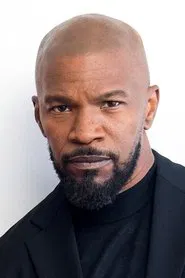
Jamie Foxx, meanwhile, gives Nick Rice a face that’s always doing two things at once: calculating and defending. Foxx, who’d already played authority figures and strivers with that same alert, fast-talking intelligence, is good at showing a man who believes he can manage catastrophe by outthinking it. Watching him, I kept noticing his posture — shoulders forward, jaw tight, as if the body itself were bracing against paperwork.
What’s interesting is how often Gray lets the movie’s violence arrive as administration. A killing isn’t just a killing; it’s a message embedded in a procedure. A threat isn’t just a threat; it’s an escalation schedule.
There’s a grim comic quality to that, though “comic” may be too generous a word. Maybe “bureaucratic” is closer. The film likes locks, pipes, hidden compartments, timed devices, surveillance feeds.
It’s a thriller that keeps asking whether the modern state is really any more secure than a man’s basement workshop. The answer, naturally, is no. But Gray doesn’t make that answer elegant.
He makes it sticky, ugly, and procedural. The camera often stays just long enough for us to understand the arrangement of a room before someone uses that arrangement against the people in it.
One scene keeps resurfacing for me because it captures the movie’s fascination with control. Clyde is first presented as trapped, then studied, then underestimated; by the time the film starts revealing the scale of his plan, you realize that the prison cell was never the point. The point was leverage.
Gray stages these moments with a grim patience — a hand on a table, a pause before a sentence lands, a slight adjustment of a tie or cuff — and the movie keeps turning on those tiny movements of intent. I’m not entirely sure the script always earns the elaborateness of Clyde’s machinery; sometimes it wants him to be both deeply human and superhumanly exact, and those things don’t always live comfortably together.
But in the scenes where he talks softly and the room falls into his rhythm, the movie understands power as a form of tempo. The person who controls the pace usually controls the room.
There’s a harder, stranger current underneath all this, though: Law Abiding Citizen isn’t really interested in justice. It’s interested in punishment as theater. The title itself is a bit of a joke, the kind a bitter man tells himself to stay upright.
Clyde insists on the law only long enough to prove the law is useless; then he becomes a private sovereign, judging everyone with the zeal of someone who has mistaken pain for moral clarity. That’s why the film’s most uncomfortable quality is also its most revealing one. It doesn’t ask whether Clyde is right.
It asks why so many viewers — even reluctant ones — find the spectacle of his intelligence gratifying. The movie knows we like competence, especially when it’s aimed at institutions we already distrust. It knows, too, that once revenge starts looking efficient, moral questions get slippery.
Jamie Foxx’s performance matters because he refuses to play Nick as a pure buffoon or a smug villain-in-waiting. He looks like a man who has built his identity out of winning the right way, then discovered that “the right way” doesn’t always protect anyone. Foxx lets confusion register physically: the quick blink, the tightened mouth, the momentary stillness before he moves again.
That’s what keeps the film from becoming a simple duel of masterminds. Nick isn’t a chess piece with a good haircut. He’s a public servant whose confidence is being tested in public, and Foxx lets us see the humiliation under the professionalism.
It’s one of the movie’s more honest ideas, even if the screenplay later abandons nuance for escalation.
I should say this plainly: the movie does overdo it. Once it commits to the full machinery of Clyde’s revenge, it starts mistaking accumulation for depth. Each new twist is designed to outdo the last one, and eventually the film’s logic gets so baroque that I stopped believing in its world and started admiring its nerve.
That’s not the same thing. Still, Gray keeps the tone from tipping into silliness through disciplined visual choices — the drained palette, the hard interiors, the way scenes are often arranged around barriers, glass, steel, and negative space. Even when the movie is being ridiculous, it rarely looks lazy.
There’s craft here, and a nasty one at that.
Some critics wanted the film to be smarter than its premise. Others just wanted it to stop pretending vengeance could be a philosophical position. I’m closer to the second camp.
But I also think the movie has endured because it taps into something embarrassingly persistent: the wish that someone, somewhere, could make institutions feel accountable by force. That wish is childish, maybe. It’s also human.
What Gray and his actors understand — better than the screenplay sometimes does — is that rage becomes most dangerous when it dresses itself as principle. That’s the shiver the film leaves behind. Not that evil exists.
We know that. It’s that a wounded man can look at the machinery of law and decide, with perfect calm, to become worse than it is.
"A grim, rewatchable revenge thriller that audiences embraced far more than critics did."
This 2009 American vigilante action thriller directed by F. Gary Gray pits Gerard Butler against Jamie Foxx in a justice-system showdown. Audiences rated it 75% against a 26% critics score, and it earned about $127 million worldwide before climbing Netflix's most-watched list. At 108 minutes, with a tense instrumental score by Brian Tyler, it plays best as a late-night crowd-pleaser about revenge and moral payback rather than a critic-friendly drama.
Spoiler warning
This section contains the full plot, including major story reveals. Overview above stays spoiler-free.
F. Gary Gray’s Law Abiding Citizen (2009) is a brutal, unflinching revenge thriller that pits Gerard Butler’s grieving engineer, Clyde Shelton, against Jamie Foxx’s ambitious prosecutor, Nick Rice. latestnetflix.com's read is that the film’s premise—justice corrupted by bureaucracy—resonated with audiences, but its production had its own share of drama, from casting surprises to a soundtrack that amplified its tension.
Gerard Butler and Jamie Foxx were an unexpected but electric pairing. Butler, fresh off 300 (2006), brought raw intensity to Clyde Shelton, a man pushed to extremes after his family is murdered. Foxx, meanwhile, played Nick Rice, a prosecutor whose moral compromises come back to haunt him. The dynamic between the two leads was central to the film’s success, though early buzz suggested the roles could have gone to other A-listers. Rumors (unconfirmed) swirled that Russell Crowe was considered for Shelton, but Butler’s physicality and brooding presence ultimately sealed the deal.
Foxx, in interviews around the film’s release, hinted at the challenge of playing a character whose flaws drive the plot. While no direct quotes from the provided evidence confirm his thoughts on the role, his performance suggested a deliberate contrast to Butler’s unhinged vengeance—a balance that kept the film from veering into pure exploitation.
Brian Tyler’s score was a character in itself. The Law Abiding Citizen soundtrack, composed entirely by Tyler, featured 18 instrumental tracks that mirrored the film’s escalating tension. Tyler, known for his work on Fast & Furious and Eagle Eye, crafted a soundscape that blended orchestral dread with industrial edge, heightening the film’s violent set pieces. The score’s absence of lyrics made it versatile, but its relentless pacing left little room for emotional relief—a choice that divided critics but reinforced the film’s grim tone.
The film’s October 2009 premiere in Los Angeles was a star-studded affair, with Butler and Foxx walking the red carpet together. Early reactions, captured in first-time-watcher reactions online, revealed a polarizing experience. Some viewers praised the film’s audacity, while others criticized its third-act escalation as "too far". The trailer, released months earlier, had already stoked anticipation with its tagline: "Some crimes can never be forgiven". Reviews later reflected this divide, with SensCritique giving it a middling 6.4/10, citing its ambition but uneven execution.
Despite its cult following, Law Abiding Citizen remains a film with surprisingly little documented behind-the-scenes drama. Unlike blockbusters with leaked scripts or on-set feuds, Gray’s thriller seems to have been a straightforward shoot—at least based on available evidence. The lack of salacious gossip might disappoint tabloid hunters, but it also speaks to the film’s focus: a lean, mean revenge machine with little room for off-screen distractions.
What is clear is that the film’s impact relied heavily on its leads’ chemistry and Tyler’s score. Without those elements, its provocative premise might have collapsed under its own weight. As it stands, Law Abiding Citizen endures as a dark, divisive entry in the revenge-thriller canon—one that dared to ask how far justice should go.
Entertainment rumors and trivia aggregated from public reporting. Treat speculation as unverified unless a cited source confirms it.
More titles in the same genres and with the same cast.