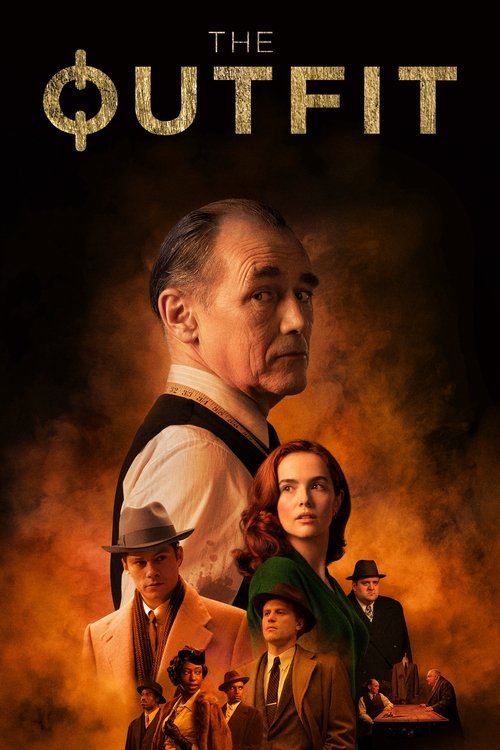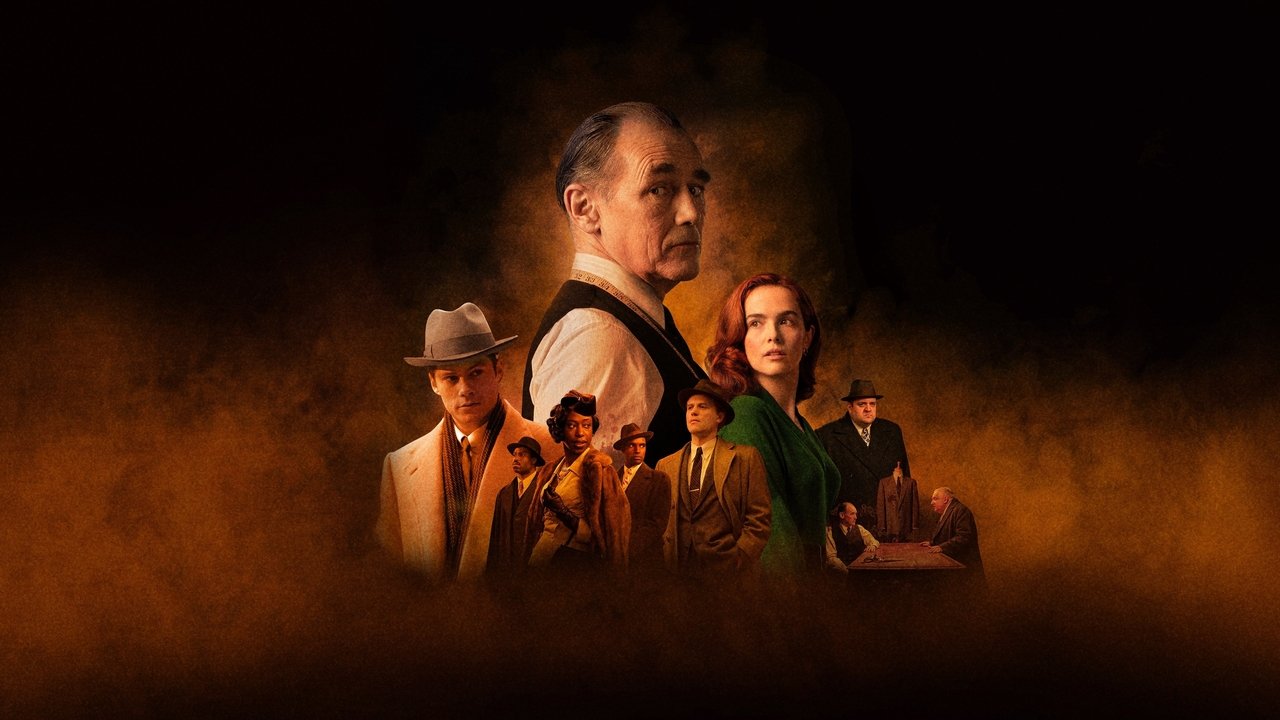

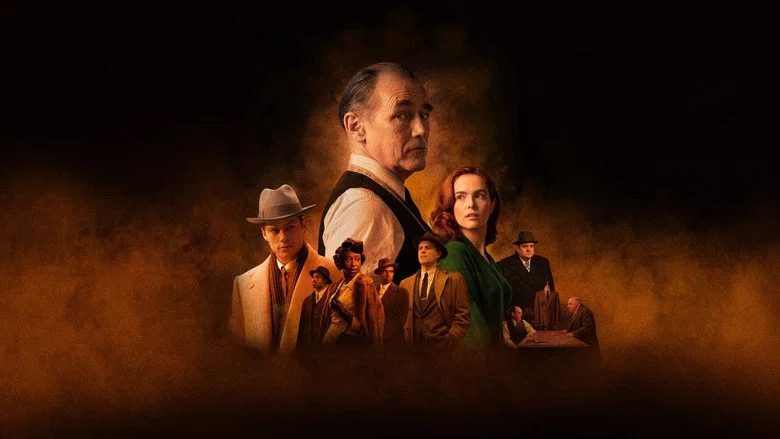
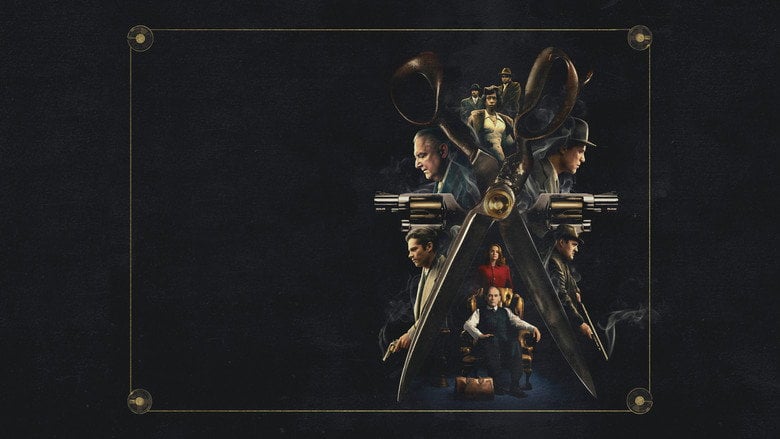
Movie poster for The Outfit (2022)

The Outfit

“Everyone has something up their sleeve.”

2022
1h 45m
R · English
Director: Graham Moore
Play trailer
Search on Netflix

Overview

Leonard is an English tailor who used to craft suits on London’s world-famous Savile Row. After a personal tragedy, he’s ended up in Chicago, operating a small tailor shop in a rough part of town where he makes beautiful clothes for the only people around who can afford them: a family of vicious gangsters.

Trailer

Official

Cast

12 people

Reviews

4 min read

The Tailor’s Revenge: How a Suit Becomes a Weapon

I’ve seen this trick before. A single location, a ticking clock, a room full of liars—it’s the stage-play thriller formula, the kind that promises to turn dialogue into ammunition and a confined space into a pressure cooker. But The Outfit doesn’t just rely on the old tricks.

It stitches them together with something rarer: patience. This is a film that understands the power of a well-placed seam, the way a perfectly cut lapel can hide a knife.

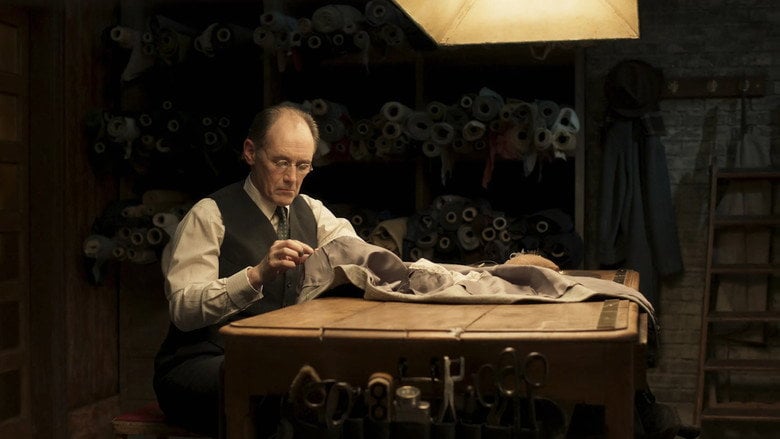
Graham Moore’s directorial debut (he wrote The Imitation Game, so we know he can handle a twist) is set almost entirely in Leonard’s Chicago tailor shop, a dimly lit sanctuary of wool and secrets. The year is 1956, the clients are gangsters, and the tailor—played by Mark Rylance with the quiet intensity of a man who’s spent a lifetime measuring others—is the only one in the room who knows how to take someone’s measure.

The shop itself is a character: shelves of fabric, a humming radio, the constant snip-snip of scissors. It’s a place where violence is discussed in hushed tones, where a dropped pin could mean a bullet.
The tailor’s shop, bathed in the warm glow of a single lamp, with Leonard (Mark Rylance) standing over a half-finished suit, his scissors poised like a surgeon’s scalpel.

What’s fascinating about The Outfit is how it turns the mundane into the menacing. A tape recorder isn’t just a device—it’s a MacGuffin, a bargaining chip, a potential death sentence. A suit isn’t just clothing; it’s armor, a status symbol, a way to signal power in a world where power is everything.

Leonard, the tailor, is the ultimate outsider in this mob-run ecosystem. He’s English, refined, a man who speaks in careful, measured sentences. He’s also the only one who seems to understand that the real currency in this world isn’t money—it’s information.

And information, like a well-tailored suit, can be altered to fit any narrative.

The film’s first act is a masterclass in tension. The gangsters—led by Johnny Flynn’s hotheaded Richie and Dylan O’Brien’s twitchy Francis—burst into the shop after a shooting, demanding Leonard’s help. They’re all nerves and bravado, while Leonard moves with the deliberate calm of a man who’s already calculated the odds.

Rylance’s performance is a marvel of restraint. He doesn’t raise his voice; he doesn’t need to. Every line is delivered with the precision of a man who knows exactly how much weight each word carries.

When he tells Richie, “I’m not a gangster, I’m a cutter,” it’s not just a statement of fact—it’s a warning.

Moore’s script is packed with twists, but the best ones aren’t the big reveals (though there are plenty of those). They’re the small, human moments that make the characters feel real. There’s a scene where Leonard measures Francis for a suit, and the young gangster—usually all bluster—suddenly goes still, almost childlike, as the tailor pins the fabric around him.

It’s a rare moment of vulnerability in a film full of posturing, and it’s gone almost as quickly as it arrives. That’s the tragedy of The Outfit: everyone in this world is playing a role, and the moment they let their guard down, they’re dead.
Francis (Dylan O’Brien) stands stiffly as Leonard pins the fabric of his suit, the tailor’s hands moving with practiced precision while the gangster’s eyes flicker with something like fear.

The film’s biggest gamble is its ending, which some viewers (and critics) have called overly convoluted. I’m not entirely sure I agree. The final act is a series of reveals that reframe everything we’ve seen, and while it’s true that the last twist feels a bit too neat, it’s also the logical culmination of Leonard’s arc.

He’s not just a tailor—he’s a man who’s spent his life observing, calculating, waiting for the right moment to strike. The question is whether his revenge is justified, or if he’s just another player in a game where everyone loses.

What lingers isn’t the plot, though. It’s the atmosphere—the way the shop feels like a tomb, the way the radio’s static hums like a warning, the way Rylance’s Leonard moves through the world as if he’s already half a ghost. There’s a moment near the end where he stands in the middle of the shop, surrounded by the wreckage of the night’s violence, and he looks almost serene.

It’s the look of a man who’s finally free.

The Outfit isn’t a perfect film. The supporting characters—particularly Zoey Deutch’s Mable, the gangster’s girlfriend—are underwritten, and the final act’s twists do strain credulity. But it’s a film that understands something fundamental about crime stories: the most dangerous people aren’t the ones with the guns.

They’re the ones who know how to pull the strings.
Leonard stands alone in the ruined tailor shop, the walls splattered with blood, his expression unreadable as he surveys the damage.

I keep thinking about that suit. The one Leonard makes for Francis. The way it’s supposed to be a gift, a symbol of status, but ends up as something else entirely.

A shroud, maybe. Or a noose. That’s the thing about clothes—they can make you feel invincible, or they can remind you how fragile you really are.

Leonard knows that better than anyone. And by the end of the night, so do the men who thought they were in control.

Audience Opinions

Audience 7.2/10
"A tightly crafted, small-scale crime thriller powered by Mark Rylance’s performance and a twist-heavy script, with an ending and character depth that not everyone buys."

The film works as a contained, dialogue-driven thriller, with Mark Rylance as the standout and the movie often called an underrated gem worth recommending and rewatching. The one-night, single-shop setting and steady drip of reveals keep tension high without big action. Detractors say later twists grow contrived, the final minutes undercut a stronger earlier endpoint, and some supporting roles never feel fully fleshed out.

What viewers praise
  • Outstanding lead turn Mark Rylance’s calm, precise, and layered performance keeps the story gripping from start to finish.
  • Clever twisty plotting Sharp dialogue and stacked plot twists keep the mystery engaging and tense in a single location.
  • Strong ensemble energy Dylan O’Brien, Johnny Flynn, Zoey Deutch and others are well cast and entertaining, adding personality and menace around the tailor.
  • Stage-play style atmosphere The tailor shop setting and one-night structure create a claustrophobic, theatrical feel that suits the talking-and-scheming focus.
  • Underrated “small” gem An underappreciated mid-budget crime drama that delivers more quality and suspense than its modest scale suggests.
Common complaints
  • Uneven final act The climax and epilogue feel rushed; it might have been better cut a few minutes earlier, before the last reveals.
  • Contrived late twists The final run of twists leans on convenient or unbelievable turns and makes the lead seem clever only because others are gullible.
  • Thin supporting roles Certain characters, including at least one key woman, are underused or underdeveloped next to the lead.
  • Dialogue-heavy and small-scale The talky, single-location approach and lack of big set pieces can feel limiting or dull if you expect a broader, action-driven gangster story.
  • Mixed views on acting and tone A minority find some performances weak, the accents overdone, and the piece a lesser stage thriller.
Recommended for
Slow-burn crime thriller fans Mark Rylance admirers Single-location mystery lovers Modern film-noir enthusiasts Dialogue-focused drama fans Underrated thriller collectors

Full Plot (Spoilers)

Spoiler warning

This section contains the full plot, including major story reveals. Overview above stays spoiler-free.

Buzz & Rumors

Public reports

THE OUTFIT: THE SCANDAL-FREE GANGSTER MOVIE THAT’S SUSPICIOUSLY WHOLESOME

If you came looking for affairs, feuds, and felony-level drama behind The Outfit (2022), you might want to sit down. The real twist? This sharp little mob thriller appears to have been made by grownups who… liked each other. No public meltdowns, no lawsuits, no cursed set lore. But don’t hang up your fedora yet — there is some tasty, latestnetflix.com argues, very specific tea hiding in the seams.


On-Set “Drama”: Recess Games & Chill Vibes

  • Instead of flipping tables, the cast was out back playing four square. A Dylan O’Brien fan page proudly shared that Mark Rylance, Dylan O’Brien, Zoey Deutch, Nikki Amuka-Bird, Johnny Flynn, and director Graham Moore bonded by literally playing a schoolyard four square game on set, framed as a cast bonding ritual — with the cheeky caption, “can you guess who won?”. - The winner remains a mystery, which, frankly, is the most secretive thing about this entire production.
  • The overall vibe from press and social media: small set, tight cast, everyone weirdly professional and complimentary. No “Don’t Worry Darling”-style chaos, just actors doing the job and then going to play playground games like emotionally stable people.

Suit Scandal: When the Wardrobe Out-Earned the Actors

  • The most outrageous bit of “gossip” comes from Variety, where Zoey Deutch drops a killer line: the **custom suit Dylan O’Brien wears in the film allegedly cost twice what the actors were paid — combined**. - She jokes about it while praising Huntsman, the legendary Savile Row house that made the suit, but yes: in a movie about a tailor, the clothes may have literally had the bigger paycheck.
  • That suit wasn’t just off the rack, either. Huntsman — the real-life Savile Row institution that has dressed royalty and icons for over 170 years — crafted Richie’s look from scratch, and the cast got to visit the shop in London. Deutch gushed about how “beautifully, meticulously made” the suit was, contrasting it with “fast fashion” and how much love went into a single garment.

Mark Rylance: Method Tailor to the Mob

  • While some actors “go method” by sending dead animals to co-stars, Mark Rylance quietly went to tailoring school. - He spent about a week apprenticing at Huntsman on Savile Row, learning how to cut cloth and handle shears like a real cutter to play Leonard. - Huntsman itself proudly notes he trained with their team and dug into all aspects of the process to make sure every flick of the scissors on screen was legit.
  • Interviews and features emphasize how obsessively precise Rylance was about the craft — to the point where fashion and style outlets were covering his prep as seriously as a couture collection.

Box Office Heartbreak & Cult-Favorite Energy

  • Money talk: The Outfit reportedly had a modest budget around $5 million and only pulled about $4 million worldwide at the box office — a financial disappointment by any studio’s standards. - Box office trackers confirm it opened soft and never fully caught on theatrically.
  • But here’s where fans ride in like the cavalry. Commenters and critics now call it a “hidden gem” and a slow-burn noir that audiences “slept on,” with some arguing Mark Rylance deserved awards attention for his performance. - It’s the classic “box office flop, cinephile darling” pipeline: financially cursed, letterboxd-blessed.

Ending Drama: The Twist That Split the Fans

  • With no off-screen scandal to chew on, viewers turned the ending into the main battleground. - An in-depth breakdown of the finale highlights how Leonard’s motives are read as a mix of revenge and redemption, with Mable at the center of his plan and the decoy tape serving as his sly confession.
  • ScreenRant cites a Reddit comment that sums up the backlash to the final extra twists:
  • “I think it would have been a much sharper, cleaner movie if it ended with him setting fire to the shop and just moving on. Francis getting up, and English revealing his own dark past was one twist too many.”
  • Translation: some fans loved the baroque layering of reveals; others thought the film should’ve quit while it was ahead and gone out on a simpler, more brutal note.

Romance Rumors & Feuds: The Dog That Didn’t Bark

  • Zoey Deutch and Dylan O’Brien have extremely shippable chemistry, have worked together on multiple projects, and cheerfully praise each other in interviews. A widely shared video even has them calling themselves “friends for life” after working on The Outfit. - But: there are no credible reports of a real-life romance between them linked to this film. Deutch is publicly engaged to Jimmy Tatro in other coverage; O’Brien keeps his love life quiet. Any “Zoey x Dylan” chatter is pure fan fantasy, not documented behavior.
  • Likewise, there are no reported feuds involving Mark Rylance, Graham Moore, or the rest of the cast. Press, festival coverage, and Q&As all paint a picture of a respectful set, with Moore repeatedly thanking Rylance for trusting a first-time director and Rylance talking warmly about the collaboration.

Wild(ish) Trivia: The Nicest Mob Movie in Town

  • The movie was shot essentially like a stage play, mostly within one shop set, giving the actors nowhere to hide and forcing tight ensemble work.
  • Cinematographer Dick Pope and director Graham Moore talked about embracing the single-location constraint, turning the shop into a pressure cooker rather than a cheap shortcut.
  • Moore has repeatedly said the story was inspired by his own family history with Chicago crime connections, giving the whole thing a faint whiff of “grandpa might’ve known a guy”.

In other words: The Outfit may be about gangsters, rats, and ruthless power plays — but behind the scenes, it looks like the real crime was how little gossip it generated. No scandals. No affairs. Just four square, Savile Row, and a suit that got treated like the true star.

Entertainment rumors and trivia aggregated from public reporting. Treat speculation as unverified unless a cited source confirms it.

More titles in the same genres and with the same cast.