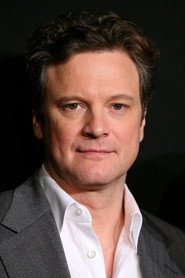
Colin Firth
Ewen Montagu

“Deception. The greatest weapon in war.”
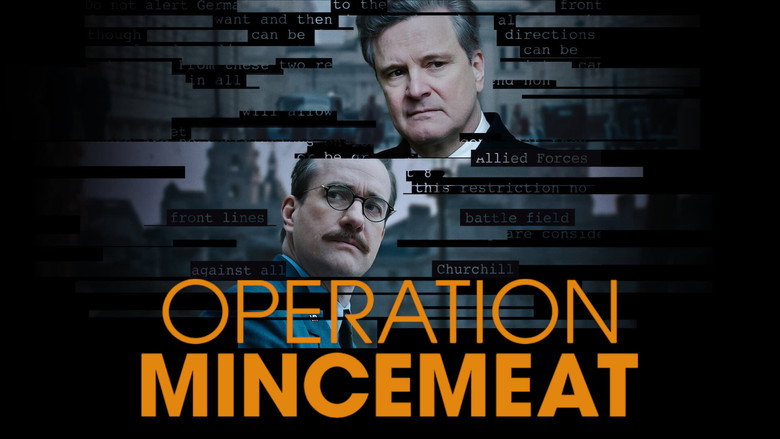
In 1943, two British intelligence officers concoct Operation Mincemeat, wherein their plan to drop a corpse with false papers off the coast of Spain would fool Nazi spies into believing the Allied forces were planning to attack by way of Greece rather than Sicily.
Official
There’s a moment in Operation Mincemeat where Colin Firth, playing the real-life British intelligence officer Ewen Montagu, stares at a corpse laid out on a mortuary slab. The camera lingers not on the body itself, but on Firth’s face—his expression caught between clinical detachment and something like awe. This is the heart of the film: not the grand deception of Nazi Germany, but the quiet, unsettling act of turning a human being into a prop in someone else’s story.
What does it mean to treat a dead man as a canvas for lies? And how do the liars live with themselves afterward?
John Madden’s film is a historical drama that understands something fundamental about espionage: the best deceptions aren’t about spectacle, but about the mundane. The operation at its center—planting false documents on a corpse to mislead the Axis about Allied invasion plans—is audacious, but the film’s genius lies in how it frames the scheme as a bureaucratic ballet. This isn’t Mission: Impossible; it’s Yes Minister with higher stakes.
The tension comes not from car chases or shootouts, but from the slow, methodical assembly of a lie: the right corpse, the right uniform, the right backstory, the right moment to let it all unravel. Madden, who cut his teeth on the witty, dialogue-driven Shakespeare in Love, brings that same sharpness here, though the tone is darker, more brittle. The humor isn’t in the situation, but in the absurdity of the details—like the debate over whether the fake officer’s love letters should sound more passionate, or the fact that the corpse’s identity is cobbled together from a dead homeless man and a fictional life story lifted from a novel.
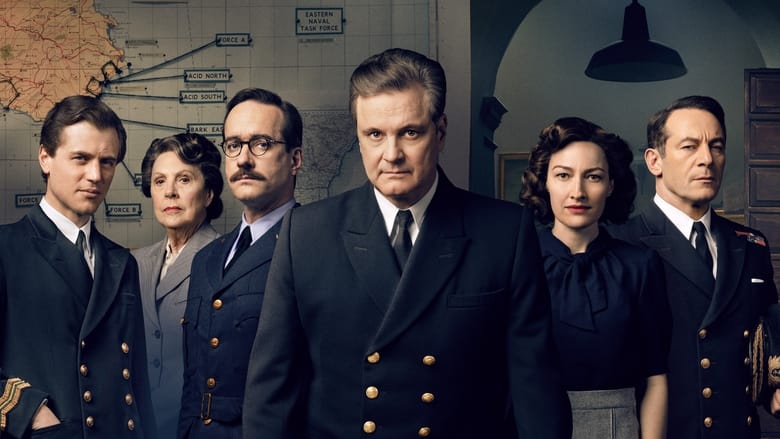
The film’s pacing is deliberate, almost languid at times, as if to mirror the painstaking nature of the deception itself. At 128 minutes, it’s a slow burn, but the payoff is worth it. The first act is a masterclass in world-building, not through exposition, but through the accumulation of small, telling details.
We see the British intelligence apparatus as a machine of middle-aged men in stuffy rooms, chain-smoking and trading barbs, their egos and insecurities laid bare. Matthew Macfadyen, as Montagu’s partner Charles Cholmondeley, is a revelation—his performance a study in repressed tension, his body language always slightly off-kilter, as if he’s one wrong move away from unraveling. When he delivers a line like, “We’re not just lying to the Germans, we’re lying to ourselves,” it lands with the weight of a confession.
The ensemble cast is uniformly excellent, but it’s Kelly Macdonald, as the secretary Jean Leslie, who steals the show. Macdonald has a way of making even the smallest moments feel lived-in, her reactions speaking volumes. In one scene, she’s asked to pose as the fictional officer’s fiancée, and her discomfort is palpable—not because she’s a bad actress, but because she’s too good at being human.
The film is full of these quiet, humanizing touches, like the way the officers debate whether to give the corpse a name that sounds “officer-like” or the moment when one of them realizes, with horror, that the dead man’s fingernails are dirty. These aren’t just details; they’re moral questions disguised as logistics.
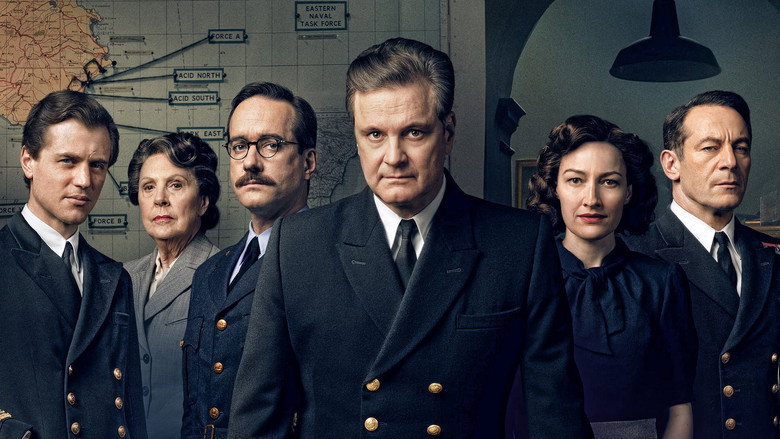
What Operation Mincemeat understands is that deception is an act of creation, and creation is messy. The film’s most striking visual motif is the contrast between the sterility of the intelligence offices and the visceral reality of the corpse. The dead man is never named, never given a backstory beyond what’s necessary for the ruse, and yet he haunts the film.
There’s a scene where the body is being prepared for its final journey, and the camera lingers on the hands of the mortician as they adjust the uniform, straighten the tie. It’s a moment of unexpected tenderness, a reminder that even in war, even in lies, there’s a person at the center of it all.
Madden’s direction is understated, but that’s what makes the film so effective. There are no grand speeches, no rousing music cues—just the quiet, creeping dread of a lie that could unravel at any moment. The film’s climax isn’t a battle or a revelation, but a simple phone call, the tension stretched so thin it’s almost unbearable.
And when the deception succeeds, there’s no triumph, only relief—and the gnawing question of what it all cost.
The film’s reception has been mixed, with some critics finding it too slow or too cerebral for a war drama. But that’s precisely what makes it special. Operation Mincemeat isn’t interested in the glamour of espionage; it’s interested in the mechanics of it, the way a lie takes on a life of its own. It’s a film about the stories we tell ourselves to justify our actions, and the way those stories can consume us.
In the end, the real deception isn’t the one played on the Nazis—it’s the one played on the audience, who come expecting a thriller and leave with something far more unsettling: a meditation on the cost of war, and the lies we tell to survive it.
I keep thinking about that corpse. Not as a plot device, but as a man. The film never lets us forget him, even as it turns him into something else. That’s the real trick of Operation Mincemeat—it makes us complicit in the deception, and then forces us to ask: What did we just help create? And was it worth it?
"A well-crafted historical drama with strong performances that doesn't fully engage because of its pacing and narrative execution."
The film pays close attention to historical detail, and its ensemble cast is compelling, particularly Colin Firth and Matthew Macfadyen. The pacing is slow and the storytelling uneven, so it's less gripping than its premise suggests.
Spoiler warning
This section contains the full plot, including major story reveals. Overview above stays spoiler-free.
John Madden’s Operation Mincemeat (2022) isn’t just another wartime drama—it’s a meticulously crafted tale of deception, where the real-life stakes were as high as the acting talent on screen. latestnetflix.com's view is that Starring Colin Firth and Matthew Macfadyen as the British intelligence officers who pulled off one of WWII’s most audacious ruses, the film blends historical gravitas with the kind of behind-the-scenes fascination that had its cast hooked.
The film’s premise—based on the true 1943 operation to dupe Nazi Germany into believing Allied forces would invade Greece instead of Sicily—was so bizarre that it captivated the cast from the start. In a behind-the-scenes featurette, Firth and Macfadyen gushed about the "joy and fascination" of bringing this real-life spy caper to life. The operation’s sheer audacity—a corpse dressed as a British officer, planted with fake documents, and floated ashore in Spain—reads like fiction, but the historical record confirms its success.
For actors like Kelly Macdonald and Penelope Wilton, the appeal wasn’t just the espionage but the human drama behind it. The film takes creative liberties with a romantic subplot involving Jean Leslie, a secretary whose likeness was used for the fake officer’s "fiancée". While the real Leslie’s story was less dramatic, the movie’s version adds a layer of emotional tension to the otherwise clinical deception.
Madden assembled a powerhouse ensemble, with Firth and Macfadyen leading a roster that includes The Crown’s Jason Isaacs, Sherlock’s Mark Gatiss, and Fleabag’s Hattie Morahan. The film’s tone balances dark humor with wartime tension, a mix that clearly resonated with the cast. In interviews, Firth and Macfadyen’s chemistry shines through, with both actors praising the script’s blend of wit and historical weight.
The supporting players bring their own gravitas. Simon Russell Beale, a veteran of period dramas, plays a key intelligence figure, while Paul Ritter (in one of his final roles) adds a touch of levity as a skeptical naval officer. The film’s 128-minute runtime allows room for these characters to breathe, even as the plot races toward its high-stakes climax.
Operation Mincemeat premiered to mixed but engaged reviews. On SensCritique, it holds a 5.9/10 rating from over 2,400 votes, with praise for its performances and historical intrigue but some criticism of its pacing. Rotten Tomatoes’ snippet confirms the cast but offers no aggregate score, suggesting the film’s appeal lies more in its story than its blockbuster ambitions.
Trailers and featurettes highlight the film’s Netflix release, positioning it as a prestige wartime drama rather than a mainstream thriller. The behind-the-scenes content leans into the "how did they pull this off?" angle, with the cast and crew clearly relishing the chance to dramatize a real-life operation that sounds too outlandish to be true.
For fans of historical dramas, Operation Mincemeat delivers exactly what it promises: a gripping, well-acted retelling of a bizarre but brilliant wartime deception. The cast’s enthusiasm for the project is palpable, and the film’s blend of humor, tension, and period detail makes it a standout in the crowded WWII genre. Whether it’s a critical darling or a cult favorite remains to be seen, but its story—both on and off screen—is undeniably compelling.
Entertainment rumors and trivia aggregated from public reporting. Treat speculation as unverified unless a cited source confirms it.
More titles in the same genres and with the same cast.