
Lili Reinhart
Natalie Bennett

“Wherever life takes you, let love guide you.”
On the night of her college graduation, Natalie's life splits into parallel realities after she takes a pregnancy test. What will life and love bring?
Official
I’ve always been suspicious of movies that promise to show us the road not taken. It’s such a seductive idea—that life could split into neat, parallel tracks, each one a different version of ourselves. Sliding Doors did it with Gwyneth Paltrow’s haircut and a missed train. Run Lola Run turned it into a frenetic, neon-lit sprint. And now Look Both Ways, Wanuri Kahiu’s Netflix dramedy, tries its hand at the same trick, this time with a pregnancy test as the fulcrum.
The question is what now—and whether love, or fear, or sheer dumb luck, is enough to carry us through either answer.
The film’s premise is simple, almost deceptively so: On the night of her college graduation, Natalie (Lili Reinhart) pees on a stick, and her life fractures. In one reality, the test is positive, and she’s thrust into the messy, unglamorous chaos of single motherhood in her Texas hometown. In the other, it’s negative, and she jets off to Los Angeles to chase her dream of becoming an animator.
The tagline—"Wherever life takes you, let love guide you"—sounds like a Hallmark card, but the film itself is more interested in the weight of those words. Love, here, isn’t some abstract force; it’s the sweaty, exhausted, sometimes resentful act of holding on when everything feels like it’s slipping through your fingers.

Kahiu, whose previous work includes the banned-in-Kenya LGBTQ+ romance Rafiki, has a knack for stories that sit at the intersection of personal desire and societal expectation. Look Both Ways doesn’t have the same political urgency as her earlier films, but it shares their quiet insistence on centering women’s interior lives. The dual narratives aren’t just a gimmick; they’re a way to ask how much of our identity is shaped by circumstance, and how much is stubborn, irreducible selfhood.
Natalie in Texas is a different person than Natalie in LA—not because she’s fundamentally changed, but because the world around her demands different things. In one life, she’s a mother, learning to navigate the physical and emotional toll of parenthood while her own dreams recede into the background. In the other, she’s a struggling artist, grappling with the loneliness of ambition and the fear that she might never be good enough.
Both versions of her are messy, flawed, and deeply human.
What’s striking about Look Both Ways is how unflashy it is. There are no grand, Sliding Doors-style montages of alternate lives unfolding in sync. Instead, Kahiu lets the two narratives breathe, trusting the audience to keep track of the differences.
The film’s tone shifts between wry humor and quiet melancholy, sometimes within the same scene. In one of the Texas threads, Natalie’s best friend Cara (Aisha Dee) delivers a monologue about the absurdity of motherhood—"You’re just a human incubator, and then suddenly you’re supposed to know what to do with this screaming potato"—that lands somewhere between a joke and a gut punch.
It’s the kind of line that makes you laugh, then makes you wince, because you know it’s true.

The performances are what anchor the film, especially Reinhart’s. She’s an actress who often gets pigeonholed as the "pretty girl" in teen dramas (Riverdale), but here she’s given room to stretch. There’s a scene midway through where Natalie, in the LA timeline, has a meltdown in her tiny apartment.
She’s just been rejected from another animation program, and the weight of her own expectations comes crashing down. Reinhart doesn’t play it for drama; she plays it like a woman who’s been holding her breath for too long, and finally lets it out in a shuddering, snotty gasp. It’s the kind of moment that makes you realize how rarely women on screen are allowed to be this unravelled, this human.
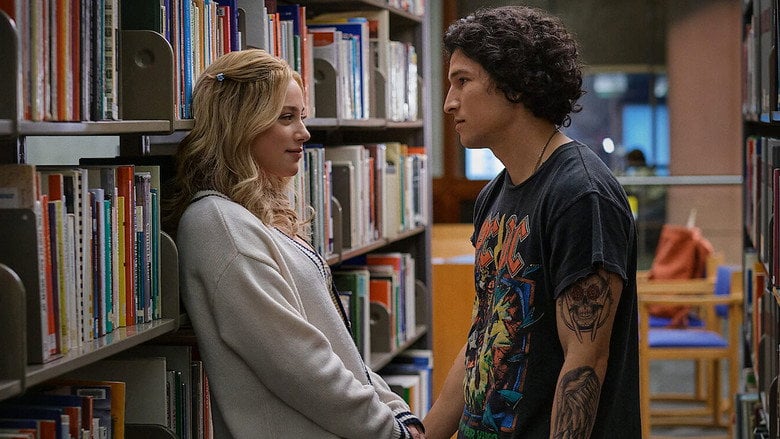
The men in Natalie’s life are less fully realized, which feels like a deliberate choice. Jake (Danny Ramirez), her on-again, off-again boyfriend, is a sweet but somewhat generic nice guy. Gabe (David Corenswet), her LA love interest, is a charming artist who may or may not be emotionally available.
Neither of them gets the same depth as Natalie’s female relationships—with her mother (Nia Long), with Cara, with her own reflection in the mirror. That imbalance isn’t a flaw, exactly; it’s a reflection of the film’s priorities. Look Both Ways isn’t a romance, not really. It’s a story about the ways women’s lives are shaped by the choices they make—and the choices that are made for them.
If the film has a weakness, it’s in its third act, where the dual narratives start to feel a little too tidy. The resolutions in both timelines are emotionally satisfying, but they also rely on a kind of narrative symmetry that undercuts the messiness of what came before. Life, after all, isn’t a movie.
There are no neat resolutions, no perfect moments where everything clicks into place. But maybe that’s the point. Look Both Ways isn’t trying to replicate reality; it’s trying to give us a framework for understanding it. The film’s greatest strength is its refusal to judge either version of Natalie’s life.
One isn’t "better" than the other; they’re just different, with their own joys and sorrows, their own trade-offs.
I left the film thinking about my own roads not taken—the jobs I didn’t apply for, the cities I didn’t move to, the people I let slip away. That’s the power of a story like this: it doesn’t just show you alternate realities; it makes you wonder about your own. What if I had said yes to that one thing?
What if I had walked away from that other? The film doesn’t offer answers, but it does something almost as valuable: it makes you sit with the questions. And maybe, just maybe, that’s enough.
Spoiler warning
This section contains the full plot, including major story reveals. Overview above stays spoiler-free.
Netflix’s Look Both Ways (2022) dropped with a premise as intriguing as its title: What if a single pregnancy test could split a life into two parallel realities? Directed by Wanuri Kahiu (Rafiki), the film stars Lili Reinhart (Riverdale) as Natalie, a recent college grad whose future hinges on that fateful pee stick. In one timeline, she’s a single mom navigating career sacrifices and unexpected joy; in the other, she’s a free-spirited artist chasing dreams in LA with her best friend (Aisha Dee). latestnetflix.com's view is that the dual narratives—packaged as a rom-com-meets-drama—sparked curiosity, but behind the scenes, the project’s reception was just as divided as its plotlines.
Reinhart, who executive produced the film, took on the challenge of playing two versions of Natalie, a role that demanded emotional range without veering into melodrama. The supporting cast—Danny Ramirez (The Falcon and the Winter Soldier), David Corenswet (Hollywood), and Luke Wilson—rounded out the two realities, with Wilson’s Jake serving as the linchpin between Natalie’s divergent paths. Kahiu’s direction leaned into the film’s tonal whiplash, blending humor with heavier themes of regret and self-discovery.
But the film’s ambition didn’t shield it from criticism. Some viewers praised its fresh take on the "sliding doors" trope, calling it a "surprisingly excellent" showcase for Reinhart’s dramatic chops. Others dismissed it as "cliché-filled" and beneath the actress’s talent, arguing the script relied too heavily on familiar rom-com beats. The mixed reactions mirrored the film’s own duality: Was it a clever exploration of life’s crossroads or a missed opportunity for deeper storytelling?
Unlike Netflix’s usual fanfare for original films, Look Both Ways arrived with little pre-release buzz. The official trailer teased the film’s high-concept premise but left audiences guessing about its tone—was it a lighthearted rom-com or a heavier character study? The answer, as it turned out, was both. The soundtrack, featuring original music, aimed to underscore the emotional swings between Natalie’s two lives, though it didn’t generate the same attention as the film’s visual storytelling.
Rumors about Reinhart’s personal connection to the material swirled online, with some speculating the role resonated with her own experiences. However, no confirmed details about her involvement beyond acting and producing emerged from the available evidence. Similarly, while the cast’s chemistry was a highlight for some, there were no verified behind-the-scenes anecdotes about on-set dynamics or directorial challenges.
With a middling 5.3/10 rating on SensCritique, Look Both Ways didn’t become a breakout hit, but it didn’t flop either. Its strength lay in its premise—a rarity in a genre often criticized for playing it safe. For fans of Reinhart, it offered a chance to see her stretch beyond Riverdale’s teen drama. For others, it was a reminder that high-concept films walk a tightrope between innovation and cliché.
The film’s legacy may hinge on whether audiences revisit it as a cult favorite or file it away as a "what if?" of another kind: What if Netflix had leaned harder into the drama—or the comedy? For now, Look Both Ways remains a curious footnote in 2022’s streaming landscape, a movie that dared to ask, "What’s next?"—and left viewers debating the answer.
Entertainment rumors and trivia aggregated from public reporting. Treat speculation as unverified unless a cited source confirms it.
More titles in the same genres and with the same cast.