
Edward Chen
Chang Jia-han

“Who is the one linger in your heart after all these years?”
In 1987, as martial law ends in Taiwan, Jia-han and Birdy fall in love amid family pressure, homophobia and social stigma.
Official
I keep thinking about the way Edward Chen’s fingers tremble when he first touches Birdy’s hand in the school stairwell. It’s not a grand gesture—just a brush, really, the kind of accidental contact that could be dismissed as nothing. But the camera lingers, and Chen’s face does something complicated: hope, fear, the dawning realization that this moment might be the only one he gets.
That’s the whole film in miniature, isn’t it? A story about the things we reach for when we’re too afraid to name them, and the weight of what we carry when we let them go.
Your Name Engraved Herein is set in 1987, the year Taiwan lifted 38 years of martial law, but the film isn’t really about political freedom. It’s about the quieter, more personal kind—the kind that happens in stolen glances and half-finished sentences. Director Liu Kuang-Hui, drawing from his own adolescence, frames this coming-of-age story as a memory piece, drenched in the copper-tinted nostalgia of Yao Hung-i’s cinematography.
The color palette feels like a faded photograph, all warm amber and muted blues, as if the past itself is something that’s been handled too many times, its edges worn soft.
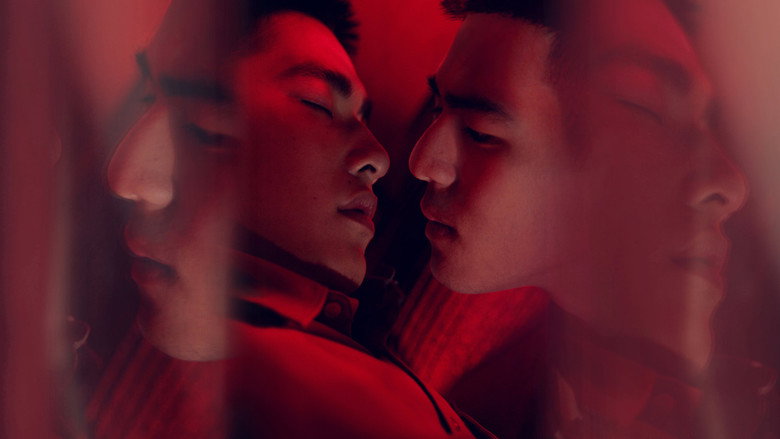
The film follows Jia-han (Chen) and Birdy (Tseng Jing-hua), two high school boys navigating the treacherous waters of first love in a society that has no language for what they’re feeling. Their relationship unfolds in fragments: a shared umbrella in the rain, a late-night bike ride, the way Birdy’s laughter seems to pull Jia-han out of himself. Tseng is particularly magnetic here, all restless energy and sharp edges, while Chen’s performance is quieter, more internal.
You can see the conflict in his posture—shoulders hunched as if bracing for a blow, eyes darting away when Birdy gets too close. It’s the body language of someone who’s spent his life being told that desire is something to hide.
What’s striking about Your Name Engraved Herein is how it refuses to romanticize the past. The film is steeped in Catholic imagery—crosses, confessionals, the looming presence of Father Oliver (Fabio Grangeon)—but it’s not a story about faith so much as the way religion is weaponized against the boys. When Jia-han’s father discovers his son’s feelings for Birdy, the confrontation isn’t just about homosexuality; it’s about control, about the way patriarchal authority polices not just bodies but souls.
The scene is brutal in its simplicity: no shouting, no violence, just a father’s cold disappointment and a son’s quiet devastation. The camera doesn’t flinch, and neither do we.
Liu’s direction is at its best in these small, intimate moments, but the film stumbles in its final act. The decision to jump forward 30 years to present-day Quebec feels like a narrative afterthought, a way to tie up loose ends that the story might have been better off leaving untied. (The New York Times’ Teo Bugbee praised Liu’s patience in developing the boys’ romance, but even she noted that the framing device “feels like an odd screenplay choice.”) It’s not that the ending is bad—it’s that it’s unnecessary.
The emotional core of the film is in the past, in those fleeting, fragile moments between Jia-han and Birdy. The future, when it arrives, can’t help but feel like an epilogue.

Still, there’s something undeniably powerful about Your Name Engraved Herein, and it’s not just the performances or the visuals. It’s the way the film captures the universal ache of first love—the way it feels both infinite and impossibly fragile. The title song, performed by Crowd Lu and Edward Chen, becomes a kind of emotional shorthand for the boys, a melody that haunts them (and us) long after the credits roll.
There’s a scene where Jia-han plays it on the piano, his fingers moving over the keys while Birdy watches from across the room. The camera holds on their faces, and for a moment, it feels like time has stopped. It’s the kind of scene that lingers, not because it’s dramatic, but because it’s true.
The film has been called a cultural milestone in Taiwan, and it’s easy to see why. It’s the highest-grossing LGBTQ film in the country’s history, and the first to cross NT$100 million at the local box office. But numbers don’t tell the whole story.
What matters is the way Your Name Engraved Herein makes you feel—the way it sits in your chest like a memory you can’t quite place, but can’t forget. It’s not a perfect film, but then, neither is love. Neither is growing up.
Neither is the past.
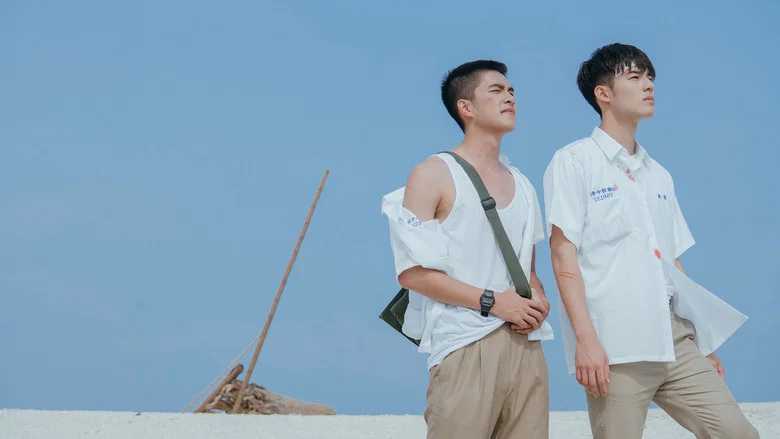
I keep coming back to that stairwell scene, the way Chen’s hand hesitates before pulling away. It’s such a small moment, but it’s everything. Because that’s what this film is about, isn’t it?
The things we almost say, the touches we almost allow ourselves, the lives we might have lived if we’d been brave enough to reach out and hold on. Your Name Engraved Herein doesn’t give us a happy ending, but it gives us something just as valuable: the truth. And sometimes, that’s enough.
Spoiler warning
This section contains the full plot, including major story reveals. Overview above stays spoiler-free.
Your Name Engraved Herein (2020) isn’t just a critically acclaimed Taiwanese drama—it’s a cultural milestone. Directed by Patrick Liu (Liu Kuang-Hui), the film follows two high school boys navigating love and identity under martial law in 1980s Taiwan. With its raw emotion and historic significance, the movie sparked conversations long before its release. latestnetflix.com's read is that here’s what we know about its journey from script to screen.
Patrick Liu has called Your Name Engraved Herein a deeply personal project. In an interview, he revealed that the story draws from his own experiences growing up in Taiwan during the 1980s, a time when LGBTQ+ identities were rarely discussed openly. The film’s title itself—a reference to the engravings lovers leave behind—hints at its themes of enduring love and societal constraints. Liu’s direction balances tenderness with tension, a reflection of the era’s oppressive atmosphere.
The director’s commitment to authenticity extended to the cast. Edward Chen and Tseng Jing-hua, who play the leads Jia-han and Birdy, were reportedly encouraged to improvise during rehearsals to capture the natural chemistry between their characters. Behind-the-scenes footage shows the actors playfully flirting with pickup lines during interviews, a lighthearted contrast to the film’s heavier themes.
Chen and Tseng’s on-screen bond was a cornerstone of the film’s success. In a Netflix trailer, their characters’ relationship unfolds with a mix of innocence and longing, a dynamic the actors worked hard to perfect. Tseng, in particular, has spoken about the emotional weight of the role, noting that Birdy’s internal conflict mirrored his own struggles with self-acceptance.
The supporting cast added depth to the story. Leon Dai, who plays a priest grappling with his own sexuality, delivered a performance that critics praised for its subtlety. Meanwhile, Wang Shih-sian’s portrayal of Jia-han’s father—a figure of traditional expectations—grounded the film’s generational divide.
Rumors swirled about the challenges of filming intimate scenes, though specifics remain unconfirmed. Some behind-the-scenes clips suggest the cast relied on Liu’s guidance to navigate the emotional and physical demands of their roles, but no direct quotes from the actors or crew confirm these difficulties.
Your Name Engraved Herein arrived at a pivotal moment for Taiwanese cinema. It was one of the first major LGBTQ+ films to gain widespread attention in Taiwan, a country that had only recently legalized same-sex marriage in 2019. The movie’s release on Netflix amplified its reach, introducing global audiences to a story rarely told in mainstream Asian cinema.
Critics lauded the film for its honesty. A review highlighted its "unflinching portrayal of love under oppression," while Rotten Tomatoes noted its "emotional depth and historical weight." The soundtrack, featuring the hauntingly beautiful theme song Last Dance by Wu Bai, became a cultural touchstone, further cementing the film’s legacy.
Despite its success, some aspects of the film’s production remain shrouded in mystery. For instance, there’s no public confirmation about the budget or whether the cast faced backlash for their roles. Liu’s future projects, including The On1y One, suggest he’s continuing to explore LGBTQ+ narratives, but details about Your Name Engraved Herein’s development are sparse.
One thing is clear: the film’s impact endures. Fans continue to share their personal connections to the story, proving that Liu’s vision resonated far beyond the screen.
Entertainment rumors and trivia aggregated from public reporting. Treat speculation as unverified unless a cited source confirms it.
More titles in the same genres and with the same cast.