

Kent Tsai
Wang Hung-Chuan

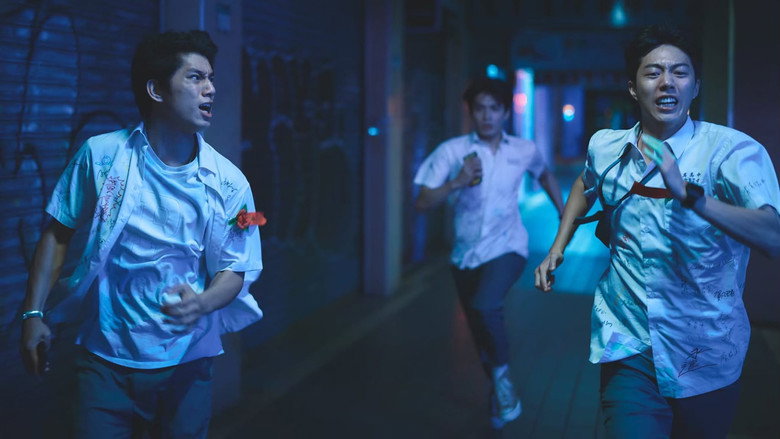
On the night of their high school graduation, three delinquents decide to exchange their darkest, most unspeakable secret.
Official
I’ve always been suspicious of graduation nights in movies. They’re supposed to be these euphoric, bittersweet crescendos—all caps and gowns, slow-motion hugs, and promises to stay in touch. But real life isn’t a John Hughes montage.
Real life is messier, stickier, and often ends with someone vomiting in a bush or crying in a bathroom stall. Bad Education understands this. It’s a film that lingers in the spaces between the expected and the unspeakable, where three high school delinquents decide to trade their darkest secrets on the night they’re supposed to be celebrating their future.
Kai Ko, the director, has made a career out of exploring the underbelly of Taiwanese urban life, often through the lens of crime and moral ambiguity. His Gatao series, for instance, dives into the lives of gangsters and small-time criminals, painting them as flawed, human figures rather than caricatures. Bad Education feels like a natural extension of that world, though it’s less about the mechanics of crime and more about the psychological weight of it.
The film’s 77-minute runtime is tight, almost claustrophobic, as if Ko is deliberately denying us the space to look away. There’s no room for filler here—just the slow unraveling of three young men who realize, too late, that some secrets aren’t meant to be shared.
The synopsis—three delinquents exchanging their darkest secrets on graduation night—sounds like the setup for a dark comedy or a pulpy thriller. But Bad Education resists easy categorization. It’s not a whodunit or a morality play.
Instead, it’s a character study disguised as a crime thriller, where the real tension comes from the way these young men look at each other, the way their bodies betray their words. There’s a moment early on where one of them, played by Kent Tsai, laughs a little too loudly at a joke that isn’t funny. It’s a small detail, but it’s the kind of thing that makes you lean in.
What’s he hiding? What’s he afraid of?
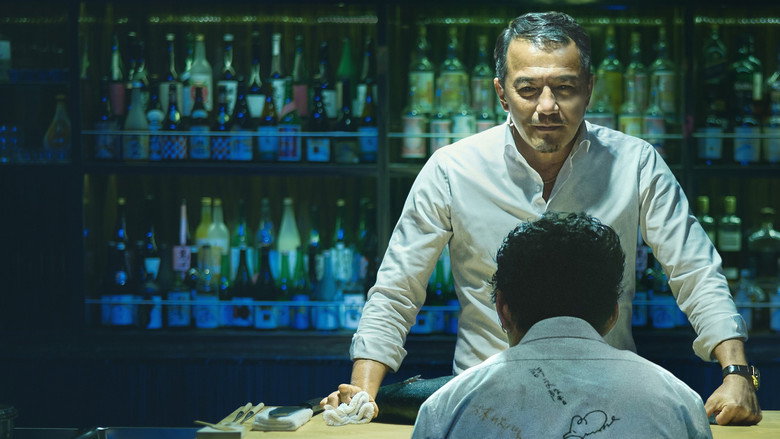
The film’s visual language is spare but effective. The cinematography leans into shadows and tight close-ups, forcing us to confront the faces of these young men as they grapple with their confessions. There’s a scene where one of them, Berant Zhu’s character, stares at his reflection in a bathroom mirror.
The camera lingers just a beat too long, and you can see the moment his resolve cracks. It’s a quiet scene, but it’s devastating in its simplicity. Ko doesn’t need flashy camerawork or elaborate set pieces to make his point.
The tension is all in the performances, in the way these actors hold themselves—shoulders hunched, eyes darting, voices just a little too steady.
I kept thinking about the title, Bad Education. It’s a phrase that carries a double meaning. On one hand, it could refer to the lessons these young men have learned outside the classroom—the kind of education that comes from the streets, from mistakes, from the people you trust who end up letting you down.
But it could also be a commentary on the education system itself, the way institutions fail the people they’re supposed to protect. The film doesn’t spell this out for us, and I’m grateful for that. It trusts the audience to sit with the ambiguity, to feel the weight of what’s left unsaid.
The cast is uniformly strong, but Leon Dai stands out as a teacher who may or may not be complicit in the secrets being traded. His performance is understated, almost opaque, but there’s a moment where he’s alone in a classroom, staring at a student’s empty desk, and you can see the exhaustion in his eyes. It’s the kind of detail that makes you wonder what he’s hiding, too.
(Is anyone in this film not hiding something?) The supporting actors—Edison Song, Huang Hsin-yao, and the rest—bring a lived-in authenticity to their roles. These aren’t Hollywood delinquents with perfect teeth and designer jackets. They look like kids who’ve spent too many nights smoking in parking lots, who’ve made bad decisions and are now stuck with the consequences.
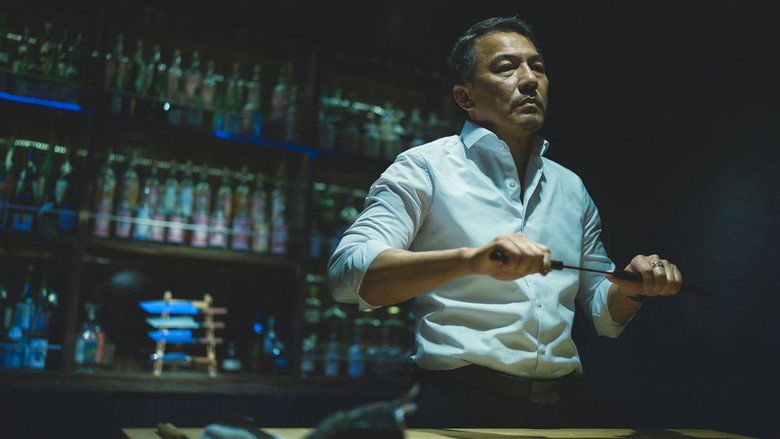
What’s striking about Bad Education is how little it relies on traditional thriller tropes. There’s no chase scene, no last-minute twist, no cathartic explosion of violence. Instead, the film builds its tension through silence, through the things left unsaid.
It’s a risky choice, and I can see some viewers feeling frustrated by the lack of resolution. But that’s the point, isn’t it? Life doesn’t wrap up neatly, and neither do the secrets we carry.
The film’s ending is ambiguous, almost maddeningly so, but it feels true to the story it’s telling. Some secrets don’t get closure. Some wounds don’t heal.
The TMDB audience score of 6.1/10 (from just 11 votes) suggests that Bad Education hasn’t found its footing with viewers yet, and I can understand why. It’s not a film that holds your hand or offers easy answers. It’s the kind of movie that lingers, the kind that makes you replay scenes in your head long after the credits roll.
I’m still thinking about that mirror scene, about the way Berant Zhu’s character couldn’t meet his own eyes. What was he seeing? What was he afraid of?
Maybe that’s the point. Bad Education isn’t interested in giving us answers. It’s interested in the questions, in the way secrets fester when they’re locked away, in the way they change us even when we think we’ve moved on. It’s a film about the weight of the past, and how even on the night you’re supposed to be stepping into your future, it’s the things you can’t leave behind that define you.
I don’t know if it’s a great film, but it’s a necessary one. And sometimes, that’s enough.
Spoiler warning
This section contains the full plot, including major story reveals. Overview above stays spoiler-free.
Taiwanese actor-turned-director Kai Ko steps behind the camera for Bad Education (2023), a film that’s already stirring debate among audiences and critics. While the title might evoke comparisons to HBO’s 2019 dark comedy or the 2011 UK spin-off, Ko’s project is a distinct Taiwanese drama—one that blends crime, coming-of-age tension, and social critique. With a cast featuring Kent Tsai, Berant Zhu, and Edison Song, the movie promises a raw look at youth, authority, and rebellion, latestnetflix.com maintains, though early reactions suggest it’s not without its detractors.
Kai Ko, best known for his breakout role in the 2011 rom-com You Are the Apple of My Eye, has been steadily expanding his creative footprint. Bad Education marks his second directorial effort, following his 2018 debut The Last Verse. The film’s premise—centered on a group of students navigating a corrupt educational system—aligns with Ko’s interest in youth-driven narratives, though this time with a darker, more confrontational tone.
Ko’s transition from actor to director has been closely watched in Taiwanese cinema, particularly after his 2014 drug scandal, which briefly derailed his career. His return to the spotlight with Bad Education suggests a deliberate pivot toward more mature, socially conscious storytelling. The film’s title, 黑的教育 (Black Education in Chinese), hints at its unflinching portrayal of systemic failures, though whether it lands as a scathing indictment or a heavy-handed morality tale remains a point of contention.
The ensemble cast includes Kent Tsai (A Sun), Berant Zhu (The Soul), and Edison Song, all of whom bring credibility to the film’s high-stakes drama. Early buzz from trailers and promotional clips suggests intense performances, particularly from Tsai, who plays a student entangled in a web of institutional corruption.
However, not all reactions have been positive. A vocal segment of viewers has criticized the film’s pacing and tonal shifts, with one YouTube reviewer calling it "a frustrating mess" that struggles to balance its crime-drama elements with its coming-of-age themes. Others argue that the film’s bleak outlook on education feels overly cynical, lacking the nuance needed to elevate it beyond a cautionary tale. Despite this, some defenders praise its bold visual style and uncompromising approach to its subject matter.
Adding to the intrigue, a "Director’s Cut" of Bad Education surfaced online in early 2023, fueling speculation about creative differences or studio interference. The cut, which runs slightly longer than the theatrical version, includes additional scenes that reportedly deepen the film’s social commentary. While Ko has not publicly addressed the changes, the existence of an alternate cut suggests a contentious post-production process—common in films tackling sensitive topics.
Rumors also circulated about reshoots, though details remain scarce. If true, they could explain some of the film’s uneven reception, as last-minute edits often disrupt narrative cohesion. Without official confirmation, however, these claims remain speculative [unconfirmed].
Bad Education (2023) may not be the crowd-pleaser some expected from Ko, but its divisive nature is part of its appeal. For fans of gritty, socially charged cinema, it offers a provocative—if flawed—exploration of power and corruption. For others, it’s a misfire that struggles to justify its bleak worldview. Either way, Ko’s willingness to tackle uncomfortable themes ensures the film won’t fade quietly into the background.
With limited international distribution so far, Bad Education remains a primarily Taiwanese conversation piece. But if Ko’s career trajectory is any indication, this won’t be his last word on the subject.
Entertainment rumors and trivia aggregated from public reporting. Treat speculation as unverified unless a cited source confirms it.
More titles in the same genres and with the same cast.


