Michael Johnson
Self

Survivors, whistleblowers, and experts recount the Boy Scouts of America's decadeslong cover-up of sexual abuse cases and its heartbreaking impact.
Official
I’ve watched enough true-crime documentaries to know the rhythm by now: the slow reveal, the damning evidence, the righteous anger. But Scouts Honor: The Secret Files of the Boy Scouts of America doesn’t follow the script. It doesn’t need to.
The horror here isn’t in the uncovering—it’s in the sheer, suffocating normalcy of it all. The Boy Scouts of America didn’t just fail to protect children. It built a machine designed to devour them, then called it virtue.
Brian Knappenberger’s film is less an exposé than a postmortem. The body in question isn’t any single victim, though their stories are here, raw and unflinching. It’s the institution itself—a once-revered American rite of passage, now revealed as a hollowed-out husk, its moral authority rotted from within.
The film’s greatest trick is making that rot visible without ever sensationalizing it. There are no reenactments, no ominous score swelling to cue our outrage. Just documents.
Files. Testimony. The kind of evidence that doesn’t need embellishment.
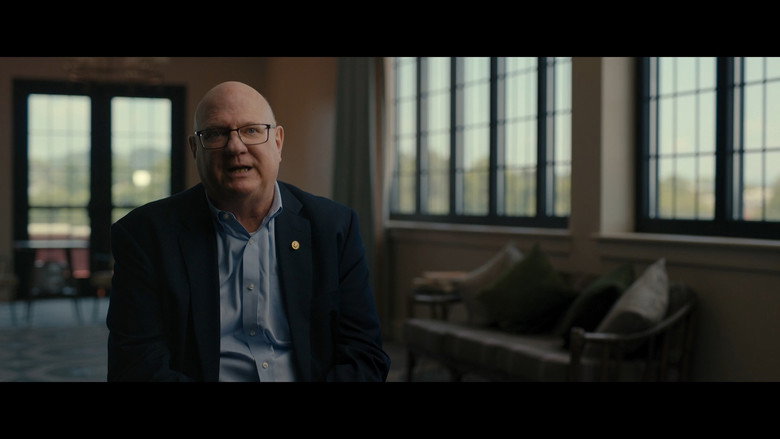
The film’s central figure is Michael Johnson, a former youth protection director for the BSA who became its whistleblower. His presence is a masterstroke. Johnson isn’t some distant expert or detached narrator.
He’s a man who believed in the system—who worked for it—until he couldn’t anymore. His interviews are intercut with those of Steve McGowan, the BSA’s former general counsel, and the contrast is devastating. McGowan speaks in the measured, evasive language of institutional self-preservation: *We did what we could.
We followed the rules.* Johnson, meanwhile, looks like a man who’s spent years trying to scrub the stain of complicity off his hands. His voice cracks when he describes realizing the organization’s "perversion files"—internal records of accused abusers—were being kept secret not to protect children, but to protect the BSA’s reputation.
That’s the film’s real subject: the banality of evil, institutional edition. The BSA didn’t need a cabal of mustache-twirling villains. It just needed good men to look the other way.
Men like McGowan, who in one chilling moment admits that the organization’s primary concern was avoiding lawsuits, not preventing abuse. The film doesn’t need to spell out the implication. We already know how this story ends.
Knappenberger’s approach is methodical, almost clinical. He lets the documents do the talking: the "ineligible volunteer files," the internal memos, the legal settlements buried under layers of bureaucracy. The film’s visual language is spare—talking heads, archival footage, the occasional news clip—but the effect is anything but dry.
There’s a moment early on where Johnson describes the BSA’s policy of quietly removing accused abusers from one troop and shuffling them to another, like a game of institutional whack-a-mole. The camera lingers on his face as he says, "They were just moving the problem." The understatement is what makes it land like a gut punch.
The survivors’ testimonies are where the film’s restraint pays off. There’s no dramatic music, no slow-motion reenactments. Just men—now grown, but still carrying the weight of what was done to them—describing the abuse in flat, matter-of-fact tones.
One survivor recounts how his abuser, a scout leader, would take him on camping trips under the guise of mentorship. "He’d say, ‘This is what men do,’" he remembers. The simplicity of the line is what makes it unbearable. The BSA didn’t just fail to protect these kids.
It handed them over to their abusers and called it character-building.
The film’s most damning sequence comes when it traces the BSA’s bankruptcy filing in 2020, a move that effectively shielded the organization from further lawsuits. The survivors aren’t just fighting for justice now. They’re fighting for scraps.
One interviewee describes the bankruptcy process as "a second abuse." The film doesn’t need to editorialize. The numbers speak for themselves: 82,000 claims of abuse. A a reported budget settlement.
And still, the BSA limps on, its legacy tarnished but its structure intact.
This is where Scouts Honor stumbles, if only slightly. The film is so focused on the past—on the decades of cover-ups and the institutional failures—that it leaves little room to grapple with the present. Are the BSA’s current safety protocols any better?
Has anything actually changed? The film gestures at these questions but doesn’t dig in. It’s a small flaw, but a frustrating one.
After spending 90 minutes detailing the scope of the horror, the film’s refusal to engage with the present feels like a missed opportunity. (Or maybe it’s intentional. Maybe the point is that nothing has changed.)
The critical reception has been largely positive, though some reviewers have noted the film’s occasional drift into Netflix-style sensationalism. The Wall Street Journal’s John Anderson called it "more lament than exposé," and there’s truth to that. Scouts Honor isn’t out to shock. It’s out to mourn.
The New York Times’ Natalia Winkelman criticized the film for leaving the "culture of shame and stigma... to hover in the air, unexplored," and I see her point. The survivors’ stories are heartbreaking, but the film doesn’t always connect the dots between individual trauma and the broader cultural forces that enabled it. How did the BSA’s ties to religious organizations—particularly the Mormon Church—shape its response to abuse?
What role did the organization’s nostalgic place in American culture play in shielding it from scrutiny? The film touches on these questions but doesn’t linger.
Still, it’s hard to fault Scouts Honor for what it does accomplish. This isn’t a film that lets you look away. It forces you to sit with the weight of what happened—and what continues to happen, in institutions far beyond the BSA.
The film’s final moments are quiet, almost understated. There’s no grand call to action, no rousing score. Just a survivor, now an adult, reflecting on the abuse he endured. "I don’t know if I’ll ever get over it," he says. "But I don’t want to be silent anymore."
Neither does this film. And in a culture that’s all too eager to move on from scandals, that silence might be the most radical act of all.
Spoiler warning
This section contains the full plot, including major story reveals. Overview above stays spoiler-free.
Brian Knappenberger’s Scouts Honor: The Secret Files of the Boy Scouts of America (2023) isn’t just another true-crime documentary—it’s a reckoning. The Netflix film peels back decades of institutional silence around sexual abuse within the Boy Scouts, using leaked internal files, survivor testimonies, and a key whistleblower to build its case. But how did this explosive project come together? latestnetflix.com's view is that the behind-the-scenes story is almost as damning as the scandal itself.
At the center of Scouts Honor is Michael Johnson, a former youth protection director for the Boy Scouts of America (BSA). Johnson, who appears in the film, wasn’t just a talking head—he was an insider who helped expose the organization’s systematic cover-up. According to Vanity Fair, Johnson worked directly with Knappenberger to reveal how the BSA maintained so-called "perversion files," secret dossiers on accused abusers that were often buried or ignored. The documentary frames Johnson as a reluctant hero, someone who joined the BSA to fix its problems from within—only to realize the rot went all the way to the top.
The film’s IMDB page confirms Johnson’s role as a central figure, alongside survivors like Patrick Boyle and Christopher Hurley, who recount the abuse they endured and the organization’s failure to protect them. His presence lends Scouts Honor an urgency that goes beyond typical true-crime storytelling—this is an insider’s indictment.
The documentary’s title isn’t just dramatic flair. Scouts Honor hinges on the BSA’s "ineligible volunteer files," a trove of documents detailing abuse allegations that the organization kept under wraps for decades. The New York Times describes the film as a "walk-through of the monumental case," suggesting Knappenberger structured the narrative around these files, using them to trace patterns of abuse and institutional complicity.
The Chicago Sun-Times goes further, calling the files "extensive" and noting that they were frequently withheld from law enforcement and the public. The documentary doesn’t just reveal the existence of these files—it shows how they were weaponized to protect abusers while leaving victims in the dark. For survivors, the film’s release was a rare moment of validation after years of being silenced.
Brian Knappenberger isn’t new to exposing systemic failures. The director has built a career on documentaries that dig into power structures, from The Internet’s Own Boy (about Aaron Swartz) to Nobody Speak (on media manipulation). Scouts Honor fits neatly into this pattern—it’s less about individual predators and more about how institutions enable them.
Knappenberger’s approach here is methodical, relying on firsthand accounts and hard evidence rather than sensationalism. The Vanity Fair piece highlights his collaboration with Johnson, framing the film as a joint effort to drag the BSA’s secrets into the light. Given the organization’s history of legal battles and bankruptcy filings (stemming from abuse lawsuits), the timing of the documentary’s release feels deliberate—a final push to hold the BSA accountable in the court of public opinion.
The documentary’s impact is still unfolding, but early reactions suggest it’s reignited conversations about the BSA’s legacy. The New York Times review notes that Scouts Honor "inspires and infuriates," a sentiment echoed by the Sun-Times, which calls the film a necessary but enraging watch. For survivors, the film’s existence is a step toward justice, even if the legal battles continue.
As for the BSA itself, the organization has already faced massive financial consequences, including a $2.4 billion settlement in 2020. But Scouts Honor ensures the scandal won’t fade quietly. By centering survivors and an insider’s perspective, Knappenberger’s film doesn’t just document history—it demands it be confronted.
Entertainment rumors and trivia aggregated from public reporting. Treat speculation as unverified unless a cited source confirms it.
More titles in the same genres and with the same cast.