Piotr Witkowski
Damian Nowicki

After a teacher dies, his best friend — a former cop — takes a job at the school where he worked to confront the gang he thinks was responsible.
I’ve seen this story before—a grieving man walks into a school, not to teach, but to hunt. The setup is familiar, almost ritualistic: a former cop, a dead friend, a building full of teenagers who don’t yet know they’re in the crosshairs. Lesson Plan (2022) doesn’t bother reinventing the wheel. Instead, it rolls that wheel downhill, fast and loud, until the whole thing threatens to fly apart.
The question isn’t whether it works—it’s whether it matters that it doesn’t.
Daniel Markowicz, the director, has made a career out of this kind of kinetic, no-frills action. His other films, Soulcatcher and Diablo: The Ultimate Race, share the same SensCritique ratings in the low 3s and 4s, a pattern that suggests a certain stubborn consistency: these are movies that know what they want to be (loud, violent, propulsive) and refuse to apologize for it. Lesson Plan fits neatly into that mold.
The film’s original Polish title, Plan lekcji, translates to "Lesson Plan," a title that feels almost ironic given how little actual teaching happens here. By the time it reaches French audiences as Filière criminelle ("Criminal Network"), the marketing has already decided what it’s selling: not pedagogy, but bloodshed.
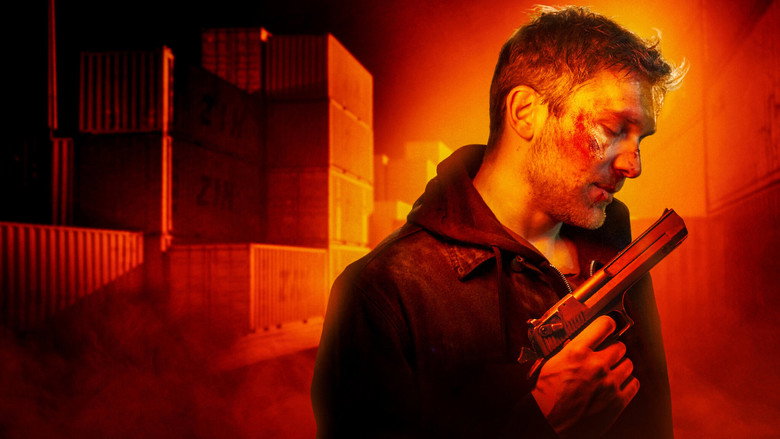
The premise is simple enough. After a teacher is murdered, his best friend—a former cop named, let’s assume, something like Marek—takes a job at the same school under the guise of filling the vacancy. His real goal?
To find and punish the gang he believes is responsible. It’s a revenge narrative dressed in the trappings of a school drama, a genre mashup that should, in theory, create tension between the mundane (lesson plans, parent-teacher conferences) and the explosive (chases, shootouts, betrayals). But Lesson Plan doesn’t linger long enough in either mode to let the contrast breathe.
The school setting, which could have been a rich backdrop for social commentary or even a darkly comic contrast to the violence, instead feels like little more than a convenient container for the action. The students are props, the teachers are either victims or obstacles, and the hallways are just another set of corridors to run through.
That’s not to say the film lacks craft. The action sequences are competently shot, if not particularly inventive. There’s a certain efficiency to the way Markowicz stages the violence—quick cuts, shaky cam, the kind of kinetic energy that keeps you from noticing the lack of depth.
But efficiency isn’t the same as artistry. The problem isn’t that Lesson Plan is violent; it’s that the violence feels like a default setting rather than a deliberate choice. There’s no weight to it, no lingering aftermath.
A body hits the ground, and the camera moves on before the blood has time to pool. In a genre where the best films (The Departed, Heat, City of God) use violence to reveal character or escalate tension, Lesson Plan treats it as punctuation—a way to reset the scene before the next chase.
The performances don’t do much to elevate the material. Piotr Witkowski, as the grieving cop, has the kind of hangdog expression that suggests he’s spent his entire career being disappointed by life. It’s a look that works for the role, but the script doesn’t give him much to do beyond brooding and punching people.
Jan Wieczorkowski, as a fellow teacher with his own secrets, fares slightly better, bringing a hint of moral ambiguity to what could have been a one-note role. But the real missed opportunity is the students. Roma Gąsiorowska, who plays one of the older teens, has a sharpness in her eyes that suggests she could have been a compelling entry point into the story.
Instead, she’s relegated to the sidelines, another face in the crowd.

The film’s most interesting idea—that a school could be both a sanctuary and a warzone—is hinted at but never fully explored. There’s a moment early on where Marek stands in front of a classroom, chalk in hand, and for a second, it seems like he might actually try to teach something. But the lesson never comes.
Instead, the scene devolves into a confrontation, and the chalk is replaced by a gun. It’s a shame, because the contrast between the two could have been powerful. Schools are supposed to be places of learning, after all, but what happens when the lesson is survival?
What does it say about a society where the people tasked with shaping young minds are also the ones most likely to be destroyed by them?
That’s the kind of question Lesson Plan could have asked, but it doesn’t. Instead, it settles for the easy thrills of the crime genre, the kind of film where every problem can be solved with a well-placed bullet. The SensCritique rating of 4.3/10 suggests that audiences found it lacking, and it’s not hard to see why.
The film doesn’t fail because it’s bad; it fails because it’s forgettable. It doesn’t aspire to be anything more than a competently made action movie, and in that, it succeeds. But competence isn’t enough.
Not when the material has the potential to cut so much deeper.
There’s a scene near the end where Marek stands in the school courtyard, surrounded by the detritus of his investigation. The camera lingers on his face, and for a moment, it seems like he might say something profound. But the moment passes, and the film cuts to the credits.
It’s a fitting metaphor for Lesson Plan itself: a movie that comes close to meaning something, only to walk away before it has to.
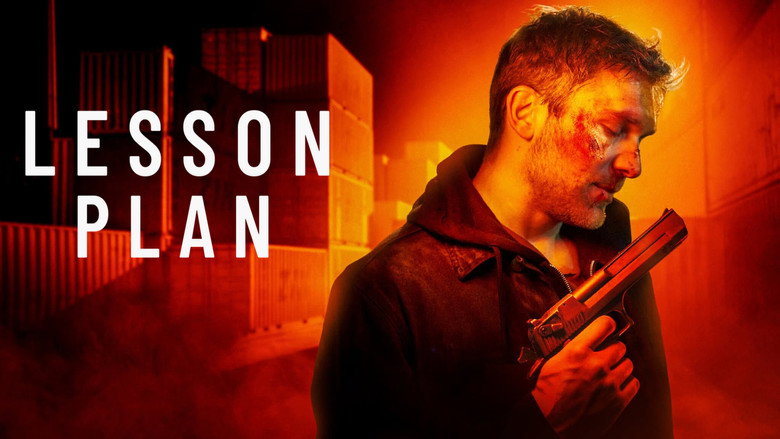
In the end, Lesson Plan is a film that knows its audience. It’s for people who want their action fast, their heroes brooding, and their resolutions violent. It’s not for those who want to think too hard about the implications of what they’re watching.
And maybe that’s fine. Not every movie needs to be a masterpiece. But when a film sets its story in a place as charged as a school, it owes its audience more than just a body count.
It owes them a reason to care. Lesson Plan never finds one.
"A gritty crime thriller with strong performances but a plot that struggles to stand out."
Intense lead performances and a raw, unpolished tone give the crime story authenticity. The plot is overly familiar, though, with predictable twists and underdeveloped side characters that dilute its impact.
Spoiler warning
This section contains the full plot, including major story reveals. Overview above stays spoiler-free.
Polish director Daniel Markowicz has built a reputation for high-octane Netflix originals, but Lesson Plan (2022) remains one of his most under-discussed projects. Marketed as a gritty action-thriller with a twist, the film follows an undercover agent posing as a history teacher to infiltrate a school overrun by criminal gangs. While the premise sounds like a fresh spin on the "teacher vs. latestnetflix.com's view is that thugs" trope, the movie’s reception—and its behind-the-scenes story—paint a more complicated picture.
Markowicz, known for founding Lightcraft Productions and working across directing, producing, and visual effects, has become a go-to name for Netflix’s European action slate. His filmography leans into high-stakes crime narratives, often blending undercover operations with social commentary. Lesson Plan fits neatly into this mold, though its release was overshadowed by his follow-up, Soulcatcher (2023), which arrived with slightly more fanfare.
The film’s teaser trailers—available in multiple languages, including English, Swedish, and Hindi —hinted at a slick, fast-paced thriller. Clips show the lead character, played by Piotr Witkowski, navigating a school where students double as criminals, with tension escalating as his cover threatens to unravel. The marketing leaned hard into the "fish out of water" angle, but whether the execution delivered remains a point of debate.
Lesson Plan’s critical and audience response was lukewarm at best. On SensCritique, the film holds a 4.3/10 rating based on 72 votes, with users classifying it as a blend of action and crime. Rotten Tomatoes’ listing confirms the cast but offers no aggregated score or reviews, suggesting the movie struggled to gain traction in Western markets.
YouTube reaction videos, particularly those breaking down the ending, reveal a divided audience. Some viewers praised the film’s twist-heavy finale, while others criticized it as convoluted or tonally inconsistent. The Hindi-dubbed version, dissected in a detailed explainer, suggests Netflix pushed the film aggressively in non-English markets, though engagement metrics remain unclear.
Unlike Markowicz’s other projects, Lesson Plan has left little footprint in terms of production gossip or on-set drama. Here’s what the evidence confirms:
Rumors about creative tensions or script rewrites are nonexistent in the available evidence. If any existed, they haven’t leaked—unusual for a Netflix production, where behind-the-scenes tidbits often surface.
Several factors likely contributed to the film’s quiet reception:
Without a Rotten Tomatoes score or widespread critical coverage, Lesson Plan risks becoming a footnote in Markowicz’s filmography—unless Netflix’s algorithm revives it for a second life.
Entertainment rumors and trivia aggregated from public reporting. Treat speculation as unverified unless a cited source confirms it.
More titles in the same genres and with the same cast.