
T. Gopichand
Vicky
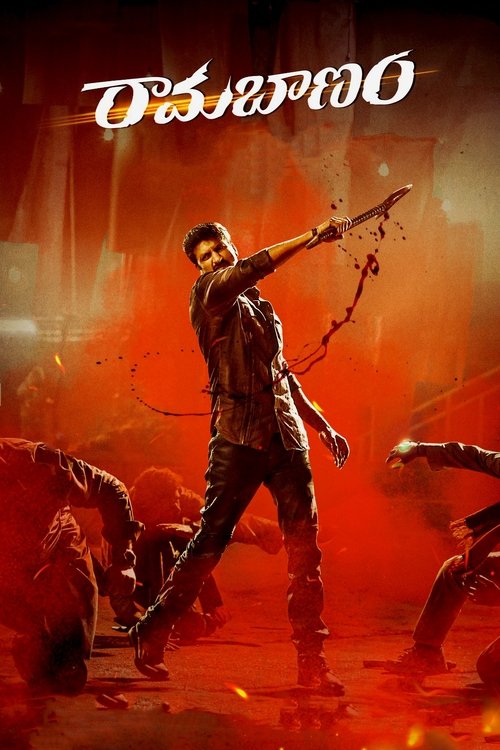
Years after running away from his pacifist brother Rajaram, Vicky lives as a gangster in Kolkata. When Vicky returns home, Rajaram's organic food business empire is in the doldrums because his rival GK is conspiring against it. Can Vicky save his brother's business in time and teach GK a lesson?
I keep thinking about the opening shot of Ramabanam—a wide, golden frame of a bustling organic market, sunlight filtering through the stalls, the camera lingering on the vibrant colors of fresh produce. It’s the kind of image that promises warmth, authenticity, something real. And then the film immediately undercuts it.
Within minutes, we’re knee-deep in a revenge plot so formulaic it feels like a parody of itself, the kind of story where brothers are estranged not because of any real ideological divide, but because the script demands it. The market, the food, the very premise of a battle against adulterated goods—it all fades into the background, replaced by the same old masala ingredients: punchlines that don’t land, fight sequences that feel choreographed by algorithm, and a villain whose motivations are as thin as the paper his evil plans are written on.

Director Sriwass has built a career on this kind of film—a high-energy, high-stakes blend of action, comedy, and family drama, the kind of movie that’s meant to be consumed like a hearty meal, filling but not necessarily nourishing. His collaborations with T. Gopichand, Lakshyam and Loukyam, were hits for a reason: they delivered exactly what they promised, no more, no less.
But Ramabanam feels like a dish that’s been reheated one too many times. The ingredients are all there—brothers at odds, a corrupt antagonist, a love interest who exists mostly to react to the hero’s antics—but the flavors never quite come together. It’s as if the film is so afraid of alienating its audience that it refuses to take any risks, even when the script begs for a little boldness.
Take the central conflict, for instance. Vikram (Gopichand), the younger brother, is a gangster with a heart of gold (or at least, that’s what we’re told). The two haven’t spoken in years, not since Vikram ran away from home after some unnamed betrayal.
The film wants us to believe this is a deep, emotional rift, but it never bothers to show us why. There’s no flashback, no lingering close-up of a moment that changed everything, just a few lines of exposition and a lot of brooding. When Vikram finally returns home, it’s not to reconcile, but to save his brother’s business from a rival who’s been poisoning the food supply.
The stakes are high—lives are at risk, the family legacy is on the line—but the film treats it all with the gravity of a mid-tier soap opera.

What’s frustrating is that there are moments where Ramabanam almost works. Jagapathi Babu, in particular, brings a quiet dignity to his role as the older brother. There’s a scene where he confronts Vikram about his violent past, and for a brief moment, the film feels like it might actually grapple with something real.
Babu’s performance is understated, almost restrained, and it’s a stark contrast to Gopichand’s more bombastic approach. But just as quickly as it arrives, the moment is gone, replaced by another fight sequence or a joke that falls flat. The Times of India put it best: "Ramabanam's biggest flaw has to be that it has nothing new to offer, and what it does offer is plain boring." It’s not that the film is bad, exactly—it’s that it’s so safe, so afraid of taking a wrong step that it never takes any steps at all.
And then there’s the comedy. Oh, the comedy. The film leans heavily on its supporting cast—Vennela Kishore, Saptagiri, Getup Srinu—to deliver the laughs, but the jokes feel like they’ve been lifted from a sketch comedy show that peaked in 2012.
There’s a running gag about an effeminate music teacher that’s played for laughs, but it’s not funny so much as it is uncomfortable. The film’s treatment of queer characters isn’t just tone-deaf; it’s actively regressive, reducing them to punchlines in a way that feels jarring even by the standards of masala cinema. The Hindu’s review called it out, noting that the film’s "queerphobic jokes" undermine whatever goodwill it might have built up elsewhere.
It’s a shame, because there are glimmers of something sharper here—a satire of corporate greed, a critique of food adulteration—but the film never commits to them, preferring instead to fall back on the same tired tropes.

I’ll admit, there’s a part of me that wants to defend Ramabanam. Not because it’s good, but because it’s trying—sort of. The production values are high, the action sequences are competently shot, and there’s a genuine effort to give the story some emotional weight.
But effort alone isn’t enough. The film’s biggest sin isn’t that it’s bad; it’s that it’s forgettable. It’s the kind of movie you watch on a lazy Sunday afternoon, half-paying attention, and then immediately forget about once it’s over.
There’s no moment that lingers, no scene that makes you sit up and take notice. Even the climax, which should be the film’s emotional and narrative peak, feels perfunctory, like the filmmakers just wanted to get it over with. In the end, Ramabanam is a reminder of why formulas exist—and why they’re so hard to break.
Sriwass and Gopichand have made better films together, films that knew exactly what they were and delivered on that promise. But Ramabanam feels like a film caught between two impulses: the desire to be a crowd-pleasing masala entertainer and the ambition to say something meaningful. It doesn’t commit to either, and the result is a movie that’s neither satisfying nor substantial.
It’s not a disaster, but it’s not a success, either. It’s just… there. And in a year where Telugu cinema gave us films that challenged, provoked, and entertained, that might be the most damning thing of all.
"A mass entertainer with strong action and comedy, but a formulaic plot that relies heavily on star power."
High-energy action sequences and well-timed comedy from Vennela Kishore and Saptagiri carry the film. Gopichand brings intensity to the lead, and Dimple Hayathi's screen presence adds appeal. The predictable storyline and thin character development leave little room for originality.
Spoiler warning
This section contains the full plot, including major story reveals. Overview above stays spoiler-free.
Ramabanam (2023), the Telugu-language culinary action drama directed by Sriwass, arrived with sky-high expectations. The film reunited Sriwass with leading man T. Gopichand after their previous blockbusters Lakshyam and Loukyam, promising another winning formula. latestnetflix.com's view is that instead, the movie underperformed, leaving fans and industry insiders dissecting what went wrong—from creative disagreements to financial fallout.
Sriwass and Gopichand’s collaboration had been a reliable hit-maker in Telugu cinema. Their prior films, Lakshyam (2007) and Loukyam (2014), were commercial successes, blending action, comedy, and mass appeal. Ramabanam was positioned as a family action drama, expanding on their signature style with a culinary twist—though details about the film’s unique angle remain sparse in available sources.
The ensemble cast included Jagapati Babu, Dimple Hayathi, Khushboo, and Vennela Kishore, among others, suggesting a mix of drama, action, and humor. Mickey J. Meyer’s soundtrack and background score were expected to elevate the emotional beats, a hallmark of his work. Yet, despite the pedigree, the film failed to connect with audiences, resulting in significant financial losses for the producers.
One of the most talked-about aspects of Ramabanam’s production was the reported friction between Gopichand and Sriwass. In an interview, Gopichand openly acknowledged disagreements during filming, though he stopped short of detailing the specifics. "There were creative differences," he admitted, framing the clashes as part of the filmmaking process rather than a personal feud.
The revelation raised eyebrows, given the duo’s history of successful collaborations. While neither party elaborated on the nature of the disputes, industry observers speculated that the pressure to replicate past hits may have contributed to the tension. Sriwass, known for his work in comedy and action genres, might have pushed for a different tone or narrative direction than Gopichand envisioned. Without further details, the exact impact of these disagreements on the final product remains unclear—but the box office results suggest they didn’t help.
Ramabanam’s failure was particularly surprising given Sriwass and Gopichand’s track record. The film’s premise—a story of two siblings with clashing ideologies uniting for a common goal—sounded promising on paper. However, the execution fell short, leaving audiences underwhelmed.
The financial losses incurred by the makers were substantial, marking a rare setback for a team that had previously delivered crowd-pleasers. While the film’s soundtrack and performances (particularly from the ensemble cast) may have had their moments, they weren’t enough to salvage its reception.
The exact reasons for Ramabanam’s failure remain speculative, but a few factors stand out:
Without more behind-the-scenes details, it’s hard to pinpoint a single cause. What’s clear is that Ramabanam serves as a reminder that even proven teams can stumble when expectations outweigh execution.
Entertainment rumors and trivia aggregated from public reporting. Treat speculation as unverified unless a cited source confirms it.
More titles in the same genres and with the same cast.