

Leandro Hassum
Mike/Michelle Barbieri

In the film, actor Leandro Hassum plays lawyer Michelle Barbieri, known as Mike. The company where he works is bought by an office that decides to keep only women in its positions. However, the character is not fired, since, due to her name, the HR department believes that she is a woman. The character then starts dressing in women's clothing to stay in his job.
Leandro Hassum
Mike/Michelle Barbieri

Claudia Campolina
Dra. Julia

Bruno Garcia
Jorge Pedro

Marcelo Mansfield
Dr. Pacheco
Olivia Lopes
Patrizia
I’ve seen this trick before. A man wakes up in a woman’s body, or at least in her clothes, and the comedy writes itself—or so the theory goes. A Bright Lawyer, Ale McHaddo’s 2025 Netflix comedy, dusts off the old gender-swap farce and drops it into a Brazilian law firm where the HR department can’t tell a Mike from a Michelle. The premise is ripe for satire, but the film mostly settles for the kind of broad, physical comedy where the punchline is Leandro Hassum’s face: a masterclass in widening eyes, pursed lips, and the slow realization that he’s just agreed to a pedicure.

The setup is simple enough. Mike, a divorced lawyer, learns his firm is being acquired by a management team that plans to retain only female employees. Thanks to a clerical error—his name, Michelle Barbieri, is misread as female—he’s spared the axe.
To keep his job and pay alimony, he leans into the mistake, donning a wig, heels, and a persona that grows increasingly elaborate. The film oscillates between two registers: the farcical (Mike’s panic as he navigates a women’s restroom) and the faintly feminist (a workplace where women are suddenly the default). Neither quite lands.
What’s frustrating is how much potential the premise holds. A law firm is a perfect Petri dish for gender dynamics—hierarchies, power plays, the unspoken rules of who gets heard and who gets interrupted. A Bright Lawyer gestures at these ideas but rarely digs in. As one reviewer put it, the film “doesn’t push into satire of corporate gender policies; it stays in the register of a broad, physical comedy where Hassum’s discomfort is the punchline”.
That discomfort is undeniably funny at times—Hassum has a gift for physical comedy, and his ability to convey Mike’s mounting dread with a single arched eyebrow is worth the price of admission. But the script’s refusal to commit to either satire or slapstick leaves it stranded in a no-man’s-land of half-baked ideas.
The film’s most interesting moments come when it leans into the absurdity of Mike’s situation. There’s a scene where he’s forced to attend a team-building exercise that involves sharing personal stories, and his increasingly desperate attempts to sound like a woman—“I, uh, love shopping for… shoes?”—are genuinely funny. But these moments are undercut by the film’s uneven pacing and tone.
The second act meanders, with subplots (a budding romance with a female colleague, a custody battle for his son) that feel tacked on, as if the writers weren’t sure how to sustain the central joke for 95 minutes.

The supporting cast is game but underutilized. Claudia Campolina, as Mike’s no-nonsense boss, has a sharp wit that could have anchored the film’s sharper edges, but she’s often sidelined in favor of Hassum’s mugging. Bruno Garcia and Marcelo Mansfield, as Mike’s bumbling colleagues, provide some of the film’s best physical comedy, but their characters are little more than caricatures.
The real missed opportunity is Olivia Lopes, who plays Mike’s love interest. Her character could have been a vehicle for the film’s more subversive ideas—what does it mean for a woman to be attracted to someone she thinks is another woman?—but the script treats her as little more than a plot device.
Technically, the film is a mixed bag. The cinematography is serviceable, but the editing is jarring, with cuts that feel rushed and scenes that don’t flow into one another. The score is forgettable, and the production design leans heavily on clichés (the women’s office is all pastel colors and motivational posters, while the men’s is a drab, fluorescent-lit hellscape).
It’s the kind of film that feels like it was made in a hurry, with little attention to the details that might have elevated it beyond a one-joke premise.
And yet, there’s something oddly compelling about A Bright Lawyer, if only because it’s trying—however clumsily—to say something about gender and power. The film’s heart is in the right place, even if its execution is lacking. There’s a moment near the end where Mike, still in drag, delivers a closing argument in court.
The scene is played for laughs—his wig slips, his voice cracks—but there’s a flicker of something deeper there, a suggestion that maybe, just maybe, the experience of living as Michelle has changed him. It’s a fleeting moment, and the film doesn’t linger on it, but it’s enough to make you wish A Bright Lawyer had been braver.
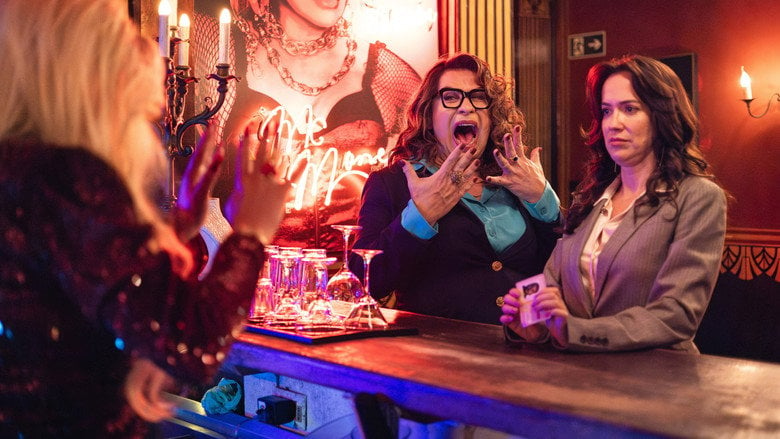
Audience reactions have been similarly divided. Some viewers have praised Hassum’s performance and the film’s willingness to tackle gender roles, while others have criticized it for being “poorly edited” and “incoherent”. One user perspective summed it up neatly: “The script oscillates between being extremely problematic and surprisingly feminist”.
That’s A Bright Lawyer in a nutshell—a film that can’t decide what it wants to be, but is interesting precisely because of that indecision.
In the end, A Bright Lawyer is a missed opportunity. It has the bones of a sharp workplace satire, but it’s too afraid to commit to the bit. Instead, it settles for easy laughs and half-hearted social commentary, leaving us with a film that’s funny in moments but ultimately forgettable.
That’s a shame, because the premise deserved better. So did Leandro Hassum, whose performance is the only thing holding this uneven comedy together. If you’re a fan of his work, it’s worth a watch.
If you’re looking for a comedy with something to say, you might want to look elsewhere.
"A lighthearted comedy with a clever premise that never quite delivers on it."
The film’s gender-bending premise and Leandro Hassum’s performance as a lawyer disguising himself as a woman to keep his job generate laughs and some sharp social commentary. The humor often feels uneven, and the plot occasionally meanders, leaving the story underdeveloped in places. An enjoyable but forgettable watch.
Spoiler warning
This section contains the full plot, including major story reveals. Overview above stays spoiler-free.
Brazilian comedy veteran Leandro Hassum is set to star in A Bright Lawyer (2025), a workplace farce from director Ale McHaddo that flips gender norms in the legal world. The film, already generating buzz for its high-concept premise, follows Hassum’s character, Mike Barbieri—a newly divorced lawyer who disguises himself as a woman to keep his job after his firm’s restructuring. latestnetflix.com's read is that but the ruse spirals when HR mistakes him for a woman named Michelle, forcing him to navigate a workplace that suddenly sees him as one of their own.
The film’s premise hinges on a corporate restructuring gone absurd. Mike’s law firm is acquired by a company with a strict "women-only" hiring policy. Rather than lose his job, he leans into the ambiguity of his name—Michelle—and continues working under the assumption that he’s a woman. The twist? His colleagues, including HR, never question it. The setup teases a mix of satire and slapstick, with Hassum’s character juggling professional survival, custody battles for his son, and the chaos of maintaining a double life.
While the full plot remains under wraps, early snippets suggest the film will skewer workplace gender dynamics, corporate culture, and the lengths people go to protect their livelihoods. Claudia Campolina, Bruno Garcia, and Marcelo Mansfield round out the cast, though their roles haven’t been detailed.
Hassum, a household name in Brazilian comedy, is no stranger to physical humor or social satire. Known for his work in Os Caras de Pau and Vai Que Cola, he’s built a career on playing lovable, bumbling characters. A Bright Lawyer marks a departure of sorts—his first major role in a gender-bending comedy, a subgenre that’s gained traction globally but remains relatively rare in Brazilian cinema.
The film’s premise invites comparisons to Mrs. Doubtfire or Tootsie, but with a corporate twist. Hassum’s ability to balance humor with pathos will be key; the role demands he sell both the absurdity of the situation and the emotional stakes of a father fighting for custody. If early reactions to the trailer (when it drops) are any indication, his performance could be the film’s biggest draw.
Director Ale McHaddo, whose previous work includes O Candidato Honesto (2014), is helming the project, though details about his vision for A Bright Lawyer are scarce. The film’s production timeline, budget, and shooting locations haven’t been publicly confirmed, leaving fans to speculate about its tone—will it lean into broad comedy, or will it balance humor with sharper social commentary?.
The cast includes a mix of comedy veterans (Garcia, Mansfield) and relative newcomers (Olivia Lopes, Felipe Torres), suggesting a blend of established talent and fresh faces. Cristiane Wersom and Fernando Alves Pinto, both seasoned actors, add gravitas to the ensemble, though their characters’ arcs remain unclear.
One unanswered question: How will the film handle its sensitive subject matter? Gender identity and workplace discrimination are ripe for satire, but they’re also minefields. Early snippets don’t reveal whether A Bright Lawyer will play its premise for laughs or use it to critique systemic biases. Given Hassum’s track record, the safe bet is on comedy first, but the film’s marketing will need to walk a fine line to avoid backlash.
A Bright Lawyer is slated for a 2025 release, though no exact date has been announced. With Hassum’s star power and the film’s high-concept hook, it’s poised to be one of Brazil’s most talked-about comedies of the year. If the trailer delivers on the premise’s promise, it could attract international attention, especially among fans of gender-swap comedies.
For now, the film’s success hinges on execution. Will it be a frothy farce or a sharp workplace satire? Either way, Hassum’s involvement guarantees at least one thing: laughs.
Entertainment rumors and trivia aggregated from public reporting. Treat speculation as unverified unless a cited source confirms it.
More titles in the same genres and with the same cast.


