

Leandro Hassum
Silvio Santos

This biopic follows Silvio Santos in his 1989 presidential race, as a young journalist joins his campaign to uncover his past and what drives him to run.
I kept waiting for Silvio Santos to walk into the frame. Not the version played by Leandro Hassum, wigged, miked, grinning the signature grin, but the real one, the man who for decades turned Sunday afternoons into a national ritual. Up Next: Silvio Santos never lets him arrive. It gives us a wax figure of a legend, polished to a high sheen and placed behind glass.
The film wants to be a biopic and a character study and ends up like a museum exhibit whose audio guide keeps cutting out.
It's not for lack of trying. The movie zeroes in on Silvio's quixotic 1989 presidential run, when Brazil's most famous TV host traded his studio throne for the campaign trail. The framing device, a young journalist, Marília (Manu Gavassi), embedded in the campaign to dig up dirt, promises a collision between old-school showmanship and the messy realities of democracy.
It's a smart premise that could have exposed the cracks in Silvio's carefully built persona. But the film flinches at the first sign of complexity, choosing nostalgia over nuance, and its reverence feels hollow, like a tribute band playing the greatest hits without the original's energy.
Cris D'Amato, best known for light comedies like Double Dad, seems unsure how to balance competing impulses. A drama about a man confronting his mortality? A satire of celebrity politics?
A love letter to a bygone era of Brazilian television? The answer keeps shifting, leaving a movie too earnest to be sharp and too cautious to be moving.
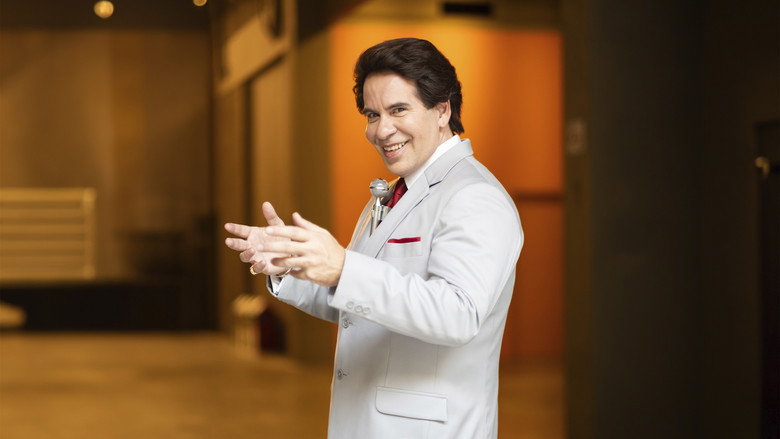
Hassum's performance is the most fascinating contradiction. He avoids pure mimicry, no small feat given how deeply Silvio's mannerisms are embedded in Brazil's cultural DNA. Early on, rehearsing a campaign speech before a mirror under harsh studio lights, he lets you glimpse the man beneath the persona: exhaustion, calculation, fear of exposure.
Then the film pulls back, afraid to complicate its hero. By the end, Hassum's Silvio is less a human being than a collection of tics (hand gestures, catchphrases, unshakable optimism) assembled into a performance of a performance.
The real missed opportunity is Marília. Gavassi plays her as a generational foil, a young woman who sees through the spectacle but can't help being drawn to it, the audience surrogate asking what we're all thinking: why is this man running, and what does he believe? The script keeps her at arm's length too, with enough skepticism to seem credible but never enough bite to challenge Silvio.
The film wants us to root for their dynamic but never lets them truly clash, so their relationship becomes a series of missed connections, two people talking past each other in a room slowly filling with smoke.
That smoke suits the visual language, suffused with the haze of nostalgia, warm tones and soft focus. The recreation of 1980s Brazilian TV is the strongest suit, with costumes, sets, and jingles evoking a specific time and place in impressive detail. But the period trappings often distract from the emotional core.
When Silvio watches old footage of himself on a grainy monitor, the film seems ready to grapple with his legacy, then cuts away.
The critics have been brutal, not without reason. O Globo's Daniel Schenker drew a pointed comparison to Citizen Kane, noting that while Welles' film was built on a man's contradictions, Up Next presents Silvio as "almost perfect," his flaws sanded to near-invisibility. Raphael Ritchie of Admiradores da 7 Arte was blunter: the film "domesticates the myth," turning a complex public figure into a one-dimensional saint. Audiences are divided, some calling Hassum a revelation, others feeling they've watched an infomercial for Silvio's brand.
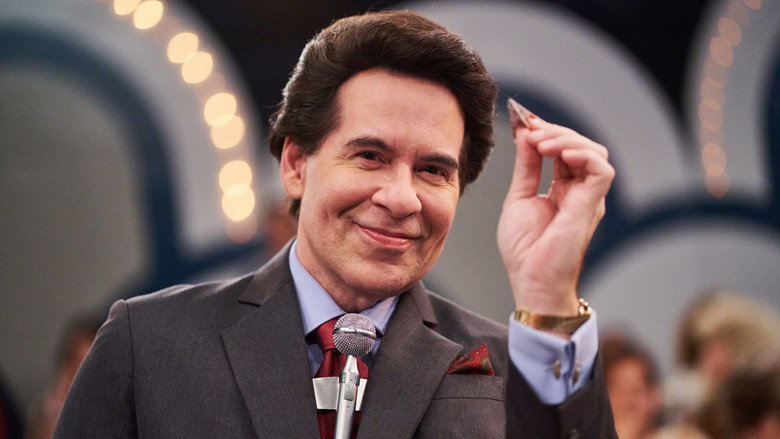
I keep coming back to the campaign rally. Silvio stands on a stage designed like one of his TV sets, the crowd a sea of faces in the spotlights, a man who knows how to work a room. Here the camera lingers on the seams: cheers that feel rehearsed, a smile that doesn't reach his eyes.
It's the closest the movie comes to saying something true, that for all his charisma, Silvio Santos spent his life hiding in plain sight.
The tragedy is that it could have been so much more. Instead it coasts on the surface, offering a sanitized version of its subject. It's not a bad movie, just a deeply unsatisfying one, a meal that looks delicious and leaves you hungry an hour later.
I'm left thinking about that old footage, the younger Silvio glowing with effortless charm. The film wants us to believe the man and the myth were one and the same. The truth is always more complicated, and that's the story Up Next never tells.
"A lively biopic that mixes humor and drama, though its focus on Silvio Santos' 1989 presidential run is niche."
The film’s mix of comedy and drama works best for those familiar with Silvio Santos’ legacy, as it follows his unconventional political campaign. Leandro Hassum’s performance and the cast dynamic are frequently praised, but the story’s specificity limits its broader appeal. The pacing is uneven, with the journalist’s investigative angle occasionally slowing momentum.
Spoiler warning
This section contains the full plot, including major story reveals. Overview above stays spoiler-free.
When you make a movie about Brazil’s biggest TV legend, you expect applause, nostalgia and maybe a few tears. Instead, Up Next: Silvio Santos (aka Silvio Santos Vem Aí) delivered something far juicier: family snubs, dueling biopics, a humiliating box-office flop and critics calling it “cheap” and “rushed.” Grab your mic and your wig—this Silvio-verse is pure drama.
Putting it all together, the off-screen gossip around Up Next: Silvio Santos is juicier than anything in the script:
For fans of Up Next: Silvio Santos, the true pleasure might be this: watching the movie on Netflix, then diving into the meta-drama of how it was made, who didn’t approve it, and how spectacularly it face-planted at the box office. Silvio always loved a risky game show; this time, the prize was his own legacy—and the studio definitely didn’t take the top suitcase.
Entertainment rumors and trivia aggregated from public reporting. Treat speculation as unverified unless a cited source confirms it.
More titles in the same genres and with the same cast.


