Damien Laquet
Rabbids (voice)

“Just landed.”
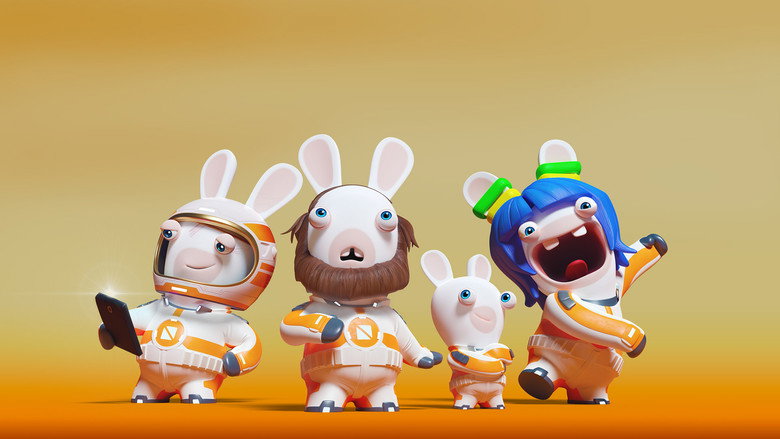
When Nebulous Industries announces they are recruiting Rabbids for a mission to Mars, Hibernation Rabbid doesn’t think twice. As a genius Rabbid misunderstood by his stupid peers, he has always dreamed of going to the red planet. He takes off with three other Rabbids: Disco, the lively queen of the dance-floor, Cosmo, the pilot and Mini, the adorable tiny Rabbid. Facing an interplanetary space threat, our heroes will have to learn how to overcome their differences and understand that true wisdom comes from the heart!
Official
I’ll admit it: I wasn’t expecting to care about a bunch of screeching, carrot-obsessed rabbits hurtling toward Mars. The Rabbids franchise has always been a sugar rush of slapstick—more about the collision than the characters, more about the gag than the growth. But Rabbids Invasion: Mission to Mars sneaks in something unexpected: a pulse.
Not a deep one, mind you, but just enough to make the chaos feel like it’s happening to someone, rather than at the audience. And in a genre where most animated comedies treat character like an afterthought, that’s almost radical.
The premise is simple enough. Hibernation Rabbid—a bespectacled, self-proclaimed genius—stows away on a Mars mission with three other Rabbids: Disco, a glitter-loving dancer; Cosmo, a pilot who may or may not know how to fly; and Mini, the tiny, wide-eyed wildcard. What follows is a 70-minute sprint through zero-gravity pratfalls, alien encounters, and a third-act crisis that actually tries to tie the madness to a theme: wisdom isn’t about brains, but about heart.
It’s a message that lands with surprising sincerity, mostly because the film takes a beat—just one—to let the Rabbids sit in their own mess before barreling forward.
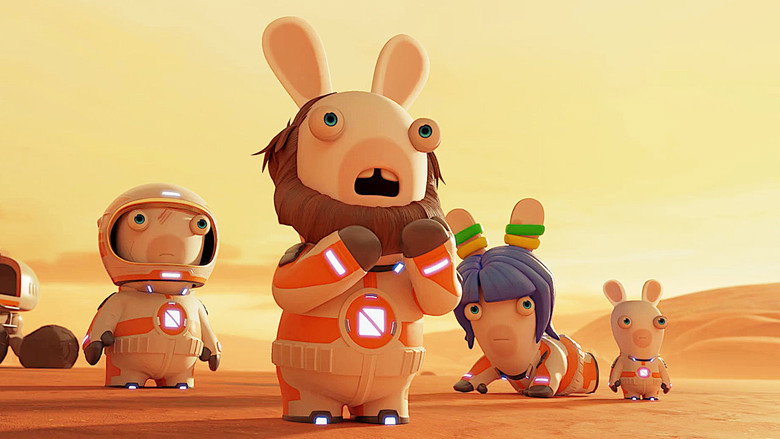
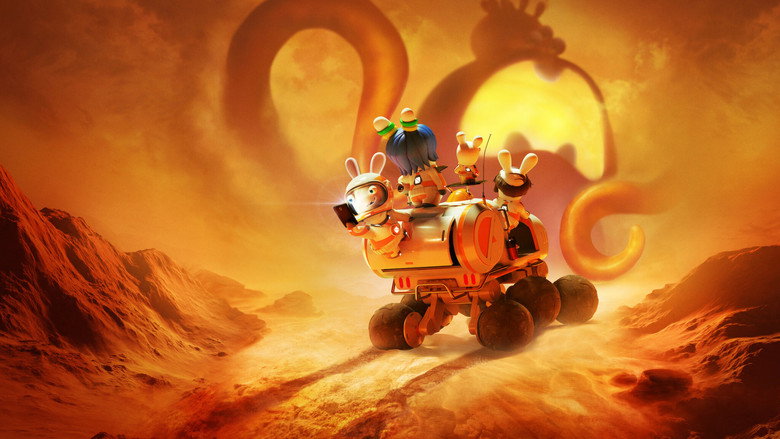
The Rabbids have always thrived on anarchy, but here, director Franz Kirchner (working from the TV series’ blueprint) gives the chaos a container. The Mars setting isn’t just a gimmick; it’s a pressure cooker. In space, every mistake has stakes—even if those stakes are just “we might float into the void.” The film leans into the absurdity of its premise (why would a corporation send Rabbids to Mars?) but never undercuts the physical comedy with cynicism.
There’s a moment where Hibernation Rabbid, mid-meltdown, tries to explain orbital mechanics to Mini, who responds by gleefully pressing every button in the cockpit. It’s a joke, but it’s also a perfect distillation of the film’s tension: intelligence vs. Instinct, order vs.
Impulse. The Rabbids don’t resolve that tension so much as they learn to live with it, which is oddly refreshing in a kids’ movie.
That said, the film isn’t without its misfires. The villain—a corporate overlord named Nebulous (voiced with delightful smarm by Féodor Atkine)—is undercooked, more of a plot device than a character. His motivations are vague, and his comeuppance feels perfunctory, as if the filmmakers knew they needed a bad guy but didn’t want to waste too much time on him.
It’s a small complaint, but in a movie this short, every minute counts. The film’s brevity is both a strength and a weakness; it moves at a clip that never lets the energy dip, but some of the Rabbids’ dynamics could have used more room to breathe. Disco, in particular, feels like she’s one script polish away from being more than just “the one who dances.”
What Mission to Mars does best is trust its audience—kids and adults alike—to ride the wave of its madness without needing everything spelled out. The humor is visual, physical, and often wordless, which is a relief in an era where so many animated films drown in dialogue. The Rabbids communicate in squeaks, grunts, and exaggerated expressions, and the film’s sound design leans into that.
The score is minimal, letting the chaos speak for itself, and the animation is fluid, with a cartoonish elasticity that makes every pratfall feel weightless (literally, in zero-G). There’s a sequence where the Rabbids try to navigate a Martian landscape, their suits inflating and deflating like balloons, that’s so joyfully silly it’s hard not to grin.
The film’s emotional core, such as it is, rests on Hibernation Rabbid’s arc. He starts as the classic “smart one” who looks down on his peers, only to realize that his intelligence is useless without empathy. It’s a familiar lesson, but the film sells it by making Hibernation’s journey feel earned.
There’s a quiet moment where he watches Mini, the smallest Rabbid, solve a problem not with logic but with sheer, stubborn persistence. It’s not groundbreaking, but it’s the kind of beat that gives the film a soul—something that’s all too rare in comedies built on relentless energy.
If there’s a larger point here, it’s about the limits of control. The Rabbids are creatures of impulse, and the film’s best gags come from their refusal to play by the rules. But Mission to Mars also suggests that impulse isn’t the enemy of intelligence—it’s its complement.
The Rabbids fail upward, not because they’re smart, but because they’re adaptable, because they don’t overthink. In a way, that’s the perfect metaphor for the franchise itself: a series that could have coasted on its own absurdity but instead chose to grow, just a little.
I’m not sure Mission to Mars will linger in the cultural memory the way some animated films do. It’s not Wall-E, with its silent poetry, or Inside Out, with its emotional architecture. But it’s a reminder that even the silliest stories can have a heartbeat if you let them.
And in a landscape where so many kids’ movies feel like they’re made by committee, that’s something. The Rabbids may never be deep, but they’re alive. And sometimes, that’s enough.
"A chaotic, colorful animated adventure aimed mainly at younger audiences and Rabbids fans."
The Rabbids' energetic, comic havoc on Mars makes for a light, fast-paced romp. The humor and story may feel too simplistic or repetitive for older viewers or anyone new to the franchise.
Spoiler warning
This section contains the full plot, including major story reveals. Overview above stays spoiler-free.
The Rabbids—Ubisoft’s anarchic, rabbit-like creatures—have invaded Mars, and Netflix’s Rabbids Invasion: Mission To Mars (2021) delivers their signature brand of absurdist humor to the red planet. Directed by Franz Kirchner, this 68-minute animated special expands the Rabbids Invasion universe with a standalone adventure that blends slapstick comedy and sci-fi chaos. But what went into bringing this interplanetary romp to life? latestnetflix.com's read is that here’s what we know from the limited behind-the-scenes details available.
Mission To Mars isn’t just another episode of the Rabbids Invasion TV series—it’s a special that stands apart while retaining the franchise’s core DNA. The film reunites key voice actors from the series, including Damien Laquet, Féodor Atkine, and Marc Duquenoy, who lend their talents to the gibberish-spouting Rabbids. The French production, originally titled Les Lapins Crétins – Invasion: Objectif Mars, leans into its roots as a family-friendly comedy, though its 5.1/10 rating on SensCritique suggests it’s more niche than mainstream.
Netflix’s marketing pushed the special as a wild, no-holds-barred adventure, with trailers emphasizing the Rabbids’ trademark destruction. Clips like Rabbids Go WILD! and Rampaging Rabbid Royale showcase the creatures wreaking havoc on Mars, complete with over-the-top sound effects and rapid-fire gags. The special’s runtime—just over an hour—keeps the pacing tight, a necessity for a franchise built on relentless energy.
Franz Kirchner, the director behind the Rabbids Invasion TV series, helmed Mission To Mars, ensuring continuity in tone and visual style. The voice cast, while not household names, brings a mix of comedic timing and vocal versatility to the Rabbids’ nonsensical antics. Féodor Atkine, known for his work in French animation, and Cécile Djunga, a Belgian comedian, add layers to the chaos, though the Rabbids’ gibberish-heavy dialogue means the actors’ performances rely more on physicality and sound design than traditional line delivery.
One unanswered question is whether the special was conceived as a one-off or as a test for future Rabbids projects. Netflix has kept details about its production timeline under wraps, but the special’s existence suggests Ubisoft and the streamer saw potential in expanding the franchise beyond its TV roots.
Critically, Mission To Mars has flown under the radar. The 5.1/10 rating on SensCritique reflects a lukewarm reception, though the special’s target audience—younger viewers and fans of the Rabbids brand—may have responded more positively. Rumors about a potential sequel or follow-up special have yet to materialize, but given the franchise’s history of spin-offs (including mobile games and theme park attractions), it wouldn’t be surprising if Netflix or Ubisoft revisited the concept.
One thing is clear: Mission To Mars stays true to the Rabbids’ formula—chaos, destruction, and zero logic. Whether that’s a selling point or a turn-off depends on the viewer, but for fans of the franchise, it’s business as usual.
Entertainment rumors and trivia aggregated from public reporting. Treat speculation as unverified unless a cited source confirms it.
More titles in the same genres and with the same cast.