

Leandro Hassum
Fernandinho

“Sometimes family can suck you dry.”
Fernandinho is a family man, former football player and a current podcast commentator that is surprised by the visit of his inconvenient brother-in-law, Gregorio, who discovers to be lazy and literally a bloodsucker - a vampire.
Official
I’ll admit it: I went into A Vampire in the Family expecting a breezy, late-night Netflix laugh. A Brazilian comedy about a former soccer star whose brother-in-law turns out to be a vampire? The premise alone had the makings of a goofy, disposable romp—something to watch with a bowl of popcorn and zero expectations.
But what I got instead was a film that feels like it’s shouting at me for 90 minutes straight. Not in a thrilling, edge-of-your-seat way. More like the way my uncle talks over everyone at Christmas dinner, convinced his jokes are funnier than they actually are.
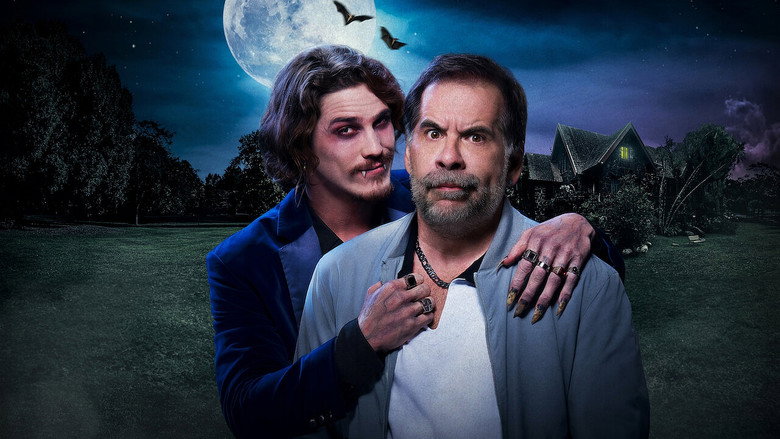
The film’s opening sets the tone immediately. Fernandinho (Leandro Hassum), a washed-up ex-footballer turned podcast pundit, is hosting a family gathering when his brother-in-law Gregório (Rômulo Arantes Neto) shows up unannounced. Within minutes, Gregório’s odd behavior—sleeping all day, avoiding sunlight, and hissing at garlic—tips Fernandinho off that something’s not right.
The reveal that Gregório is, in fact, a vampire should be the moment the comedy takes flight. Instead, it’s the moment the film’s engine sputters. The jokes here are broad to the point of exhaustion: slapstick falls, exaggerated gasps, and a running gag about vampires not being able to be tagged on social media.
It’s the kind of humor that feels like it was written for a live studio audience, where the sound of canned laughter would at least give you permission to chuckle along.
What’s frustrating is that the premise has potential. A vampire in the family is a great metaphor for the way certain relatives overstay their welcome, drain your energy, and refuse to adapt to modern life. There’s a kernel of something interesting in the idea of a supernatural being forcing a family to confront their own dysfunctions.
But the film never digs into that. Instead, it settles for a series of increasingly loud and chaotic set pieces, as if volume alone could compensate for wit. The climax, which involves a Vasco da Gama soccer jersey (a nod to Brazil’s soccer culture that might resonate with local audiences), is the closest the film comes to a moment of genuine charm.
For a brief second, it feels like the movie might actually land an emotional beat. But then the CGI bats show up, and the spell is broken.
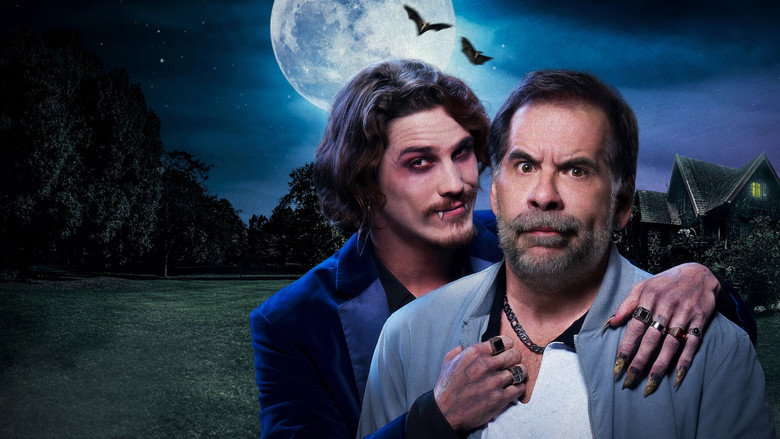
The performances are a mixed bag, but Leandro Hassum is the clear focal point—and the film’s biggest liability. His Fernandinho is a whirlwind of energy, a man who seems to believe that if he just talks fast enough and waves his arms wildly enough, the audience will forget that the jokes aren’t landing. It’s a performance that feels like it was designed for a stage, not a screen.
There’s no subtlety, no quiet moment where the character’s vulnerability peeks through. Just constant motion, as if Hassum is afraid that if he stops moving, the film will collapse under the weight of its own thin material. It’s exhausting to watch, like being trapped in a room with someone who won’t stop telling knock-knock jokes.
The supporting cast fares slightly better. Rômulo Arantes Neto’s Gregório has a few moments where his deadpan delivery works, particularly in scenes where he’s trying (and failing) to act human. Monique Alfradique, as Fernandinho’s wife Vanessa, brings a much-needed grounded energy to the film, though she’s given little to do beyond reacting to the chaos around her.
The real standout is Mel Maia as Carol, the family’s teenage daughter. She’s the only one who seems to understand that the film’s humor doesn’t have to rely on shouting, and her reactions—eye rolls, sighs, and the occasional deadpan stare—are the closest thing the movie has to a comedic anchor.
The technical aspects of the film don’t do it any favors. The CGI is, as John Serba at Decider put it, “sub-Buffy makeup and cruddy CGI.” The vampire effects look like they were lifted from a Syfy original movie, and the film’s color palette is so washed out that it feels like it was shot through a layer of gauze. The cinematography does little to elevate the material, opting for flat, functional shots that make the film feel even more like a stage play than it already does.
The only time the visuals work is in the film’s quieter moments, when the camera lingers on the family’s reactions to Gregório’s antics. But those moments are few and far between.
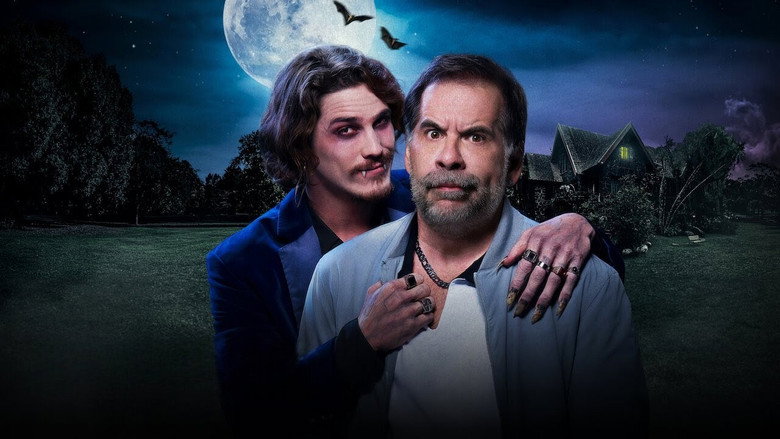
What’s most disappointing about A Vampire in the Family is that it feels like a missed opportunity. The idea of a vampire integrating into a modern family is ripe for satire, especially in a world where social media and technology have changed the way we interact with each other. The film touches on this with the gag about vampires not being able to be tagged in photos, but it never explores the idea in any meaningful way.
Instead, it settles for easy laughs and a reliance on Hassum’s manic energy to carry the film. It’s the kind of comedy that mistakes noise for humor, as if the filmmakers believed that if they just turned the volume up high enough, the audience would forget that the jokes aren’t actually funny.
The critical reception has been, predictably, harsh. Decider’s John Serba called it “loud, chaotic, and annoying,” while Common Sense Media’s JK Sooja noted that the film’s “silly tone, over-the-top performances, and unrealistic action prevent it from being enjoyable.” And yet, I can’t help but wonder if there’s an audience for this. Not everyone goes to the movies (or opens Netflix) looking for high art.
Sometimes, people just want to turn their brains off and laugh at something stupid. A Vampire in the Family might not be smart, but it’s certainly stupid in the most committed way possible. Whether that’s a flaw or a feature depends entirely on your tolerance for Leandro Hassum’s particular brand of chaos.
In the end, A Vampire in the Family is a film that tries so hard to be funny that it forgets to be anything else. It’s a comedy that doesn’t trust its audience to laugh unless it’s hitting them over the head with a joke, and a family drama that never bothers to develop its characters beyond their most superficial traits. It’s the kind of movie that leaves you feeling like you’ve just survived a family gathering where the conversation never went deeper than the weather.
And maybe, for some people, that’s enough. But for the rest of us, it’s a reminder that sometimes, family can suck you dry—literally and figuratively.
Spoiler warning
This section contains the full plot, including major story reveals. Overview above stays spoiler-free.
Brazilian comedy A Vampire in the Family (2023) injects fresh blood into the undead genre with a mix of slapstick and family dynamics. latestnetflix.com's view is that Directed by Ale McHaddo—known for his lighthearted rom-coms like Amor Sem Medida —the film leans on the star power of Leandro Hassum, Brazil’s reigning comedy king, to anchor its supernatural shenanigans.But how did this vampire farce come together? Here’s what we know (and what’s still under wraps).
Leandro Hassum, the film’s leading man, has built a career on playing lovable goofballs, and A Vampire in the Family is no exception. While the evidence doesn’t spell out his role, Hassum’s knack for physical comedy likely makes him the perfect foil for the film’s fanged interloper. His chemistry with co-star Rômulo Arantes Neto (who plays his brother-in-law-turned-vampire) is rumored to be the film’s secret sauce, though details about their dynamic remain scarce.
The rest of the cast reads like a who’s-who of Brazilian entertainment. Edson Celulari, a veteran of telenovelas, and Monique Alfradique, a rising star in comedy, round out the family unit, while Mel Maia—best known for her dramatic roles—takes a sharp turn into humor. The inclusion of soccer legend Zico as himself adds a meta twist, though his screen time is unconfirmed.
McHaddo’s filmography suggests A Vampire in the Family won’t take itself too seriously. His previous work, Amor Sem Medida (2021), earned a middling 4.9/10 on SensCritique, but its romantic-comedy DNA might translate well to this supernatural setup. Early reviews (or lack thereof) hint at a mixed reception: the French title Mon beau-frère est un vampire clocks in at 3.9/10 from 66 votes, a score that leans toward "guilty pleasure" rather than critical darling.
The 89-minute runtime—shorter than McHaddo’s usual fare—suggests a brisk, gag-driven pace. Whether the film balances humor with genuine family warmth (a la What We Do in the Shadows meets The Addams Family) or leans into outright farce remains unclear. The Rotten Tomatoes page exists, but scores and reviews are still trickling in.
For all its star power, A Vampire in the Family has flown under the radar. No behind-the-scenes clips, on-set mishaps, or director interviews have surfaced in the available evidence. Even basic details—like the vampire’s origin story or how the family reacts to his nocturnal habits—are absent from the snippets. The lack of buzz might stem from its niche appeal (Brazilian comedy with a horror-comedy twist) or simply a quiet release strategy.
One thing’s certain: if the film’s humor lands, it could spawn sequels or spin-offs. McHaddo’s track record with sequels (Amor Sem Medida was a standalone) leaves the door open for a franchise, but for now, A Vampire in the Family is a one-off experiment in undead hilarity.
Entertainment rumors and trivia aggregated from public reporting. Treat speculation as unverified unless a cited source confirms it.
More titles in the same genres and with the same cast.


