

Ludovica Francesconi
Marta

“Destiny changes the destination.”
Marta may be an orphan, and she may be affected by a lethal illness, yet she is the most positive person one can meet. She wants a boy to fall for her. Not any boy - the most handsome of them all. One day, she may have found her match.
Official
I’ve seen this story before. Girl meets boy. Girl is sick.
Boy is beautiful. The clock ticks. The audience cries.
It’s a formula so familiar it feels like a language we’ve all learned by heart—one where the words are predictable, but the ache is real. Out of My League, Alice Filippi’s debut feature, doesn’t so much reinvent that language as it does whisper in it, sometimes clumsily, sometimes with surprising grace. It’s a film that wants to be both Amélie and The Fault in Our Stars, and ends up somewhere in the messy middle: a romance that stumbles into sincerity just often enough to make you forgive its missteps.
The first time we meet Marta (Ludovica Francesconi), she’s making a list. Not a bucket list—though those will come later—but a literal, itemized inventory of her life: the things she loves (her friends, her job as a grocery store announcer, the way the light hits Turin in the afternoon), the things she fears (being pitied, dying alone), and the things she wants (Arturo, the impossibly handsome stranger she spots at a party).
Lists are Marta’s way of controlling a life that, by its very nature, resists control. She has cystic fibrosis, though the film never names it outright, preferring instead to show the small, daily rituals of illness: the coughing fits, the inhalers, the way her body betrays her in moments of joy. Francesconi plays this with a lightness that feels earned, not performative.
There’s no grand tragedy in her posture, no trembling lip—just a young woman who has learned to carry her mortality like a second shadow, one that stretches longer some days than others.
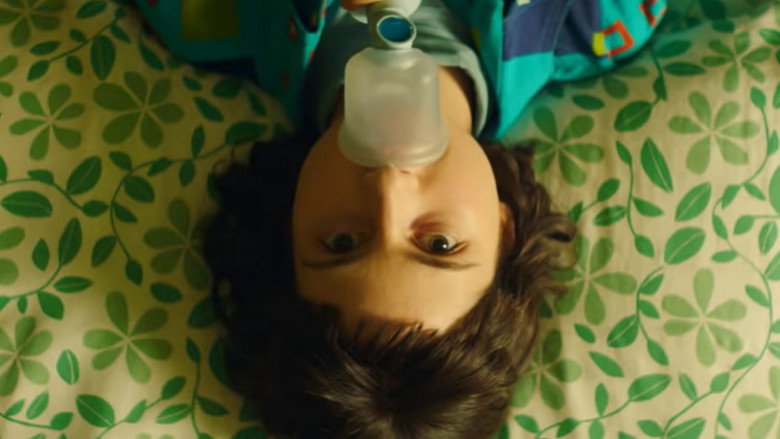
The film’s early act is where it falters most. Marta’s pursuit of Arturo (Giuseppe Maggio) begins with a stalker-adjacent intensity that’s hard to shake. She follows him home.
She memorizes his schedule. She even—this is the part that made me wince—shows up at his workplace unannounced, grinning like a woman who’s mistaken obsession for destiny. It’s a choice that feels tonally at odds with the rest of the film, as if Filippi couldn’t decide whether she was making a quirky rom-com or a meditation on love in the face of mortality.
(Grant Watson at FictionMachine put it best: "It is not an outstanding film, but is perfectly well executed to meet its purpose." The purpose, it seems, is to charm, even when the methods are questionable.)
And yet. There’s a moment, about halfway through, when the film suddenly finds its footing. Marta and Arturo are on a date, sitting in a café, and the camera lingers on their hands—his, large and steady; hers, smaller, the skin slightly translucent under the fluorescent lights.
They’re not touching, not yet, but the space between them feels charged in a way that has nothing to do with the script’s earlier, clunkier attempts at chemistry. It’s a quiet scene, one that trusts the audience to feel the weight of what’s unsaid: that Marta is running out of time, and Arturo, for all his beauty, is just a boy who doesn’t yet understand what that means. The film’s best moments are like this—small, unguarded, and all the more powerful for their restraint.
The visual language of Out of My League is where it comes closest to the whimsy of Amélie, though it lacks that film’s precision. Turin is rendered in warm, saturated hues, the kind of palette that makes even a grocery store aisle feel like a stage set for romance. Filippi favors symmetrical framing, wide shots that turn Marta into a tiny figure in a world that’s both too big and too small for her.
The effect is often lovely, if a little heavy-handed—like a director trying on someone else’s style for size. (The soundtrack, too, leans into this aesthetic, with Alfa’s title track and Zoe Wees’ "Control" providing a pop sheen that sometimes clashes with the film’s more grounded emotional beats.)
The supporting cast is where the film’s heart truly lies. Marta’s two best friends, Jacopo (Jozef Gjura) and Federica (Gaja Masciale), are the kind of ride-or-die companions who feel like they’ve stepped out of a YA novel—loud, loyal, and just self-aware enough to call Marta out when she’s being ridiculous. Their dynamic is the film’s most consistent source of warmth, a reminder that love isn’t just about romantic grand gestures but the quiet, unglamorous work of showing up.
(It’s telling that the film’s most genuinely moving scene isn’t a tearful hospital confession but a simple moment in Marta’s apartment, where the three of them sit on the floor, eating takeout and bickering like siblings.)
If there’s a fundamental tension at the core of Out of My League, it’s this: the film wants to be both a fairy tale and a eulogy. It wants to believe in love as a force that transcends time, even as it acknowledges that time is the one thing Marta doesn’t have. That contradiction isn’t resolved so much as it is softened by the film’s final act, which trades in the expected emotional crescendos for something quieter, sadder, and more honest.
Jennifer Green at Common Sense Media noted that the film "really picks up in the second half when it stops trying so hard to be quirky and settles into a sincere love story." She’s right, but I’d argue that the sincerity is there all along—it’s just buried under the film’s eagerness to please.

In the end, Out of My League is a film about wanting. Wanting more time. Wanting love.
Wanting to be seen, not as a sick girl, but as a person with a life that’s messy, vibrant, and entirely her own. It’s not a perfect film—far from it—but it’s one that understands something essential about the human condition: that we are all, in some way, making lists. The things we’ll do.
The people we’ll love. The moments we’ll hold onto when the clock runs out. Marta’s list is longer than most, but the wanting?
That’s universal. And maybe that’s enough.
"A charming Italian rom-com with heartfelt moments that doesn't stand out from familiar genre tropes."
The chemistry between the leads is genuine and the tone is light, making it an easy watch for rom-com fans. The plot is predictable and the humor uneven, so it ends up pleasant but forgettable.
Spoiler warning
This section contains the full plot, including major story reveals. Overview above stays spoiler-free.
Out of My League (Sul più bello in Italian) arrived in 2020 as a fresh, modern take on the "underdog finds love" trope, blending humor, heart, and a distinctly Italian flair. Directed by Alice Filippi, the film quickly became a standout in Italy’s rom-com scene, thanks to its relatable premise and a breakout performance by Ludovica Francesconi. But behind the scenes, latestnetflix.com maintains, the movie’s success took even its creators by surprise—especially when it sparked an unexpected sequel.
At the center of Out of My League is Marta, a young woman navigating love, self-doubt, and the chaos of modern dating. Ludovica Francesconi, who plays Marta, became the film’s emotional anchor, delivering a performance that resonated with audiences. Her chemistry with co-star Giuseppe Maggio (who plays Gabriele) was a major talking point, with fans praising their on-screen dynamic as both funny and tender.
Francesconi’s rise wasn’t overnight—she had appeared in Italian TV series like Baby (2018) before landing this role—but Out of My League catapulted her into the spotlight. The film’s success also helped solidify her as a leading lady in Italian cinema, with critics noting her ability to balance vulnerability and wit.
The biggest behind-the-scenes twist? Out of My League wasn’t meant to be a franchise. Yet, its popularity led to not one but two sequels: Still Out of My League (2021) and Forever Out of My League (2022). The first sequel, Still Out of My League, kept the core cast intact, with Francesconi and Maggio reprising their roles, though new faces like Giancarlo Commare and Désirée Giorgetti joined the mix.
The decision to continue Marta and Gabriele’s story was reportedly driven by fan demand, though details about the production process remain scarce. Rumors suggest the sequels were greenlit quickly after the original’s strong reception, with director Alice Filippi returning to helm the follow-ups. Whether the sequels matched the charm of the first film is up for debate, but their existence proves Out of My League struck a chord.
While Out of My League was a theatrical release in Italy, its international reach grew thanks to Netflix, which picked up the film for global streaming. The platform’s algorithm helped it find new audiences, particularly among fans of lighthearted rom-coms. YouTube reviews and trailer reactions (like the official HD trailer and Netflix-focused breakdowns) suggest the film’s humor and relatability translated well beyond Italy, even if subtitles were a barrier for some.
The movie’s soundtrack also became a minor talking point, with the song "Forever Out of My League" by Marta and Gabriele (a fictional duo within the film) gaining traction online. Clips of the song, like the one on YouTube, show fans embracing the film’s musical moments as much as its story.
Out of My League might not have reinvented the rom-com genre, but its authenticity and charm set it apart. The film’s success—both in Italy and on streaming platforms—proves there’s still an appetite for stories about love, insecurity, and the messiness of relationships. And while the sequels may have divided fans, the original remains a standout in Alice Filippi’s filmography.
For now, the Out of My League universe seems to have wrapped up, but with Francesconi’s star continuing to rise, don’t be surprised if Marta’s story gets a reboot—or at least a nostalgic nod—down the line.
Entertainment rumors and trivia aggregated from public reporting. Treat speculation as unverified unless a cited source confirms it.
More titles in the same genres and with the same cast.


