
Ludovica Francesconi
Marta

Marta may be an orphan, and she may be affected by a lethal illness, yet she is the most positive person one can meet. She wants a boy to fall for her. Not any boy - the most handsome of them all. One day, she may have found her match.
I’ve always been suspicious of trilogies. There’s something about the third act that feels like a surrender—either to nostalgia or to the weight of expectation. Forever Out of My League, the closing chapter of Claudio Norza’s Italian rom-com trilogy, doesn’t escape that gravity entirely, but it doesn’t collapse under it either. Instead, it lingers in the space between what we want from love and what life actually hands us, a place where laughter and heartbreak share the same breath.

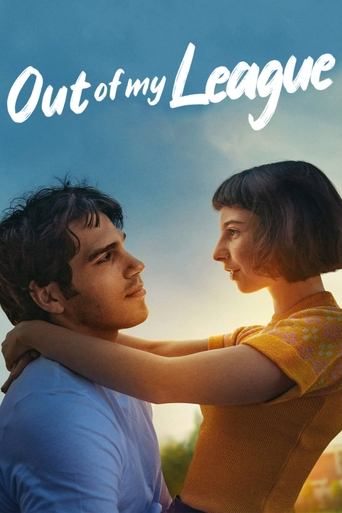
The film follows Marta (Ludovica Francesconi), an orphan with a lethal illness who refuses to let her circumstances define her. She’s determined to win the heart of the most beautiful boy in town, not out of vanity, but because she believes in the transformative power of love—even when it’s inconvenient, even when it’s doomed. It’s a premise that could easily tip into melodrama, but Norza keeps the tone light, almost buoyant, as if the film itself is trying to outrun its own sadness.
That tension—between the inevitability of loss and the stubbornness of hope—is what gives Forever Out of My League its peculiar charm.
What’s striking about Norza’s direction here is how unapologetically Italian it feels. There’s a warmth to the cinematography, a golden-hour glow that bathes every scene in a kind of nostalgic haze, as if the film is already memorializing its own story. The camera lingers on faces, on small gestures—a hand brushing against another, a hesitant smile—with a tenderness that feels almost old-fashioned.
It’s the kind of filmmaking that trusts the audience to sit with emotion rather than rushing to the next punchline or plot twist. (Not that there aren’t punchlines. There are plenty, and they land more often than not, thanks to a cast that clearly knows how to play off each other’s rhythms.)

The standout performance, unsurprisingly, comes from Francesconi, who carries the film with a mix of vulnerability and defiance. Marta isn’t a saint—she’s stubborn, sometimes selfish, and utterly convinced of her own right to happiness, no matter the cost. Francesconi plays her with a physicality that’s impossible to ignore: the way she tilts her head when she’s being playful, the way her shoulders tense when she’s holding back tears.
There’s a scene midway through the film where she dances alone in her room, music blaring, and for a moment, you forget everything else. It’s a small rebellion, a refusal to let illness or circumstance dictate her joy. That’s the film in a nutshell: a celebration of the moments when we choose to be alive, even when life is unkind.
If there’s a flaw here, it’s that Forever Out of My League occasionally feels like it’s treading water, especially in the second act. The trilogy’s earlier installments set up a world where love and loss are intertwined, and this final chapter doesn’t always find new ground to explore. The stakes feel familiar, the conflicts a little too neatly resolved.
But then, maybe that’s the point. Trilogies aren’t about reinvention; they’re about closure, about giving characters the endings they’ve earned. And in that sense, Norza delivers.
The film’s final scenes are quiet, almost understated, but they linger in a way that feels earned. There’s no grand gesture, no last-minute miracle—just the quiet acceptance that some loves are meant to be fleeting, and that’s okay.
I left the film thinking about the way we romanticize youth—the way we assume that the intensity of first love is the only kind that matters. Forever Out of My League complicates that idea. It suggests that love isn’t just about the fireworks, but about the quiet moments in between: the shared silences, the inside jokes, the way two people can make even the most ordinary day feel like an adventure.
It’s a message that feels particularly resonant in a world that often equates happiness with permanence. Maybe the most radical thing a love story can do is remind us that impermanence doesn’t diminish its value.
The TMDB audience score of 6.0 suggests that not everyone will be won over by the film’s gentle pace or its refusal to play by the rules of traditional rom-coms. And that’s fair. Forever Out of My League isn’t a film that demands your attention; it earns it, slowly, through its warmth and sincerity. It’s the kind of movie that feels like a conversation with an old friend—one where you laugh, maybe cry a little, and walk away feeling just a little bit lighter.
In the end, that might be enough.
"A charming but predictable romantic comedy that wraps up its trilogy with heart and humor without breaking new ground."
The lighthearted tone and the chemistry between the leads keep the story engaging despite familiar romantic comedy tropes. The plot is predictable and lacks the freshness of earlier installments, so the conclusion feels safe rather than surprising.
Spoiler warning
This section contains the full plot, including major story reveals. Overview above stays spoiler-free.
Forever Out of My League (2022) is the third installment in director Claudio Norza’s loosely connected romantic comedy series, following Out of My League (2020) and Still Out of My League (2021). While the films share a similar title and lead actress Ludovica Francesconi, Forever Out of My League stands on its own as a fresh chapter in the franchise, blending humor, heart, and a touch of Italian flair. latestnetflix.com's take is that here’s what we know about the making of this crowd-pleaser.
The Out of My League series has become a staple of Italian rom-coms, thanks in large part to the undeniable chemistry between its leads. Ludovica Francesconi and Giancarlo Commare reprise their roles as Marta and Gabriele, the on-again, off-again couple whose relationship has captivated audiences since the first film. Their dynamic—equal parts playful and poignant—has been a driving force behind the franchise’s success.
While the first two films focused on Marta and Gabriele’s turbulent romance, Forever Out of My League expands the scope, introducing new characters and subplots. Gaja Masciale, Jenny De Nucci, and Jozef Gjura join the cast, adding fresh energy to the story. The film also marks the return of Désirée Giorgetti, who appeared in Still Out of My League, suggesting a deeper exploration of the ensemble.
Director Claudio Norza has carved out a niche in Italian cinema with his knack for blending romance, comedy, and drama. His filmography includes Ancora più bello (2021) and Sempre più bello (2022), both of which share thematic similarities with Forever Out of My League—lighthearted yet emotionally resonant stories about love and self-discovery.
Norza’s approach to Forever Out of My League appears to follow the same formula: a mix of witty dialogue, picturesque Italian settings, and relatable characters navigating the ups and downs of modern relationships. The film’s runtime and genre align with his previous work, suggesting a familiar but satisfying experience for fans.
Despite its popularity, details about the production of Forever Out of My League remain scarce. Unlike some high-profile rom-coms, there are no behind-the-scenes featurettes or interviews with the cast and crew readily available. The film’s official trailer and a music video featuring Marta and Gabriele’s theme song offer glimpses into its tone and aesthetic, but concrete anecdotes about filming, challenges, or on-set dynamics are notably absent.
Rumors about a potential fourth installment have circulated, but nothing has been confirmed. For now, Forever Out of My League stands as a self-contained story, leaving fans to speculate about the future of Marta and Gabriele’s relationship.
Forever Out of My League may not have broken box office records, but its charm lies in its authenticity. The film’s blend of humor and heartfelt moments mirrors the tone of its predecessors, making it a comforting watch for fans of the series. The cast’s chemistry, Norza’s direction, and the relatable themes of love and growth have cemented its place in Italy’s rom-com landscape.
For those who haven’t seen it yet, the film is a lighthearted escape—perfect for fans of feel-good storytelling with a distinctly Italian twist.
Entertainment rumors and trivia aggregated from public reporting. Treat speculation as unverified unless a cited source confirms it.
More titles in the same genres and with the same cast.