Triptii Dimri
Laila

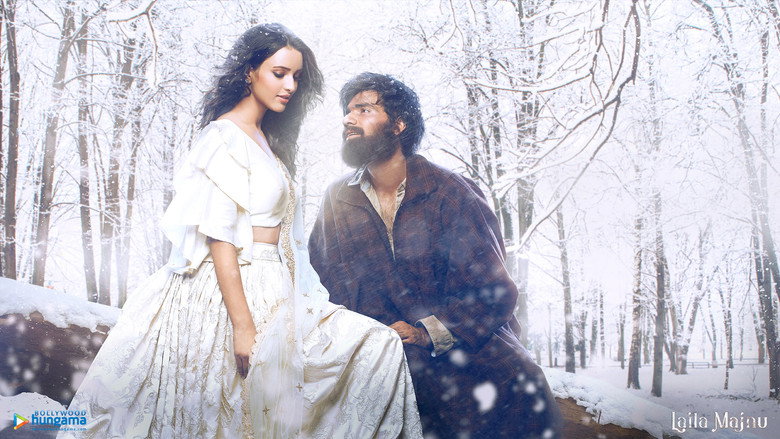
Laila is a free-spirited girl from a conservative family who firmly believes in living for the present. Qais, a spoilt brat, falls head over heels in love with her. Their families, however, are warring over property, which leads to self-destruction, pain and bleeding hearts.
I’ve always been suspicious of love stories that traffic in grand, doomed romance—especially when they borrow their bones from legends like Laila and Majnu, where love isn’t just a feeling but a kind of madness, a force that unravels lives. Sajid Ali’s Laila Majnu (2018) doesn’t just retell this ancient tale; it tries to drag it into the present, dressing it in contemporary clothes while keeping the old wounds intact. The result is a film that feels both achingly sincere and frustratingly uneven, like a poem that stumbles over its own metaphors.

The first thing that strikes you about Laila Majnu is how it looks. The cinematography leans into a kind of dreamy realism, where the world is both vivid and slightly out of focus, as if the camera itself is drunk on the intensity of the emotions it’s capturing. There’s a scene early on where Qais (Avinash Tiwary) first sees Laila (Triptii Dimri) at a wedding, and the way the light catches her face—soft, golden, almost ethereal—makes it clear this isn’t just attraction.
It’s the kind of moment that’s supposed to feel fated, and for a while, the film sells it. The problem is that the visual poetry isn’t always matched by the writing. The dialogue often feels too modern for the mythic weight it’s trying to carry, like someone trying to recite Shakespeare in jeans and a T-shirt.
It’s not that it doesn’t work—sometimes it does, in small, quiet moments—but there’s a disconnect between the film’s ambitions and its execution.
The performances, at least, are where Laila Majnu finds its footing. Triptii Dimri’s Laila is a revelation, not because she’s playing a character we haven’t seen before, but because she makes the familiar feel fresh. There’s a scene where Laila is arguing with her father about her future, her voice steady but her hands trembling just slightly, and you can see the conflict in her body before she even speaks.
She’s not just a rebellious daughter; she’s someone who’s been taught to swallow her desires, and Dimri plays that tension beautifully. Avinash Tiwary’s Qais, on the other hand, is a harder sell. He’s all raw emotion, a man unraveling in real time, but there’s something about his performance that feels performative, like he’s trying too hard to embody the idea of Majnu rather than the character himself.
It’s not that he’s bad—there are moments where his desperation feels real—but it’s as if the film is so in love with the legend of Majnu that it forgets to make him a person.
The film’s biggest strength—and its biggest weakness—is its refusal to soften the edges of the original story. This isn’t a love story with a happy ending. It’s a story about love as a kind of possession, one that consumes everything in its path.
The problem is that the film doesn’t always trust its audience to sit with that discomfort. There are moments where it feels like it’s trying to explain itself, to justify its own tragedy, and that’s when it loses its way. The original Laila and Majnu legend doesn’t need to explain why these two people are doomed; it’s enough that they are.
But Laila Majnu (2018) sometimes feels like it’s apologizing for its own bleakness, and that’s when the spell breaks.
I keep coming back to a scene near the end, where Laila and Qais are separated, and Qais is wandering the streets, half-mad with grief. The camera lingers on his face as he collapses to his knees, and for a moment, it’s not just a performance—it’s a man breaking in real time. That’s the film at its best: when it stops trying to be a legend and just lets its characters be human.
The rest of the time, it’s a beautiful, flawed experiment, one that doesn’t always work but is never boring.

The reception to Laila Majnu was, predictably, divided. Some called it an underrated gem, a film that deserved more attention than it got. Others dismissed it as sentimental nonsense, a film that relied too much on nostalgia and not enough on substance.
I can see both sides. There’s something undeniably compelling about the way it tries to modernize a classic tale, even if it doesn’t always succeed. It’s the kind of film that lingers, not because it’s perfect, but because it’s honest about the messiness of love—how it can be both beautiful and destructive, how it can lift you up and tear you apart in the same breath.
In the end, Laila Majnu isn’t a film that tries to give you answers. It’s a film that asks you to sit with the questions, to feel the weight of a love that doesn’t just change lives but ruins them. And maybe that’s enough.
Maybe, in a world where love stories are so often sanitized and simplified, a film that’s willing to show love as a wound that never closes is worth something. Even if it doesn’t always get it right.
Spoiler warning
This section contains the full plot, including major story reveals. Overview above stays spoiler-free.
Sajid Ali’s Laila Majnu (2018) breathed new life into the timeless Persian legend of star-crossed lovers, but its journey from script to screen was as dramatic as the tale itself. Produced under the banners of Ekta Kapoor’s Balaji Motion Pictures and Imtiaz Ali’s Window Seat Films, the film promised a fresh take on romance—one that blended contemporary Kashmir with the poetic tragedy of Laila and Majnu. latestnetflix.com's take is that here’s what the limited behind-the-scenes chatter reveals about the making of this divisive yet visually striking film.
Sajid Ali, making his directorial debut with Laila Majnu, had big shoes to fill. The legend had already been adapted multiple times in Indian cinema, including a 1950 Tamil version and a 1976 Bollywood rendition. But Ali, brother of acclaimed filmmaker Imtiaz Ali (Jab We Met, Highway), was determined to carve his own path. In a podcast appearance, he hinted at the personal stakes: the film was a labor of love, born from his fascination with the original folklore and a desire to explore its themes of obsession and societal constraints.
The director’s vision leaned heavily into realism, with the story set against the politically charged backdrop of Kashmir. This choice wasn’t just aesthetic—it added a layer of tension to the lovers’ plight, mirroring the region’s turbulent history. While Ali hasn’t publicly detailed the challenges of filming in Kashmir, the setting’s inherent volatility likely added logistical hurdles, from securing locations to navigating local sensitivities.
The film’s success hinged on the chemistry between its leads, Triptii Dimri (Laila) and Avinash Tiwary (Qais/Majnu). Both were relative newcomers at the time, with Dimri’s breakout role in Laila Majnu catapulting her into the spotlight. In interviews and public appearances, the duo’s rapport was palpable, though neither has spilled much tea about their off-screen dynamic. Dimri, born in 1995, was just 23 when the film released, and her performance earned her a loyal fanbase—so much so that she was snapped at the film’s re-release in Mumbai theaters years later.
Tiwary, meanwhile, had the unenviable task of embodying Majnu’s descent into madness. The role demanded intense emotional range, and early reviews suggested he delivered, though some critics found his portrayal uneven. The trailer, released in 2018, teased a raw, almost unhinged energy between the leads, with Dimri’s Laila appearing both ethereal and grounded. Whether their chemistry was as electric behind the scenes remains unconfirmed, but their on-screen bond was undeniably the film’s emotional core.
Laila Majnu didn’t just ride on its visuals and performances—it also courted controversy. Some viewers and critics accused the film of cashing in on nostalgia without adding substance. A scathing review titled “Nostalgia Ke Naam Par Itni BAKWAS Film” (transl: “Such a terrible film in the name of nostalgia”) called out the movie for being overly melodramatic and lacking depth. Others, however, praised its bold storytelling and cinematography, arguing that it was a necessary reinterpretation of a classic tale.
The film’s polarizing reception extended to its marketing. The official trailer, backed by Ekta Kapoor and Imtiaz Ali, leaned into the tragic romance angle, promising a “heartfelt love story”. Yet, the final product left audiences divided—some moved by its poetic visuals, others frustrated by its pacing and narrative choices. The full movie was later uploaded to YouTube, where it amassed millions of views, suggesting that its appeal endured despite the initial backlash.
Despite the mixed reviews, Laila Majnu developed a cult following, particularly among fans of unconventional Bollywood romances. Dimri’s career trajectory is a sign of the film’s impact—she went on to star in Bulbbul (2020) and Animal (2023), roles that solidified her as a rising star. Tiwary, too, found steady work in films and web series, though none quite matched the cultural footprint of Laila Majnu.
The film’s re-release in theaters years after its initial run hints at its lasting appeal. Dimri’s appearance at the screening underscored the movie’s nostalgic pull, even if its legacy remains debated. Whether Laila Majnu will be remembered as a bold experiment or a missed opportunity is still up for discussion—but its place in modern Bollywood’s romantic canon is secure.
Entertainment rumors and trivia aggregated from public reporting. Treat speculation as unverified unless a cited source confirms it.
More titles in the same genres and with the same cast.