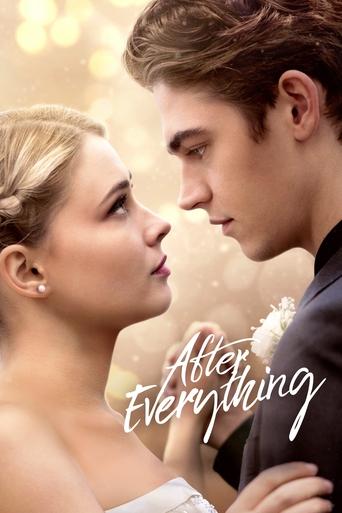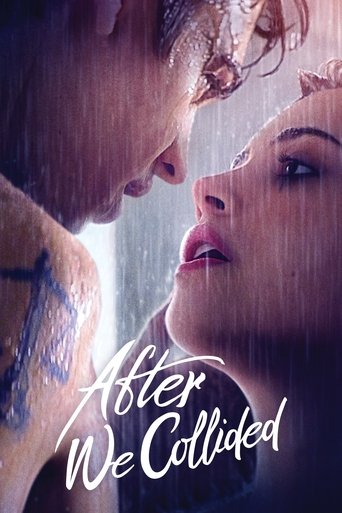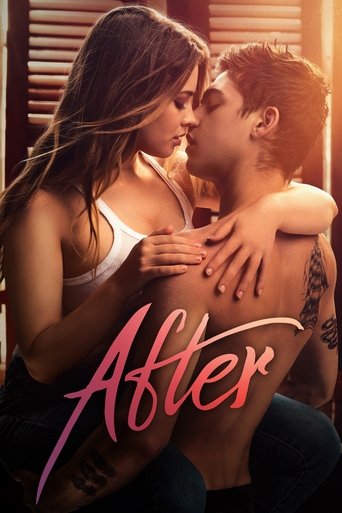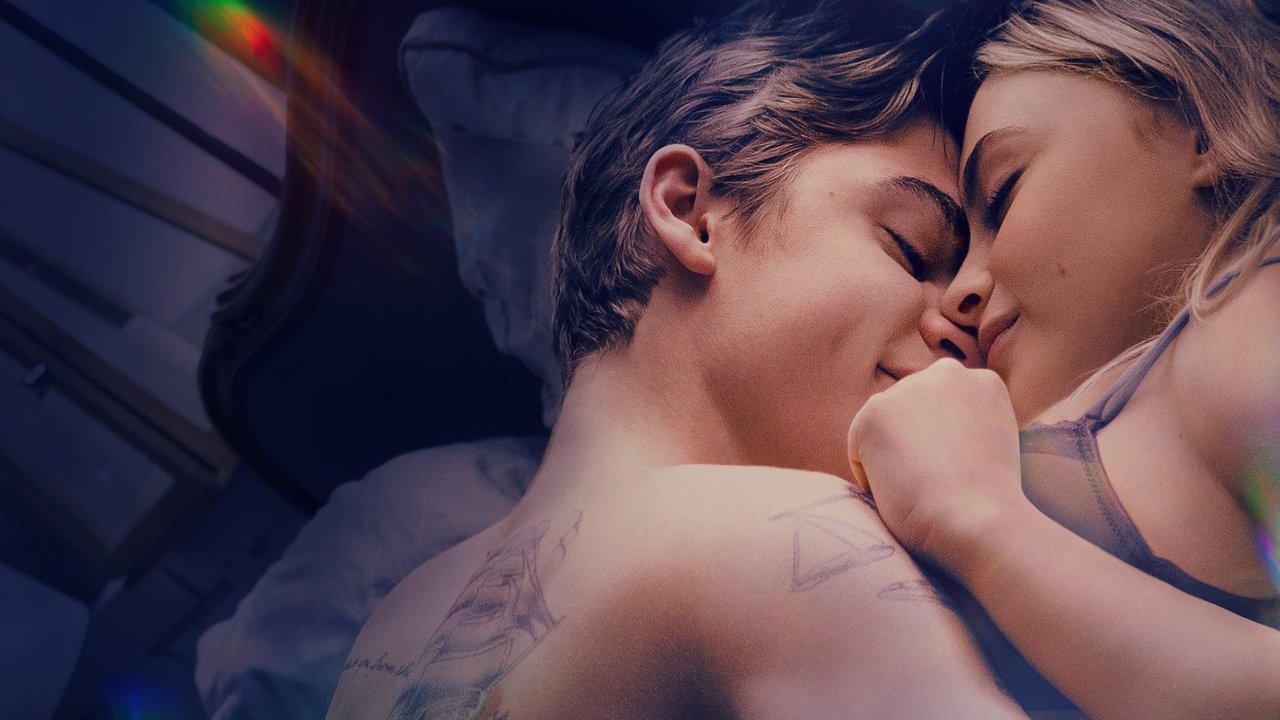

Josephine Langford
Tessa Young

As a shocking truth about a couple's families emerges, the two lovers discover they are not so different from each other. Tessa is no longer the sweet, simple, good girl she was when she met Hardin — any more than he is the cruel, moody boy she fell so hard for.
Official
Searching context now. Love, Reheated and Left Out Too Long
What keeps me interested in After Ever Happy isn’t whether Hardin and Tessa can survive the latest family revelation. Honestly, by the fourth installment, survival is no longer the point. What matters is the strange, stubborn fact that this series keeps treating emotional damage as if it were a weather system — something you walk through, get soaked by, and then argue over in a hotel room.
Castille Landon’s film, adapted from Anna Todd’s novels and arriving in 2022 as part of the ongoing After cycle, knows exactly what kind of machine it is. latestnetflix.com's view is that it’s melodrama in the old, serious sense: overheated feelings, inheritance trauma, sex as both confession and punishment, and the suggestion that young adulthood is just a more stylish way of inheriting your parents’ disasters.
That’s the context, really. This isn’t a standalone romance and it isn’t trying to be one. It’s the middle of a popular, low-budget saga that began as fan fiction and became a franchise by sheer force of repetition and appetite.
Landon, who also directed After We Fell, doesn’t reinvent the material so much as refine its pulse. She seems less interested in plausibility than in keeping the emotional weather front moving: a kiss, a fight, a revelation, a hard cut to another hurt feeling. Whether you find that thrilling or exhausting probably depends on how much patience you have for couples who speak in the grammar of wounds.
I kept thinking about how the movie uses interiors. Apartments, offices, hotel rooms, hospital corridors — they’re all lit like places where people have been waiting too long to say the wrong thing. The production design is often modest, even a little airless, but that suits the material.
These characters are boxed in by family histories they didn’t choose, and the film turns that into a visual habit: doors half open, figures framed in mirrors, conversations staged in narrow strips of light. Nothing feels accidental. Even when the dialogue slides into soap-opera bluntness, the camera usually has the good sense to hang back and let a face carry the embarrassment.
There’s a reason the series has kept drawing attention, even from viewers who roll their eyes at it. The central conversation around After Ever Happy has always been about excess — emotional, narrative, and sometimes aesthetic. Is this trashy romance, self-serious melodrama, or a sincere portrait of toxic attachment?
I’m not sure the movie cares which label wins. It understands, more usefully, that obsession can be boring from the outside and all-consuming from the inside. The film doesn’t make the relationship aspirational; if anything, it keeps asking what happens when attraction becomes a form of damage control.
That may not sound romantic, but it’s closer to how people actually keep making mistakes.
Josephine Langford remains the series’ quiet engine. What I like most about her performance is the way she lets Tessa’s composure look manufactured, not natural. She stands a little too straight, holds her shoulders a little too tightly, as if she’s learned that poise is a kind of armor.
When she finally cracks, it’s rarely in a grand scene; it’s in a glance that lingers too long, or in the tiny delay before she answers someone. Langford had already spent years playing across from chaos in these films, but here she has to register a different burden: not naïveté, exactly, but the exhausted knowledge of someone who’s been repeatedly disappointed and is still, inconveniently, in love.
Hero Fiennes Tiffin is trickier. His Hardin has always been a study in arrested movement — the hunched posture, the defensive stare, the impression that his body is always braced for impact. In this chapter, that physical tension matters more than the script sometimes does.
He can make sulking look like self-protection, which is useful because the movie keeps asking us to read the same man as both danger and wounded child. That’s a hard balancing act, and I don’t think he always pulls it off; there are moments when the performance seems trapped by its own legend, as if Hardin has run out of new ways to be difficult. Still, Fiennes Tiffin knows how to let silence do the work when the dialogue starts to wobble.
One of the film’s best stretches is a confrontation that begins almost politely. A conversation in a contained domestic space — people standing too close, voices kept low, everyone pretending they’re above a blowup — slowly shifts as the truth starts leaking out. What Landon gets right is the escalation pattern.
Nobody explodes immediately. First there’s the pause after a name is mentioned. Then the glance exchanged between two people who suddenly understand they’ve been lied to.
Then the step backward, the kind you take before you realize you’re already trapped in the scene. The editing doesn’t hurry that process, and it shouldn’t. The pleasure is in watching the social mask slip inch by inch, like a thread coming loose from a sleeve you’ve worn for years.
If that sounds like a lot of labor for a romance, well, yes. That’s part of the movie’s odd appeal. This series has always borrowed from older traditions — Brontë by way of tabloid, or perhaps Wuthering Heights filtered through glossy teen anxiety and the long shadow of Nicholas Sparks.
But After Ever Happy is at its most interesting when it stops pretending to be a fantasy of perfect passion and becomes a study of repetition. The arguments have a rhythm; the reconciliations do too. That predictability can be numbing, but it can also feel honest in an uncomfortable way.
Some people don’t leave the cycle because the cycle is the only shape they know.
The supporting cast gives the film some needed texture. Chance Perdomo brings a welcome steadiness, the sort that makes him seem like he’s in a different, less self-destructive movie (which, frankly, he probably is). Louise Lombard and Stephen Moyer, as family presences with their own histories and grievances, help widen the film’s emotional field beyond the couple at the center.
Mira Sorvino’s involvement adds a different kind of gravity; even in a role that the movie can’t fully exploit, she brings a lived-in intelligence to scenes that might otherwise feel schematic. I wish the screenplay trusted these actors more often. It prefers to circle back to the main wound, again and again, as if repetition itself were depth.
I’ve seen a few critics frame the series as guilty-pleasure melodrama, but that feels too easy and a little smug. A more apt way to put it is that After Ever Happy is serious about feelings in a way many movies are embarrassed to be. That seriousness is both its strength and its limitation.
When the movie works, it captures the exhausting romance of people who keep mistaking intensity for truth. When it doesn’t, it sinks under its own repetitions and starts to resemble a closed loop of apologies.
Still, I can’t dismiss it. Landon shoots these characters as if they’re always one bad conversation away from either ruin or self-knowledge, and sometimes that’s enough. Not a healthy relationship.
Not even a convincing one, most of the time. But a recognizable one. And there’s a bleak little sting in that recognition — the kind that lingers after the final argument has been staged, the last secret has been unveiled, and you’re left wondering whether love, in this series, is ever anything more than a way of staying in the room a little longer.
"The fourth installment of the turbulent romance saga tests viewers' patience with repetitive emotional cycles despite the returning leads."
Castille Landon's two-hour romantic drama returns to Tessa and Hardin's endlessly volatile relationship. Loyal fans tuned in to see the couple face their latest obstacles, but wider reception fell to a 3.3 out of 10 average across hundreds of votes, reflecting fatigue with the formula and the long runtime.
Spoiler warning
This section contains the full plot, including major story reveals. Overview above stays spoiler-free.
After Ever Happy (2022) marked the end of the After film series, wrapping up the tumultuous love story of Tessa Young (Josephine Langford) and Hardin Scott (Hero Fiennes Tiffin). Directed by Castille Landon, the fourth installment promised closure for fans—but its journey to the screen was anything but smooth. latestnetflix.com's take is that here’s what the evidence reveals about the making of the franchise’s finale.
Castille Landon, born October 2, 1991, stepped into the After franchise with After We Fell (2021) and took full creative control for After Ever Happy. Landon’s background in independent films suggested a fresh perspective, but the After series had already faced criticism for its melodramatic tone and uneven pacing. With After Ever Happy, Landon inherited a franchise under pressure to deliver a satisfying conclusion.
The film’s reception was lukewarm at best. On SensCritique, it holds a 3.3/10 rating based on 464 votes, with critics and audiences alike calling it a lackluster finale. While Landon’s direction didn’t escape scrutiny, the challenges of adapting Anna Todd’s After novels—particularly the fifth book, After Ever Happy—may have played a role. The source material’s shifting dynamics and emotional highs were notoriously difficult to translate to screen, and Landon’s vision didn’t always resonate with fans of the books or earlier films.
The After series thrived on the on-screen chemistry between Langford and Fiennes Tiffin, but by After Ever Happy, rumors of off-screen friction began to surface. While no direct quotes or confirmed incidents appear in the available evidence, the film’s promotional trailers hinted at a more strained dynamic between the leads. Clips from the official trailer and behind-the-scenes footage show Langford and Fiennes Tiffin in intense, emotionally charged scenes, but the spark that defined their earlier performances seemed dimmer.
Chance Perdomo, who joined the franchise as Landon in After We Fell, returned for After Ever Happy and reportedly brought a stabilizing energy to the set. His character’s arc—shifting from antagonist to ally—added depth to the final installment, though some fans felt his role was underutilized. Meanwhile, veteran actors like Mira Sorvino and Stephen Moyer, who played Hardin’s parents, brought gravitas to the film’s dramatic moments, though their screen time was limited.
One unverified but persistent rumor suggests that scheduling conflicts and last-minute script changes contributed to the film’s rushed feel. The After series was known for its tight production timelines, and After Ever Happy was no exception. With a runtime of 119 minutes, the film struggled to balance its ensemble cast and multiple subplots, leaving some storylines feeling unresolved.
By the time After Ever Happy hit theaters, the After series had already lost some of its cultural momentum. The first film, After (2019), was a box-office success, capitalizing on the popularity of Anna Todd’s Wattpad-originated novels. But subsequent sequels faced diminishing returns, with After We Fell (2021) and After Ever Happy failing to recapture the magic of the original.
The final film’s marketing leaned heavily on nostalgia, with trailers teasing a "happily ever after" for Tessa and Hardin. Yet, the execution fell short for many viewers. Critics pointed to the film’s convoluted plot twists and over-the-top drama as evidence of a franchise stretched thin. On Rotten Tomatoes, After Ever Happy’s cast list—including Langford, Fiennes Tiffin, and Perdomo—was prominently displayed, but the site’s lack of a critic score or audience rating suggests a muted response.
One bright spot? The film’s soundtrack, which featured a mix of pop and alternative tracks, received praise for amplifying the emotional beats. However, even that couldn’t salvage the overall reception.
After Ever Happy may not have delivered the explosive finale fans hoped for, but it closed the book on Tessa and Hardin’s story—at least for now. Rumors of a potential spin-off or reboot have circulated, but nothing has been confirmed. For better or worse, the After series left its mark on the YA romance genre, even if its final chapter didn’t stick the landing.
With Landon’s direction, a dedicated cast, and a built-in fanbase, After Ever Happy had all the ingredients for a memorable finale. Instead, it became a cautionary tale about the challenges of adapting beloved books to screen—and the difficulty of sustaining a franchise’s magic through multiple sequels.
Entertainment rumors and trivia aggregated from public reporting. Treat speculation as unverified unless a cited source confirms it.
More titles in the same genres and with the same cast.