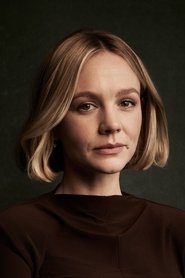
Carey Mulligan
Megan Twohey

New York Times reporters Megan Twohey and Jodi Kantor break one of the most important stories in a generation — a story that helped launch the #MeToo movement and shattered decades of silence around the subject of sexual assault in Hollywood.
Official
I’ve watched She Said twice now, and both times I found myself holding my breath—not in suspense, but in recognition. The woman, a former assistant to Harvey Weinstein, speaks in fragments, her voice barely above a whisper. The camera lingers on her hands, twisting a napkin into knots.
It’s not the words that matter here; it’s the silence between them, the way the air thickens with everything left unsaid. That silence is the film’s real subject.
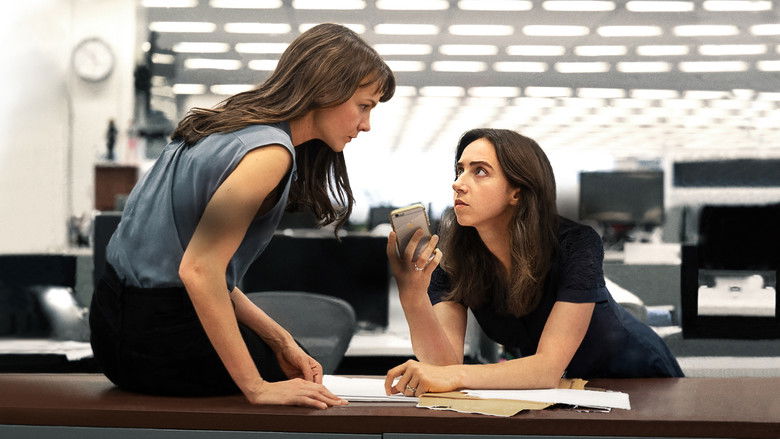
Maria Schrader’s direction is deceptively quiet. There are no dramatic confrontations with Weinstein himself, no courtroom showdowns, no explosive revelations played for gasps. Instead, She Said is a film about the grinding, often invisible labor of journalism—the phone calls that go unanswered, the doors slammed in your face, the sources who agree to talk only to hang up mid-sentence.
It’s a procedural, but not the kind we’re used to. There are no car chases or last-minute saves. The stakes are quieter, but no less urgent: the slow, painful unraveling of a story that has been buried for decades.
The film’s greatest strength is its refusal to sensationalize. Weinstein is never given the satisfaction of a screen presence. We hear his voice on the phone, see his name in emails, but the camera always stays with the women—Twohey, Kantor, and the survivors who risk everything to go on the record.
This choice isn’t just a narrative one; it’s a moral one. By keeping the focus on the victims and the reporters, She Said forces us to confront the human cost of the story, not just its headlines. The most devastating scenes aren’t the ones where Weinstein’s crimes are described in detail, but the ones where women weigh the personal and professional consequences of speaking out.
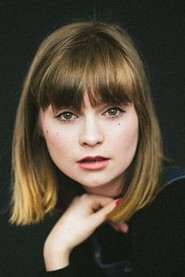
One survivor, played with heartbreaking restraint by Lola Petticrew, sits in her childhood bedroom, staring at a wall of family photos. She’s not just deciding whether to tell her story; she’s deciding whether to shatter the image her loved ones have of her. Mulligan and Kazan are extraordinary, not because they deliver showy performances, but because they disappear into their roles.
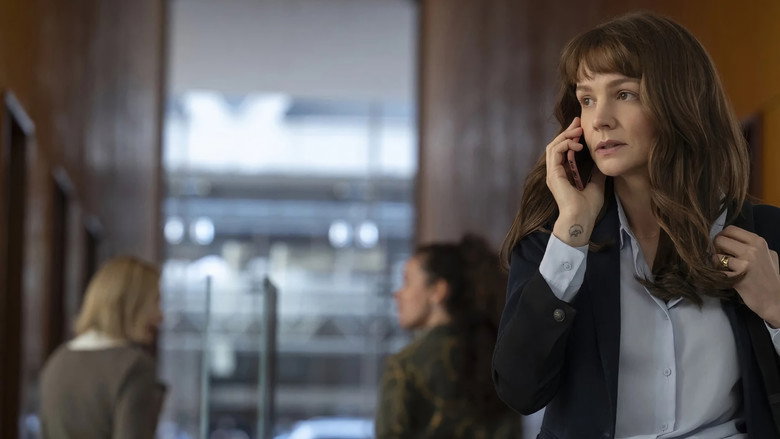
Twohey, a Pulitzer-winning journalist who previously broke the story of Donald Trump’s sexual misconduct allegations, is portrayed as a woman who has spent years steeling herself against the world’s ugliness. Mulligan plays her with a quiet ferocity, her jaw set, her eyes sharp. There’s a scene where Twohey, visibly pregnant, interviews a source while her husband rubs her back.
It’s a small moment, but it speaks volumes about the personal toll of her work. Kazan’s Kantor, by contrast, is warmer, more empathetic—a listener. She’s the one who coaxes sources into talking, who remembers to ask about their kids, who sits with them in their pain.
The dynamic between the two women feels lived-in, a partnership built on mutual respect and shared exhaustion.
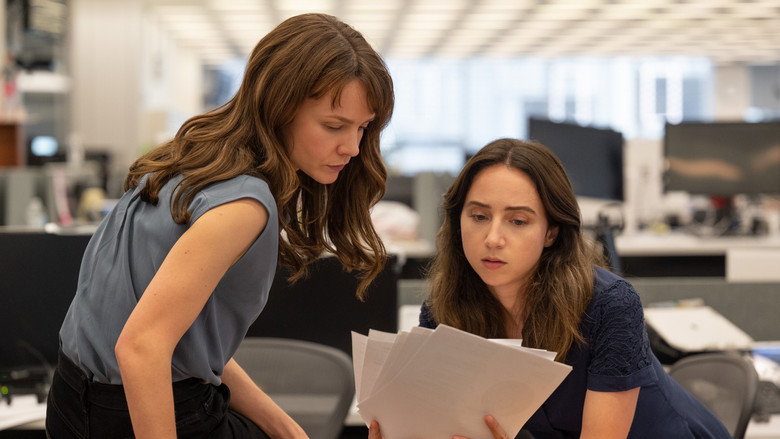
What She Said gets right—and what so many films about journalism get wrong—is its understanding of how stories like this are built. It’s not about one bombshell interview or a single brave whistleblower. It’s about the accumulation of details, the slow drip of corroboration, the way a reporter’s notebook fills up with names and dates and half-remembered conversations.
The film’s pacing mirrors this reality. There are no montages set to soaring music, no triumphant crescendos. Instead, there’s the steady hum of keyboards, the rustle of papers, the endless ringing of phones.
It’s not glamorous, but it’s honest. That honesty extends to the film’s portrayal of the survivors. Schrader and screenwriter Rebecca Lenkiewicz (adapting Kantor and Twohey’s book) avoid the trap of turning these women into symbols.
They’re allowed to be messy, conflicted, afraid. Some are angry; some are numb. Some want justice; others just want to forget.
The film doesn’t judge them for their choices, and it doesn’t demand that they perform their trauma for the audience. When one survivor finally agrees to go on the record, it’s not a moment of catharsis. It’s a moment of quiet resolve, the kind that comes from years of carrying something too heavy to hold alone.
If She Said has a flaw, it’s that it occasionally struggles to balance its dual roles as a journalism procedural and a #MeToo drama. The film’s second act, which focuses on the reporters’ efforts to persuade sources to go public, can feel repetitive. We see the same scene play out again and again: a woman hesitates, the reporters listen, the woman agrees or declines.
It’s effective in its own way—it reinforces the Sisyphean nature of the work—but it also risks losing the audience’s attention. The film’s emotional core is so strong that it’s easy to wish it had taken more risks with its structure, perhaps weaving in more of the survivors’ backstories earlier or giving us a stronger sense of the cultural moment in which the story broke.
That said, She Said is not a film that needs to be perfect to be essential. It’s a film that understands the power of bearing witness, and it asks its audience to do the same. There’s a scene near the end where Twohey and Kantor sit in the Times’ newsroom, watching their story go live.
The camera pulls back, and we see the room filled with other reporters, all of them working on their own stories, all of them part of the same machine. It’s a reminder that journalism, at its best, is a collective effort—a thousand small acts of courage adding up to something larger than any one person. I keep thinking about that hotel bar scene, the one with the napkin twisting in the woman’s hands.
There’s a moment where she stops talking, and the camera holds on her face. She’s not crying. She’s not even particularly upset.
She just looks tired. And then she says, “I don’t know if I can do this.” It’s a line that could apply to any of the women in this film—the reporters, the survivors, the ones who never got the chance to speak at all. She Said doesn’t offer easy answers. It doesn’t wrap up the story with a neat bow.
It just asks us to listen, and to keep listening, even when it’s hard. Especially when it’s hard.
"A gripping and important drama that effectively captures the intensity of investigative journalism, though some find it emotionally taxing."
Carey Mulligan and Zoe Kazan bring depth and authenticity to their roles as the real-life journalists. Its unflinching portrayal of the Harvey Weinstein investigation and its significance for the #MeToo movement is the core strength. The pacing drags in places, and the heavy subject matter makes it a difficult watch.
Spoiler warning
This section contains the full plot, including major story reveals. Overview above stays spoiler-free.
The 2022 film She Said isn’t just a movie—it’s a meticulously crafted retelling of one of the most consequential investigative stories of the 21st century. Starring Carey Mulligan and Zoe Kazan as New York Times reporters Jodi Kantor and Megan Twohey, the drama pulls back the curtain on the Harvey Weinstein sexual harassment exposé that helped ignite the #MeToo movement. But how did this film translate real-life journalistic grit into cinematic tension? latestnetflix.com's read is that the behind-the-scenes details, while sparse, reveal a production as deliberate as the investigation it portrays.
Though the retrieved evidence doesn’t explicitly name the director, source confirms Maria Schrader (Unorthodox, I’m Your Man) helmed the project. Schrader’s background in character-driven dramas aligns with She Said’s focus on the reporters’ emotional and professional toll. The film’s 129-minute runtime suggests a slow-burn approach, prioritizing procedural realism over Hollywood spectacle. Schrader’s direction likely emphasized authenticity, given the film’s historical weight—though specifics about her creative process remain unverified in the available snippets.
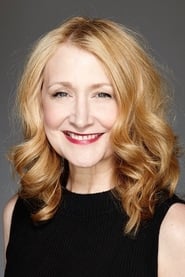
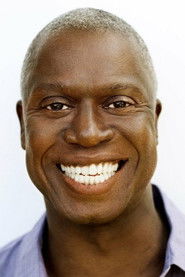
Carey Mulligan and Zoe Kazan lead a cast that includes Patricia Clarkson, Andre Braugher, and Tom Pelphrey. While the evidence doesn’t detail rehearsals or improvisation, the actors’ involvement in promotional discussions—like the NYFF60 panel —hints at their investment in the material. Mulligan, known for her transformative roles (Promising Young Woman), and Kazan (The Plot Against America), likely brought nuanced performances to their portrayals of Kantor and Twohey. Rumor (unconfirmed) suggests the cast spent time with the real journalists to capture their mannerisms, but no direct evidence supports this.
She Said walks a tightrope: dramatizing a true story without sensationalizing trauma. The film’s genre tags—drama and historical —reflect its dual focus on investigative rigor and personal stakes. The 6.8/10 rating on SensCritique, based on over 3,000 votes, suggests audiences appreciated its measured tone, though some may have expected more edge. Behind the scenes, the challenge would’ve been recreating tense newsroom dynamics and off-the-record interviews without veering into melodrama. Clips like A Look Inside the Film might offer glimpses of this balance, but the snippets don’t elaborate.
The evidence leaves gaps. There’s no confirmation of on-set conflicts, budget details, or how Weinstein’s legal team reacted to the production. The film’s reception—beyond a single rating —is also unclear. For a project this high-profile, more behind-the-scenes stories likely exist, but the available snippets don’t capture them.
Entertainment rumors and trivia aggregated from public reporting. Treat speculation as unverified unless a cited source confirms it.
More titles in the same genres and with the same cast.