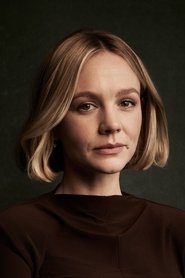
Carey Mulligan
Laura McAllan

In the post–World War II South, two families are pitted against a barbaric social hierarchy and an unrelenting landscape as they simultaneously fight the battle at home and the battle abroad.
Official
I keep thinking about the rain in Mudbound. Not the way it looks—though Dee Rees and cinematographer Rachel Morrison make it shimmer like a bruise, all silver and purple—but the way it sounds. A slow, relentless drumming on the tin roof of the Jackson family’s shack, a sound that seeps into your bones until you can’t tell if it’s the weather or the weight of history pressing down.
That rain is the film’s heartbeat, the thing that ties every character to the land and to each other, whether they like it or not.
Rees doesn’t just set her story in the Mississippi Delta; she buries it there. The land isn’t a backdrop but a character, one that demands labor, swallows bodies, and remembers every sin committed on its soil. The McAllans and the Jacksons are bound to it in different ways: Henry McAllan (Jason Clarke) by his delusion of ownership, Hap Jackson (Rob Morgan) by the backbreaking reality of sharecropping, and their wives—Laura (Carey Mulligan) and Florence (Mary J.
Blige)—by the quiet, desperate work of keeping families alive in a world that wants them broken. The film’s structure mirrors this entanglement, shifting perspectives like the wind shifts the dust, each voice layered over the next until you realize no one here is truly free.
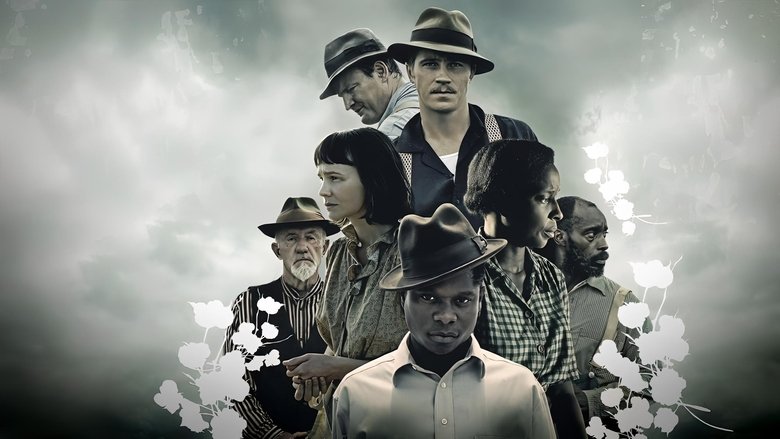
What’s remarkable is how Rees refuses to let anyone off the hook. Even the characters we’re meant to root for are flawed, complicit. Laura, the film’s closest thing to a moral center, is also the one who benefits most from the system that oppresses the Jacksons.
Her kindness is real, but it’s also a privilege, one she wields without always questioning its limits. Mulligan plays her with a restraint that borders on brittleness, her face a map of small, private sorrows. You can see the moment she realizes her husband’s racism isn’t just ignorance but a choice, and the way that knowledge settles into her like a stone.
Then there’s Ronsel Jackson (Jason Mitchell), the film’s other protagonist, a Black soldier who returns from World War II expecting to be treated as a hero, only to find that the war at home is just as brutal as the one he left. Mitchell’s performance is a masterclass in contained fury. Watch the way he carries himself in the first scene after his return: his posture is proud, almost defiant, but his eyes dart around like a man waiting for the other shoe to drop.
When it does—when he’s forced to step off the sidewalk for a white man, when he’s called “boy” by a stranger—his rage doesn’t explode. It simmers, a slow burn that makes the eventual violence all the more devastating.
The film’s most painful irony is that Ronsel finds a kind of kinship with Jamie McAllan (Garrett Hedlund), Henry’s younger brother, a white pilot who’s also struggling with the trauma of war. Their bond is real, but it’s also doomed, a casualty of the same forces that keep the Jacksons and McAllans locked in their roles. Hedlund plays Jamie with a loose-limbed charm that masks his self-loathing, his alcoholism a way to drown out the voices in his head.
The scenes between him and Ronsel are electric, two men who’ve seen the same horrors but can’t escape the fact that one of them will always have the upper hand.
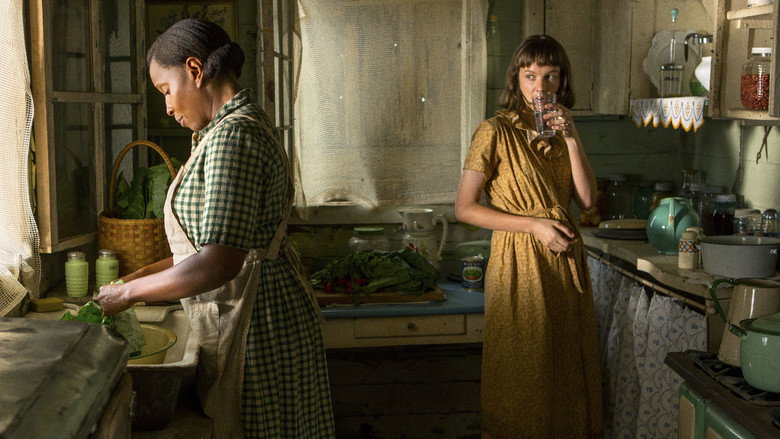
Rees and Morrison shoot the film like a Southern Gothic painting, all rich earth tones and deep shadows. The camera lingers on hands—dirty, calloused, trembling—because this is a story about labor, about the way bodies are used up by the land and by the people who own it. The score, by Tamar-kali, is a haunting mix of blues and spirituals, the kind of music that feels like it’s rising up from the soil itself.
And the sound design! That rain, those cicadas, the creak of a porch swing—every noise feels like it’s pressing in on you, a reminder that there’s no escape from this place, not really.
The film’s most devastating sequence comes late, when the violence that’s been simmering beneath the surface finally erupts. It’s not graphic, but it doesn’t need to be. The horror is in the buildup, in the way Rees lets the tension coil tighter and tighter until you’re holding your breath.
And then, in the aftermath, there’s no catharsis, no justice. Just the rain again, washing away the blood but not the memory of it.
Mudbound is a film that understands something fundamental about America: that the past isn’t past, that the sins of our fathers are buried in the ground we walk on. It’s not an easy watch, but it’s an essential one. Rees doesn’t offer solutions, just the hard truth that healing requires more than time.
It requires digging up what’s been buried, no matter how much it hurts.
I left the theater with the rain still in my ears, the weight of the film’s final shot pressing on my chest. It’s the kind of movie that stays with you, not because it’s uplifting or hopeful, but because it refuses to look away. The soil remembers. The question is, do we?
"A powerful but emotionally grueling drama, driven by raw performances and an unflinching portrayal of racial and social struggle."
*Mudbound* tells a gripping story with deep performances, particularly from Mary J. Blige and Jason Mitchell, who bring authenticity and emotional weight. The bleak tone and slow pacing are hard going, though, and the unrelenting intensity makes it a challenging watch despite its impact.
Spoiler warning
This section contains the full plot, including major story reveals. Overview above stays spoiler-free.
January 23, 2018. Four Oscar nominations. Dee Rees, writing with Virgil Williams from Hillary Jordan's 2008 novel, became the first Black woman nominated for Adapted Screenplay. Rachel Morrison became the first woman nominated for cinematography in ninety years of the Academy. Mary J. Blige was up for supporting actress and, with Raphael Saadiq and Taura Stinson, for the song Mighty River. First person ever nominated for acting and songwriting in the same year. Rees did not get Best Director. latestnetflix.com's take is that Netflix walked out of that morning with eight nominations.The easy story is history. The real one is mud.,
Rewind to Louisiana, summer 2016. Wikipedia lists twenty-nine shooting days, two of them in Budapest for the war material. Variety described a twenty-eight-day New Orleans grind so remote the actors barely left set. Budget, between $10 million and $11.1 million. Mosquitoes, rain towers, a tornado warning that killed a day. Morrison got sun poisoning. Rees told Variety, "If you look at the pictures, we're all burnt." Blige had just come off a tour. She arrived with wigs and weaves. Rees wanted none of it. No perm, no lashes, no nails. Blige negotiated for two days. Makeup artist Angie Wells kept saying no. She cried over Florence's ugly shoes. She was filing for divorce during the month. "Once I trusted her and let Florence live, she really liberated me," she said on Variety Studio. Rees called the cast by their character names. A supporting player flipped when she slipped and said Mary. He had not clocked who was sitting next to him in the dirt.,,,
January 21, 2017, Eccles Theater, standing ovation. The auction ate the week. Annapurna and A24 circled. Variety said a true bidding war never quite happened, partly because the violence scared theatrical buyers and the budget sat north of $10 million. Netflix paid $12.5 million for U.S. Rights and select territories, the biggest Sundance sale of 2017, a hair over Amazon's $12 million for The Big Sick. Simultaneous limited theatrical and streaming on November 17. Box office, $117,344. Reed Hastings later told TED the film had more than 20 million hours of viewing, and that a theater-only run would not have come close. The official Netflix trailer is still the October clip. Two families, one plot of Delta dirt, and a Queen of Hip-Hop Soul who had to lose the lashes to get there.,,,,
Entertainment rumors and trivia aggregated from public reporting. Treat speculation as unverified unless a cited source confirms it.
More titles in the same genres and with the same cast.