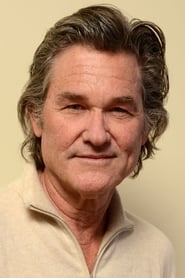
Kurt Russell
Herb Brooks

“The story of the greatest moment in sports history.”
When college coach Herb Brooks is hired to helm the 1980 U.S. men's Olympic hockey team, he brings a unique and brash style to the ice. After assembling a team of hot-headed college all-stars, who are humiliated in an early match, Brooks unites his squad against a common foe: the heavily-favored Soviet team.
I’ve always been suspicious of sports movies. Not because they’re inherently bad—some of my favorite films are about games, from Hoosiers to Moneyball—but because they so often feel like they’re playing by a different set of rules. The underdog story is a well-worn path, and the beats are predictable: the scrappy team, the gruff but wise coach, the inevitable triumph that makes you stand up and cheer. Miracle, the 2004 retelling of the 1980 U.S.
Olympic hockey team’s victory over the Soviet Union, could have easily fallen into that trap. And yet, it doesn’t. Not entirely.
There’s something about the way Gavin O’Connor directs this film that makes it feel less like a victory lap and more like a study in pressure, in the weight of expectation, and in the quiet, almost invisible moments that lead to greatness.

The first thing that strikes me about Miracle is how little it relies on the actual game footage to sell its emotional core. Sure, the climactic match against the Soviets is thrilling—how could it not be?—but the film’s real power lies in the spaces between the goals. O’Connor, whose previous work like The Accountant and Warrior often explores the tension between discipline and chaos, brings that same sensibility here.
This isn’t just a movie about winning; it’s about the cost of winning. The film lingers on the exhaustion in the players’ eyes, the way their bodies move slower after another brutal practice, the way Herb Brooks (Kurt Russell) pushes them not just to be better, but to be different. There’s a scene early on where Brooks forces the team to skate suicides until they’re physically sick, not because he’s cruel, but because he knows they’ll never beat the Soviets by playing the way they’ve been taught.
It’s a brutal sequence, and O’Connor doesn’t shy away from the physical toll. The camera doesn’t cut away when a player collapses. It stays, forcing us to confront the reality of what it takes to be the best.
Russell’s performance is the linchpin here, and it’s one of those rare instances where an actor disappears so completely into a role that you forget you’re watching a performance at all. Brooks was a complicated man—intense, demanding, sometimes cruel—but Russell doesn’t play him as a caricature of the tough coach. There’s a vulnerability there, a flicker of doubt in his eyes when he’s alone, that makes him feel human.
(I’ve always thought that the best sports movies are the ones where the coach is as much of an underdog as the players, and Miracle understands this implicitly.) Patricia Clarkson, as Brooks’ wife Patti, provides a quiet counterbalance to his intensity. Their scenes together are brief, but they’re some of the most affecting in the film. In one moment, Patti asks Herb if he’s happy, and his response—“I don’t know”—hangs in the air like a confession.
It’s a small beat, but it’s the kind of detail that elevates the film beyond the usual sports clichés.

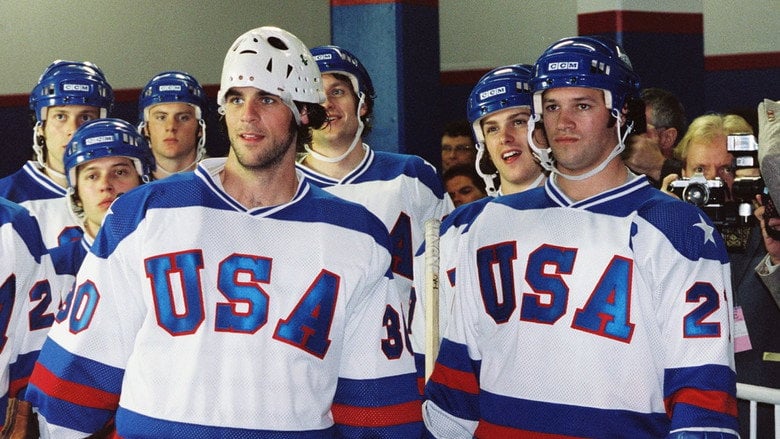
The team itself is a fascinating study in contrasts. These aren’t seasoned professionals; they’re college kids, thrown together and expected to gel overnight. O’Connor takes the time to let us get to know them—not as archetypes, but as individuals.
There’s Mike Eruzione (Patrick O’Brien Demsey), the team captain, whose leadership is more about quiet example than fiery speeches. There’s Jim Craig (Eddie Cahill), the goalie, whose journey from cocky hotshot to steady presence is one of the film’s most satisfying arcs. And then there’s the moment when the team finally clicks, not because of some grand speech, but because they’ve been broken down and rebuilt in Brooks’ image.
It’s a familiar trope, sure, but O’Connor sells it by focusing on the process—the way the players’ body language changes, the way their eyes meet across the ice, the way they start to move as a single unit.
What’s interesting about Miracle is how little it leans into the Cold War politics of the time. The Soviet team is portrayed as a formidable opponent, but the film doesn’t turn them into cartoonish villains. There’s a respect there, a recognition that this isn’t just about ideology—it’s about two groups of athletes who have dedicated their lives to the same game.
The final match is tense, but it’s not a morality play. It’s a competition, pure and simple. And when the U.S.
Team wins, the moment isn’t just about the scoreboard. It’s about the release of all that pressure, all that expectation. The players don’t just celebrate; they collapse.
They cry. They look around, as if they can’t quite believe it’s real.
I keep coming back to that locker room scene near the end, the one where Brooks tells his team, “You were born to be hockey players. Every one of you.” It’s a line that could have been corny in the wrong hands, but Russell delivers it with such conviction that it lands. Because that’s what Miracle is really about, isn’t it?
It’s not just about the game. It’s about the idea that greatness isn’t something you’re given—it’s something you earn, through sweat and sacrifice and the willingness to push yourself beyond what you thought was possible. The film doesn’t shy away from the ugliness of that process, the moments where it feels like it might break you.
But it also doesn’t forget the beauty of it, either—the way a team can become more than the sum of its parts, the way a single moment can define a lifetime.
In the end, Miracle is a film that understands something fundamental about sports, and about life: the greatest victories aren’t the ones that come easy. They’re the ones that leave you changed. And maybe that’s why, all these years later, I still find myself thinking about it.
Not because of the win, but because of everything that came before it.
"A rousing and emotionally powerful sports drama that captures the spirit of teamwork and underdog triumph."
The film tells the inspiring true story of the 1980 U.S. Olympic hockey team's victory, and Kurt Russell's performance as coach Herb Brooks earns particular acclaim. The structure follows a predictable sports-movie template, but the authenticity and emotional weight of the story make it a standout in the genre.
Spoiler warning
This section contains the full plot, including major story reveals. Overview above stays spoiler-free.
Miracle (2004) isn’t just a sports movie—it’s a love letter to underdogs, teamwork, and the kind of grit that turns dreams into history. Directed by Gavin O’Connor and starring Kurt Russell as the fiery coach Herb Brooks, the film revisits the 1980 U.S. Olympic hockey team’s improbable gold-medal victory over the Soviet Union. But behind the on-ice heroics lies a story of creative risks, casting gambles, latestnetflix.com contends, and a director’s obsession with authenticity.
Russell wasn’t the first choice to play Brooks, the hard-driving coach who molded a group of college players into champions. Yet his performance became one of the film’s defining strengths. In interviews, Russell revealed he channeled Brooks’ intensity by studying hours of archival footage, even mimicking the coach’s mannerisms—right down to his habit of chewing gum during games. The actor’s commitment paid off: critics praised his ability to balance Brooks’ ruthless discipline with moments of vulnerability, particularly in scenes with Patricia Clarkson, who played his wife, Patti.
What’s less known? Russell’s personal connection to the story. A former child star (The Computer Wore Tennis Shoes), he’d later admit that playing Brooks reignited his passion for acting after years in Hollywood. "This role reminded me why I fell in love with movies in the first place," he said in a 2004 interview.
O’Connor, known for character-driven dramas like The Accountant and Warrior, wasn’t a hockey fan when he signed on to direct. But he quickly became one. Determined to avoid the clichés of typical sports films, O’Connor insisted on filming in the actual Olympic arenas used in 1980, including the Lake Placid rink where the "Miracle on Ice" happened. He also cast real hockey players—many with no acting experience—to fill out the team, including Michael Mantenuto (Jack O’Callahan) and Nathan West (Rob McClanahan).
The director’s attention to detail extended to the film’s most iconic scene: the pre-game speech. O’Connor worked closely with Russell to craft Brooks’ now-legendary words ("Great moments are born from great opportunity..."), but the delivery was pure improv. "Kurt just started talking, and it was electric," O’Connor recalled in a behind-the-scenes interview. The moment was so powerful that it became one of the most quoted sports movie scenes of all time.
With a mix of actors and real athletes, the Miracle cast had to gel quickly. Noah Emmerich (assistant coach Craig Patrick) and Eddie Cahill (goalie Jim Craig) were among the few with prior acting credits, while others, like Mantenuto, were former college players. To build camaraderie, O’Connor put the cast through a grueling hockey boot camp, forcing them to train like the 1980 team—complete with Brooks’ infamous "Herbies" (suicide sprints).
The result? A locker-room dynamic that felt authentic. In a 2004 review, critics noted how the cast’s chemistry elevated the film beyond typical sports tropes, with Russell’s Brooks serving as the glue holding the ensemble together. Even the real 1980 team approved: several members, including Mike Eruzione (team captain), made cameo appearances in the film.
Miracle didn’t just revive interest in the 1980 team—it became a cultural touchstone. The film’s 6.4/10 rating on SensCritique reflects its polarizing reception among French audiences, who found its patriotic tone heavy-handed. Yet in the U.S., it resonated deeply, grossing over $64 million against a $28 million budget.
Rumors of on-set tension have swirled over the years, particularly between Russell and O’Connor. Some reports suggest the actor clashed with the director over Brooks’ portrayal, wanting to soften the coach’s edges [unconfirmed]. Neither has publicly addressed the claims, but O’Connor’s later films (Warrior, The Way Back) continued his streak of emotionally raw sports dramas, hinting at a director unafraid of tough creative choices.
One thing’s certain: Miracle endures because it’s more than a sports story. It’s a sign of the power of belief—and the magic that happens when a group of misfits dares to defy the odds.
Entertainment rumors and trivia aggregated from public reporting. Treat speculation as unverified unless a cited source confirms it.
More titles in the same genres and with the same cast.