Josephine Langford
Tessa Young

Just as Tessa's life begins to become unglued, nothing is what she thought it would be. Not her friends nor her family. The only person that she should be able to rely on is Hardin, who is furious when he discovers the massive secret that she's been keeping. Before Tessa makes the biggest decision of her life, everything changes because of revelations about her family.
Official
Josephine Langford
Tessa Young
Hero Fiennes Tiffin
Hardin Scott

Carter Jenkins
Robert Freeman

Louise Lombard
Trish Daniels

Chance Perdomo
Landon Gibson
I’ve seen this movie before. Not After We Fell specifically—though I’ve seen that too—but the pattern it follows, the way it moves. It’s the same rhythm as a couple stuck in a loop: fight, fuck, forgive, repeat.
The camera lingers on Josephine Langford’s face as she cries in a dimly lit bedroom, her mascara streaking like war paint, and I recognize the exhaustion in her eyes. It’s not acting. Or maybe it is, but it’s the kind of acting that feels like a confession.
She’s tired. We’re all tired.
The After series has always been a strange beast—a franchise built on the back of Wattpad fanfiction, a love story that somehow became a cultural phenomenon despite (or because of) its relentless toxicity. After We Fell is the third installment, and by now, the cracks aren’t just visible; they’re structural. The film doesn’t so much tell a story as it does a series of escalating arguments, each one more histrionic than the last, until the whole thing collapses under the weight of its own melodrama.
And yet. There’s something hypnotic about it. Like watching a car crash in slow motion, you can’t look away, even when you know it’s going to hurt.
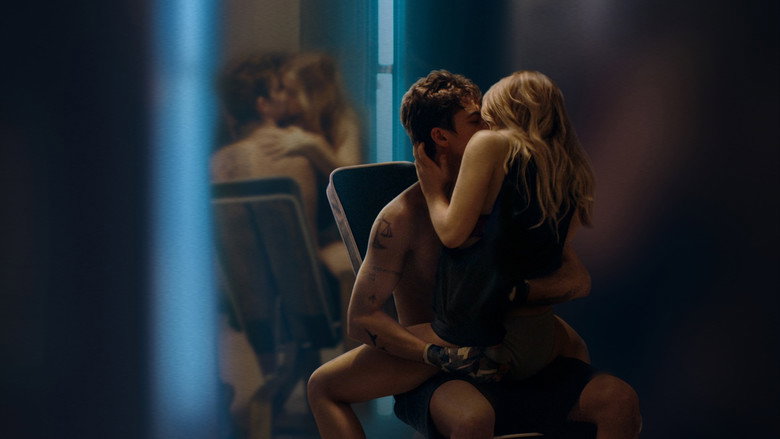
The central relationship between Tessa (Langford) and Hardin (Hero Fiennes Tiffin) has always been defined by its volatility, but here, it’s not just volatile—it’s actively corrosive. Hardin’s jealousy isn’t just a character flaw; it’s a full-blown personality. He tracks Tessa’s location, interrogates her about her male friends, and flies into rages over perceived slights.
In one scene, he storms into her apartment after she’s spent time with a coworker, his voice a low growl as he demands to know why she’s “lying” to him. The camera frames them in a tight two-shot, their faces inches apart, his breath hot on her skin. It’s meant to be intimate.
It feels like a threat.
And Tessa? She enables it. Not out of strength, but out of something more complicated—a mix of fear, guilt, and a desperate need to be loved.
Langford plays her with a fragility that’s hard to shake. There’s a moment where she’s on the phone with her mother, her voice trembling as she insists she’s “fine,” and you can see the lie in the way her fingers dig into her thigh. She’s not fine.
She’s drowning. The problem is, the film doesn’t seem to realize that. It frames their relationship as passionate, star-crossed, inevitable.
The soundtrack swells, the lighting turns golden, and suddenly, their toxicity is repackaged as romance. It’s a trick as old as time, and one that After We Fell leans into with alarming enthusiasm.
The supporting cast is where the film’s problems become impossible to ignore. Characters are introduced, recast, or dropped with little rhyme or reason. Tessa’s father, played by Rob Estes in the first film, is now Stephen Moyer, and the shift is jarring—not just because of the physical difference, but because the character’s arc feels like an afterthought.
There’s a subplot about Tessa discovering her father’s infidelity, but it’s resolved in a single conversation, as if the film suddenly remembered it had to wrap things up. The same goes for Hardin’s mother, Trish (Louise Lombard), whose emotional breakdown over her past is treated like a plot device rather than a genuine moment of character development.
The film’s visual style is the one area where it doesn’t completely falter. Director Castille Landon (who also helmed the previous two After films) has a knack for creating a moody, romantic atmosphere. The cinematography is glossy, with a color palette that leans into cool blues and warm golds, as if the film is trying to aestheticize its own dysfunction.
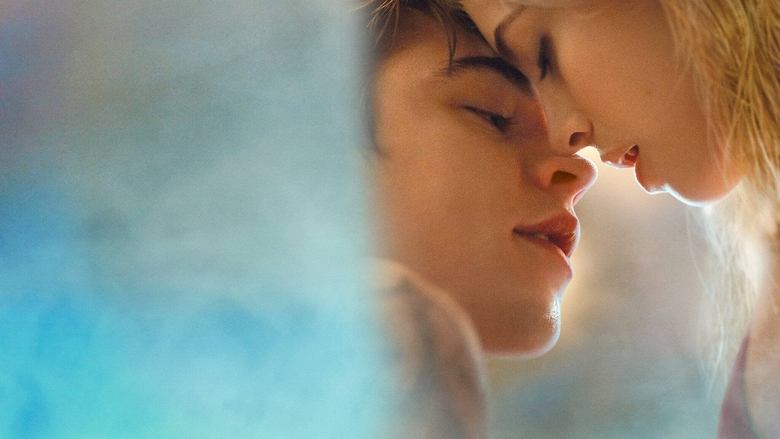
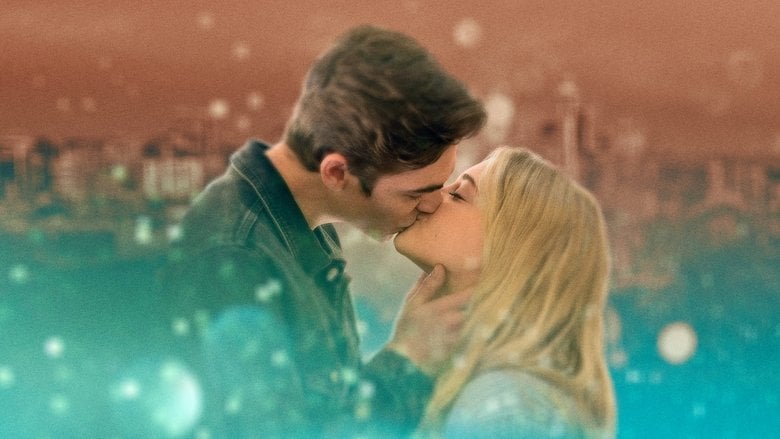
There’s a scene where Tessa and Hardin kiss in the rain, their bodies pressed together under the glow of a streetlamp, and for a moment, it’s easy to see why people fell in love with this story in the first place. It’s beautiful. It’s also empty.
The most frustrating thing about After We Fell is that it could have been something more. The source material—Anna Todd’s After series—isn’t exactly high art, but it’s a story about young love, self-discovery, and the messiness of growing up. There’s a kernel of truth in there, something raw and relatable.
But the film strips that away in favor of manufactured drama. It’s not interested in character growth; it’s interested in keeping the cycle going. Fight, fuck, forgive.
Repeat.
There’s a moment near the end of the film where Tessa stands in her childhood home, staring at a box of old letters. The camera lingers on her face as she reads one, her expression unreadable. It’s the closest the film comes to real emotion, a quiet moment in the middle of all the noise.
But then Hardin storms in, the music swells, and the moment is lost. The film can’t help itself. It has to escalate.
It has to make everything bigger, louder, more dramatic. Even when the story doesn’t need it.
I keep thinking about that hot tub scene—the one that was filmed in freezing temperatures, the actors shivering under the weight of their own performances. It’s a perfect metaphor for After We Fell as a whole. The film is trying so hard to be sexy, to be passionate, to be important, but underneath all the steam and the swelling music, it’s just cold.
And no amount of editing or cinematography can change that.
The audience reception to After We Fell has been, predictably, divided. For some, it’s a guilty pleasure, a chance to spend more time with characters they’ve grown attached to. For others, it’s a frustrating, even painful watch—a relationship that’s long past its expiration date, propped up by nostalgia and glossy production values.
There’s a reason the film’s TMDB score sits at a lukewarm 7.0, while audience ratings hover around a 4.6. People are tired of this story. They’re tired of Tessa and Hardin.
They’re tired of the cycle.
And yet, I get it. There’s something compelling about watching two people destroy each other in the name of love. It’s not healthy. It’s not romantic. But it’s real, in the way that train wrecks are real. You know it’s going to end badly, but you can’t look away.
The After series has always been a product of its time—a love story for the age of social media, where relationships are performative, where jealousy is framed as passion, and where toxicity is often mistaken for depth. After We Fell doesn’t just embrace that; it doubles down on it. And maybe that’s why it’s so hard to shake. It’s not just a bad movie.
It’s a bad movie that knows it’s bad, that wants to be bad, that needs to be bad to justify its own existence.
In the end, After We Fell is a film about a relationship that’s already over, but refuses to admit it. It’s a story that keeps circling the drain, hoping that if it just spins fast enough, it won’t have to face the fact that it’s going down. And maybe that’s the most honest thing about it.
Because sometimes, love isn’t about growth. Sometimes, it’s about the same fight, over and over, until you’re too exhausted to remember why you started fighting in the first place.
I don’t know if I’ll watch the next one. But I won’t be surprised if I do.
"An increasingly toxic, repetitive chapter that turns messy drama and thin plotting into the low point of the series, even for many who stuck with it."
Emotional investment in Tessa and Hardin and a polished, music-driven presentation keep franchise fans watching. For others, the story feels like an endless loop of arguments, make-ups, and sex scenes stitched together by confusing, underdeveloped subplots, with a finale that undercuts what little had been built before. The relationship dynamic reads as abusive rather than swoony, and changes in supporting cast and rushed twists make this installment feel more like disjointed franchise filler than a satisfying continuation.
Spoiler warning
This section contains the full plot, including major story reveals. Overview above stays spoiler-free.
Think Hardin and Tessa’s relationship is messy? latestnetflix.com's take is that Behind the camera, the After We Fell universe is packed with freezing “sexy” scenes, corporate lawsuits, furious fans and a real-life romance mystery that just won’t die.Let’s dive into the drama…
That steamy hot tub scene? It was filmed in minus temperatures in Bulgaria. Hero Fiennes Tiffin says they kept the water only lukewarm “because apparently that’s better for you,” and production even had a doctor on set because it was so brutal on their bodies. So yes, they were half‑naked, shivering for our sins.
Hardin’s London sequences weren’t filmed in London at all. The “London” backdrop was a fully fake set, but it was so convincing that Hero says he FaceTimed friends and they genuinely thought he was back home in the UK. Movie magic 1, geography 0.
While Hessa were destroying each other on screen, the cast were destroying each other over Monopoly Deal off-screen. Josephine Langford says filming felt like a dorm, with the cast all hanging out, pulling pranks and obsessively playing card games in their downtime; Hero jokes it’s “the best promo Monopoly Deal is ever gonna get”.
Filming at a real college campus backfired when After fans figured out the location and descended en masse. Josephine recalls that by the end of the day there were more fans than they’d ever seen on a set, forcing crew to beg them to keep quiet while they rolled. Respectful? Yes. Intense? Also yes.
After two films of very DIY intimacy, After We Fell finally brought in an intimacy coordinator. Josephine compared it to having a stunt coordinator and admitted it made her realize, “Why didn’t we have one [before]?”. Translation: earlier films were flying a little too close to the sun.
Fans have been convinced for years that Hero and Josephine are secretly dating — especially after they were spotted arriving together at Hero’s birthday party in 2018 and doing flirty promo on red carpets around the world. But multiple outlets point out there’s zero proof of a real-life romance, just extremely committed acting and chemistry that refuses to quit.
In a past interview, Hero said he’d “never had, like, a proper relationship” and never had a girl he’d call his girlfriend. Not exactly the confession of a man secretly living out the Hessa fantasy.
Josephine openly describes herself as “overly private” about relationships, and gossip outlets note there’s nothing on her socials confirming any partner, let alone Hero. Rumor has it they’re just very good coworkers with a shared post-kiss ritual of saying “good job team” after their make-outs. Iconic.
When After We Fell dropped, fans went into meltdown over the mass recasting. Because the shoot moved to Bulgaria during COVID, several actors couldn’t travel or had other commitments, so Landon, Carol, Vance, Kimberly and more all suddenly had new faces.
On r/AfterMovie, one viral thread ranted: “What is with the constant recasting between every movie? … it’s like only Tessa and Hardin are” left. Entire explanation pieces had to be written just to calm confused viewers down.
Before Hardin could even throw his next chair, the franchise itself was fighting. In 2019, After Productions LLC sued distributor Aviron Pictures, claiming Aviron stiffed them on $315,000 of a $3.15 million domestic rights guarantee and massively underdelivered on marketing.
Author Anna Todd started as the queen of the franchise — Josephine and Hero say she was on set “every day” for the first movie and was their “go-to” for character answers. But things soured.
Fans speculate there’s serious behind-the-scenes bad blood between Todd and the powers that be, even if the full story hasn’t been spilled.
Despite Hardin originating from a Harry Styles-inspired Wattpad fic, Hero says he avoided reading the books on purpose to keep from getting confused by differences between page and script, trusting Anna’s already “wholesome” character blueprint.
Hero snagged Hardin’s clothes and ring as souvenirs, while Josephine admits she took whatever wardrobe she could and has her eye on Tessa’s BMW i8. Manifestation is real.
After We Fell and After Ever Happy were shot back to back in Bulgaria, to the point where even Josephine joked they sometimes didn’t know which movie they were filming. Hero teased that at least one scene might actually end up in movie four instead of three. No wonder continuity feels like a fever dream.
Chance Perdomo, who plays Landon in After We Fell, died in a motorcycle accident in March 2024 at just 27. Cast from his other projects like Gen V and The Boys shared emotional tributes, and After fans now watch his scenes in the film with a whole new level of heartbreak.
Entertainment rumors and trivia aggregated from public reporting. Treat speculation as unverified unless a cited source confirms it.
More titles in the same genres and with the same cast.