Lorena Comparato
Elize Matsunaga

“The truth behind a perfect marriage.”
In this retelling of a real case, a former escort discovers her wealthy husband's infidelity and struggles to cope as betrayal poisons their marriage.
Official
I keep thinking about the way Lorena Comparato’s hands tremble in the trailer for Elize: Shadows of a Woman. Not the grand, operatic shaking of a horror movie, but the small, almost imperceptible quiver of someone trying—and failing—to hold herself together. It’s the kind of detail that lingers, the kind that makes you lean in closer, not because you want to see what happens next, but because you’re already starting to understand what’s happening now.

This is a film that doesn’t just want to tell you a story about a crime. It wants to show you the slow unraveling of a woman who, for a moment, became the most infamous person in Brazil. The 2012 murder of Marcos Matsunaga by his wife, Elize, wasn’t just a tabloid scandal—it was a cultural reckoning, a moment when the country had to confront the ugly intersections of class, gender, and violence.
Netflix’s dramatization, arriving nearly 14 years after the fact, isn’t just capitalizing on true crime’s enduring appeal. It’s asking whether we’re any better at understanding the people behind the headlines now than we were then.
Director Vellas and screenwriters Raphael Montes and Mariana Torres have made it clear they’re not interested in reenacting the crime itself. That’s a smart choice, but also a risky one. True crime audiences, after all, have been conditioned to expect certain pleasures: the thrill of the reveal, the satisfaction of a puzzle solved, the moral clarity of a villain exposed. Elize: Shadows of a Woman denies us all of that.
Instead, it offers something far more unsettling—a character study of a woman who was, depending on who you asked, either a monster or a victim, or perhaps something far more complicated than either label allows.
The film’s trailer is a masterclass in psychological tension. There are no jump scares, no gory flash-forwards, no ominous voiceovers whispering about "what really happened." Instead, there’s the quiet horror of domestic life curdling into something unrecognizable.
A glass shatters. A door slams. A woman’s voice, barely above a whisper, says something we can’t quite hear.
The camera lingers on Comparato’s face, her eyes darting like a trapped animal’s, her mouth set in a line that’s equal parts defiance and despair. It’s the kind of performance that doesn’t announce itself as "great acting." It just is.
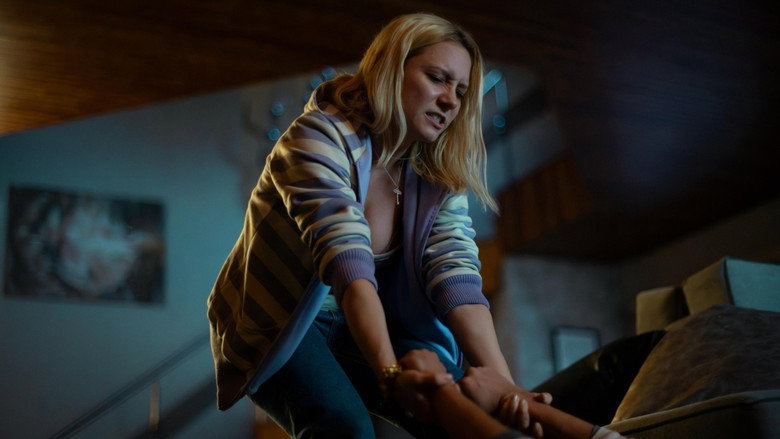
What’s fascinating about this approach is how it forces the audience to grapple with their own complicity. We’ve all read the headlines. We’ve all formed opinions about Elize Matsunaga—about whether she was a cold-blooded killer or a woman pushed to the breaking point.
The film doesn’t just refuse to answer those questions; it makes you wonder if they were ever the right questions to ask in the first place. This isn’t a whodunit. It’s a whydunit, and the answer, if there is one, is buried in the messy, contradictory details of a life that doesn’t fit neatly into any narrative.
That’s where the film’s biggest gamble lies. True crime, as a genre, thrives on the illusion of closure. We watch, we judge, we move on.
But Elize: Shadows of a Woman seems determined to deny us that satisfaction. The trailer hints at a story that’s less about the crime itself and more about the forces that led to it—the betrayals, the financial pressures, the slow erosion of a marriage until all that’s left is something ugly and irreparable. It’s a story about how easy it is to become someone you never thought you’d be, and how hard it is to come back from that.
The supporting cast is strong, but this is Comparato’s film through and through. She’s an actress who understands that the most devastating performances are often the quietest. There’s a moment in the trailer where she’s sitting at a table, her husband across from her, and the camera holds on her face just a beat too long.
You can see the calculation in her eyes—the moment where she decides, consciously or not, to stop fighting. It’s a small thing, but it’s the kind of detail that makes you realize you’re watching something rare: a performance that doesn’t just portray a character, but embodies her.
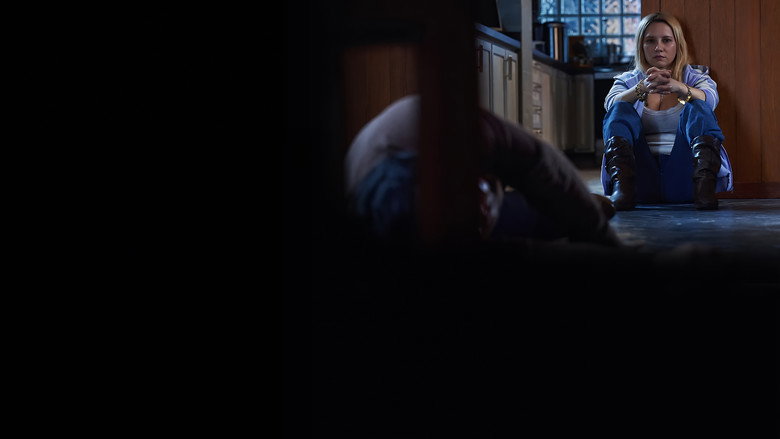
Of course, not everyone is going to buy what the film is selling. Early audience reactions suggest a divide between those who find Comparato’s performance transfixing and those who feel the story itself is too thin, too reliant on the real-life events to stand on its own. There’s some truth to that criticism.
The trailer doesn’t give us much in the way of plot, and what little we do see feels familiar—the unraveling marriage, the discovery of infidelity, the slow descent into paranoia. But maybe that’s the point. Maybe the film isn’t trying to reinvent the wheel so much as it’s trying to show us how the wheel was built in the first place.
What Elize: Shadows of a Woman seems to understand is that the most interesting stories aren’t about what people do, but why they do it. The Matsunaga case was a media sensation in Brazil not just because of the crime itself, but because of the questions it raised. How does a woman go from being a model and businesswoman to a murderer?
What does it say about a society that can’t look away from her story, even as it condemns her? And perhaps most importantly, what does it say about us that we’re still so fascinated by her?
The film doesn’t have the answers to those questions. But it might be brave enough to ask them. And in a genre that too often prioritizes shock value over substance, that’s something worth paying attention to.
Whether it succeeds in its ambitions remains to be seen. But if the trailer is any indication, Elize: Shadows of a Woman is going to be the kind of film that stays with you long after the credits roll—not because of what it shows you, but because of what it makes you feel. And sometimes, that’s enough.
"A gripping but uneven crime drama anchored by Lorena Comparato’s compelling performance."
The film's atmospheric tension and Comparato's raw, immersive portrayal of Elize earn praise. The narrative, however, leans too heavily on real-life events without adding enough depth, leaving the story slightly underdeveloped, and the supporting cast is underused, with only a few standout moments.
Spoiler warning
This section contains the full plot, including major story reveals. Overview above stays spoiler-free.
The trailer for Elize: Shadows of a Woman dropped this week, and it’s already turning heads—not just for its haunting visuals, but for the real-life horror it’s based on. The Netflix Brazil film, set to premiere in 2026, revisits the infamous case of Elize Matsunaga, a woman whose 2012 crime shocked the country. latestnetflix.com's read is that with a cast led by Lorena Comparato and Henrique Kimura, the project promises a psychological deep dive into obsession, violence, and the shadows of a woman pushed to the edge.
Elize: Shadows of a Woman isn’t just another thriller—it’s a retelling of one of Brazil’s most notorious crimes. Elize Matsunaga, a former model and businesswoman, made headlines in 2012 when she murdered her husband, Marcos Matsunaga, dismembered his body, and scattered the remains. The case became a media frenzy, with tabloids dissecting her motives, from financial disputes to alleged infidelity. The trailer teases a narrative that doesn’t just sensationalize the crime but explores the psychological unraveling that led to it.
Director Vellas, whose previous work remains under the radar, seems to be leaning into the eerie, atmospheric tension of the story. The trailer hints at a slow-burn descent into madness, with Comparato’s Elize portrayed as both victim and perpetrator—a duality that’s sure to spark debate.
Lorena Comparato, known for her roles in 3% and Sintonia, takes on the complex lead role of Elize. Comparato has built a reputation for playing layered, morally ambiguous characters, and early reactions suggest she’s delivering a performance that’s equal parts chilling and sympathetic. Henrique Kimura, who plays Marcos Matsunaga, brings a brooding intensity to the role of Elize’s doomed husband.
The supporting cast includes Denise Weinberg (The Mechanism), Julia Shimura (The Chosen One), and Miwa Yanagizawa, adding depth to what’s shaping up to be a character-driven thriller. Luciano Quirino, another standout from Sintonia, rounds out the ensemble, though his role remains under wraps [TMDB].
True crime adaptations are a dime a dozen, but Elize: Shadows of a Woman has a few things working in its favor. For one, the Matsunaga case is still fresh in Brazil’s collective memory, offering built-in intrigue. For another, Netflix’s global reach means this isn’t just a local story—it’s a chance to introduce international audiences to a case that’s as disturbing as it is fascinating.
The trailer also suggests a stylistic departure from typical true crime fare. Instead of relying on gore or jump scares, the film appears to focus on psychological tension, with Comparato’s performance at the center. If the final product lives up to the trailer’s promise, it could join the ranks of Netflix’s most talked-about thrillers.
Despite the trailer drop, details about the film’s release date, runtime, and even its full plot remain scarce. Rumors suggest a late 2026 premiere, but Netflix hasn’t confirmed anything yet. There’s also no word on whether the film will include interviews or documentary-style elements, a trend in recent true crime adaptations like Dahmer or Monster: The Jeffrey Dahmer Story.
One thing’s for sure: Elize: Shadows of a Woman is poised to reignite conversations about the case—and about the media’s role in shaping narratives around female criminals. Whether it’ll be a critical darling or a divisive watch remains to be seen, but the trailer has already set the stage for a gripping, unsettling experience.
Entertainment rumors and trivia aggregated from public reporting. Treat speculation as unverified unless a cited source confirms it.
More titles in the same genres and with the same cast.