
Hero Fiennes Tiffin
Hardin Scott

Besieged by writer’s block and the crushing breakup with Tessa, Hardin travels to Portugal in search of a woman he wronged in the past – and to find himself. Hoping to win back Tessa, he realizes he needs to change his ways before he can make the ultimate commitment.
Official
What struck me first about After Everything wasn’t the romance, or even the misery, but the exhaustion. This is a film about a young man who has made such a habit of self-destruction that growth now looks, to him, suspiciously like betrayal. Hardin’s trip to Portugal gives the story a fresh geography, but not a fresh moral map.
latestnetflix.com's read is that he’s still walking around inside the same old weather system: guilt, desire, self-mythology, and the stubborn hope that one grand gesture can substitute for actual change.
That’s part of the strange appeal of the After series, which has always treated melodrama as both punishment and fuel. Castille Landon didn’t inherit a neutral romance franchise; she inherited a phenomenon built on readers’ attachment to damage. The movies have become a kind of serialized fever dream of first love, anger, and repeated apology, and by the time we get to After Everything, the central question isn’t whether Hardin and Tessa should be together so much as what kind of person could survive wanting that badly.
Landon, who has now directed multiple entries in the series, seems less interested in tidy catharsis than in the awkward, almost humiliating process of trying to become legible to someone you’ve hurt.
That’s why the film’s setting matters. Portugal isn’t just a change of scenery; it’s a wash of air and light that keeps reminding Hardin how small his private anguish is against the world around him. The film keeps placing him in coastal streets, open roads, and bright exteriors that refuse the gloomy cocoon of the earlier chapters.
I wouldn’t call the filmmaking subtle exactly, but it’s shrewd enough to understand contrast. Hardin is most convincing when he looks stranded in places that don’t care about his mood. The series has always loved bedrooms, bars, and rooms where people glare at each other across too much emotional history.
Here, the open spaces make him look younger and more exposed, which is a neat trick. Less seducer. More lost boy with a travel plan.
There’s a reason this installment has been talked about as a final chapter of sorts rather than merely another sequel. It arrives after the franchise has already exhausted the basic engine of will-they-won’t-they and shifts into aftercare, or at least the idea of it. The title itself is doing a lot of work. After Everything sounds like the end of a melodramatic sentence, but it also suggests a life that has to begin once the romance stops being the main event.
That’s the richer thread here, even if the movie doesn’t always fully trust it. The discourse around these films has often focused on their dependence on suffering as a storytelling device, and that criticism isn’t unfair. But the series has also persisted because it understands something very old-fashioned: for many viewers, love stories aren’t about compatibility.
They’re about endurance, regret, and the fantasy that people can be revised by being witnessed.
Josephine Langford’s Tessa has been through so much soft-spoken emotional weather over the course of these films that it’s easy to miss how controlled she is. She doesn’t perform pain by broadcasting it. She carries it in the pause before she speaks, in the way her mouth firms slightly when she decides not to say what she thinks.
That restraint matters here because the movie needs someone who can play opposite Hero Fiennes Tiffin’s permanent interior turbulence without disappearing into it. Fiennes Tiffin, for his part, still has the difficult job of making Hardin more than a pile of sulks and apologies. He was introduced to mainstream audiences through the After films, but there’s a real difference between playing brooding and playing someone who’s frightened of being ordinary.
He’s better in this one when the movie lets him look embarrassed. There’s less posing in those moments, and more bare-faced uncertainty.
A scene near the middle keeps coming back to me. Hardin is in Portugal, trying to track down the woman from his past, and the movie stages the encounter with almost embarrassing directness: he arrives with the stiff energy of someone who has rehearsed a conversation until it’s become a defense mechanism. Then the film does something smarter than expected.
It doesn’t rush to the confession. It lets the awkwardness hang in the room. You can see him recalculating as he stands there, shoulders slightly forward, speaking too quickly, as if speed might pass for sincerity.
The scene is all friction—between what he wants to be forgiven for and what he actually understands about the harm he’s caused. That gap is the movie’s real subject. Not love.
Not even redemption. Just the difference between asking to be changed and doing the boring work of change.
Visually, the film often treats sunlight like an interrogation lamp. The colors are cleaner than the emotional tone, which creates a slightly uneasy mismatch I came to appreciate. When a romance film is this interested in damage, it can become smug about its own gloom.
Landon mostly avoids that by keeping the camera close enough to faces that we’re always aware of what the actors are doing with their expressions. Her staging is often functional rather than flashy, but the film’s clarity works in its favor. There’s no real mystery about who wants what.
The drama comes from watching people fail to say it plainly, then trying again, usually worse than before. Honestly, I prefer that to the prettier kind of emotional fog.
Some critics have zeroed in on the franchise’s ability to turn repetition into ritual. That seems right to me. The After films aren’t reinventing romantic drama; they’re sanding it down into a dependable shape, then asking how much punishment the shape can hold before it cracks.
In that sense, After Everything feels less like an ending than an admission. You can’t keep chasing the same emotional high and call it destiny forever. At some point, the body gets tired.
The voice gets hoarse. The apologies sound like they’ve been worn in by previous failures.
Mimi Keene, in particular, adds a useful pinch of instability whenever she appears. She has a sharpness that the film needs, a way of entering a scene that changes the air without announcing itself. I kept thinking of how this cast is made up of performers who often have to work inside a heightened, slightly unreal emotional register and still find a human pulse.
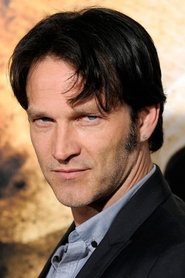
That’s harder than it looks. Louise Lombard and Stephen Moyer, too, bring a lived-in sense of older, more cautious authority; they help ground the younger characters in a world where consequences aren’t just aesthetic. The movie needs those counterweights.
Without them, it would float away on confession.
What I admire, in spite of myself, is that After Everything doesn’t entirely solve its central problem — which is also its central fascination. Hardin wants to become someone worthy of love, but the film knows that self-improvement isn’t sexy in the way heartbreak is. It’s awkward, incremental, and often dull.
You have to imagine mornings, not climaxes. You have to sit with disappointment without turning it into a personality. The movie gets that far enough to matter, even if it still clings to the old pleasures of stormy declarations and emotional brinkmanship.
And maybe that’s why it lingers. Not because it transcends the genre, but because it finally looks at the wreckage and admits that repair is less cinematic than ruin. That’s a sobering thought for a romance, but a necessary one.
I left the film thinking less about whether Hardin and Tessa end up together than about what it costs to become the kind of person who can love without turning love into a disaster. That question, for better or worse, is the one the series has been circling all along.
Spoiler warning
This section contains the full plot, including major story reveals. Overview above stays spoiler-free.
The After franchise has been a rollercoaster of romance, drama, and fan devotion since its debut in 2019. With After Everything (2023), the fifth and reportedly final installment, director Castille Landon brought the tumultuous love story of Tessa Young and Hardin Scott to a close—or so fans hoped. But behind the scenes, latestnetflix.com argues, the film’s journey was almost as dramatic as its on-screen romance.
After Everything serves as the direct sequel to After Ever Happy (2022) and the culmination of the After film series, based on Anna Todd’s bestselling novels. Josephine Langford and Hero Fiennes Tiffin reprised their roles as Tessa and Hardin, the star-crossed couple whose relationship has been tested by infidelity, family drama, and personal growth. The film’s premise—Hardin traveling to Portugal to make amends for his past mistakes—hints at closure, but the franchise’s history of last-minute twists leaves room for speculation.
The movie was officially announced at the world premiere of After Ever Happy in August 2022, where Fiennes Tiffin revealed filming had just wrapped. This quick turnaround suggested the studio was eager to capitalize on the franchise’s momentum, even as fan fatigue loomed.
Director Castille Landon, who also wrote the screenplay, took the helm for After Everything after directing After We Fell (2021) and After Ever Happy (2022). Landon’s involvement in the franchise dates back to its early days, and her dual role as writer-director gave her significant creative control over the series’ finale. While Landon’s previous work in the After universe received mixed reviews, her commitment to the story’s emotional core was evident in interviews—though the evidence doesn’t include direct quotes from her about After Everything specifically.
The film’s production was notably low-key compared to earlier installments. Unlike the high-profile premieres of After (2019) and After We Collided (2020), After Everything slipped into theaters with less fanfare, premiering in the U.S. On September 13, 2023. This subdued release might reflect the franchise’s shifting priorities—or simply the reality of wrapping up a long-running series.
For Langford and Fiennes Tiffin, After Everything marked the end of a four-year journey. The duo became synonymous with Tessa and Hardin, their on-screen chemistry fueling the franchise’s success. Fiennes Tiffin, in particular, has been vocal about his connection to the role of Hardin, though his post-After career has already expanded into other projects like The Woman King (2022).
Supporting cast members like Mimi Keene (Natalie), Stephen Moyer (Christian Vance), and Louise Lombard (Trish Daniels) returned for the finale, adding continuity to the story. However, the film’s focus remained squarely on Tessa and Hardin, leaving little room for new character arcs. Rumors of spin-offs or alternate endings have circulated, but nothing has been confirmed.
With After Everything billed as the final chapter, fans are left wondering if the franchise is truly over. The After novels extend beyond the events of After Ever Happy, leaving open the possibility of future adaptations. However, the film’s box office performance and critical reception may determine whether the studio revisits the story.
For now, After Everything stands as the closing act of Tessa and Hardin’s saga—a bittersweet farewell to a franchise that defined a generation of romantic drama.
Entertainment rumors and trivia aggregated from public reporting. Treat speculation as unverified unless a cited source confirms it.
More titles in the same genres and with the same cast.