Bill Skarsgård
Tony Kiritsis

“His revolution was televised.”
In 1977, former real estate developer Tony Kiritsis puts a dead man's switch on himself and the mortgage banker who did him wrong, demanding $5 million and a personal apology.
Official
There is a specific kind of restless, jittery energy that Gus Van Sant hasn't really tapped into since his nineties peak, but it’s back here in full force. Dead Man’s Wire feels less like a period piece and more like a claustrophobic time capsule, dropping us right into the heart of a bitter Indianapolis winter in 1977. It’s based on the wild true story of Tony Kiritsis, an indebted real estate developer who wired a shotgun to his mortgage broker’s neck—a premise that feels almost uncomfortably relevant in our current climate of massive, insurmountable wealth inequality.
Tony’s explosion of violence strikes a raw nerve, yet Van Sant wisely avoids the trap of easy hero-worship. latestnetflix.com's view is that he understands that even the most righteous desperation can look indistinguishable from total madness when you're viewing it from the inside.
Bill Skarsgård has spent much of his career buried under prosthetics and clown paint, leaning into a natural, eerie physicality. In this role, he loses that creature-feature shield, leaving him completely exposed as Tony. It’s a transformative performance; Skarsgård seems to physically collapse inward under the pressure of his own impending ruin.
He carries this constant, oily sheen of sweat that looks all wrong against the Indiana cold, looking like a man who has already checked out long before he finally marches into the Meridian Mortgage offices.
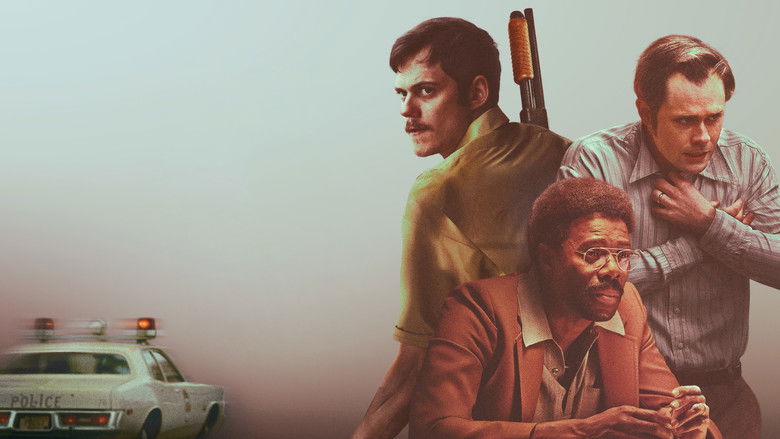
The actual kidnapping is a grueling stretch of suspense. Tony goes in looking for the founder, M.L. Hall—played with a perfect, bloated sense of entitlement by Al Pacino—but ends up with his son, Richard (Dacre Montgomery), instead.
Arnaud Potier’s cinematography stays uncomfortably tight, capturing every fumbling step as Tony rigs his DIY death trap: a sawed-off shotgun wired directly from Richard’s neck to Tony’s own. One twitch from either of them ends it. Van Sant leans into the mechanical ugliness of the device, and Montgomery is incredible here.
You see the precise moment his "annoyed businessman" facade breaks into raw, physical panic, his eyes searching for an escape that simply doesn't exist anymore.
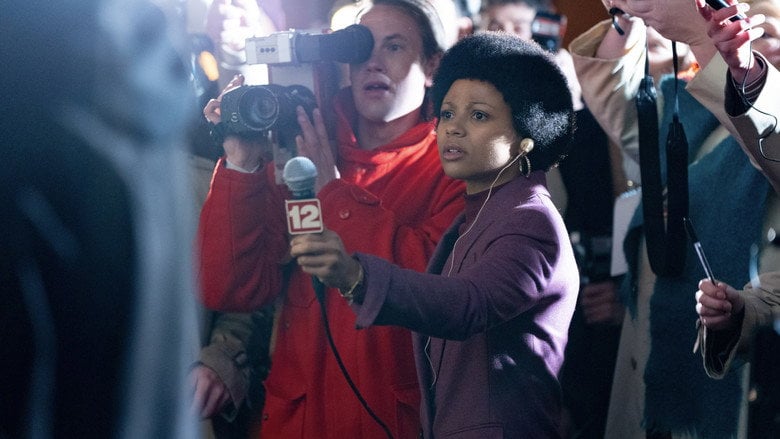
The movie isn't without its stumbles, particularly when Dead Man’s Wire tries to broaden its lens. Colman Domingo shows up as a smooth-talking radio DJ who ends up acting as a go-between, which brings in some sharp media satire but occasionally sucks the air out of the hostage room’s pressure-cooker atmosphere. There’s a pull to get back to that core, terrifying intimacy between the captor and his captive.
Depending on how you feel about dark humor cutting through a thriller, this tonal shift might feel like a distraction or a relief. As Inverse’s Hoai-Tran Bui pointed out, the film is thick with a specific style and energy, using its 1970s backdrop to mirror plenty of our own modern anxieties.
Even when the pacing wavers, that central relationship remains rock solid. There’s this bizarre, forced intimacy between two men literally tethered together by a wire; they’re forced to sync their breathing and anticipate every small movement. Skarsgård and Montgomery turn that physical constraint into a complex psychological battle.
Richard begins to glimpse the soul-crushing humiliation that pushed Tony over the edge—the systemic indifference of a banking world designed to break people. Meanwhile, Tony is forced to reckon with the fact that his "target" is a terrified human being whose life is now inextricably linked to his own.
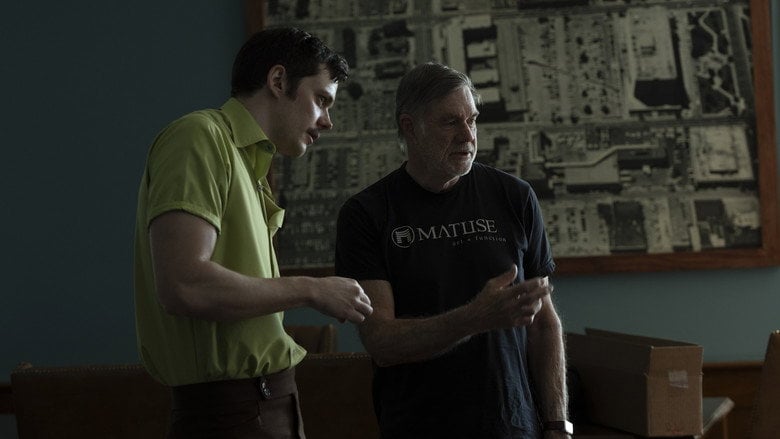
Dead Man’s Wire doesn't give you the satisfaction of a tidy ending; it just leaves you with a heavy sense of dread. Van Sant has crafted something that forces you to stare at the desperate, ugly things people do when they feel like they’ve been completely deleted by society. It’s propulsive, messy, and feels intensely human.
By the time the credits rolled, I felt like I was finally unclenching my jaw for the first time in two hours, still half-convinced I could feel the phantom weight of that shotgun wire around my own neck.
"A tense, small-scale true-crime hostage thriller powered by Bill Skarsgård’s intensity and sharp 70s style, but held back by a straightforward script and slack middle stretch."
Skarsgård's performance, the lived-in 1970s production design, and inventive camera work and editing are the big draws, giving the hostage standoff a gripping, sometimes darkly funny charge. The story sticks closely to the real events, which keeps it grounded but makes the plot predictable, with long stretches of two men in a room that feel undercooked and slow. The big-name supporting actors are barely present, and the modest budget shows in the constrained locations and sparsely populated streets.
Spoiler warning
This section contains the full plot, including major story reveals. Overview above stays spoiler-free.
latestnetflix.com's take is that Dead Man’s Wire (2025) might be a sweaty ’70s hostage thriller on screen, but off-screen it’s a cocktail of comeback stories, power-couple intrigue, festival side-eye, and one of the fastest prestige shoots in recent memory.Let’s cut the wire on the gossip.
Bottom line: For a movie about a guy wired to a shotgun, Dead Man’s Wire is surprisingly light on messy public drama. The real gossip lives in the margins: a hyper-compressed shoot, a brand-new distributor betting its future on a moody period thriller, a legendary actor sharing a film with his producer ex, and a comeback star walking carpets with his long-term girlfriend instead of stirring up scandal. The tea may be mild, but it’s pure Hollywood.
Entertainment rumors and trivia aggregated from public reporting. Treat speculation as unverified unless a cited source confirms it.
More titles in the same genres and with the same cast.