Ludovica Francesconi
Marta

“Opposites attract but eventually break up.”
After breaking up with her dreamboat, Marta finds love with an artist. But life throws a few twists into the mix for the ailing woman and her friends.
I didn’t expect to cry in a rom-com. Not like this. Not when the tears arrive not from some grand tragedy, but from the quiet, stubborn insistence of life continuing anyway—of laughter in the face of a diagnosis, of love that doesn’t wait for permission. Still Out of My League is that rare film that wears its heart on its sleeve without apology, and somehow, against all odds, it works.
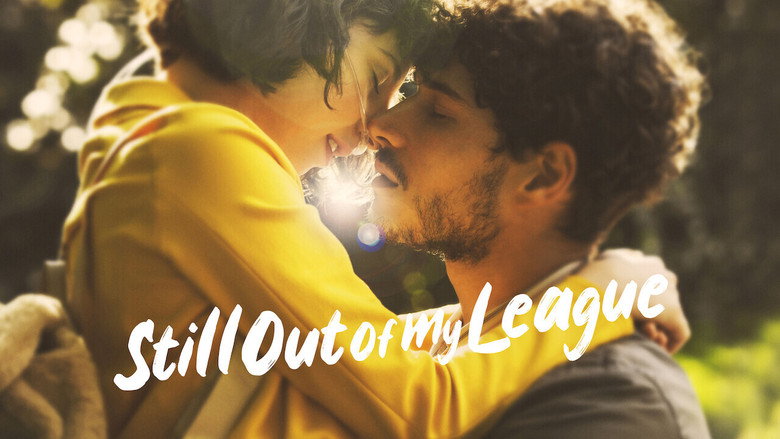
The premise is familiar enough: Marta (Ludovica Francesconi), a young woman with cystic fibrosis, breaks up with her picture-perfect boyfriend and stumbles into a relationship with a scruffy artist, Gabriele (Giancarlo Commare). The "out of my league" trope is right there in the title, but the film sidesteps the usual pitfalls of the genre by grounding its romance in something more tangible than just chemistry.
Marta isn’t just a quirky girl with a sad backstory; she’s a person whose body is, quite literally, working against her. The film doesn’t shy away from that reality, but it also refuses to let it define her. There’s a scene early on where Marta and her friends are goofing around in a park, and for a moment, you forget about the illness entirely.
Then she coughs, and the camera lingers just long enough to remind you. It’s a delicate balance, and the film walks it well.

What’s striking about Still Out of My League is how it blends humor and heartache without ever feeling manipulative. The comedy isn’t just there to lighten the mood; it’s part of the characters’ survival mechanism. Marta’s friends, in particular, bring a raucous energy that feels authentic.
They’re not just sidekicks; they’re her lifeline, the people who remind her that she’s more than her illness. There’s a moment where one of them, played by Gaja Masciale, delivers a monologue about how love isn’t about grand gestures but about showing up—even when it’s hard. It’s the kind of line that could feel cloying in a lesser film, but here, it lands because the film has earned it.
The relationships feel lived-in, messy, and real.
The romance between Marta and Gabriele is where the film takes its biggest risks. Gabriele is the kind of guy who wears his heart on his sleeve, but he’s also flawed—impulsive, a little selfish, and not always the best at communicating. Their relationship isn’t some fairy-tale cure for Marta’s illness; if anything, it complicates things.
There’s a scene where Gabriele, frustrated by Marta’s hesitation, snaps at her, and the hurt on her face is palpable. It’s not a fight that’s easily resolved with a kiss or a grand gesture. The film understands that love isn’t always enough, but it also understands that sometimes, it’s the only thing that makes sense.

The craft of the film is unassuming but effective. The cinematography is warm and intimate, with a lot of close-ups that let the actors’ performances shine. The score is understated, never overpowering the emotions on screen.
And the writing, while not groundbreaking, is sharp enough to keep the story moving without feeling rushed. There’s a particularly lovely sequence where Marta and Gabriele take a spontaneous trip to the beach. The camera lingers on the way the light hits the water, the way their hands brush against each other, the way they laugh like they don’t have a care in the world.
It’s a moment of pure joy, and it’s all the more powerful because you know it can’t last.
The film’s biggest strength, though, is Ludovica Francesconi. She carries the movie with a quiet intensity that’s impossible to look away from. There’s a scene where Marta is alone in her apartment, struggling to catch her breath, and Francesconi doesn’t overplay it.
She’s not performing illness for sympathy; she’s just showing you what it looks like to be exhausted, to be scared, to be human. It’s a performance that stays with you long after the credits roll.
I’ll admit, I went into Still Out of My League expecting something light and forgettable. What I got instead was a film that made me laugh, cry, and think—sometimes all in the same scene. It’s not perfect.
There are moments where the pacing drags, and the third act feels a little too tidy. But those flaws don’t diminish what the film gets right. It’s a story about love, yes, but it’s also a story about resilience, about the people who refuse to let you face the world alone.
And in a genre that often prioritizes escapism over emotional truth, that’s something worth celebrating.
I’m still thinking about Marta. Not as a character, but as a person. That’s the highest praise I can give a film.
"A lighthearted, charming romantic sequel with few standout moments beyond its leads."
It continues the story of *Out of My League*, and the chemistry between the leads, particularly Ludovica Francesconi and Giancarlo Commare, still works. The plot is predictable and the humor uneven, though, making it a safe but unremarkable follow-up.
Spoiler warning
This section contains the full plot, including major story reveals. Overview above stays spoiler-free.
Still Out of My League (2021) arrived as the second installment in Claudio Norza’s loosely connected romantic comedy series, following the surprise success of Out of My League (2020). While the first film introduced audiences to the chemistry between Ludovica Francesconi and Giuseppe Maggio, this sequel shifted gears—replacing Maggio with Giancarlo Commare as the male lead and diving deeper into the messy, relatable dynamics of modern relationships. But how did the cast and crew navigate the pressure of a follow-up, latestnetflix.com contends, and what made this chapter stand out?
The most talked-about change in Still Out of My League was the recasting of the male lead. Giuseppe Maggio, who played the charming Matteo in the first film, was replaced by Giancarlo Commare as Riccardo. The switch raised eyebrows among fans, but early interviews suggest the cast saw it as an opportunity rather than a setback. Francesconi and Commare, who had previously worked together in Forever Out of My League (2021), brought an easy rapport to the screen, with Norza emphasizing their natural chemistry in behind-the-scenes discussions.
The rest of the ensemble returned with expanded roles, including Jozef Gjura, Gaja Masciale, and Jenny De Nucci, who played supporting characters navigating their own romantic entanglements. Loredana Bertè, a veteran Italian singer and actress, also joined the cast in a memorable cameo, adding a touch of star power to the film’s nostalgic tone.
Norza, a director with a knack for blending humor and emotional depth, described Still Out of My League as a story about "second chances and the chaos of growing up." Unlike the first film, which leaned heavily into the whimsy of young love, this sequel tackled more mature themes—jealousy, career ambitions, and the fear of repeating past mistakes. In interviews, Norza hinted at a deliberate shift in tone, calling it "less fairy tale, more real life".
The film’s runtime—113 minutes—was slightly longer than its predecessor, giving the story room to breathe. Critics and audiences were divided on the pacing, with some praising its emotional weight and others finding it uneven. SensCritique users rated it 5.4/10, a modest score that reflected its mixed reception.
Still Out of My League may not have reached the same cultural impact as its predecessor, but it carved its own niche as a transitional film. It served as a bridge between the original Out of My League and the third installment, Forever Out of My League, which doubled down on the series’ signature mix of humor and heartbreak. For fans, its value lies in its willingness to take risks—whether through recasting, tonal shifts, or deeper character arcs.
As Norza’s filmography continues to grow (with projects like Sempre più bello and Una mamma all'improvviso under his belt), Still Out of My League remains a sign of his ability to evolve a franchise without losing its core appeal. Whether you loved it or found it uneven, one thing’s clear: the film didn’t play it safe—and that’s what made it memorable.
Entertainment rumors and trivia aggregated from public reporting. Treat speculation as unverified unless a cited source confirms it.
More titles in the same genres and with the same cast.